
BuddhistCatholicContemplativeEvangelicalGeneral ChristianHinduJewishLatter-day SaintMuslimNew VisionsProgressive Christian
Beliefs
- Buddhist
- Catholic
- Contemplative
- Evangelical
- General Christian
- Hindu
- Jewish
- Latter-day Saint
- More Voices
- Muslim
- New Visions
- Pagan
- Progressive Christian
Topics
- Religion News
- Food and Religion
- Sports and Religion
- Religious Art
- Religious Music and Entertainment
- Religious Events
- History and Religion
- Style and Religion
- Politics and Religion
- Women in Religion
- Recreation Outdoors and Religion
- Business Finance and Religion
- Careers Workplace and Religion
- Education and Religion
- Family Parenting and Religion
- Health Fitness and Religion
- Home and Religion
- Relationships and Religion
- Technology and Religion
- Travel and Religion
Columnists
- Buddhist Columnists
- Business Finance and Religion Columnists
- Careers Workplace and Religion Columnists
- Catholic Columnists
- Contemplative Columnists
- Education and Religion Columnists
- Evangelists Columnists
- Family Parenting and Religion Columnists
- General Christian Columnists
- Health Fitness and Religion Columnists
- Hindu Columnists
- History and Religion Columnists
- Home and Religion Columnists
- Jewish Columnists
- More Voices Columnists
- Latter Day Columnists
- Muslim Columnists
- New Visions Columnists
- Nonreligious Columnists
- Pagan Columnists
- Politics and Religion Columnists
- Progressive Columnists
- Recreation Outdoors and Religion Columnists
- Relationships and Religion Columnists
- Religion News Columnists
- Religious Art Columnists
- Religious Events Columnists
- Religious Music and Entertainment Columnists
- Sports and Religion Columnists
- Style and Religion Columnists
- Technology and Religion Columnists
- Travel and Religion Columnists
- Women in Religion Columnists
Resource Library
- 2026 Calendar
- Library of World Religions
- The 100 Most Holy Places on Earth
- Patheos Answers
- Podcasts
- Videos
- Faith Leaders Database
- Anglican Episcopalian
- Bahai
- Baptist
- Buddhism
- Christianity
- Confucianism
- Eastern Orthodoxy
- Hinduism
- Holiness and Pentecostal
- ISKCON
- Islam
- Judaism
- Lutheran
- Methodist
- The Church of Jesus Christ of Latter-day Saints
- New Age
- Paganism
- Presbytarian and Reformed
- Protestantism
- Religion Behind the Scenes
- Roman Catholic
- Scientology
- Shia Islam
- Sikhism
- Sufism
- Sunni Islam
- Taoism
- Zen
- See all religions
Research Tools
 Ad-Free & Subscriber Log-In Subscription Support
Ad-Free & Subscriber Log-In Subscription Support
Follow Patheos 

- Trending:
- Forgiveness
- |
- Marriage
- |
- Consciousness
- |
- Death Penalty
- |
- Election
- |
- Halloween
 Love is an Orientation
- Home
- Evangelical
- Is Empathy Dangerous?
Is Empathy Dangerous?
Last updated on: February 20, 2014 at 9:39 am by Andrew Marin
Is Empathy Dangerous? 2014-02-20T09:39:28-06:00 Andrew Marin
Patheos Explore the world's faith through different perspectives on religion and spirituality! Patheos has the views of the prevalent religions and spiritualities of the world.
The following post is by Jason Bilbrey, our Director of Pastoral Care here at The Marin Foundation. You can read more from Jason at his blog, www.jasonbilbrey.com.
Back in the fall of 2008, before my wife ever told me she was bisexual, we lived in Pasadena, California, where I was studying at Fuller Theological Seminary. My conservative beliefs about homosexuality and the LGBTQ community at the time seemed mostly in-line with those of my peers and professors.
But I knew gay people. I worshipped alongside them on Sundays. And I was surprised to find they were a lot like me. I remember sitting at lunch after church with Christine, who had married her wife around the same time I had married mine. We swapped wedding stories for a bit before she told me, with a shaky voice, how nervous she felt about the upcoming Prop. 8 vote and the possibility that her marriage might become legally invalidated.
It was the first time I had ever considered how that might feel.
With these discoveries came two distinct, paradoxical feelings in equal measure: empathy, and skepticism of that empathy. Here’s what I mean–this is an excerpt from the textbook for the Christian Ethics class I was taking at the time:
Much of what drives the quest among Christians for some kind of openness to legitimating homosexual behavior that occurs in this kind of context (monogamous, permanent) is sensitivity to the experiences, indeed the honest perplexity and profound suffering, of people who are in precisely this situation. In other words, personal loyalties and commitments are at play, and not dispassionate biblical exegesis or moral reasoning. We have already claimed that it is critical to look for this dimension of how moral moral judgements are made and positions taken, both by those we agree with and those we do not….And we affirm sensitivity to human suffering is a Christlike virtue (Kingdom Ethics, Stassen and Gushee, p.310).
Empathy is godly. But it’s also dangerous. That was the message I heard. Empathy seemed to stand opposed to the “dispassionate biblical exegesis and moral reasoning” that are exalted by so many Evangelicals as the bedrock of Christian ethics.
The term “slippery slope” comes up a lot as an argument against same-sex couples marrying. If we allow a man to marry another man, the argument goes, then why not a man and a dog? But in many Christian circles, the slippery slope starts much higher on the mountain: If I am sensitive to the experiences of gay people, what’s to prevent my sensitivity from undermining my beliefs. So befriend with caution.
That’s a recipe for superficial relationships. And that’s what I had.
It was easiest if I buried my head in the sand. When it came time for the November elections, with Prop. 8 on the ballot, I didn’t vote. And when Christine and all my other gay friends left the church en mass one Sunday after our pastor shared his true thoughts on homosexuality from the pulpit, I pretended not to notice. (I say this to my shame. I want to be honest about my journey, but in no way do I defend these actions. You can read more about my thoughts on standing in solidarity with the LGBTQ community here, here, here, and here.)
All of this changed for me, subtly, the following year when I took Exegetical Methods from a fantastic adjunct professor. He was the nicest guy you would ever meet–Catholic, mid-50s, though a surprisingly tough grader. I remember the day we started talking about Romans 1 in class. “I wish this bit about homosexuality wasn’t in here,” he said. “My wife and I have good friends, Carol and Marlene, who have been together for years. They have kids the same age as ours. They’re good parents. They’re great people. And I hope they never ask me about these verses, because I don’t know what to tell them. The thought that God would disapprove of such a clearly beautiful relationship is absurd to me. And yet, as much as I have researched cogent, hermeneutically responsible arguments for the Bible’s affirmation of same-sex relationships like theirs, I just can’t find anything that persuades me.”
I was floored. Was he allowed to say that? Was he allowed to admit to the disparity between his interpretation of the Bible and his experience with the world? On the one hand, it sounded like he was towing the line by prioritizing “dispassionate biblical exegesis” above personal and relational experience. On the other hand, he seemed much more willing to engage critically in the dilemma. He didn’t have his head buried in the sand at all.
I’ve written more about the challenge of holding conflicting views about Scripture’s message and one’s personal experience here. But here’s what I learned from this season of my life: Evangelicals like me often talk about allowing Scripture to shape our perceptions of reality, not the other way around. I think that’s way too simplistic. Not only is it impossible to shed completely the influence of our experiences in our interpretation of Scripture, but it’s dangerous to think that we can. It gives a false sense of moral weight to our beliefs if we think that we came upon them without bias.
I think this sentiment is dangerously simplistic for another reason also: Sometimes these two just don’t line up. Sometimes your experiences with the world contradict what seems to be the truth of Scripture. I think that’s ok. I think it’s better to be honest about it rather than caving to the temptation to pit one against the other in false resolution. I think that’s part of what it means to live in the tension.
Much Love.
Previous Post

February 17, 2014
Clearing the Path for your Child’s Faith
Next Post
February 22, 2014 Living in the Tension - Monday 1/24
Browse Our Archives
Select a Category Book Reviews Bridging Opposing Worldviews Culture Don't Drink and Drive Faith Guest Posts I'm Sorry Campaign Interviews Language Laura Statesir LGBT Living in the Tension Living in the Tension Gatherings Love Is an Orientation Love Is an Orientation Blog Love Is an Orientation Book Love Is an Orientation DVD Melinda Guerra Memory My One Sentence Bible Newsletter Our Last Option Parents & Families Politics Quick Quotes Quotes ReEngaging Civility Sexuality Speaking The Marin Foundation Theology Uncategorized Us Versus Us Videos Warren Perry Youth and Campus Ministry
Select a Month June 2016 May 2016 December 2015 June 2015 May 2015 April 2015 March 2015 February 2015 January 2015 December 2014 November 2014 October 2014 September 2014 August 2014 July 2014 June 2014 May 2014 April 2014 March 2014 February 2014 January 2014 December 2013 November 2013 October 2013 September 2013 August 2013 July 2013 June 2013 May 2013 April 2013 March 2013 February 2013 January 2013 December 2012 November 2012 October 2012 September 2012 August 2012 July 2012 June 2012 May 2012 April 2012 March 2012 February 2012 January 2012 December 2011 November 2011 October 2011 September 2011 August 2011 July 2011 June 2011 May 2011 April 2011 March 2011 February 2011 January 2011 December 2010 November 2010 October 2010 September 2010 August 2010 July 2010 June 2010 May 2010 April 2010 March 2010 February 2010 January 2010 December 2009 November 2009 October 2009 September 2009 August 2009 July 2009 June 2009 May 2009 April 2009 March 2009 February 2009 January 2009 December 2008 November 2008 October 2008 September 2008
Follow Us!
TAKE THE
Religious Wisdom Quiz
Who said, "I am the way, the truth, and the life"?
Select your answer to see how you score.
Peter Paul John the Baptist Jesus
Related posts from Love is an Orientation

Don't Let Your Anger Turn Into Their Hate

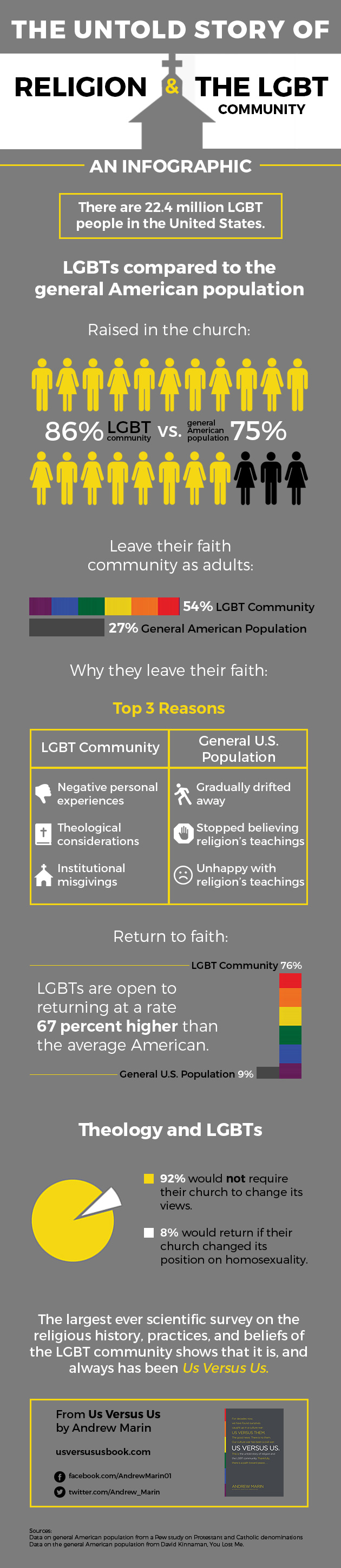
Great Infographic for Research Findings in Us Versus...

My ebook, Our Last Option, is Patheos Book...
TRENDING AT PATHEOS Evangelical

How the author of the world's best hymn...
I've been working with John Newton for a while now. This makes...

Long before this Lectio Divina, Psalm 130 - the song - started...

What About the Trees? Another Living Parable
After I finished writing the last article about falling leaves as a...

Why Classical Education Is a Conversation, Not a...
Come and Read: Joy in Classical Education When I was a little...

Falling Leaves: A Living Parable on Letting Go
I’ve spent the vast majority of my life in the southeast corner...

Cornell University has received a great deal of negative publicity and intense...
view all Evangelical blogs
Ad-Free & Subscriber Log-In Subscription Support
- About Us
- 2026 Calendar
- Videos
- Podcasts
- Library of World Religions
- Faith In Media Tracker
- Advertise With Us
- Write for Us
- Privacy Policy
- Terms of Service
- Do Not Sell My Data
- Contact Us
- Radiant Digital
- Manage Newsletter Subscriptions
- Unsubscribe From Notifications
- Sitemap
Copyright 2008-2026, Patheos. All rights reserved.
Subscription Support Ad-Free & Subscriber Log-In
Follow Patheos