
BuddhistCatholicContemplativeEvangelicalGeneral ChristianHinduJewishLatter-day SaintMuslimNew VisionsProgressive Christian
Beliefs
- Buddhist
- Catholic
- Contemplative
- Evangelical
- General Christian
- Hindu
- Jewish
- Latter-day Saint
- More Voices
- Muslim
- New Visions
- Pagan
- Progressive Christian
Topics
- Religion News
- Food and Religion
- Sports and Religion
- Religious Art
- Religious Music and Entertainment
- Religious Events
- History and Religion
- Style and Religion
- Politics and Religion
- Women in Religion
- Recreation Outdoors and Religion
- Business Finance and Religion
- Careers Workplace and Religion
- Education and Religion
- Family Parenting and Religion
- Health Fitness and Religion
- Home and Religion
- Relationships and Religion
- Technology and Religion
- Travel and Religion
Columnists
- Buddhist Columnists
- Business Finance and Religion Columnists
- Careers Workplace and Religion Columnists
- Catholic Columnists
- Contemplative Columnists
- Education and Religion Columnists
- Evangelists Columnists
- Family Parenting and Religion Columnists
- General Christian Columnists
- Health Fitness and Religion Columnists
- Hindu Columnists
- History and Religion Columnists
- Home and Religion Columnists
- Jewish Columnists
- More Voices Columnists
- Latter Day Columnists
- Muslim Columnists
- New Visions Columnists
- Nonreligious Columnists
- Pagan Columnists
- Politics and Religion Columnists
- Progressive Columnists
- Recreation Outdoors and Religion Columnists
- Relationships and Religion Columnists
- Religion News Columnists
- Religious Art Columnists
- Religious Events Columnists
- Religious Music and Entertainment Columnists
- Sports and Religion Columnists
- Style and Religion Columnists
- Technology and Religion Columnists
- Travel and Religion Columnists
- Women in Religion Columnists
Resource Library
- 2026 Calendar
- Library of World Religions
- The 100 Most Holy Places on Earth
- Patheos Answers
- Podcasts
- Videos
- Faith Leaders Database
- Anglican Episcopalian
- Bahai
- Baptist
- Buddhism
- Christianity
- Confucianism
- Eastern Orthodoxy
- Hinduism
- Holiness and Pentecostal
- ISKCON
- Islam
- Judaism
- Lutheran
- Methodist
- The Church of Jesus Christ of Latter-day Saints
- New Age
- Paganism
- Presbytarian and Reformed
- Protestantism
- Religion Behind the Scenes
- Roman Catholic
- Scientology
- Shia Islam
- Sikhism
- Sufism
- Sunni Islam
- Taoism
- Zen
- See all religions
Research Tools
 Ad-Free & Subscriber Log-In Subscription Support
Ad-Free & Subscriber Log-In Subscription Support
Follow Patheos 

- Trending:
- Forgiveness
- |
- Marriage
- |
- Consciousness
- |
- Death Penalty
- |
- Election
- |
- Halloween
 Love is an Orientation
- Home
- Evangelical
- The ‘Other’ As Examen
The ‘Other’ As Examen
Last updated on: October 23, 2013 at 10:06 am by Andrew Marin
The ‘Other’ As Examen 2013-10-23T10:06:57-05:00 Andrew Marin
Patheos Explore the world's faith through different perspectives on religion and spirituality! Patheos has the views of the prevalent religions and spiritualities of the world.
 The following post was written by Kevin Harris, Director of Community Relations at The Marin Foundation.
Lately I’ve been learning more about the prayer of examen, a prayer for detecting God’s presence and God’s direction in our daily lives as well as examining our consciousness. As I’m attempting to examine my day, I’ve found myself wondering about how information and events (particularly those that are negative) may be used to examine my conscience and grow as a person.
I’ve been struck by how much easier it is for me to internally respond with disdain, condescension, or general feelings of animosity regarding harmful things people have done or even in regards to those that I adamantly disagree with, rather than with compassion.
Each day as I open my computer and scan news and social media sites, I come across articles written to highlight the harmful or simply ignorant things that others have done or been caught saying. Within a few minutes of opening Facebook, I come across a link to a blog post about some prominent figure making a homophobic remark. I scroll past an article about the latest celebrity blunder and glance at a discussion thread with individuals debating who was really to blame for the recent government shutdown. I read a status update angrily writing off some public persona that I don’t particularly care for, and I quietly find a little comfort in others sharing my feelings.
I find myself wondering how some people can do such ridiculous and narrow-minded things. There is no shortage of things to be outraged about and people to be tempted to simply cast off as evil ‘others’.
Regretfully, it can still be easy to respond with animosity and write people off as ‘others’ in our in-person interactions in the way that we see those that say harmful things or just espouse opinions that we adamantly disagree with. Thankfully, the propensity to other people diminishes as we grow in relationship with them and we’re more likely to respond with compassion than compared to our interactions with strangers.
Considering that we will continue to come across actions and words that we find harmful and unfortunate, I’m wondering about what we can practically do in the present to engage in ways that help to elicit compassion as we’re (hopefully) becoming the type of people that are more likely to behave compassionately.
What would it look like use the harmful and unfortunate actions that we come across as an opportunity to examine or investigate our own conscience and hopefully cultivate compassion?
- It seems like we would need to start off by establishing our equality before God. Like us, our enemies are wounded individuals created in the image of God and loved dearly by God. Also, acknowledging that but by the grace of God we are capable of every evil.
- Asking ourselves, ‘What would it take for me to do a similar thing?’ Not trying to arrogantly think that we can actually discern the exact motivations and reasons for the behaviors of others, but primarily trying to humanize it. If we did something even remotely similar in the past; were we motivated by fear, anxiety, insecurity, jealously, selfishness, worry, a desire for affection or esteem or something else? If we can personally identify with something that someone else is having a hard time with in any way, we’re more likely to be able to empathize with the person and show them compassion. For example, those that have experienced judgmental attitudes in themselves are more likely to extend compassion and desire to help others that they see caught up in judgmental behavior. We see our model in Jesus whom scripture says, “For we do not have a high priest who is unable to empathize with our weaknesses, but we have one who has been tempted in every way, just as we are–yet was without sin (Hebrews 4:15).” The following verse states that because of this we should then approach God with confidence to receive mercy and grace. We obviously are not Jesus, but that does not mean that we cannot seek to identify with the weaknesses of others in even some small way with God’s help.
- Asking God to help us see if there is currently anything in us (fear, anxiety, etc.) in terms of personal issues that we need to address regarding the issue or harm we see another perpetuating. We can use our experience as a springboard to pray Psalm 139:23-24 in the situation: “Search me, O God, and know my heart; test me and know my anxious thoughts. See if there is any offensive way in me, and lead me in the way everlasting.” If we’re actually able to pinpoint something, we’re more likely to be humbled and it could create the possibility for us to extend empathy and act with compassion.
I don’t mean to try to over simplify our response to harmful actions as I realize that it can be appropriate for Christians to condemn those actions that do not honor the inherent worth, dignity, and beauty in others as having been made in the image of God. A righteous anger may be appropriate as well, though I question the ‘righteous’ part if we don’t actually go beyond our yearning for justice to also desiring what is best for the other party and for them to experience God’s grace, love, and forgiveness. Sadness and mourning at the actions of others should obviously have a place as well lest we risk moving even more into bitterness and cynicism.
I’m primarily wondering if we can use the harmful and unfortunate actions of others that we regularly encounter for more than an opportunity to voice our anger (which has a place) or going beyond even using it as motivation in trying to make the situation better. Are there attitudes or practices that can help us to engage with them in ways that encourage and challenge ourselves to grapple with the difficult things in ourselves that are reflected in the world? Could it be turned into a spiritual discipline, and if so what would it look like?
Much love.
www.themarinfoundation.org
Previous Post

October 18, 2013
Living in the Tension Gathering - 10/21
Next Post
October 23, 2013 Jesus Shows How Arguing the Bible With People Is Pointless
Browse Our Archives
Select a Category Book Reviews Bridging Opposing Worldviews Culture Don't Drink and Drive Faith Guest Posts I'm Sorry Campaign Interviews Language Laura Statesir LGBT Living in the Tension Living in the Tension Gatherings Love Is an Orientation Love Is an Orientation Blog Love Is an Orientation Book Love Is an Orientation DVD Melinda Guerra Memory My One Sentence Bible Newsletter Our Last Option Parents & Families Politics Quick Quotes Quotes ReEngaging Civility Sexuality Speaking The Marin Foundation Theology Uncategorized Us Versus Us Videos Warren Perry Youth and Campus Ministry
Select a Month June 2016 May 2016 December 2015 June 2015 May 2015 April 2015 March 2015 February 2015 January 2015 December 2014 November 2014 October 2014 September 2014 August 2014 July 2014 June 2014 May 2014 April 2014 March 2014 February 2014 January 2014 December 2013 November 2013 October 2013 September 2013 August 2013 July 2013 June 2013 May 2013 April 2013 March 2013 February 2013 January 2013 December 2012 November 2012 October 2012 September 2012 August 2012 July 2012 June 2012 May 2012 April 2012 March 2012 February 2012 January 2012 December 2011 November 2011 October 2011 September 2011 August 2011 July 2011 June 2011 May 2011 April 2011 March 2011 February 2011 January 2011 December 2010 November 2010 October 2010 September 2010 August 2010 July 2010 June 2010 May 2010 April 2010 March 2010 February 2010 January 2010 December 2009 November 2009 October 2009 September 2009 August 2009 July 2009 June 2009 May 2009 April 2009 March 2009 February 2009 January 2009 December 2008 November 2008 October 2008 September 2008
Follow Us!
TAKE THE
Religious Wisdom Quiz
True or False: Ezekiel saw a vision of a valley of dry bones that came to life.
Select your answer to see how you score.
FALSE TRUE
Related posts from Love is an Orientation

Don't Let Your Anger Turn Into Their Hate

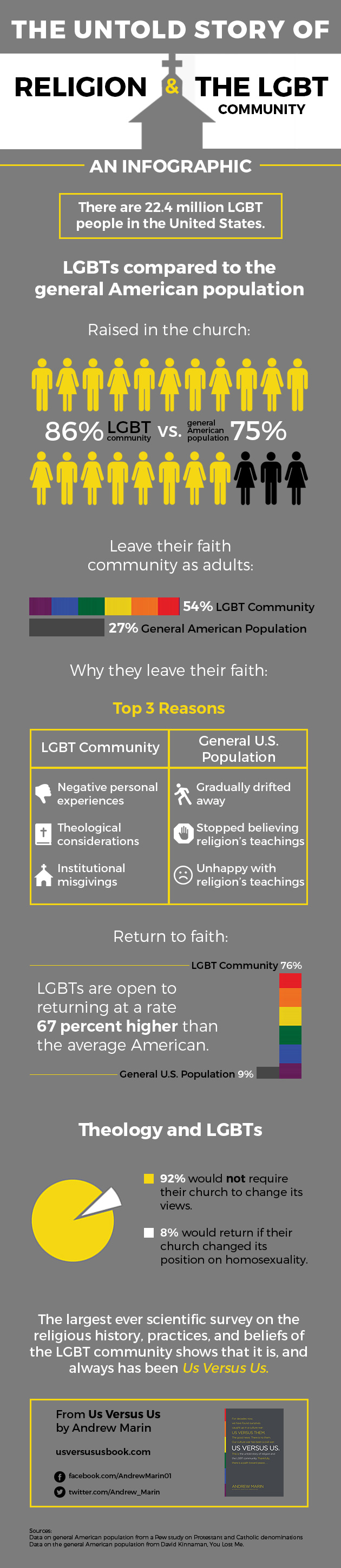
Great Infographic for Research Findings in Us Versus...

My ebook, Our Last Option, is Patheos Book...
TRENDING AT PATHEOS Evangelical

How the author of the world's best hymn...
I've been working with John Newton for a while now. This makes...

Long before this Lectio Divina, Psalm 130 - the song - started...

What About the Trees? Another Living Parable
After I finished writing the last article about falling leaves as a...

Why Classical Education Is a Conversation, Not a...
Come and Read: Joy in Classical Education When I was a little...

Falling Leaves: A Living Parable on Letting Go
I’ve spent the vast majority of my life in the southeast corner...

Cornell University has received a great deal of negative publicity and intense...
view all Evangelical blogs
Ad-Free & Subscriber Log-In Subscription Support
- About Us
- 2026 Calendar
- Videos
- Podcasts
- Library of World Religions
- Faith In Media Tracker
- Advertise With Us
- Write for Us
- Privacy Policy
- Terms of Service
- Do Not Sell My Data
- Contact Us
- Radiant Digital
- Manage Newsletter Subscriptions
- Unsubscribe From Notifications
- Sitemap
Copyright 2008-2026, Patheos. All rights reserved.
Subscription Support Ad-Free & Subscriber Log-In
Follow Patheos