
BuddhistCatholicContemplativeEvangelicalGeneral ChristianHinduJewishLatter-day SaintMuslimNew VisionsProgressive Christian
Beliefs
- Buddhist
- Catholic
- Contemplative
- Evangelical
- General Christian
- Hindu
- Jewish
- Latter-day Saint
- More Voices
- Muslim
- New Visions
- Pagan
- Progressive Christian
Topics
- Religion News
- Food and Religion
- Sports and Religion
- Religious Art
- Religious Music and Entertainment
- Religious Events
- History and Religion
- Style and Religion
- Politics and Religion
- Women in Religion
- Recreation Outdoors and Religion
- Business Finance and Religion
- Careers Workplace and Religion
- Education and Religion
- Family Parenting and Religion
- Health Fitness and Religion
- Home and Religion
- Relationships and Religion
- Technology and Religion
- Travel and Religion
Columnists
- Buddhist Columnists
- Business Finance and Religion Columnists
- Careers Workplace and Religion Columnists
- Catholic Columnists
- Contemplative Columnists
- Education and Religion Columnists
- Evangelists Columnists
- Family Parenting and Religion Columnists
- General Christian Columnists
- Health Fitness and Religion Columnists
- Hindu Columnists
- History and Religion Columnists
- Home and Religion Columnists
- Jewish Columnists
- More Voices Columnists
- Latter Day Columnists
- Muslim Columnists
- New Visions Columnists
- Nonreligious Columnists
- Pagan Columnists
- Politics and Religion Columnists
- Progressive Columnists
- Recreation Outdoors and Religion Columnists
- Relationships and Religion Columnists
- Religion News Columnists
- Religious Art Columnists
- Religious Events Columnists
- Religious Music and Entertainment Columnists
- Sports and Religion Columnists
- Style and Religion Columnists
- Technology and Religion Columnists
- Travel and Religion Columnists
- Women in Religion Columnists
Resource Library
- 2026 Calendar
- Library of World Religions
- The 100 Most Holy Places on Earth
- Patheos Answers
- Podcasts
- Videos
- Faith Leaders Database
- Anglican Episcopalian
- Bahai
- Baptist
- Buddhism
- Christianity
- Confucianism
- Eastern Orthodoxy
- Hinduism
- Holiness and Pentecostal
- ISKCON
- Islam
- Judaism
- Lutheran
- Methodist
- The Church of Jesus Christ of Latter-day Saints
- New Age
- Paganism
- Presbytarian and Reformed
- Protestantism
- Religion Behind the Scenes
- Roman Catholic
- Scientology
- Shia Islam
- Sikhism
- Sufism
- Sunni Islam
- Taoism
- Zen
- See all religions
Research Tools
 Ad-Free & Subscriber Log-In Subscription Support
Ad-Free & Subscriber Log-In Subscription Support
Follow Patheos 

- Trending:
- Forgiveness
- |
- Marriage
- |
- Consciousness
- |
- Death Penalty
- |
- Election
- |
- Halloween
 Love is an Orientation
- Home
- Evangelical
- Homophobia, Hell, and How I Decided to Become an Ally
Homophobia, Hell, and How I Decided to Become an Ally
Last updated on: August 9, 2013 at 9:03 am by Andrew Marin
Homophobia, Hell, and How I Decided to Become an Ally 2013-08-09T09:03:33-05:00 Andrew Marin
Patheos Explore the world's faith through different perspectives on religion and spirituality! Patheos has the views of the prevalent religions and spiritualities of the world.
 The following post is from Jason Bilbrey, our Director of Pastoral Care at The Marin Foundation.
“I am as passionate about this campaign as I ever was about apartheid.” These are the words of Archbishop Desmond Tutu, known for his role in ending racial segregation in South Africa (known as Apartheid), just a few weeks ago at the launch of a UN-backed campaign to promote gay rights throughout Africa. “I would refuse to go to a homophobic heaven,” he continued. “No, I would say sorry, I mean I would much rather go to the other place. I would not worship a God who is homophobic and that is how deeply I feel about this.”
Tutu’s sentiment strikes a chord with me, and presumably others like me who, for lack of a better term, call themselves allies. We are those who know LGBT folks and, perhaps despite our former, traditionalist sensibilities, we love them–their partners, their gender expressions–everything about them, really. The idea of a God or a heaven unwelcoming of these friends and family members? No thanks.
Of course, I doubt Archbishop Tutu actually believes in a God like that. And neither do I. But, at the risk of reading too deeply into his statements, I think behind his satire is a subtle acknowledgement of the moral complexity that this issue raises for Christian allies.
On the one hand, there is the very real possibility that the conservative-traditional interpretation of the Bible is correct and that God really does condemn all forms of same-sex relationships. That’s what we all grew up hearing. That’s what the church has taught, historically. The idea that God might be homophobic (or having a broader attitude of opposition with which this inflammatory term is often conflated) has to be taken seriously. On the other hand, homophobia in any form seems like such a foreign and ridiculous attitude to hold toward my LGBT friends, those who are just as wonderfully creative and responsible and emotive and dysfunctional and vulnerable as me or any other straight person I know. So my experience of the LGBT community seems to undermine the message of those traditionalist values. Gay people are not dangerous. Gay marriage is not a threat. Gay parents are every bit as capable as their straight counterparts. I’ve come to believe all this, quite strongly, during the last few years of my direct engagement with the LGBT community.
These twin realities–the legitimacy of the Conservative community’s argument from Scripture, and the legitimacy of the LGBT community’s argument from experience–creates, for me, a very real ethical perplexity. Do I support my LGBT friends, or not? There was a moment, and I couldn’t tell you when exactly it was, when my guilt at the desire to put my affinity for the gay community into action was outweighed by my guilt at the thought of inaction. So I became an ally. I voted. I spoke up. I welcomed opportunities to officiate gay weddings. It wasn’t that I lost my faith, nor that I found some other way of relieving my conflicted conscious. No, I just decided that I couldn’t let this lack of resolution keep me from feeling, well…resolute.
Archbishop Tutu reminds me of another great Christian figure who took decisive action in the face of moral ambiguity: Dietrich Bonhoeffer. How did he do it? He ignored his conscience.
In his book, unceremoniously titled, Ethics, Bonhoeffer describes the conscience as “the call of human existence for unity with itself, voiced from a deep wellspring beyond one’s own will and reason.” In other words, it’s an instinct to be true to one’s own sense of integrity. So behind the inclinations of our conscience is the desire for self-preservation, inner peace and freedom from guilt.
This is not a good thing.
Rather than trying to do good or be right, Bonhoeffer argues that we should lead a life in answer to the life of Jesus. He calls this “responsibility.” This is not a petty distinction. Bonhoeffer carries out his arguments to a dramatic conclusion: Following Jesus does not promise a life free of guilt. “Those who, in acting responsibly, seek to avoid becoming guilty…place their personal innocence above their responsibility for other human beings,” he writes. Taking responsible action means following the example of Christ, who was not afraid to break the law to honor those who were oppressed, who put the needs of others before himself, who willingly sacrificed his guiltlessness for our sake.
What guilt was Bonhoeffer himself willing to incur for the sake of others? That of killing Hitler. Literally. Bonhoeffer was a German theologian living under Nazi regime, but he was also committed to nonviolence, and understood Jesus teaching to specifically prohibit the kind of action which he and others knew would be necessary to bring an end to the wholesale slaughter of the Jewish people.
We see in Bonhoeffer’s writings a man who takes the seemingly antithetical commands of Scripture–to love one’s enemy and one’s neighbor, to act peacefully and also protectively–very seriously. And he is willing to let both commands sit together in contradiction, without trying to pit one against the other in false resolution. Bonhoeffer accepted that both action and inaction likely entangled him in guilt.
The conflicted conscious, whether in the paralysis of inaction or the liability of action, means that those facing a moral dilemma will necessarily feel a lack of inner peace. “From now on,” writes the German, pacifist bombmaker from jail, “I can only find unity with myself by surrendering my ego to God and others.”
I think those are wise words for this Evangelical, gay-rights advocate today. As a Christian, my responsibility is not to be guiltless but to follow Christ’s example and thrust myself upon his grace with every decision I make. And if I risk incurring hell in my solidarity with the LGBT community, at least I’ll be in good company. Maybe I’ll even be cellmates with Desmond Tutu.
Much love.
Previous Post

August 5, 2013
A Christlike Response?
Next Post
August 10, 2013 Living in the Tension - 8/12
Browse Our Archives
Select a Category Book Reviews Bridging Opposing Worldviews Culture Don't Drink and Drive Faith Guest Posts I'm Sorry Campaign Interviews Language Laura Statesir LGBT Living in the Tension Living in the Tension Gatherings Love Is an Orientation Love Is an Orientation Blog Love Is an Orientation Book Love Is an Orientation DVD Melinda Guerra Memory My One Sentence Bible Newsletter Our Last Option Parents & Families Politics Quick Quotes Quotes ReEngaging Civility Sexuality Speaking The Marin Foundation Theology Uncategorized Us Versus Us Videos Warren Perry Youth and Campus Ministry
Select a Month June 2016 May 2016 December 2015 June 2015 May 2015 April 2015 March 2015 February 2015 January 2015 December 2014 November 2014 October 2014 September 2014 August 2014 July 2014 June 2014 May 2014 April 2014 March 2014 February 2014 January 2014 December 2013 November 2013 October 2013 September 2013 August 2013 July 2013 June 2013 May 2013 April 2013 March 2013 February 2013 January 2013 December 2012 November 2012 October 2012 September 2012 August 2012 July 2012 June 2012 May 2012 April 2012 March 2012 February 2012 January 2012 December 2011 November 2011 October 2011 September 2011 August 2011 July 2011 June 2011 May 2011 April 2011 March 2011 February 2011 January 2011 December 2010 November 2010 October 2010 September 2010 August 2010 July 2010 June 2010 May 2010 April 2010 March 2010 February 2010 January 2010 December 2009 November 2009 October 2009 September 2009 August 2009 July 2009 June 2009 May 2009 April 2009 March 2009 February 2009 January 2009 December 2008 November 2008 October 2008 September 2008
Follow Us!
TAKE THE
Religious Wisdom Quiz
"For all have sinned, and all have fallen short of the ______ of God."
Select your answer to see how you score.
Glory Standards Expectations Sight
Related posts from Love is an Orientation

Don't Let Your Anger Turn Into Their Hate

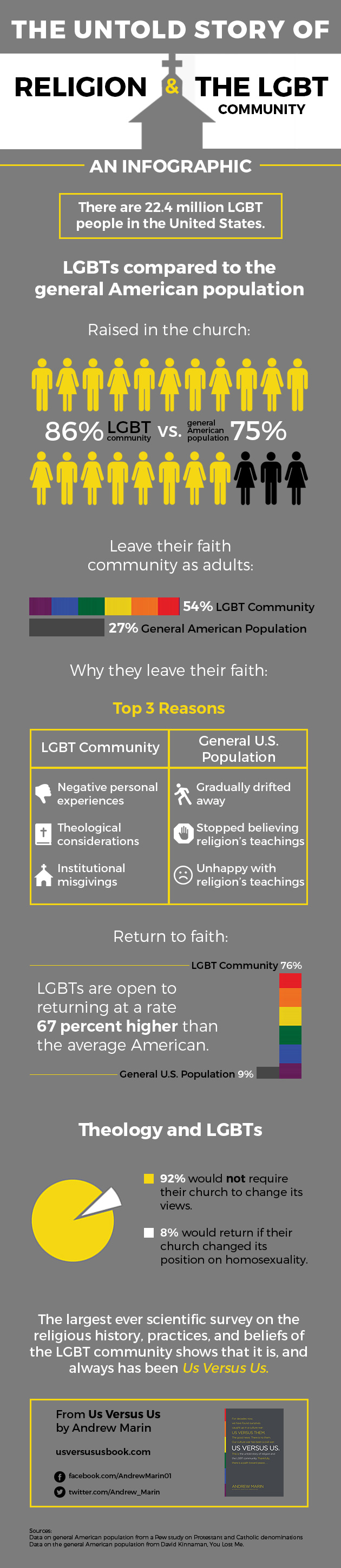
Great Infographic for Research Findings in Us Versus...

My ebook, Our Last Option, is Patheos Book...
TRENDING AT PATHEOS Evangelical

The REST of Your Life: A Creative Wrestles...
This week I had a conversation with a good friend from church....

How the author of the world's best hymn...
I've been working with John Newton for a while now. This makes...

Long before this Lectio Divina, Psalm 130 - the song - started...

What About the Trees? Another Living Parable
After I finished writing the last article about falling leaves as a...

Why Classical Education Is a Conversation, Not a...
Come and Read: Joy in Classical Education When I was a little...

Cornell University has received a great deal of negative publicity and intense...
view all Evangelical blogs
Ad-Free & Subscriber Log-In Subscription Support
- About Us
- 2026 Calendar
- Videos
- Podcasts
- Library of World Religions
- Faith In Media Tracker
- Advertise With Us
- Write for Us
- Privacy Policy
- Terms of Service
- Do Not Sell My Data
- Contact Us
- Radiant Digital
- Manage Newsletter Subscriptions
- Unsubscribe From Notifications
- Sitemap
Copyright 2008-2026, Patheos. All rights reserved.
Subscription Support Ad-Free & Subscriber Log-In
Follow Patheos