
BuddhistCatholicContemplativeEvangelicalGeneral ChristianHinduJewishLatter-day SaintMuslimNew VisionsProgressive Christian
Beliefs
- Buddhist
- Catholic
- Contemplative
- Evangelical
- General Christian
- Hindu
- Jewish
- Latter-day Saint
- More Voices
- Muslim
- New Visions
- Pagan
- Progressive Christian
Topics
- Religion News
- Food and Religion
- Sports and Religion
- Religious Art
- Religious Music and Entertainment
- Religious Events
- History and Religion
- Style and Religion
- Politics and Religion
- Women in Religion
- Recreation Outdoors and Religion
- Business Finance and Religion
- Careers Workplace and Religion
- Education and Religion
- Family Parenting and Religion
- Health Fitness and Religion
- Home and Religion
- Relationships and Religion
- Technology and Religion
- Travel and Religion
Columnists
- Buddhist Columnists
- Business Finance and Religion Columnists
- Careers Workplace and Religion Columnists
- Catholic Columnists
- Contemplative Columnists
- Education and Religion Columnists
- Evangelists Columnists
- Family Parenting and Religion Columnists
- General Christian Columnists
- Health Fitness and Religion Columnists
- Hindu Columnists
- History and Religion Columnists
- Home and Religion Columnists
- Jewish Columnists
- More Voices Columnists
- Latter Day Columnists
- Muslim Columnists
- New Visions Columnists
- Nonreligious Columnists
- Pagan Columnists
- Politics and Religion Columnists
- Progressive Columnists
- Recreation Outdoors and Religion Columnists
- Relationships and Religion Columnists
- Religion News Columnists
- Religious Art Columnists
- Religious Events Columnists
- Religious Music and Entertainment Columnists
- Sports and Religion Columnists
- Style and Religion Columnists
- Technology and Religion Columnists
- Travel and Religion Columnists
- Women in Religion Columnists
Resource Library
- 2026 Calendar
- Library of World Religions
- The 100 Most Holy Places on Earth
- Patheos Answers
- Podcasts
- Videos
- Faith Leaders Database
- Anglican Episcopalian
- Bahai
- Baptist
- Buddhism
- Christianity
- Confucianism
- Eastern Orthodoxy
- Hinduism
- Holiness and Pentecostal
- ISKCON
- Islam
- Judaism
- Lutheran
- Methodist
- The Church of Jesus Christ of Latter-day Saints
- New Age
- Paganism
- Presbytarian and Reformed
- Protestantism
- Religion Behind the Scenes
- Roman Catholic
- Scientology
- Shia Islam
- Sikhism
- Sufism
- Sunni Islam
- Taoism
- Zen
- See all religions
Research Tools
 Ad-Free & Subscriber Log-In Subscription Support
Ad-Free & Subscriber Log-In Subscription Support
Follow Patheos 

- Trending:
- Forgiveness
- |
- Marriage
- |
- Consciousness
- |
- Death Penalty
- |
- Election
- |
- Halloween
 Love is an Orientation
- Home
- Evangelical
- Attitude Shift – Part 2
Attitude Shift – Part 2
Last updated on: June 12, 2013 at 9:37 am by Andrew Marin
Attitude Shift – Part 2 2013-06-12T09:37:33-05:00 Andrew Marin
Patheos Explore the world's faith through different perspectives on religion and spirituality! Patheos has the views of the prevalent religions and spiritualities of the world.
 The following post is from Brent Bailey, a Master of Divinity student at Abilene Christian University. Brent is interning with us at The Marin Foundation this summer, and you can find his blog at oddmanout.net.
In my previous post, I described how public opinion on homosexuality in the U.S. has shifted rapidly, with the result that traditional Christian sexual ethics, which once synchronized with general societal attitudes, now often come across as intolerant and oppressive. Without a doubt, conservative Christian political activity in direct opposition to the movement for gay rights has contributed to a widely negative perception of Christians from those outside church walls, especially among those who support or advocate for gay rights. Nevertheless, I think Christians’ attitudes and behaviors outside the political arena are equally to blame for the perception that Christians are anti-gay and bigoted. Just like it pains me to encounter negative generalizations about the LGBT community, it pains me to encounter negative generalizations about conservative Christians, especially since the Christians in my life (yes, including the conservative ones) have tended to be deeply gracious, gentle, and compassionate. Because I’ve been fortunate to encounter the best of what Christians can be, I want to explore how Christians may have undermined their own reputation as a body characterized by God’s love for all people, specifically related to their interactions with the LGBT community.
First, many Christians have failed to feel the heavy weight of the relentless persecution, violence, and oppression sexual minorities have suffered throughout history. In some cases, that persecution has come from people claiming to act on behalf of religious commitments, Christian or otherwise. In other cases, Christians have stood by as others did harm to sexual minorities. Even if we overlook—and I hope we won’t—how a culture of silence and heteronormativity does harm to sexual minorities that don’t fit, we can’t ignore the profound violence people have perpetrated and are perpetrating against those whose orientation or gender identity was/is atypical.
Rather than consistently siding with those on the margins of society, Christians have often given the impression they’re more concerned with enforcing certain sexual ethics than they are with protecting the targets of abuse by vocally opposing anti-LGBT bullying measures, utilizing anti-gay language, etc. (Whenever Christians over-exaggerate how society has victimized them by denouncing their beliefs, it certainly doesn’t boost their credibility among those whose victimization has stung much worse.) So long as Christians refuse to acknowledge the harm the LGBT community has suffered and to hurt with them, professing sexual ethics that seem to contribute to that oppression further damages their reputation.
Second, Christians often haven’t worked hard enough to silence or counteract toxic messages about the nature of God and God’s attitude toward sexual minorities. Christian leaders have mostly moved away from the most vitriolic and homophobic rhetoric that was prevalent when the AIDS epidemic began, but they often haven’t gone to any lengths to insure a new message of love and empathy is broadcasting even more loudly.
For the last few decades, the dominant conservative Christian attitude seems to have been something along the lines of, “Everyone knows God loves them, but sexual ethics are changing in the country, so we need to re-assert traditional values.” I’d say we’ve reached a point in our culture when that approach needs to flip: Most people understand at least some version of the traditional Christian position on homosexuality, if they have any reason to care what it is, but the question of God’s love has become a matter of debate, especially with groups like Westboro (whose name, whether Christians like it or not, still utilizes the phrase “Baptist Church,” and whose signs still say “God”) receiving so much airtime. Christian teachings on sin, however they define the term, depend upon a foundational understanding of God as loving, gracious, and merciful, and if that foundational understanding of God is no longer a shared assumption among non-Christians, it may be time for Christians to refocus their efforts. In other words, is it more important that people believe God loves them or that people believe gay sex is sinful? (The common response from conservative Christians is that the concepts aren’t mutually exclusive, but unless they find a way to preach them in perfect harmony, one message is going to sink deeper into people’s hearts than the other.) When Christians give more energy and attention to a message of condemnation, it drowns out any messages of love.
Finally, Christians have tended to undermine their own theology for sexuality by describing and applying it inconsistently. Because the genders of the people involved in a marriage relationship is one of the most pressing debates in our culture, many conservative Christian voices have utilized a refrain describing the biblical view of marriage as “one man and one woman”—a description that may be technically accurate according to some Scripture interpretations, but one that is painfully limited and essentially ignores the vast, diverse wealth of Christian tradition and theology for marriage and sexuality. I think the biblical view of marriage is something much more beautiful and compelling and poetic than any short phrase could convey, and the tendency of many Christians to emphasize one aspect of a particular theology for marriage makes Christian’s opposition to same-sex marriage feel more like a selfish and frightened reaction to gay activism than a faithful commitment to a certain tradition rooted in history.
Furthermore, regardless of how internally consistent or inconsistent the traditional Christian sexual ethic may be, Christians have become notorious for applying it inconsistently, overlooking the sexual sins of heterosexuals in favor of demonizing gay sex and people who identify as gay or lesbian. There are plenty of possible explanations for why this happens—maybe they’re uncomfortable confronting sins that have become so common among us, maybe they’re eager to find a scapegoat to relive their own guilt, maybe they’re nervous about the direction in which our country is headed—but the end result is that any appeals to a higher theology of sex ring false when that theology of sex doesn’t seem to apply to anything other than gay sex and gay people. Were Christians as concerned with the other behaviors they perceive as sexual sin as they seem to be with homosexuality, their stance on same-sex relationships might seem at least more coherent and consistent, even to those who flatly reject any sort of Christian worldview.
So, where do we go from here? I don’t believe the broadly negative perceptions that exist towards Christians were an inevitable outcome of our culture’s evolving understanding of sexuality. In order for us to bring into existence a reality in which conservative Christians might peacefully exist with same-sex couples, Christians must come to terms with the fact that they live in a culture that increasingly affirms and celebrates same-sex relationships and condemns those who don’t affirm and celebrate them. (In light of that fact, they might do well to scrutinize their sexual practices in conversation with the living God they worship, and they might similarly do well to scrutinize how well their political action is accomplishing the ultimate aim of their Christian mission.) Recognition of that fact means re-imagining what it means to demonstrate the compassionate love of Christ to people from all walks of life in light of new insights and new attitudes about marriage and family. The good news of Jesus remains as relevant today as it ever has been, even as the manifestations of that love continue to adapt.
Much love.
[This post is connected to a recent series on Brent’s blog, oddmanout.net.]
Previous Post

June 11, 2013
Equality Means Equality
Next Post
June 13, 2013 Living in the Tension gathering - 6/17
Browse Our Archives
Select a Category Book Reviews Bridging Opposing Worldviews Culture Don't Drink and Drive Faith Guest Posts I'm Sorry Campaign Interviews Language Laura Statesir LGBT Living in the Tension Living in the Tension Gatherings Love Is an Orientation Love Is an Orientation Blog Love Is an Orientation Book Love Is an Orientation DVD Melinda Guerra Memory My One Sentence Bible Newsletter Our Last Option Parents & Families Politics Quick Quotes Quotes ReEngaging Civility Sexuality Speaking The Marin Foundation Theology Uncategorized Us Versus Us Videos Warren Perry Youth and Campus Ministry
Select a Month June 2016 May 2016 December 2015 June 2015 May 2015 April 2015 March 2015 February 2015 January 2015 December 2014 November 2014 October 2014 September 2014 August 2014 July 2014 June 2014 May 2014 April 2014 March 2014 February 2014 January 2014 December 2013 November 2013 October 2013 September 2013 August 2013 July 2013 June 2013 May 2013 April 2013 March 2013 February 2013 January 2013 December 2012 November 2012 October 2012 September 2012 August 2012 July 2012 June 2012 May 2012 April 2012 March 2012 February 2012 January 2012 December 2011 November 2011 October 2011 September 2011 August 2011 July 2011 June 2011 May 2011 April 2011 March 2011 February 2011 January 2011 December 2010 November 2010 October 2010 September 2010 August 2010 July 2010 June 2010 May 2010 April 2010 March 2010 February 2010 January 2010 December 2009 November 2009 October 2009 September 2009 August 2009 July 2009 June 2009 May 2009 April 2009 March 2009 February 2009 January 2009 December 2008 November 2008 October 2008 September 2008
Follow Us!
TAKE THE
Religious Wisdom Quiz
Which Christian group follows the Five Points of Calvinism?
Select your answer to see how you score.
Baptists Pentecostals Reformed Methodists
Related posts from Love is an Orientation

Don't Let Your Anger Turn Into Their Hate

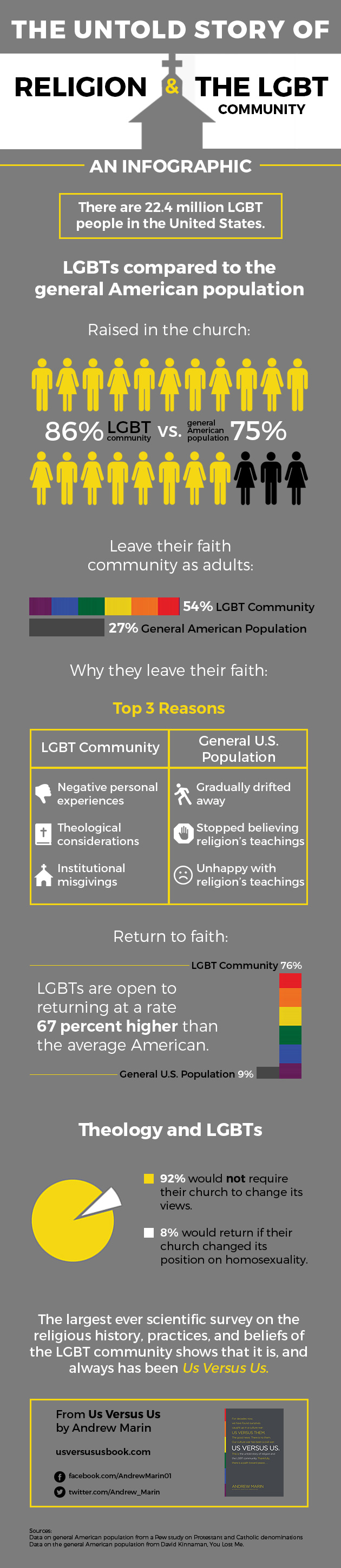
Great Infographic for Research Findings in Us Versus...

My ebook, Our Last Option, is Patheos Book...
TRENDING AT PATHEOS Evangelical

How the author of the world's best hymn...
I've been working with John Newton for a while now. This makes...

Long before this Lectio Divina, Psalm 130 - the song - started...

What About the Trees? Another Living Parable
After I finished writing the last article about falling leaves as a...

Why Classical Education Is a Conversation, Not a...
Come and Read: Joy in Classical Education When I was a little...

Falling Leaves: A Living Parable on Letting Go
I’ve spent the vast majority of my life in the southeast corner...

Cornell University has received a great deal of negative publicity and intense...
view all Evangelical blogs
Ad-Free & Subscriber Log-In Subscription Support
- About Us
- 2026 Calendar
- Videos
- Podcasts
- Library of World Religions
- Faith In Media Tracker
- Advertise With Us
- Write for Us
- Privacy Policy
- Terms of Service
- Do Not Sell My Data
- Contact Us
- Radiant Digital
- Manage Newsletter Subscriptions
- Unsubscribe From Notifications
- Sitemap
Copyright 2008-2026, Patheos. All rights reserved.
Subscription Support Ad-Free & Subscriber Log-In
Follow Patheos