
BuddhistCatholicContemplativeEvangelicalGeneral ChristianHinduJewishLatter-day SaintMuslimNew VisionsProgressive Christian
Beliefs
- Buddhist
- Catholic
- Contemplative
- Evangelical
- General Christian
- Hindu
- Jewish
- Latter-day Saint
- More Voices
- Muslim
- New Visions
- Pagan
- Progressive Christian
Topics
- Religion News
- Food and Religion
- Sports and Religion
- Religious Art
- Religious Music and Entertainment
- Religious Events
- History and Religion
- Style and Religion
- Politics and Religion
- Women in Religion
- Recreation Outdoors and Religion
- Business Finance and Religion
- Careers Workplace and Religion
- Education and Religion
- Family Parenting and Religion
- Health Fitness and Religion
- Home and Religion
- Relationships and Religion
- Technology and Religion
- Travel and Religion
Columnists
- Buddhist Columnists
- Business Finance and Religion Columnists
- Careers Workplace and Religion Columnists
- Catholic Columnists
- Contemplative Columnists
- Education and Religion Columnists
- Evangelists Columnists
- Family Parenting and Religion Columnists
- General Christian Columnists
- Health Fitness and Religion Columnists
- Hindu Columnists
- History and Religion Columnists
- Home and Religion Columnists
- Jewish Columnists
- More Voices Columnists
- Latter Day Columnists
- Muslim Columnists
- New Visions Columnists
- Nonreligious Columnists
- Pagan Columnists
- Politics and Religion Columnists
- Progressive Columnists
- Recreation Outdoors and Religion Columnists
- Relationships and Religion Columnists
- Religion News Columnists
- Religious Art Columnists
- Religious Events Columnists
- Religious Music and Entertainment Columnists
- Sports and Religion Columnists
- Style and Religion Columnists
- Technology and Religion Columnists
- Travel and Religion Columnists
- Women in Religion Columnists
Resource Library
- 2026 Calendar
- Library of World Religions
- The 100 Most Holy Places on Earth
- Patheos Answers
- Podcasts
- Videos
- Faith Leaders Database
- Anglican Episcopalian
- Bahai
- Baptist
- Buddhism
- Christianity
- Confucianism
- Eastern Orthodoxy
- Hinduism
- Holiness and Pentecostal
- ISKCON
- Islam
- Judaism
- Lutheran
- Methodist
- The Church of Jesus Christ of Latter-day Saints
- New Age
- Paganism
- Presbytarian and Reformed
- Protestantism
- Religion Behind the Scenes
- Roman Catholic
- Scientology
- Shia Islam
- Sikhism
- Sufism
- Sunni Islam
- Taoism
- Zen
- See all religions
Research Tools
 Ad-Free & Subscriber Log-In Subscription Support
Ad-Free & Subscriber Log-In Subscription Support
Follow Patheos 

- Trending:
- Forgiveness
- |
- Marriage
- |
- Consciousness
- |
- Death Penalty
- |
- Election
- |
- Halloween
 Love is an Orientation
- Home
- Evangelical
- Part 1: Interviewed by Church Marketing Sucks on Gay Marriage
Part 1: Interviewed by Church Marketing Sucks on Gay Marriage
Last updated on: May 20, 2013 at 9:29 am by Andrew Marin
Part 1: Interviewed by Church Marketing Sucks on Gay Marriage 2013-05-20T09:29:16-05:00 Andrew Marin
Patheos Explore the world's faith through different perspectives on religion and spirituality! Patheos has the views of the prevalent religions and spiritualities of the world.

The good folks over at Church Marketing Sucks recently asked me some questions about engaging in the gay marriage debate from the perspective of their predominantly conservative evangelical audience. You can see the original post here. For your convenience, I have also posted it for you to read here:
“Gay marriage is a lightning rod issue these days. Just ask the good folks at Chick-fil-A. While that entire fiasco drew lots of headlines, what didn’t get so much attention was the reconciliation that happened behind the scenes. That was a much-needed injection of grace.
There are churches on all sides of (and in between) the gay marriage debate, and all of them have to struggle with how to communicate about it. To give us some insight on how churches can do that, we talked with someone deep in the trenches on this issue. Andrew Marin is the author of Love Is an Orientation and the founder of The Marin Foundation, which seeks to build bridges between opposing sides of this debate.
How can churches—both those that oppose homosexuality and those that support it—communicate about gay marriage without alienating people?
Andrew Marin: By presenting your question with two opposing categories like that you’re making an extreme generalization that the consciousness of church congregations are unified in one way or the other. I hope, and genuinely pray, that churches are at the very least striving to represent the Jesus in the Scriptures who practiced an actual ethic of inclusion; defined as “all, everyone.” In Jesus’ day, this meant including the culturally far left to the pharisaic far right. Further, Jesus invented the come-as-you-are-culture many Christians see as their ideal for living their faith.
As to contemporary church culture and politics, I do not believe churches should be speaking directly to political issues in definitive ways. Don’t misunderstand what I am saying, as I am not suggesting that churches should not have a firm theological framework with which to engage each other and broader culture. But just as there are Republicans and Democrats in every audience, the pastor must then communicate frameworks for thinking through various divisive issues rather than “suggest” how their congregations should vote.
We’ll talk more about how to do this later.
“Hate the sin, love the sinner” is a line often thrown out in this discussion. Does that ever work?
Andrew: Jesus never said “hate the sin, love the sinner” in a direct command to his followers. I think Tony Campolo interprets Matthew 7:1-5 the best I’ve ever heard. Campolo views Jesus’ words in that passage to say, “Love the sinner and hate the sin in your own life. And until you deal with your own sin, far be it for you to judge anyone else’s.” I don’t think it could be said any better.
In some ways the gay marriage debate has shifted away from homosexuality and toward traditional marriage—you’ll see supporters saying things like “I’m not anti-gay, I’m pro-traditional marriage.” Is that kind of framing effective? Or is still going to be seen as offensive?
Andrew: No matter what kind of “framing” one might choose, it’s still communicating an end-game to support a particular belief system. As it is shown with a variety of political “yes/no” results-based policy debates, nothing will be effective in a contemporary society void of knowing how to peacefully and productively engage divisive topics.
Those in our country have the constitutional right to freely decide what they believe and then live into those convictions. That part is never going to change. We live in a pluralistic, post-modern culture where progressive movements are dominating mainstream culture and yet conservative theological faith communities are still numerically dominating our country’s religious scene. We must grasp that juxtaposition as our new normal, and that is OK.
I can’t say this enough—it’s less about who believes the same as “me” and more about how we engage those who believe the opposite. My hope is that people have done enough cultural, legal and theological homework to understand why they believe what they believe. And once they do, it’s all good to stand by that belief. What is not OK is when those who own said belief, 1) expect everyone else to agree with them, or 2) refuse to engage divisive constructs with an eye towards our shared humanity as children of God.
Should churches care about being offensive?
Andrew: I see two understandings of “offensive” in today’s culture. One type of “offensive” is Westboro Baptist Church. WBC are intentionally trying to offend people as a representative of their conservative interpretation of Scripture. The other type of “offensive” is, for instance, Willow Creek Community Church. WCCC is not trying to be offensive, but there are LGBT activists who, short of full agreement, will deem any conservative interpretation of same-sex relationships offensive. The difference is that Westboro is intentional about their offensiveness, Willow is just living into their theological beliefs, beliefs that an activist sect define offensive.
The vice versa is just as true with the “offensiveness” of LGBT and progressive beliefs within churches, from conservative activists. Only one can judge for themselves what is truly offensive. However, for more theologically traditional churches, acting in good conscious within their theological framework is more about how they are serving to meet the needs of their surrounding LGBT community, regardless of theological agreement, over any “perfect” position paper they may create. I’ll talk more about how to do this tomorrow.”
I will be posting Part 2 of this interview on Friday, May 3. **UPDATE: You can read Part 2 of this interview here.
Much love.
Previous Post

May 1, 2013
May 1: My One Sentence Bible
Next Post
May 1, 2013 I'm Tired of Being Blamed. You Make the Choice.
Browse Our Archives
Select a Category Book Reviews Bridging Opposing Worldviews Culture Don't Drink and Drive Faith Guest Posts I'm Sorry Campaign Interviews Language Laura Statesir LGBT Living in the Tension Living in the Tension Gatherings Love Is an Orientation Love Is an Orientation Blog Love Is an Orientation Book Love Is an Orientation DVD Melinda Guerra Memory My One Sentence Bible Newsletter Our Last Option Parents & Families Politics Quick Quotes Quotes ReEngaging Civility Sexuality Speaking The Marin Foundation Theology Uncategorized Us Versus Us Videos Warren Perry Youth and Campus Ministry
Select a Month June 2016 May 2016 December 2015 June 2015 May 2015 April 2015 March 2015 February 2015 January 2015 December 2014 November 2014 October 2014 September 2014 August 2014 July 2014 June 2014 May 2014 April 2014 March 2014 February 2014 January 2014 December 2013 November 2013 October 2013 September 2013 August 2013 July 2013 June 2013 May 2013 April 2013 March 2013 February 2013 January 2013 December 2012 November 2012 October 2012 September 2012 August 2012 July 2012 June 2012 May 2012 April 2012 March 2012 February 2012 January 2012 December 2011 November 2011 October 2011 September 2011 August 2011 July 2011 June 2011 May 2011 April 2011 March 2011 February 2011 January 2011 December 2010 November 2010 October 2010 September 2010 August 2010 July 2010 June 2010 May 2010 April 2010 March 2010 February 2010 January 2010 December 2009 November 2009 October 2009 September 2009 August 2009 July 2009 June 2009 May 2009 April 2009 March 2009 February 2009 January 2009 December 2008 November 2008 October 2008 September 2008
Follow Us!
TAKE THE
Religious Wisdom Quiz
What does "Eli" mean in Hebrew?
Select your answer to see how you score.
Strength in God My God Holy one The Lord saves
Related posts from Love is an Orientation

Don't Let Your Anger Turn Into Their Hate

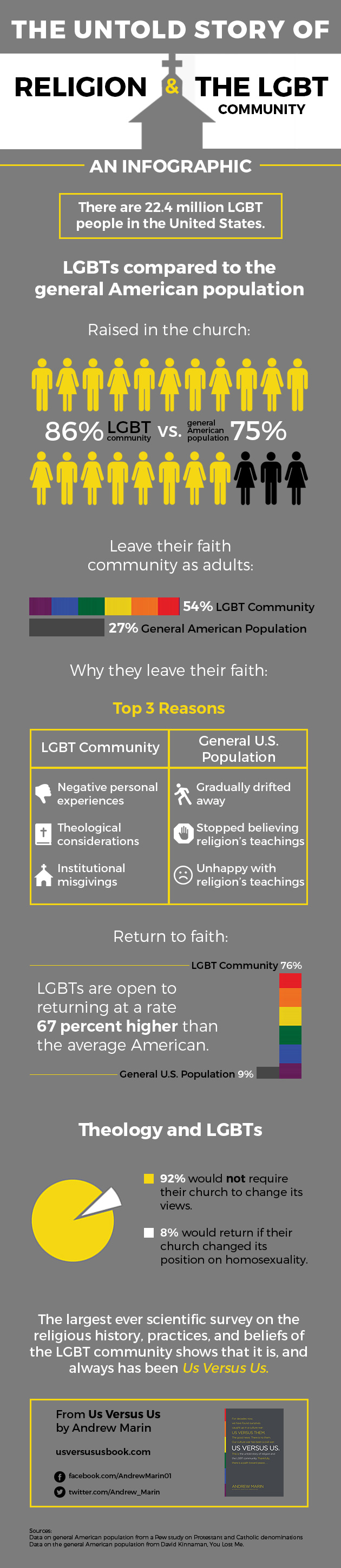
Great Infographic for Research Findings in Us Versus...

My ebook, Our Last Option, is Patheos Book...
TRENDING AT PATHEOS Evangelical

How the author of the world's best hymn...
I've been working with John Newton for a while now. This makes...

Long before this Lectio Divina, Psalm 130 - the song - started...

What About the Trees? Another Living Parable
After I finished writing the last article about falling leaves as a...

Why Classical Education Is a Conversation, Not a...
Come and Read: Joy in Classical Education When I was a little...

Falling Leaves: A Living Parable on Letting Go
I’ve spent the vast majority of my life in the southeast corner...

Cornell University has received a great deal of negative publicity and intense...
view all Evangelical blogs
Ad-Free & Subscriber Log-In Subscription Support
- About Us
- 2026 Calendar
- Videos
- Podcasts
- Library of World Religions
- Faith In Media Tracker
- Advertise With Us
- Write for Us
- Privacy Policy
- Terms of Service
- Do Not Sell My Data
- Contact Us
- Radiant Digital
- Manage Newsletter Subscriptions
- Unsubscribe From Notifications
- Sitemap
Copyright 2008-2026, Patheos. All rights reserved.
Subscription Support Ad-Free & Subscriber Log-In
Follow Patheos