
BuddhistCatholicContemplativeEvangelicalGeneral ChristianHinduJewishLatter-day SaintMuslimNew VisionsProgressive Christian
Beliefs
- Buddhist
- Catholic
- Contemplative
- Evangelical
- General Christian
- Hindu
- Jewish
- Latter-day Saint
- More Voices
- Muslim
- New Visions
- Pagan
- Progressive Christian
Topics
- Religion News
- Food and Religion
- Sports and Religion
- Religious Art
- Religious Music and Entertainment
- Religious Events
- History and Religion
- Style and Religion
- Politics and Religion
- Women in Religion
- Recreation Outdoors and Religion
- Business Finance and Religion
- Careers Workplace and Religion
- Education and Religion
- Family Parenting and Religion
- Health Fitness and Religion
- Home and Religion
- Relationships and Religion
- Technology and Religion
- Travel and Religion
Columnists
- Buddhist Columnists
- Business Finance and Religion Columnists
- Careers Workplace and Religion Columnists
- Catholic Columnists
- Contemplative Columnists
- Education and Religion Columnists
- Evangelists Columnists
- Family Parenting and Religion Columnists
- General Christian Columnists
- Health Fitness and Religion Columnists
- Hindu Columnists
- History and Religion Columnists
- Home and Religion Columnists
- Jewish Columnists
- More Voices Columnists
- Latter Day Columnists
- Muslim Columnists
- New Visions Columnists
- Nonreligious Columnists
- Pagan Columnists
- Politics and Religion Columnists
- Progressive Columnists
- Recreation Outdoors and Religion Columnists
- Relationships and Religion Columnists
- Religion News Columnists
- Religious Art Columnists
- Religious Events Columnists
- Religious Music and Entertainment Columnists
- Sports and Religion Columnists
- Style and Religion Columnists
- Technology and Religion Columnists
- Travel and Religion Columnists
- Women in Religion Columnists
Resource Library
- 2026 Calendar
- Library of World Religions
- The 100 Most Holy Places on Earth
- Patheos Answers
- Podcasts
- Videos
- Faith Leaders Database
- Anglican Episcopalian
- Bahai
- Baptist
- Buddhism
- Christianity
- Confucianism
- Eastern Orthodoxy
- Hinduism
- Holiness and Pentecostal
- ISKCON
- Islam
- Judaism
- Lutheran
- Methodist
- The Church of Jesus Christ of Latter-day Saints
- New Age
- Paganism
- Presbytarian and Reformed
- Protestantism
- Religion Behind the Scenes
- Roman Catholic
- Scientology
- Shia Islam
- Sikhism
- Sufism
- Sunni Islam
- Taoism
- Zen
- See all religions
Research Tools
 Ad-Free & Subscriber Log-In Subscription Support
Ad-Free & Subscriber Log-In Subscription Support
Follow Patheos 

- Trending:
- Forgiveness
- |
- Marriage
- |
- Consciousness
- |
- Death Penalty
- |
- Election
- |
- Halloween
 Love is an Orientation
- Home
- Evangelical
- Proximity and Relationship.
Proximity and Relationship.
Last updated on: October 24, 2014 at 9:51 am by Andrew Marin
Proximity and Relationship. 2014-10-24T09:51:17-05:00 Andrew Marin
Patheos Explore the world's faith through different perspectives on religion and spirituality! Patheos has the views of the prevalent religions and spiritualities of the world.
 This post is written by Michael Kimpan, our Associate Director at The Marin Foundation.
—
There’s credibility and power in proximity and relationship.
It is impossible to advance the message of reconciliation without being in proximity to and relationship with those who’ve been marginalized. Proximity to and relationship with the marginalized instills in us an ability to see beyond the misinformation which has too often led to the dehumanization and lessening of those known as ‘the Other.’
It’s easy to speak out of a position of ignorance and intolerance when we’re dealing with unknown faces and unheard stories.
It becomes much more difficult – impossible, in fact – when we’re speaking of our friends.
Proximity and relationship means everything.
Before landing in the gay neighborhood of Chicago, I’ve been a bit of a nomad. While I was growing up our family moved around quite a bit – Ohio, Texas, California, Michigan, Florida, Illinois, Scotland and elsewhere. In each of these communities I have actively participated in worship as a regular attender, member and even served on staff at various denominations of evangelical Christianity – Baptists of all types, shades and sizes, FourSquare, Assemblies of God, Presbyterian, Methodist, Reformed, neo-Reformed, Nazarene and multiple non-denominational churches
One might say I’m a little bit of a Christian mutt. In the midst of my eclectic evangelical upbringing and until only quite recently, I have systematically found my home in the context of predominantly conservative evangelical faith communities.
They’re my people. And I love them.
Yet for all of the good things I learned from being a part of these conservative faith communities, I also inherited some negative sweeping generalizations and unfair stereotypes toward my LGBT neighbors (along with one or two other theological quirks). Without relationship with any openly gay people, for years I continued to perpetuate the ignorance and intolerance preserved by those insistent upon making declarations of ‘Truth’ (emphasized with a capital ‘t’) regarding a handful of bible verses and unhelpful bumper-sticker slogans like, ‘Love the sinner, hate the sin,’ or ‘God made Adam and Eve, not Adam and Steve.’
And then I met Eric.
I had been desperately searching for a job to coincide with my full-time load of seminary classes. My last ministry position hadn’t ended well, which made a positive reference from my former employer hard to come by. I finally bit the bullet and decided to once again don the green apron at Starbucks Coffee Company. I introduced myself to the Store Manager and divulged how much coffee I consumed on a daily basis.
He gave me the job.
Eric and I became fast friends – though we were an unlikely pair, to be sure. I was a former pastor at a conservative evangelical church and attending a prestigious evangelical seminary in pursuit of an MDiv. with an emphasis on Reformation Church History. Eric was an openly gay man who had been rejected by his church and had no patience for religious folk, nor any desire to engage in any sort of theological conversation. On the surface, we didn’t have much in common beyond our love for coffee and could have found endless areas of disagreement.
Instead, we simply got to know one another.
We spent countless hours together – at work, after work, during breaks and on weekends. My part time job turned into a full time one, and Eric became my mentor as I furthered my career with the company. For a season, it wasn’t uncommon for Eric and I to be working together for 12-16 hours a day. We would regularly go to the local pub after work to debrief our day and discuss upcoming company initiatives. We became inseparable, known in our district as the Dynamic Duo of Batman and Boy Wonder.
While we often spoke about work, our conversation inevitably turned to the vulnerable unfolding of each of our own stories. The intricate details of what drove our life decisions became common conversation, and the transparent telling of the fears we held of each other became unveiled.
‘You’re the first gay guy I’ve ever really spent time with.’
‘You’re the first evangelical pastor I’ve ever spent time with.’
With a mutual respect for one another as co-workers and friends, we allowed ourselves room for questions and disagreement. We shared our stories and voluntarily re-opened old wounds in an effort to understand each other, feeling the freedom to challenge the other’s beliefs within the context of a safe and sacred friendship. Rather than causing a division, this practice of honest dialogue in the midst of the tension-filled conversations regarding faith and sexuality strengthened our friendship and respect for one another. Secondary theological and political issues became just that as the primary value of elevating the conversation and deepening the bonds of relationship became our priority.
And then my life fell apart.
My marriage dissolved under immense pressure from multiple angles. Counseling proved futile. A DUI ensued. Then a separation. Bible college buddies took sides, most often against me as I wasn’t ‘in ministry’ any longer. After experiencing the unparalleled heartache and frustration of watching my well-formed theologies crumble under the reality of real life, I unwittingly and unfortunately continually encountered a less-than-Christian version of Christianity. I felt alone. Abandoned. Ostracized. Judged. Marginalized. Other-ed.
But not by Eric.
Throughout even the darkest of times, my friend stood by my side. He offered grace and forgiveness, providing unconditional support in ways that reflected the Divine welcoming of the lost son. Our friendship has continued, surviving transformations and career changes and theological evolutions, geographical relocations and more. Fidelity to the process of reconciliation has enabled our relationship to surpass the polarizing, win-lose, back-and-forth rhetoric which so often shapes the conservative and LGBT disconnect.
Our friendship was framed differently.
When we choose to sit down and hear the stories of those pushed to the margins, we encounter in them the very humanity we had previously either overlooked or ignored. As we commit to friendship and live out their experiences alongside them as fellow travelers in their journey – sitting with them in their pain and allowing it to grow into our own heartache – there is a very natural shift in our response :: from aggression or apathy to one of grace and hope.
This follows the example set before us in the incarnation.
The very doctrine of the incarnation contains at its heart the divine welcoming of the Other; embodying that same welcome is at the heart of our own obedience to God’s grace.
We must be committed to the ongoing pursuit of those who’ve been marginalized and treated as outcasts. This is the mission and art of reconciliation – the pursuit of that which is disconnected.
Connecting with others in proximity and relationship allows us to see injustice through God’s eyes – to recognize when people we love are being treated poorly, even by other people we love. It creates in us the courage to stand up for the oppressed; to lend a voice to the voiceless; to defend the defenseless.
I am convinced that relationship and proximity castrates our ability to continue to treat Others unjustly, and forces us into the reality of the process of reconciliation.
The question is – are we willing to live incarnationally? Are we willing to set aside our agendas and ideals, instead seeking reconciliation through the power and credibility of proximity and relationship? Could it be that the way forward as bridge builders is indeed following the example of Jesus, who consistently stood in solidarity with the Other?
What do you think?
—
Connect with Michael through his thought provoking blog, hit him up on Facebook, or follow him on Twitter.
Previous Post

April 3, 2013
Safe Havens
Next Post
April 6, 2013 Living in the Tension Gathering - Mon April 8
Browse Our Archives
Select a Category Book Reviews Bridging Opposing Worldviews Culture Don't Drink and Drive Faith Guest Posts I'm Sorry Campaign Interviews Language Laura Statesir LGBT Living in the Tension Living in the Tension Gatherings Love Is an Orientation Love Is an Orientation Blog Love Is an Orientation Book Love Is an Orientation DVD Melinda Guerra Memory My One Sentence Bible Newsletter Our Last Option Parents & Families Politics Quick Quotes Quotes ReEngaging Civility Sexuality Speaking The Marin Foundation Theology Uncategorized Us Versus Us Videos Warren Perry Youth and Campus Ministry
Select a Month June 2016 May 2016 December 2015 June 2015 May 2015 April 2015 March 2015 February 2015 January 2015 December 2014 November 2014 October 2014 September 2014 August 2014 July 2014 June 2014 May 2014 April 2014 March 2014 February 2014 January 2014 December 2013 November 2013 October 2013 September 2013 August 2013 July 2013 June 2013 May 2013 April 2013 March 2013 February 2013 January 2013 December 2012 November 2012 October 2012 September 2012 August 2012 July 2012 June 2012 May 2012 April 2012 March 2012 February 2012 January 2012 December 2011 November 2011 October 2011 September 2011 August 2011 July 2011 June 2011 May 2011 April 2011 March 2011 February 2011 January 2011 December 2010 November 2010 October 2010 September 2010 August 2010 July 2010 June 2010 May 2010 April 2010 March 2010 February 2010 January 2010 December 2009 November 2009 October 2009 September 2009 August 2009 July 2009 June 2009 May 2009 April 2009 March 2009 February 2009 January 2009 December 2008 November 2008 October 2008 September 2008
Follow Us!
TAKE THE
Religious Wisdom Quiz
I saw a river flowing from the temple threshold, getting deeper until it became a river no one could cross. What grew along its banks?
Select your answer to see how you score.
Grass Flowers Trees Vines
Related posts from Love is an Orientation

Don't Let Your Anger Turn Into Their Hate

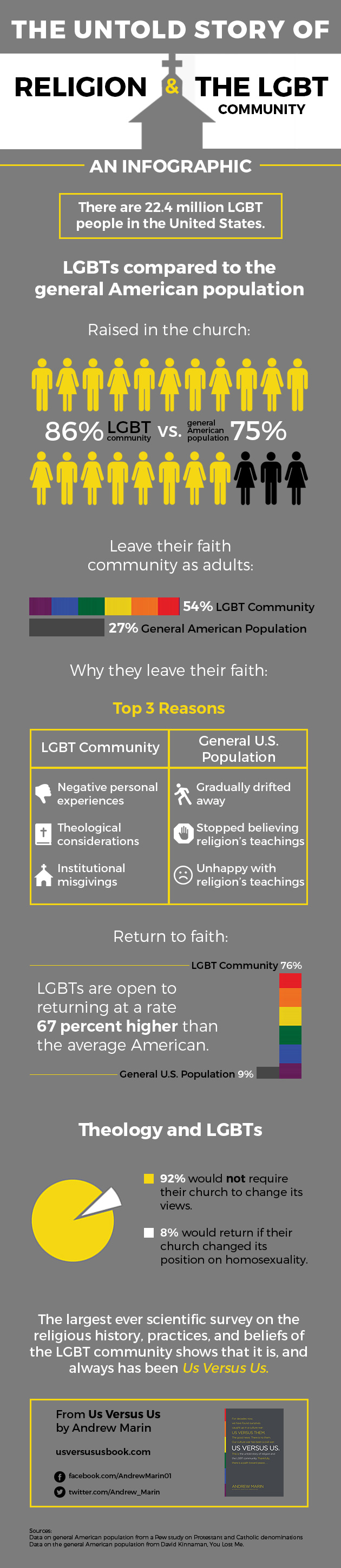
Great Infographic for Research Findings in Us Versus...

My ebook, Our Last Option, is Patheos Book...
TRENDING AT PATHEOS Evangelical

The REST of Your Life: A Creative Wrestles...
This week I had a conversation with a good friend from church....

How the author of the world's best hymn...
I've been working with John Newton for a while now. This makes...

Long before this Lectio Divina, Psalm 130 - the song - started...

What About the Trees? Another Living Parable
After I finished writing the last article about falling leaves as a...

Why Classical Education Is a Conversation, Not a...
Come and Read: Joy in Classical Education When I was a little...

Cornell University has received a great deal of negative publicity and intense...
view all Evangelical blogs
Ad-Free & Subscriber Log-In Subscription Support
- About Us
- 2026 Calendar
- Videos
- Podcasts
- Library of World Religions
- Faith In Media Tracker
- Advertise With Us
- Write for Us
- Privacy Policy
- Terms of Service
- Do Not Sell My Data
- Contact Us
- Radiant Digital
- Manage Newsletter Subscriptions
- Unsubscribe From Notifications
- Sitemap
Copyright 2008-2026, Patheos. All rights reserved.
Subscription Support Ad-Free & Subscriber Log-In
Follow Patheos