
BuddhistCatholicContemplativeEvangelicalGeneral ChristianHinduJewishLatter-day SaintMuslimNew VisionsProgressive Christian
Beliefs
- Buddhist
- Catholic
- Contemplative
- Evangelical
- General Christian
- Hindu
- Jewish
- Latter-day Saint
- More Voices
- Muslim
- New Visions
- Pagan
- Progressive Christian
Topics
- Religion News
- Food and Religion
- Sports and Religion
- Religious Art
- Religious Music and Entertainment
- Religious Events
- History and Religion
- Style and Religion
- Politics and Religion
- Women in Religion
- Recreation Outdoors and Religion
- Business Finance and Religion
- Careers Workplace and Religion
- Education and Religion
- Family Parenting and Religion
- Health Fitness and Religion
- Home and Religion
- Relationships and Religion
- Technology and Religion
- Travel and Religion
Columnists
- Buddhist Columnists
- Business Finance and Religion Columnists
- Careers Workplace and Religion Columnists
- Catholic Columnists
- Contemplative Columnists
- Education and Religion Columnists
- Evangelists Columnists
- Family Parenting and Religion Columnists
- General Christian Columnists
- Health Fitness and Religion Columnists
- Hindu Columnists
- History and Religion Columnists
- Home and Religion Columnists
- Jewish Columnists
- More Voices Columnists
- Latter Day Columnists
- Muslim Columnists
- New Visions Columnists
- Nonreligious Columnists
- Pagan Columnists
- Politics and Religion Columnists
- Progressive Columnists
- Recreation Outdoors and Religion Columnists
- Relationships and Religion Columnists
- Religion News Columnists
- Religious Art Columnists
- Religious Events Columnists
- Religious Music and Entertainment Columnists
- Sports and Religion Columnists
- Style and Religion Columnists
- Technology and Religion Columnists
- Travel and Religion Columnists
- Women in Religion Columnists
Resource Library
- 2026 Calendar
- Library of World Religions
- The 100 Most Holy Places on Earth
- Patheos Answers
- Podcasts
- Videos
- Faith Leaders Database
- Anglican Episcopalian
- Bahai
- Baptist
- Buddhism
- Christianity
- Confucianism
- Eastern Orthodoxy
- Hinduism
- Holiness and Pentecostal
- ISKCON
- Islam
- Judaism
- Lutheran
- Methodist
- The Church of Jesus Christ of Latter-day Saints
- New Age
- Paganism
- Presbytarian and Reformed
- Protestantism
- Religion Behind the Scenes
- Roman Catholic
- Scientology
- Shia Islam
- Sikhism
- Sufism
- Sunni Islam
- Taoism
- Zen
- See all religions
Research Tools
 Ad-Free & Subscriber Log-In Subscription Support
Ad-Free & Subscriber Log-In Subscription Support
Follow Patheos 

- Trending:
- Forgiveness
- |
- Marriage
- |
- Consciousness
- |
- Death Penalty
- |
- Election
- |
- Halloween
 Love is an Orientation
- Home
- Evangelical
- The Blame Game
The Blame Game
Last updated on: April 1, 2014 at 3:05 pm by Andrew Marin
The Blame Game 2014-04-01T15:05:14-05:00 Andrew Marin
Patheos Explore the world's faith through different perspectives on religion and spirituality! Patheos has the views of the prevalent religions and spiritualities of the world.
 The following post is from Laura Statesir, Director of Family and Youth at The Marin Foundation.
We live in a culture of blame, but is that the way it’s supposed to be?
In John 9, Jesus and his disciples are walking along and spot a blind man begging for money. This man is an outcast, but Jesus, of his own initiative, approaches the man, spits in the mud, and heals the man’s blindness. Later the man’s neighbors and the Pharisees question him about this miraculous healing. The story continues from there, but let’s focus on the first three verses:
9 As he went along, he saw a man blind from birth. 2 His disciples asked him, “Rabbi, who sinned, this man or his parents, that he was born blind?”
3 “Neither this man nor his parents sinned,” said Jesus, “but this happened so that the works of God might be displayed in him.”
The disciples ask a question in verse two which seems very strange to me. In my understanding of science, I know that blindness is not caused by sin. However, in ancient Jerusalem it was common belief that physical ailments and deformities were caused by sin. In fact, rabbis at this time were in disagreement as to what caused blindness from birth – were the parents to blame or the individual? On one side was the belief (from the Old Testament) that a parent’s sin could be transmitted to their children. On the other side was the belief that some people were so wicked that they sinned in the womb.
Concluding this calamity to be inflicted for some very heinous crime, they ask,
Who were the criminals, this man or his parents?
And what was this to them? Or what good would it do them to know it? We are apt to be more inquisitive concerning other people’s sins than concerning our own.
Jesus’ disciples see this man as a theological question: Who is at fault for this man’s blindness, the man or his parents? As often happens when people asked Jesus a question (be it his enemies or friends), the disciples wanted a definitive answer that would end the debate about who to blame.
Why does this question of blame sound so familiar?
Because in my work with Christian parents of lesbian, gay, bisexual and transgender (LGBT) children, I hear this question often:
Why is my child LGBT? Did I do something wrong as a parent or is it a choice my child made? Who is it that sinned – me or my child?
There is a stereotype that children are LGBT because their parents screwed up. The most common opinion is that an over-bearing mother and an absentee father cause children to become LGBT.
Imagine how a Christian parent might feel knowing that some people blame them for their child’s sexuality/gender identity. (The following are actual quotes from Christian parents).
It was a terrible day for me when I found out [that my son was gay] because I was such a strong Christian. I didn’t know what to do*.** This was somebody that I loved very much. I also thought it was about me, that I was getting punished somehow and that I did something wrong.*
[I had a church friend tell me], “You must have been a bad dad; you probably didn’t make him do enough pushups.”
Parents often blame themselves for their child being LGBT. Worse still, they fear that others will blame them. This shame, guilt, and fear causes them to feel isolated and alone. Christian voices that have blamed parents have worsened the situation.
For a great example of the harm caused by blaming parents, read this piece.
Then there is the other side of the blame game. Sometimes we answer the question of “Who sinned?” by blaming the LGBT individual. They chose to be this way.
How do you think that makes an LGBT individual feel?
“Rabbi, who sinned, this man or his parents, that he was born blind?”
Who can we blame? Who can we ostracize? Who is the bad guy?
3 “Neither this man nor his parents sinned,” said Jesus, “but this happened so that the works of God might be displayed in him.
Jesus isn’t concerned with the cause of this man’s blindness. Jesus doesn’t blame the man or the man’s parents. He doesn’t engage in a polarizing debate about the latest research. On the contrary, he refuses to even concern himself with placing blame.
Jesus does not see the blind man as a theological question. Jesus (as is his character), refuses to answer the question the way his disciples expect. Instead, Jesus explains a kingdom principle: tough situations in our lives are an opportunity for the work of God to be displayed through us. Then, to drive his point home, he spits in the mud and heals the man.
Unlike the disciples who view this man as a problem, Jesus views this man with compassion.
Unlike the disciples who want to place blame, Jesus wants to reveal God’s glory through this man.
Unlike the disciples who use the occasion to fuel a theological debate, Jesus uses the occasion to produce faith, not only in the blind man, but in others as well.
How can we do the same?
For parents: Show yourself the same grace and love that Christ shows you. Stop blaming yourself. You don’t have to focus on the “why’s” and the past. If you really want to know why, ask your child (and listen to their answer with an open heart). If you’re not satisfied with the way you have loved your child up until this point, then there has never been a more opportune time to love them better. And if you have spent your life sacrificing and loving your child the best you can, then by all means, continue doing so. Please don’t allow shame, guilt and the ignorance of others to rule you. This is a chance for God to work in you and your child.
For LGBT individuals: Jesus approaches all of us of His own initiative. Don’t let the accusations and pointing fingers of others drive you from Christ’s love. This is a chance for God to reveal God’s glory through you.
For the Church: We should not be concerned with assigning blame. A church should never be a place that people fear. This shouldn’t be happening in our churches:
Our son came out and we had the most negative experience we’ve ever had [with a church]. We thought we would tell people and there would be an understanding and a very loving response, but what we encountered was a very unloving response….We had one person say to us, “What did you do wrong that your son turned out that way?”
Can we stop shaming parents and LGBT individuals? If Jesus wasn’t concerned about blame then what gives us the right to be? Instead of asking who has sinned, ask who is hurting. Let’s focus on Jesus’ example and look for the works of God that might be displayed if only we keep our eyes open.
Much love,
www.themarinfoundation.org
Previous Post

March 22, 2013
Symptomatic.
Next Post
March 27, 2013 Stunted by Shame
Browse Our Archives
Select a Category Book Reviews Bridging Opposing Worldviews Culture Don't Drink and Drive Faith Guest Posts I'm Sorry Campaign Interviews Language Laura Statesir LGBT Living in the Tension Living in the Tension Gatherings Love Is an Orientation Love Is an Orientation Blog Love Is an Orientation Book Love Is an Orientation DVD Melinda Guerra Memory My One Sentence Bible Newsletter Our Last Option Parents & Families Politics Quick Quotes Quotes ReEngaging Civility Sexuality Speaking The Marin Foundation Theology Uncategorized Us Versus Us Videos Warren Perry Youth and Campus Ministry
Select a Month June 2016 May 2016 December 2015 June 2015 May 2015 April 2015 March 2015 February 2015 January 2015 December 2014 November 2014 October 2014 September 2014 August 2014 July 2014 June 2014 May 2014 April 2014 March 2014 February 2014 January 2014 December 2013 November 2013 October 2013 September 2013 August 2013 July 2013 June 2013 May 2013 April 2013 March 2013 February 2013 January 2013 December 2012 November 2012 October 2012 September 2012 August 2012 July 2012 June 2012 May 2012 April 2012 March 2012 February 2012 January 2012 December 2011 November 2011 October 2011 September 2011 August 2011 July 2011 June 2011 May 2011 April 2011 March 2011 February 2011 January 2011 December 2010 November 2010 October 2010 September 2010 August 2010 July 2010 June 2010 May 2010 April 2010 March 2010 February 2010 January 2010 December 2009 November 2009 October 2009 September 2009 August 2009 July 2009 June 2009 May 2009 April 2009 March 2009 February 2009 January 2009 December 2008 November 2008 October 2008 September 2008
Follow Us!
TAKE THE
Religious Wisdom Quiz
What does "Zion" (as in Mount Zion) mean?
Select your answer to see how you score.
Light Fortress River Spirit
Related posts from Love is an Orientation

Don't Let Your Anger Turn Into Their Hate

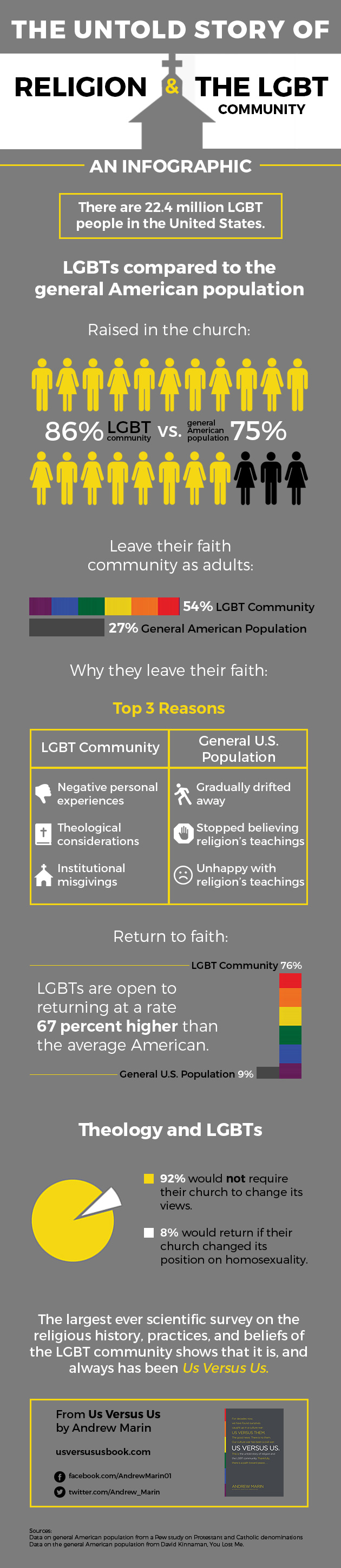
Great Infographic for Research Findings in Us Versus...

My ebook, Our Last Option, is Patheos Book...
TRENDING AT PATHEOS Evangelical

The REST of Your Life: A Creative Wrestles...
This week I had a conversation with a good friend from church....

How the author of the world's best hymn...
I've been working with John Newton for a while now. This makes...

Long before this Lectio Divina, Psalm 130 - the song - started...

What About the Trees? Another Living Parable
After I finished writing the last article about falling leaves as a...

Why Classical Education Is a Conversation, Not a...
Come and Read: Joy in Classical Education When I was a little...

Cornell University has received a great deal of negative publicity and intense...
view all Evangelical blogs
Ad-Free & Subscriber Log-In Subscription Support
- About Us
- 2026 Calendar
- Videos
- Podcasts
- Library of World Religions
- Faith In Media Tracker
- Advertise With Us
- Write for Us
- Privacy Policy
- Terms of Service
- Do Not Sell My Data
- Contact Us
- Radiant Digital
- Manage Newsletter Subscriptions
- Unsubscribe From Notifications
- Sitemap
Copyright 2008-2026, Patheos. All rights reserved.
Subscription Support Ad-Free & Subscriber Log-In
Follow Patheos