
BuddhistCatholicContemplativeEvangelicalGeneral ChristianHinduJewishLatter-day SaintMuslimNew VisionsProgressive Christian
Beliefs
- Buddhist
- Catholic
- Contemplative
- Evangelical
- General Christian
- Hindu
- Jewish
- Latter-day Saint
- More Voices
- Muslim
- New Visions
- Pagan
- Progressive Christian
Topics
- Religion News
- Food and Religion
- Sports and Religion
- Religious Art
- Religious Music and Entertainment
- Religious Events
- History and Religion
- Style and Religion
- Politics and Religion
- Women in Religion
- Recreation Outdoors and Religion
- Business Finance and Religion
- Careers Workplace and Religion
- Education and Religion
- Family Parenting and Religion
- Health Fitness and Religion
- Home and Religion
- Relationships and Religion
- Technology and Religion
- Travel and Religion
Columnists
- Buddhist Columnists
- Business Finance and Religion Columnists
- Careers Workplace and Religion Columnists
- Catholic Columnists
- Contemplative Columnists
- Education and Religion Columnists
- Evangelists Columnists
- Family Parenting and Religion Columnists
- General Christian Columnists
- Health Fitness and Religion Columnists
- Hindu Columnists
- History and Religion Columnists
- Home and Religion Columnists
- Jewish Columnists
- More Voices Columnists
- Latter Day Columnists
- Muslim Columnists
- New Visions Columnists
- Nonreligious Columnists
- Pagan Columnists
- Politics and Religion Columnists
- Progressive Columnists
- Recreation Outdoors and Religion Columnists
- Relationships and Religion Columnists
- Religion News Columnists
- Religious Art Columnists
- Religious Events Columnists
- Religious Music and Entertainment Columnists
- Sports and Religion Columnists
- Style and Religion Columnists
- Technology and Religion Columnists
- Travel and Religion Columnists
- Women in Religion Columnists
Resource Library
- 2026 Calendar
- Library of World Religions
- The 100 Most Holy Places on Earth
- Patheos Answers
- Podcasts
- Videos
- Faith Leaders Database
- Anglican Episcopalian
- Bahai
- Baptist
- Buddhism
- Christianity
- Confucianism
- Eastern Orthodoxy
- Hinduism
- Holiness and Pentecostal
- ISKCON
- Islam
- Judaism
- Lutheran
- Methodist
- The Church of Jesus Christ of Latter-day Saints
- New Age
- Paganism
- Presbytarian and Reformed
- Protestantism
- Religion Behind the Scenes
- Roman Catholic
- Scientology
- Shia Islam
- Sikhism
- Sufism
- Sunni Islam
- Taoism
- Zen
- See all religions
Research Tools
 Ad-Free & Subscriber Log-In Subscription Support
Ad-Free & Subscriber Log-In Subscription Support
Follow Patheos 

- Trending:
- Forgiveness
- |
- Marriage
- |
- Consciousness
- |
- Death Penalty
- |
- Election
- |
- Halloween
 Love is an Orientation
- Home
- Evangelical
- Silence = Death
Silence = Death
Last updated on: February 8, 2013 at 9:51 am by Andrew Marin
Silence = Death 2013-02-08T09:51:35-06:00 Andrew Marin
Patheos Explore the world's faith through different perspectives on religion and spirituality! Patheos has the views of the prevalent religions and spiritualities of the world.


Brian Gee received an M.A. in Biblical Exegesis from Wheaton College. When he’s not working, Brian enjoys writing from his own experiences at the intersection of faith and sexuality. Originally from southern California, he lives in Chicago’s western suburbs with his wife and two kids. You can check out more about Brian, or get in contact with him, at http://briangee.me
Silence = Death
In 1987, six young men gathered together in New York City. Around them, AIDS was preying on thousands of frightened young men across America just like them. They were frustrated by the silence of the Reagan administration and the lackadaisical response of both the CDC and FDA. None of them acted with the swiftness and gravity with which a crisis of AIDS’ magnitude should have been met.
To raise awareness, they created a poster that contained only two elements: a large, pink triangle that the Nazi’s had made gay men wear in the concentration camps and, just below the triangle, those words: “Silence = Death.” The implication was clear. Those who remained silent about AIDS were just as culpable for the death of AIDS victims as Nazi’s had been for those who died under Germany’s Third Reich.
–
It has been months since those powerful words first seared themselves into my conscience. They haunted me at first, and they haunt me still. They haunt me because they are the words of a thousand souls left for dead by those who should have spoken. They haunt me because the only words I can find from Christians who spoke up during the crisis are words of death from men like Majority co-founder Jerry Falwell. He spoke up, but his words spoke death, “AIDS is not just God’s punishment for homosexuals, it is God’s punishment for the society that tolerates homosexuals.”
But for as much as these words can convict a person for ignorance or inaction, they also have the power to reveal the very heart of God. They are words that show how the so-called culture wars have become the religion of many Christians. They are words that can show us the path back to the heart of God.
–
Nearly two-thousand years prior to the AIDS crisis, Jesus walked into a synagogue near Capernaum in Galilee. In the synagogue, there were some Pharisees who were looking for an excuse to accuse Jesus of being a blasphemer worthy of death. Knowing this, Jesus asked a man who had a deformed hand to step into the center of the room. Anyone who knew Jesus’ reputation knew that he was preparing to heal the man’s deformity. To the leaders, this act of healing would violate their Sabbath law, giving them grounds to accuse Jesus.
When the man came down, Jesus posed a question that was no doubt meant for his accusers. He asked, “Which is lawful on the Sabbath: to do good or to do evil, to save life or to kill?” The crowd didn’t answer. Instead, they sat in silence.
Jesus was deeply distressed by their silence. Why? Because these religious leaders only cared about what was legal, not what was right. Their care for their laws betrayed their carelessness for the spirit of the law itself. Though the man’s deformity was probably not fatal, Jesus’ question connects the silence of those watching with evildoing – even to the point of murder.
When given the option to do good for someone who was hurting, the people sat in silent concern over whether such a good was lawful. Jesus’ question exposes their silence for the true hypocrisy that it was. When given the option to do good, you should do good. Silence is not neutrality. It is death.
–
At least two documentaries about the AIDS crisis in America have been released in the last three years. The film How to Survive a Plague is up for an Academy Award, and it deserves the honor. But a lesser-publicized film gripped me with its title. It’s called We Were Here, and it follows the lives and stories of several gay men as AIDS descended upon the Castro district of San Francisco to decimating effect. Throughout the film, that title kept returning to my mind: we were here…we were here…. Until the inverse question came to me. Where were we? Where are we? Christians, where are we?
Too often our starting point for taking action is the same as the Pharisees: “Does this person follow God’s laws?” as if a person’s status before God and his law should determine whether or not we will take action. But as Jesus demonstrated that day in Galilee, this is the wrong question. When faced with the opportunity to do good, Christians should do good. We will all have our personal convictions and interpretations about sexuality. But when we can do good for someone who is being oppressed, we do good.
–
Though AIDS is no longer at epidemic levels in America, we Christians still have the opportunity to lend the power of our voices to those whose voices are being silenced.
Young men are being told they can’t be Boy Scouts because of their sexual orientation, not the content of their character. (Where are we?) Several states still have laws that make being gay an offense for which you can be fired from your job. (Where are we?) Teenagers are taking their own lives because they feel they have no one who will listen or understand. (Christians, where are we?)
Are we helping to save lives or take them if we turn our social media profiles purple for Spirit Day as a way of telling LGBT youth that we care about their lives? Are we helping to save lives or take them if we call our congressmen to advocate for fair employment practices for LGBT workers? Are we helping to save lives or take them if we send Twitter, Facebook, and Change.org petitions to the Boy Scouts as a way of telling LGBT youth that being gay doesn’t mean you cannot have values or character? Shouldn’t we donate to LGBT Suicide Prevention hotlines with the same vigor with which we send money to crisis pregnancy centers? Doesn’t the life of an LGBT youth matter as much to us as the lives of the unborn?
Of course, breaking our silence means committing publicly to those whom many in the church reject. We may even feel like our action constitutes a full endorsement of the values of one side or the other. When we do good on their behalf, many will accuse us of breaking God’s law for simply showing God’s love. But as followers of Jesus, we should care less about the assumptions of our peers if those assumptions keep us from acting like Jesus. Isn’t it better to be misunderstood by Christians for standing up for the oppressed than to be fully understood in our silence by a watching world?
If we end our silence, if we start doing good, if we act up to save a life—whether physically, emotionally, or spiritually—we can, like Jesus himself, offer words that bring comfort, peace, and life to those whom the world has rejected. That is the true love of God. Against such love there is no law.
What are your thoughts on the contemporary means of activism and speaking up in today’s culture?
Much love.
Previous Post

February 8, 2013
Feb 8: My One Sentence Bible
Next Post
February 11, 2013 What "Would" Jesus Do?
Browse Our Archives
Select a Category Book Reviews Bridging Opposing Worldviews Culture Don't Drink and Drive Faith Guest Posts I'm Sorry Campaign Interviews Language Laura Statesir LGBT Living in the Tension Living in the Tension Gatherings Love Is an Orientation Love Is an Orientation Blog Love Is an Orientation Book Love Is an Orientation DVD Melinda Guerra Memory My One Sentence Bible Newsletter Our Last Option Parents & Families Politics Quick Quotes Quotes ReEngaging Civility Sexuality Speaking The Marin Foundation Theology Uncategorized Us Versus Us Videos Warren Perry Youth and Campus Ministry
Select a Month June 2016 May 2016 December 2015 June 2015 May 2015 April 2015 March 2015 February 2015 January 2015 December 2014 November 2014 October 2014 September 2014 August 2014 July 2014 June 2014 May 2014 April 2014 March 2014 February 2014 January 2014 December 2013 November 2013 October 2013 September 2013 August 2013 July 2013 June 2013 May 2013 April 2013 March 2013 February 2013 January 2013 December 2012 November 2012 October 2012 September 2012 August 2012 July 2012 June 2012 May 2012 April 2012 March 2012 February 2012 January 2012 December 2011 November 2011 October 2011 September 2011 August 2011 July 2011 June 2011 May 2011 April 2011 March 2011 February 2011 January 2011 December 2010 November 2010 October 2010 September 2010 August 2010 July 2010 June 2010 May 2010 April 2010 March 2010 February 2010 January 2010 December 2009 November 2009 October 2009 September 2009 August 2009 July 2009 June 2009 May 2009 April 2009 March 2009 February 2009 January 2009 December 2008 November 2008 October 2008 September 2008
Follow Us!
TAKE THE
Religious Wisdom Quiz
How does Isaiah describe the suffering servant's reaction to unjust treatment?
Select your answer to see how you score.
Fleeing to Egypt Weeping loudly Silent as a sheep Roaring like a lion
Related posts from Love is an Orientation

Don't Let Your Anger Turn Into Their Hate

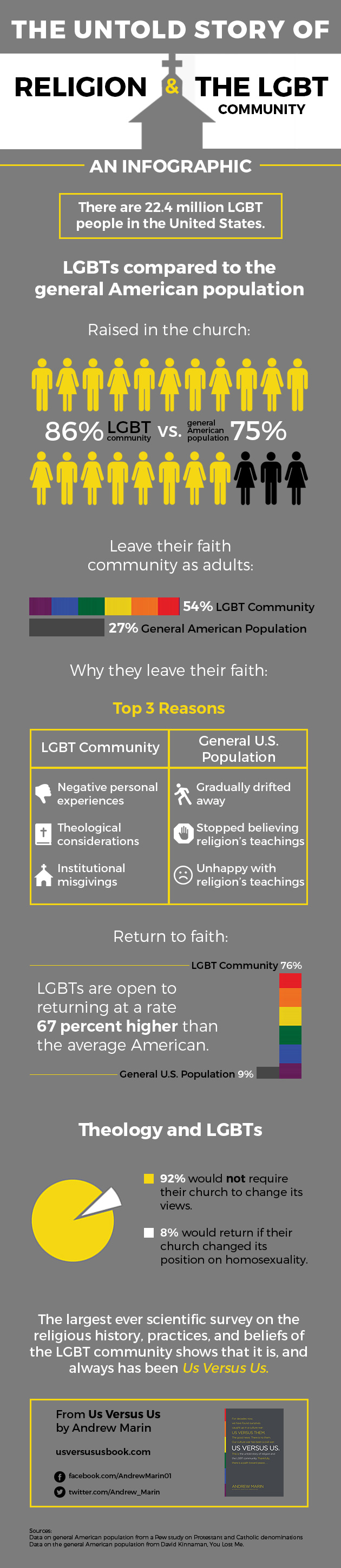
Great Infographic for Research Findings in Us Versus...

My ebook, Our Last Option, is Patheos Book...
TRENDING AT PATHEOS Evangelical

How the author of the world's best hymn...
I've been working with John Newton for a while now. This makes...

Long before this Lectio Divina, Psalm 130 - the song - started...

What About the Trees? Another Living Parable
After I finished writing the last article about falling leaves as a...

Why Classical Education Is a Conversation, Not a...
Come and Read: Joy in Classical Education When I was a little...

Falling Leaves: A Living Parable on Letting Go
I’ve spent the vast majority of my life in the southeast corner...

Cornell University has received a great deal of negative publicity and intense...
view all Evangelical blogs
Ad-Free & Subscriber Log-In Subscription Support
- About Us
- 2026 Calendar
- Videos
- Podcasts
- Library of World Religions
- Faith In Media Tracker
- Advertise With Us
- Write for Us
- Privacy Policy
- Terms of Service
- Do Not Sell My Data
- Contact Us
- Radiant Digital
- Manage Newsletter Subscriptions
- Unsubscribe From Notifications
- Sitemap
Copyright 2008-2026, Patheos. All rights reserved.
Subscription Support Ad-Free & Subscriber Log-In
Follow Patheos