
BuddhistCatholicContemplativeEvangelicalGeneral ChristianHinduJewishLatter-day SaintMuslimNew VisionsProgressive Christian
Beliefs
- Buddhist
- Catholic
- Contemplative
- Evangelical
- General Christian
- Hindu
- Jewish
- Latter-day Saint
- More Voices
- Muslim
- New Visions
- Pagan
- Progressive Christian
Topics
- Religion News
- Food and Religion
- Sports and Religion
- Religious Art
- Religious Music and Entertainment
- Religious Events
- History and Religion
- Style and Religion
- Politics and Religion
- Women in Religion
- Recreation Outdoors and Religion
- Business Finance and Religion
- Careers Workplace and Religion
- Education and Religion
- Family Parenting and Religion
- Health Fitness and Religion
- Home and Religion
- Relationships and Religion
- Technology and Religion
- Travel and Religion
Columnists
- Buddhist Columnists
- Business Finance and Religion Columnists
- Careers Workplace and Religion Columnists
- Catholic Columnists
- Contemplative Columnists
- Education and Religion Columnists
- Evangelists Columnists
- Family Parenting and Religion Columnists
- General Christian Columnists
- Health Fitness and Religion Columnists
- Hindu Columnists
- History and Religion Columnists
- Home and Religion Columnists
- Jewish Columnists
- More Voices Columnists
- Latter Day Columnists
- Muslim Columnists
- New Visions Columnists
- Nonreligious Columnists
- Pagan Columnists
- Politics and Religion Columnists
- Progressive Columnists
- Recreation Outdoors and Religion Columnists
- Relationships and Religion Columnists
- Religion News Columnists
- Religious Art Columnists
- Religious Events Columnists
- Religious Music and Entertainment Columnists
- Sports and Religion Columnists
- Style and Religion Columnists
- Technology and Religion Columnists
- Travel and Religion Columnists
- Women in Religion Columnists
Resource Library
- 2026 Calendar
- Library of World Religions
- The 100 Most Holy Places on Earth
- Patheos Answers
- Podcasts
- Videos
- Faith Leaders Database
- Anglican Episcopalian
- Bahai
- Baptist
- Buddhism
- Christianity
- Confucianism
- Eastern Orthodoxy
- Hinduism
- Holiness and Pentecostal
- ISKCON
- Islam
- Judaism
- Lutheran
- Methodist
- The Church of Jesus Christ of Latter-day Saints
- New Age
- Paganism
- Presbytarian and Reformed
- Protestantism
- Religion Behind the Scenes
- Roman Catholic
- Scientology
- Shia Islam
- Sikhism
- Sufism
- Sunni Islam
- Taoism
- Zen
- See all religions
Research Tools
 Ad-Free & Subscriber Log-In Subscription Support
Ad-Free & Subscriber Log-In Subscription Support
Follow Patheos 

- Trending:
- Forgiveness
- |
- Marriage
- |
- Consciousness
- |
- Death Penalty
- |
- Election
- |
- Halloween
 Love is an Orientation
- Home
- Evangelical
- An Eye Cannot Hear
An Eye Cannot Hear
Last updated on: December 15, 2012 at 7:17 pm by Andrew Marin
An Eye Cannot Hear 2012-12-15T19:17:55-06:00 Andrew Marin
Patheos Explore the world's faith through different perspectives on religion and spirituality! Patheos has the views of the prevalent religions and spiritualities of the world.
The following post is from Brent Bailey, who is currently with us in Chicago as an intern at The Marin Foundation. He is working on his Masters of Divinity at Abilene Christian University and regularly blogs at oddmanout.net. Brent will be writing a few posts for this blog over the summer, so to kick things off he has written a piece to share a small part of his story along with touching on why he has chosen to invest in building bridges between the LGBT and Christian communities.
 I remember the first time I honestly began to wonder whether Christian community was a place that would ever feel like home to me. It would be inaccurate to label it a faith crisis; I was confident God loved me, I was confident God’s love mattered, and I was confident I loved God in return—none of those convictions were at stake. What was at stake was whether I would be able to maintain any kind of meaningful relationship with God among a subculture of people whose experiences and needs were so different from mine.
It happened during a season of intense searching and questioning in my life. The campus ministry in which I was participating—a group towards which I felt and still feel fondness and affection—organized an event at the church building featuring a frank, open discussion of dating and relationships, satisfying the requests of countless students with those topics on their minds. As the conversation proceeded, I became increasingly aware of how little the entire event applied to my situation. This wasn’t necessarily due to oversight on the part of the event’s planning team (considering I helped plan it); it was simply an unavoidable reality of my status as a minority gay student (and closeted, at that) among a largely straight student body. In that time in the development of my sexual identity, I didn’t know where I would land: I had some theological difficulties imagining myself in a relationship with a man, but I was also aware a relationship with a woman would be complicated and noticeably unlike most heterosexual relationships. In either case, I struggled to discern the relevancy of a seminar on the ins and outs of the heterosexual dating scene for my own relationship with God.
I didn’t hurry home that night to distance myself immediately from everything religious and overtly Christian, but the event did somehow give me eyes to begin noticing how the Christian world in which I had always felt comfortable seemed carefully designed for a kind of person who was not me. Most of my friends seemed to assume without question they’d marry a life partner in the next few years. (I didn’t know whom I wanted to marry or whom God would permit me to marry or if I even would marry.) Gender-specific ministries often depended on cultural stereotypes of women and men for their role models and their programming. (I was still struggling mightily to determine who I was and which aspects of my personality, both traditionally masculine and feminine, best revealed Christ.) Very few people around me seemed to have given much thought to how a person who was exclusively attracted to people of the same gender fit into the Kingdom of God. (My ability to belong hinged on that very question.) From a young age, I had fit rather easily into that Christian world, but I suddenly felt like a square peg in a round hole, unable to feel and think like it seemed I was supposed to. I’ve never been one to disrupt the status quo, but the diversity of experience I was bringing seemed to make disruption inevitable.
Before I came to terms with my sexuality and started coming out to friends and family, I read I Corinthians 12 with a bit of a smirk. That’s the chapter where Paul paints the picture of a body at war within itself: Some of the parts try to remove others, and some of the parts try to remove themselves, and none of them seems to understand that each of them has an essential function. The whole concept of infighting within a church community based on different spiritual gifts read as nonsense to me because I knew I had a place and imagined everyone else functioning with as much comfort as me. It was one of the luxuries of being in a place of privilege, I suppose, to assume everyone felt as secure as I. But on the night I attended the campus ministry event about relationships—the night on which homosexuality seemed so very, very different from heterosexuality, and I so different from them—I suddenly identified with I Corinthians 12:15-7. I was a lonely ear looking at a body comprised entirely of eyeballs, and the sense of hearing I offered sounded irritating and noisy. This was no longer my world.
If you know anything about I Corinthians—or, really, if you know anything about basic human anatomy—you know the body is not comprised entirely of eyeballs. So Paul agrees: “In fact God has placed the parts in the body, every one of them, just as he wanted them to be. If they were all one part, where would the body be? As it is, there are many parts, but one body” (12:18-20). When I fit comfortably in the majority, the diversity of the body was inefficient and dangerous; but when I owned my status as part of the minority, I began to recognize the vast wisdom and beauty of God’s design to form community from heterogeneity, the way the whole is much greater than the sum of its dissimilar types. All of the metaphors began making sense to me: how the magnificence of a symphony is a result of the interactions of all its different instruments, how a tasty meal requires a variety of ingredients, how the most extravagant paintings utilize all the colors of the spectrum. The diversity of experience I brought to the church was not a liability or an affliction; it was an absolutely essential contribution to the body through which “the manifold wisdom of God should be made known” (Ephesians 3:10). It is not the church’s job to make room for LGBT members; it is the church’s job to recognize the room God has already made for LGBT members (just like God carved out space for everyone else) and then to delight in the diversity of people through whom God is revealed to us.
At the same time as I was discovering how valuable I (like every individual) was to the church, I was discovering how valuable the church was to me, how I could not possibly hope to know or experience or worship God fully without engaging a body of believers. My desire “to offer [my body] as a living sacrifice, holy and pleasing to God” and to conform no longer “to the pattern of this world, but be transformed by the renewing of [my] mind” required the support and enculturation of others who acknowledged God’s reign (Romans 12:1-2). My experience is different from that of many of the people I encounter at church, which means we have all the more to teach each other and discover within each other. The perspective of the solitary ear who tries to discover God will be as limited and incomplete as the perspective of an eyeballs-only church who tries to discover God.
(I don’t want to ignore here that many churches are toxic environments for LGBT individuals; although I believe every believer needs to thrive in a community of faith, I’m aware certain people legitimately need to abandon certain churches for the sake of their mental and spiritual health in favor of other churches.)
This journey has brought me to a place of deep investment in forming Christian communities into bodies that cherish and value their LGBT members. I am fully convinced I have a place, and I am fully convinced others like me have places, and I don’t imagine we’ll grow any closer towards an understanding of God until we all (yes, even me) learn to live in community with people who are different from us. Obviously, this is hard work, but the best symphonies and meals and paintings rarely develop without careful, tedious, arduous labor. The end result of the work could be church communities who, in the rich interactions of their diverse parts, demonstrate a fuller expression of the nature of God than anything we’ve seen, which is surely a goal worth pursuing.
Much love.
Previous Post

May 29, 2012
Interview with Jennifer Knapp
Next Post
June 8, 2012 Calling All Parents
Browse Our Archives
Select a Category Book Reviews Bridging Opposing Worldviews Culture Don't Drink and Drive Faith Guest Posts I'm Sorry Campaign Interviews Language Laura Statesir LGBT Living in the Tension Living in the Tension Gatherings Love Is an Orientation Love Is an Orientation Blog Love Is an Orientation Book Love Is an Orientation DVD Melinda Guerra Memory My One Sentence Bible Newsletter Our Last Option Parents & Families Politics Quick Quotes Quotes ReEngaging Civility Sexuality Speaking The Marin Foundation Theology Uncategorized Us Versus Us Videos Warren Perry Youth and Campus Ministry
Select a Month June 2016 May 2016 December 2015 June 2015 May 2015 April 2015 March 2015 February 2015 January 2015 December 2014 November 2014 October 2014 September 2014 August 2014 July 2014 June 2014 May 2014 April 2014 March 2014 February 2014 January 2014 December 2013 November 2013 October 2013 September 2013 August 2013 July 2013 June 2013 May 2013 April 2013 March 2013 February 2013 January 2013 December 2012 November 2012 October 2012 September 2012 August 2012 July 2012 June 2012 May 2012 April 2012 March 2012 February 2012 January 2012 December 2011 November 2011 October 2011 September 2011 August 2011 July 2011 June 2011 May 2011 April 2011 March 2011 February 2011 January 2011 December 2010 November 2010 October 2010 September 2010 August 2010 July 2010 June 2010 May 2010 April 2010 March 2010 February 2010 January 2010 December 2009 November 2009 October 2009 September 2009 August 2009 July 2009 June 2009 May 2009 April 2009 March 2009 February 2009 January 2009 December 2008 November 2008 October 2008 September 2008
Follow Us!
TAKE THE
Religious Wisdom Quiz
Which empire destroyed the First Temple in Jerusalem?
Select your answer to see how you score.
Assyrian Empire Roman Empire Persian Empire Babylonian Empire
Related posts from Love is an Orientation

Don't Let Your Anger Turn Into Their Hate

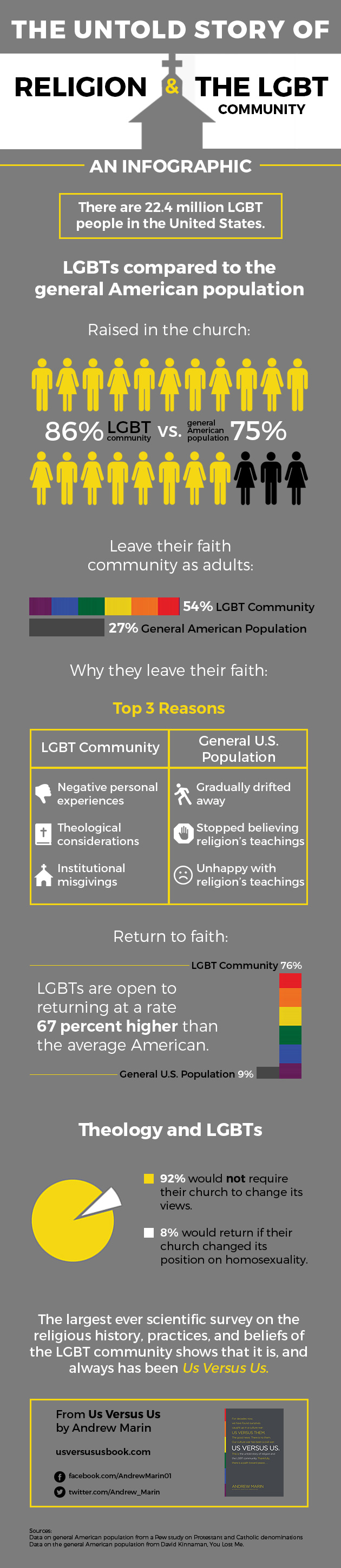
Great Infographic for Research Findings in Us Versus...

My ebook, Our Last Option, is Patheos Book...
TRENDING AT PATHEOS Evangelical

The REST of Your Life: A Creative Wrestles...
This week I had a conversation with a good friend from church....

How the author of the world's best hymn...
I've been working with John Newton for a while now. This makes...

Long before this Lectio Divina, Psalm 130 - the song - started...

What About the Trees? Another Living Parable
After I finished writing the last article about falling leaves as a...

Why Classical Education Is a Conversation, Not a...
Come and Read: Joy in Classical Education When I was a little...

Cornell University has received a great deal of negative publicity and intense...
view all Evangelical blogs
Ad-Free & Subscriber Log-In Subscription Support
- About Us
- 2026 Calendar
- Videos
- Podcasts
- Library of World Religions
- Faith In Media Tracker
- Advertise With Us
- Write for Us
- Privacy Policy
- Terms of Service
- Do Not Sell My Data
- Contact Us
- Radiant Digital
- Manage Newsletter Subscriptions
- Unsubscribe From Notifications
- Sitemap
Copyright 2008-2026, Patheos. All rights reserved.
Subscription Support Ad-Free & Subscriber Log-In
Follow Patheos