
BuddhistCatholicContemplativeEvangelicalGeneral ChristianHinduJewishLatter-day SaintMuslimNew VisionsProgressive Christian
Beliefs
- Buddhist
- Catholic
- Contemplative
- Evangelical
- General Christian
- Hindu
- Jewish
- Latter-day Saint
- More Voices
- Muslim
- New Visions
- Pagan
- Progressive Christian
Topics
- Religion News
- Food and Religion
- Sports and Religion
- Religious Art
- Religious Music and Entertainment
- Religious Events
- History and Religion
- Style and Religion
- Politics and Religion
- Women in Religion
- Recreation Outdoors and Religion
- Business Finance and Religion
- Careers Workplace and Religion
- Education and Religion
- Family Parenting and Religion
- Health Fitness and Religion
- Home and Religion
- Relationships and Religion
- Technology and Religion
- Travel and Religion
Columnists
- Buddhist Columnists
- Business Finance and Religion Columnists
- Careers Workplace and Religion Columnists
- Catholic Columnists
- Contemplative Columnists
- Education and Religion Columnists
- Evangelists Columnists
- Family Parenting and Religion Columnists
- General Christian Columnists
- Health Fitness and Religion Columnists
- Hindu Columnists
- History and Religion Columnists
- Home and Religion Columnists
- Jewish Columnists
- More Voices Columnists
- Latter Day Columnists
- Muslim Columnists
- New Visions Columnists
- Nonreligious Columnists
- Pagan Columnists
- Politics and Religion Columnists
- Progressive Columnists
- Recreation Outdoors and Religion Columnists
- Relationships and Religion Columnists
- Religion News Columnists
- Religious Art Columnists
- Religious Events Columnists
- Religious Music and Entertainment Columnists
- Sports and Religion Columnists
- Style and Religion Columnists
- Technology and Religion Columnists
- Travel and Religion Columnists
- Women in Religion Columnists
Resource Library
- 2026 Calendar
- Library of World Religions
- The 100 Most Holy Places on Earth
- Patheos Answers
- Podcasts
- Videos
- Faith Leaders Database
- Anglican Episcopalian
- Bahai
- Baptist
- Buddhism
- Christianity
- Confucianism
- Eastern Orthodoxy
- Hinduism
- Holiness and Pentecostal
- ISKCON
- Islam
- Judaism
- Lutheran
- Methodist
- The Church of Jesus Christ of Latter-day Saints
- New Age
- Paganism
- Presbytarian and Reformed
- Protestantism
- Religion Behind the Scenes
- Roman Catholic
- Scientology
- Shia Islam
- Sikhism
- Sufism
- Sunni Islam
- Taoism
- Zen
- See all religions
Research Tools
 Ad-Free & Subscriber Log-In Subscription Support
Ad-Free & Subscriber Log-In Subscription Support
Follow Patheos 

- Trending:
- Forgiveness
- |
- Marriage
- |
- Consciousness
- |
- Death Penalty
- |
- Election
- |
- Halloween
 Love is an Orientation
- Home
- Evangelical
- Being Fully Present
Being Fully Present
Last updated on: December 15, 2012 at 8:00 pm by Andrew Marin
Being Fully Present 2012-12-15T20:00:10-06:00 Andrew Marin
Patheos Explore the world's faith through different perspectives on religion and spirituality! Patheos has the views of the prevalent religions and spiritualities of the world.
The next post in this series on identity in relation to faith and sexuality is from Kevin Harris. Kevin is the Director of Community Relations and the Administrative Assistant at The Marin Foundation.
What? Why do you identify as gay? Aren’t you a Christian?
Bring up the topic of homosexuality and identity (or gender identity that does not adhere to the norm) with Christians, and you may feel like you’re talking about spam. Like the meat, it’s either a mystery to many Christians since our identity is to be in Christ, or it’s met with aversion out of contempt for the unpalatable matter being presented before them.
I fully believe that the redemptive story of Jesus’ life, death and resurrection has implications for our identity that are to supersede any other competing claims vying for the foundational basis upon which our identity is to rest. I also fully believe that followers of Jesus have been grafted onto the body of Christ that transcends any other identifier or label (generation, nationality, race, ethnic identity, gender, sexuality, occupation, etc.). However, I do not see how that rules out the use of secondary identifiers. I feel it is very important to root our primary identity in Christ (which I have written about here) and, while I see myself as God’s beloved, I have also seen the need to name and identify my reality as a gay man.
Functioning in a heteronormative society where heterosexual individuals do not have to identify themselves as such or announce their sexuality because it is the norm to which everyone else is compared (and individuals are assumed to be such unless noted otherwise), I have found that it is easy to become invisible as a queer person and have my reality silenced. This is especially true in many Christian circles where sermons and discussions are littered with language that assumes heterosexual and cisgender (assigned gender at birth matches current gender identity) identity and only acknowledges the realities that are deemed as acceptable. A disappointing exception to this is where the LGBT community is mentioned in the context of being solely looked upon as a mission field or ministry project that is deserving of compassion. Attentiveness to such language stemming from a place of heteronormativity and the labels we employ within language are important as they have the capacity to make individuals outside of the heterosexual mainstream feel like outsiders or that they do not belong if we are not intentional about the language we utilize. You can read more about straight privilege that is a byproduct of heteronormativity here. While labels used in regard to sexuality can be limiting and restrictive, I have found that they can be helpful in filtering information, navigating the world, and simply being present in relationships. But if we are going to use labels in regards to sexuality, it is important that we start allowing individuals to define the labels they claim rather than allowing labels to define individuals. The inherent challenge in this is that we are called to invest in conversations and ask individuals what they mean when they use certain words and how they experience the realities they name and claim.
Rather than allowing labels like gay and lesbian to be descriptive and relate reality as it is experienced, belief systems are often attached to them or the labels become sexualized. One such belief paradigm is revealed through the fact that homosexuality is often only spoken of in terms of attraction and desire, or it becomes only sexualized where sexual activity is primarily presumed to be present, being viewed as genitalized behavior. In her book, The End of Sexual Identity (which is a really well written book that I would recommend even though I personally disagree with the main conclusion inferred by the title), Jennell Williams Paris makes the case that sexual attractions and desires are not a trustworthy indicator of human identity and they should not become a part of our identity since they merely refer to attractions as she states that “The sexual identity framework fixates on who people want to have sex with (p 93).” Such a view is a rather simple and reductionistic take on sexuality. Sure, when I talk about being gay that includes being mentally, emotionally and physically attracted to other men. But it goes beyond that to describe how I long to experience the fulfillment of my desires for intimacy with a partner in a more holistic sense than just a physical relationship. Beyond desires, it is indicative of the type of person that I would compliment in a relationship, for the purpose of sacrificing for them and striving to encourage and build up their relationship with God. And while it does not define my experience, it influences how I navigate the world around me and how I interpret some experiences and information. Being gay has an impact on how I relate my personhood to those around me and even the social circles I decide to invest in and surround myself by. The way that I express myself cannot be detached from the reality of being same-sex attracted, at least not in a healthy way. It is interrelated with things like my creativity and other aspects of my personhood. It reaches all the way to my relationship with God since being gay is one of a number of lenses through which I approach and seek to interact with God (regardless of what is correct about etiology and theology).
There was a point in time during college with regards to my sexuality and relationship with God where I prayed on a nightly basis for weeks on end that God would take my life in my sleep since I did not want to be gay. As I sought to push forward from that point and to seek God, I have found (over years) that my experience as a gay man has played a significant role in helping me to develop certain attributes and to further step into caring more about some of the things that I perceive God caring about. Sifting through my own journey over time with faith and sexuality has contributed to developing patience in general and compassion for individuals wrestling with different issues. Being able to have some experience as an ‘other’ in the Christian world (as small as that experience has been at times considering I still possess immense amounts of privilege as a middle-class college educated white cisgender male who can pass as heterosexual without too much difficulty) has helped to deepen my concern for those who are oppressed and marginalized. I may not have been as motivated to seek out the heart of God or learn about how God views me if it were not for the need for support that arose out of living in a heteronormative society. I’m thankful for the ways that my sexuality has influenced my relationship with God and I would not change it to become heterosexual if I could. While my sexuality has not been the only factor in this process by any means as other experiences and people have played significant roles in my journey with God, it has nevertheless been an important factor. Even though I am not currently pursuing or engaged in a romantic or physical relationship, I am very much a “practicing homosexual” as some Christians might say. Thus, in a more comprehensive sense (at least as it relates to my story), sexual identity is more encompassing than who someone is attracted to and wants to have sex with.
I have experienced what it is like to operate out of a compartmentalized and fragmented sense of self as it relates to things like disassociating myself from being gay or “struggling with same-sex attractions” as if they are another occasional temptation as opposed to something intertwined with how I experience, interpret and navigate the world. After experiencing such a divided sense of self and fragmented reality, I want to bring my whole self into my relationships with vulnerability and authenticity. Part of that journey has included reclaiming my identity as it relates to sexuality. Churches are big on being authentic…..except when it comes to naming your reality if you happen to be queer. As I pursue authenticity and sexual holiness, I want to seek that holiness (like any other Christian regardless of their sexual orientation) as Paris describes in her book as seeking to give and receive love with God and with other people in and through my sexuality (p 83). God, the Church, and those that I love do not deserve any less, and certainly do not deserve just a fragment of me.
Much love.
Previous Post

November 21, 2011
On Why I Hate/Love Homecomings
Next Post
November 27, 2011 Living in the Tension - Tuesday, November 29
Browse Our Archives
Select a Category Book Reviews Bridging Opposing Worldviews Culture Don't Drink and Drive Faith Guest Posts I'm Sorry Campaign Interviews Language Laura Statesir LGBT Living in the Tension Living in the Tension Gatherings Love Is an Orientation Love Is an Orientation Blog Love Is an Orientation Book Love Is an Orientation DVD Melinda Guerra Memory My One Sentence Bible Newsletter Our Last Option Parents & Families Politics Quick Quotes Quotes ReEngaging Civility Sexuality Speaking The Marin Foundation Theology Uncategorized Us Versus Us Videos Warren Perry Youth and Campus Ministry
Select a Month June 2016 May 2016 December 2015 June 2015 May 2015 April 2015 March 2015 February 2015 January 2015 December 2014 November 2014 October 2014 September 2014 August 2014 July 2014 June 2014 May 2014 April 2014 March 2014 February 2014 January 2014 December 2013 November 2013 October 2013 September 2013 August 2013 July 2013 June 2013 May 2013 April 2013 March 2013 February 2013 January 2013 December 2012 November 2012 October 2012 September 2012 August 2012 July 2012 June 2012 May 2012 April 2012 March 2012 February 2012 January 2012 December 2011 November 2011 October 2011 September 2011 August 2011 July 2011 June 2011 May 2011 April 2011 March 2011 February 2011 January 2011 December 2010 November 2010 October 2010 September 2010 August 2010 July 2010 June 2010 May 2010 April 2010 March 2010 February 2010 January 2010 December 2009 November 2009 October 2009 September 2009 August 2009 July 2009 June 2009 May 2009 April 2009 March 2009 February 2009 January 2009 December 2008 November 2008 October 2008 September 2008
Follow Us!
TAKE THE
Religious Wisdom Quiz
Jesus raised whose daughter from the dead?
Select your answer to see how you score.
Thaddeus Darius Bartholomew Jairus
Related posts from Love is an Orientation

Don't Let Your Anger Turn Into Their Hate

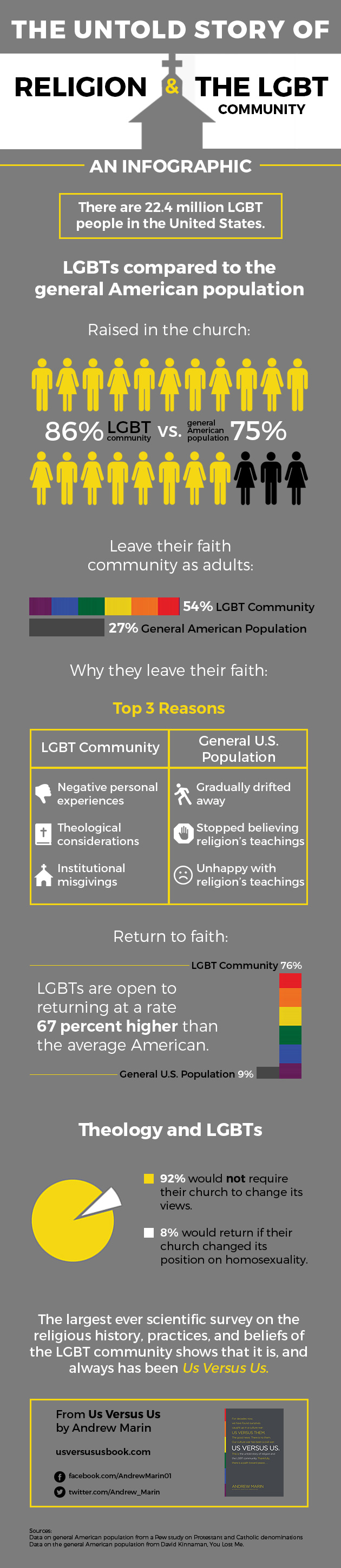
Great Infographic for Research Findings in Us Versus...

My ebook, Our Last Option, is Patheos Book...
TRENDING AT PATHEOS Evangelical

The REST of Your Life: A Creative Wrestles...
This week I had a conversation with a good friend from church....

How the author of the world's best hymn...
I've been working with John Newton for a while now. This makes...

Long before this Lectio Divina, Psalm 130 - the song - started...

What About the Trees? Another Living Parable
After I finished writing the last article about falling leaves as a...

Why Classical Education Is a Conversation, Not a...
Come and Read: Joy in Classical Education When I was a little...

Cornell University has received a great deal of negative publicity and intense...
view all Evangelical blogs
Ad-Free & Subscriber Log-In Subscription Support
- About Us
- 2026 Calendar
- Videos
- Podcasts
- Library of World Religions
- Faith In Media Tracker
- Advertise With Us
- Write for Us
- Privacy Policy
- Terms of Service
- Do Not Sell My Data
- Contact Us
- Radiant Digital
- Manage Newsletter Subscriptions
- Unsubscribe From Notifications
- Sitemap
Copyright 2008-2026, Patheos. All rights reserved.
Subscription Support Ad-Free & Subscriber Log-In
Follow Patheos