
BuddhistCatholicContemplativeEvangelicalGeneral ChristianHinduJewishLatter-day SaintMuslimNew VisionsProgressive Christian
Beliefs
- Buddhist
- Catholic
- Contemplative
- Evangelical
- General Christian
- Hindu
- Jewish
- Latter-day Saint
- More Voices
- Muslim
- New Visions
- Pagan
- Progressive Christian
Topics
- Religion News
- Food and Religion
- Sports and Religion
- Religious Art
- Religious Music and Entertainment
- Religious Events
- History and Religion
- Style and Religion
- Politics and Religion
- Women in Religion
- Recreation Outdoors and Religion
- Business Finance and Religion
- Careers Workplace and Religion
- Education and Religion
- Family Parenting and Religion
- Health Fitness and Religion
- Home and Religion
- Relationships and Religion
- Technology and Religion
- Travel and Religion
Columnists
- Buddhist Columnists
- Business Finance and Religion Columnists
- Careers Workplace and Religion Columnists
- Catholic Columnists
- Contemplative Columnists
- Education and Religion Columnists
- Evangelists Columnists
- Family Parenting and Religion Columnists
- General Christian Columnists
- Health Fitness and Religion Columnists
- Hindu Columnists
- History and Religion Columnists
- Home and Religion Columnists
- Jewish Columnists
- More Voices Columnists
- Latter Day Columnists
- Muslim Columnists
- New Visions Columnists
- Nonreligious Columnists
- Pagan Columnists
- Politics and Religion Columnists
- Progressive Columnists
- Recreation Outdoors and Religion Columnists
- Relationships and Religion Columnists
- Religion News Columnists
- Religious Art Columnists
- Religious Events Columnists
- Religious Music and Entertainment Columnists
- Sports and Religion Columnists
- Style and Religion Columnists
- Technology and Religion Columnists
- Travel and Religion Columnists
- Women in Religion Columnists
Resource Library
- 2026 Calendar
- Library of World Religions
- The 100 Most Holy Places on Earth
- Patheos Answers
- Podcasts
- Videos
- Faith Leaders Database
- Anglican Episcopalian
- Bahai
- Baptist
- Buddhism
- Christianity
- Confucianism
- Eastern Orthodoxy
- Hinduism
- Holiness and Pentecostal
- ISKCON
- Islam
- Judaism
- Lutheran
- Methodist
- The Church of Jesus Christ of Latter-day Saints
- New Age
- Paganism
- Presbytarian and Reformed
- Protestantism
- Religion Behind the Scenes
- Roman Catholic
- Scientology
- Shia Islam
- Sikhism
- Sufism
- Sunni Islam
- Taoism
- Zen
- See all religions
Research Tools
 Ad-Free & Subscriber Log-In Subscription Support
Ad-Free & Subscriber Log-In Subscription Support
Follow Patheos 

- Trending:
- Forgiveness
- |
- Marriage
- |
- Consciousness
- |
- Death Penalty
- |
- Election
- |
- Halloween
 Love, InshAllah
- Home
- Muslim
- Relationships and Religion
- Brown Girl Dreaming
Brown Girl Dreaming
Last updated on: April 15, 2015 at 9:42 pm by Love InshAllah Columnist
Brown Girl Dreaming 2015-04-15T21:42:16-07:00 Love InshAllah Columnist
Patheos Explore the world's faith through different perspectives on religion and spirituality! Patheos has the views of the prevalent religions and spiritualities of the world.
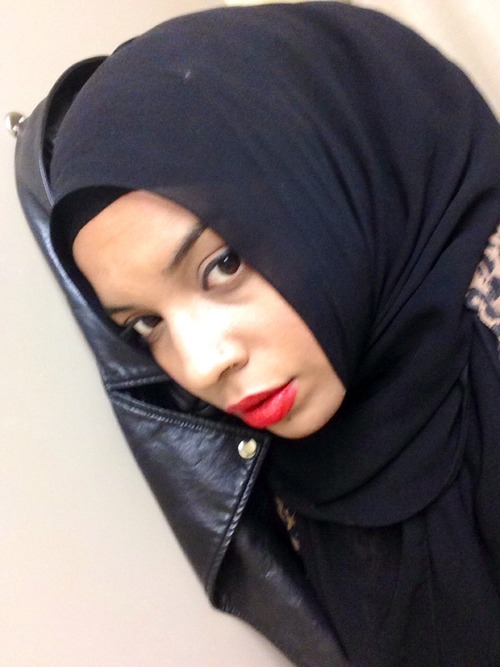
I remember being three, face deep in a mango, my mosquito legs poking out from the shade of a palm tree, the Caribbean sun hot and deliberate. One of my Aunties came around the corner, and, with her heavy hand, began beating my legs back into the shade, yelling in her creamy patois (that always sounded more like singing), “You are going to get too dark!”
It was the first time that I ever looked at my skin and realized that people weren’t just black or white.
I remember being eight, riding shotgun in my father’s 1995 silver Acura as he and I cruised around the city on a crisp Saturday afternoon. His window was cracked open, and old school reggae joints flooded the air. The sun had forgotten that it was the middle of February; she was out, kissing everything she touched. I remember watching my father’s dark brown skin glisten in her rays. A yearning filled me: I wanted skin like his.
I was pale and boring I thought, but he was deep and rich, his skin could swallow me up and it would be like I had never existed. I saw power in his complexion.
I was eleven the first time I heard the phrase, “light skin is the right skin.” It was yelled across a junior high cafeteria at a dark-skinned girl who wouldn’t let a group of clammy-handed 8th graders grab her ass. I remember watching and wondering how a group of dark-skinned brown boys could not see how stupid they sounded. I remember wondering about their mothers and the colour of their skin.
Being from a mixed-race home, self-acceptance and deconstructing the hierarchy of race have always been present in our upbringing. We were never taught to be “colour blind.” Instead, our individual colours and shades were acknowledged and praised.
I recall my father sitting me on his lap and telling me how pretty my skin was, then watched him do the same with my sister (who is significantly lighter than me), and again with my mother, who is Métis Canadian but white passing. My Mother, in turn, always complimented my Father’s deep brown skin, and my sister and I would agree, marveling at the fullness of his complexion.
In our home, colour was always praise worthy, and the differences in our hues and tones was beautiful. But outside of our home, we were taught something different. Whether it was heavy-handed aunties, clammy-handed boys, or cousins who were so desperate to find a skin-lightening agent that finally worked, that they went to lengths that still nauseate me to think about, the lesson has always been clear: the lighter, the brighter, the better.
In high school, a boy who I liked told me that if I was any darker he wouldn’t have even talked to me. “As pretty as you are, if you was black, I wouldn’t have even given you the time of day.”
I took inventory of his face, his dark brown skin. I watched the way the lines around his mouth deepened when he half-smiled. I listened to his put on “New York” accent that had no place in the mouth of a boy who was born and raised in Toronto.
But, it didn’t matter how stupid he was or how fake his accent was. My 15-year-old self was only concerned with how fine this self-loathing teenage boy was. So I ignored the sting that came from the words “if you was black”, because at 15 it doesn’t matter what you are, the only thing that matters is what people think you are.
It was then that my attitude towards my pale, lifeless skin changed. I began to see it anew, as better, as “more beautiful than.” I was proud of it.
But, in the third week of this boy and I kicking it behind portables and in empty bleachers, a new girl joined our school. I instantly noticed that she was lighter than I was; her skin glowed the colour of ivory with a gold shimmer beneath. I marveled at her complexion – and so did my crush.
It took only a few days before my significantly browner complexion was “too dark” for him. He was moving up. I was hurt – not because he didn’t choose me (at 15 you need only make eye contact with a pubescent boy to gain his attention); I was hurt that I had no control over what “made her better than me.”
I confided in my father during one late night conversation at the kitchen table, telling him that I had considered using Fair and Lovely cream to “even out my tone.” The hurt on his face was overwhelming. But at 3 o’clock in the morning, he helped me understand the gap in my thinking.
We hear aunties and friends and cousins define beauty for us. We watch television shows with token light-skinned black girls in a sea of white friends, or the fairer-skinned Miss India becoming the desired face of all South Asian women. We are expected to aspire to these standards of beauty. The darker-skinned we are, the more exotic we are, the more of an acquired taste we become. We rarely define beauty for ourselves, or look at ourselves and others without the lens of our colonized minds.
At twenty-three, as I embark on this journey to marriage, I think about race and shadeism. I think about the man in my life and ponder what our respective locations on God’s wondrous palette of complexions mean – what it means for our future daughters and our future sons, what it means for us, now.
As a woman who identifies as an anti-racist feminist, the question of racial identity is something that is on my mind constantly, but even more so now that I am (inshaAllah) opening up doors to a family. I recall my own parents and the efforts they put into raising daughters who not only acknowledged race, but who understood and marveled at it.
I think about the way that even with their dedication I was still led astray by a boy who watched way too much BET and was under the impression that conquering the light made you more desirable, more powerful as a man.
Generally, though, my generation is more consciously aware than our mothers’; we know the harm that shadeism causes. We know that shadeism is a colonial construct, that only furthers the racist agenda. We know these things. But, still, we slip into its grasps again and again.
I’m writing this for my brown girls who still sometimes wish their hair was longer or straighter, who linger in the Fair and Lovely section a little too long. Brown girls who secretly hate their noses or the shape of their eyes, brown girls with names that live in the space of mispronunciation 90 percent of the time. For my brown girls who are tired of being Othered, my brown girls who would still pick the white doll in private.
I want you to know that every second in your skin is radical, every moment that you love yourself is radical, every good hair day, every approved selfie, every double take in the mirror is radical. The hijabi that loves her hijab, the niqabi that loves her niqab, the afro sister, the fade sister, the locs sister, the sister who woke up this morning and thought that the width of her nose made her beautiful, the fill of her lips makes her hot, who looked at her full body and admired it. The brown girl who touched her skin with gentle hands today: You are so radical, your existence is radical, loving even 1 percent of yourself is radical.
You have the potential to be eternal. You are loved, you are admired, you are prayed for. You are IT.
—
Read more from Key on our site, here!
Key Ballah is a Toronto-based writer and Hip Hop enthusiast. She is the author of the poetry collection, ‘Preparing My Daughter For Rain‘, she melts faith, love and her experiences of being a woman of colour navigating the western world in her writing. She believes in empowering the brown girl to reclaim her selves and her body, by connecting and healing collectively, over borders, oceans and time zones, through story telling and poetry. She is currently working on a new project due out this fall.
contact her via email: [email protected]
follow her on twitter & Instagram : @keyballah
read more of her works: www.keywrites.com
Previous Post
January 7, 2015
Winners of the Eleventh Annual Brass Crescent Awards
Next Post

January 14, 2015 Weighty Ghosts
Browse Our Archives
Select a Category Book Reviews Brown Girl Dreaming Editors Flirting with Fate and other Disasters of an Intersectional Muslimah Food, Love, & Memories Friday Love Halal Since 22 Integrity of Heart Life After Death Literary Mama Literature Love Inshallah Podcast Love InshAllah writers Media My Infidel Husband Not Without Love Poetry Monday Radical Love Reflections & Readings Reviews of Love InshAllah Salaam Love Writers Sex & The Ummah Single in the City Spotlight Story & Chai Book Club The Geekologist The Love Tour The Male Gaze Things I Wish I'd Known Thoughts of a Wasat Girl Uncategorized Your Sunny Side Up Your voices
Select a Month May 2015 April 2015 March 2015 February 2015 January 2015 December 2014 November 2014 October 2014 September 2014 August 2014 July 2014 June 2014 May 2014 April 2014 March 2014 February 2014 January 2014 December 2013 November 2013 October 2013 September 2013 August 2013 July 2013 June 2013 May 2013 April 2013 March 2013 February 2013 January 2013 December 2012 November 2012 October 2012 September 2012 August 2012 July 2012 June 2012 May 2012 April 2012 March 2012 February 2012 January 2012 December 2011 November 2011
Follow Us!
TAKE THE
Religious Wisdom Quiz
What sign does Paul give in 2 Thessalonians as his authentic mark in every letter?
Select your answer to see how you score.
A special blessing His greeting in his own handwriting His seal His signature
Related posts from Love, InshAllah



Hip-Hop Hijabis: Spitting Rhymes About Being Muslim And...

TRENDING AT PATHEOS Muslim

25 Years Later: How Much Has Changed for...
As we approach the 25th anniversary of September 11th, I’ve found myself...

Podcast: Third Spaces & The Rise of Yemeni...
In the latest episode of The Artistic Foodies Podcast, hosts Abbas...

HalalFest Picks: Best 60 Halal Spots for Super...
Back in 2016, I came up with a list of 29...

Unity Is America’s Strength — Division Is Its...
by Hidayatullah Ahsan When Valentina Gomez, a Republican candidate for Congress in...

Zohran Mamdani and New York’s Fight Against Islamophobia
This past June, against all odds, Zohran Mamdani won the Democratic primary...

What the Fourth of July Means to a...
As we mark another Fourth of July, millions of Americans will celebrate...
view all Muslim blogs
Ad-Free & Subscriber Log-In Subscription Support
- About Us
- 2026 Calendar
- Videos
- Podcasts
- Library of World Religions
- Faith In Media Tracker
- Advertise With Us
- Write for Us
- Privacy Policy
- Terms of Service
- Do Not Sell My Data
- Contact Us
- Radiant Digital
- Manage Newsletter Subscriptions
- Unsubscribe From Notifications
- Sitemap
Copyright 2008-2026, Patheos. All rights reserved.
Subscription Support Ad-Free & Subscriber Log-In
Follow Patheos