
BuddhistCatholicContemplativeEvangelicalGeneral ChristianHinduJewishLatter-day SaintMuslimNew VisionsProgressive Christian
Beliefs
- Buddhist
- Catholic
- Contemplative
- Evangelical
- General Christian
- Hindu
- Jewish
- Latter-day Saint
- More Voices
- Muslim
- New Visions
- Pagan
- Progressive Christian
Topics
- Religion News
- Food and Religion
- Sports and Religion
- Religious Art
- Religious Music and Entertainment
- Religious Events
- History and Religion
- Style and Religion
- Politics and Religion
- Women in Religion
- Recreation Outdoors and Religion
- Business Finance and Religion
- Careers Workplace and Religion
- Education and Religion
- Family Parenting and Religion
- Health Fitness and Religion
- Home and Religion
- Relationships and Religion
- Technology and Religion
- Travel and Religion
Columnists
- Buddhist Columnists
- Business Finance and Religion Columnists
- Careers Workplace and Religion Columnists
- Catholic Columnists
- Contemplative Columnists
- Education and Religion Columnists
- Evangelists Columnists
- Family Parenting and Religion Columnists
- General Christian Columnists
- Health Fitness and Religion Columnists
- Hindu Columnists
- History and Religion Columnists
- Home and Religion Columnists
- Jewish Columnists
- More Voices Columnists
- Latter Day Columnists
- Muslim Columnists
- New Visions Columnists
- Nonreligious Columnists
- Pagan Columnists
- Politics and Religion Columnists
- Progressive Columnists
- Recreation Outdoors and Religion Columnists
- Relationships and Religion Columnists
- Religion News Columnists
- Religious Art Columnists
- Religious Events Columnists
- Religious Music and Entertainment Columnists
- Sports and Religion Columnists
- Style and Religion Columnists
- Technology and Religion Columnists
- Travel and Religion Columnists
- Women in Religion Columnists
Resource Library
- 2026 Calendar
- Library of World Religions
- The 100 Most Holy Places on Earth
- Patheos Answers
- Podcasts
- Videos
- Faith Leaders Database
- Anglican Episcopalian
- Bahai
- Baptist
- Buddhism
- Christianity
- Confucianism
- Eastern Orthodoxy
- Hinduism
- Holiness and Pentecostal
- ISKCON
- Islam
- Judaism
- Lutheran
- Methodist
- The Church of Jesus Christ of Latter-day Saints
- New Age
- Paganism
- Presbytarian and Reformed
- Protestantism
- Religion Behind the Scenes
- Roman Catholic
- Scientology
- Shia Islam
- Sikhism
- Sufism
- Sunni Islam
- Taoism
- Zen
- See all religions
Research Tools
 Ad-Free & Subscriber Log-In Subscription Support
Ad-Free & Subscriber Log-In Subscription Support
Follow Patheos 

- Trending:
- Forgiveness
- |
- Marriage
- |
- Consciousness
- |
- Death Penalty
- |
- Election
- |
- Halloween
 Love, InshAllah
- Home
- Muslim
- Relationships and Religion
- From America to Kenya: Love in Every Last Bite
From America to Kenya: Love in Every Last Bite
Last updated on: November 3, 2014 at 11:13 am by Posted by The Editors
From America to Kenya: Love in Every Last Bite 2014-11-03T11:13:26-07:00 Posted by The Editors
Patheos Explore the world's faith through different perspectives on religion and spirituality! Patheos has the views of the prevalent religions and spiritualities of the world.
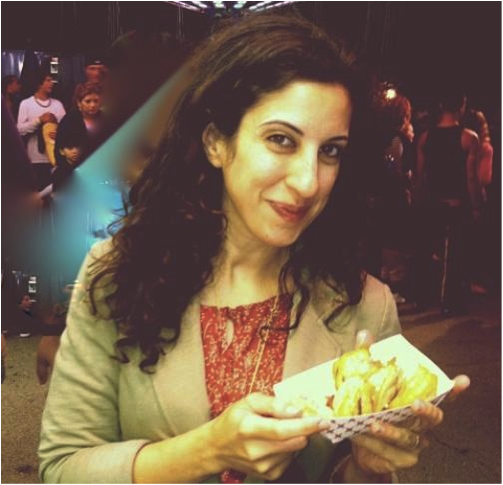
I’m a foodie. I’ll admit it. I shamelessly look up pictures and videos of food on websites like Tastespotting and Instagram. It’s even more thrilling to do it while I’m fasting.
I grew up in a small city in Michigan. Food played an important role in bringing together my mixed family. As a child of an immigrant father from Pakistan and an Irish-Slavanian American mother, my parents imbued me with a passion for food.
I remember picnics as a child on Lake Michigan in Chicago, stuffing spicy, grilled masala chicken into steaming folds of pita bread, while watching my brother play Frisbee with my then-20 year-old uncles who had huge Afros and wore black leather jackets. I remember Mom making Thanksgiving turkey and Ammi Jan frying up the leftovers in MSG to serve with biryani the day after.
I was slightly embarrassed as a kid by my family’s rituals around food. We had a tradition of going to McDonalds for breakfast on Saturday mornings, where we would all get the same thing: biscuits with egg and cheese, hash browns, and OJ. Dad would return holding the tray of food; I always noticed his low-heeled leather boots and pleated dress pants. Dad, NEVER wore jeans.
Mom, who had a spiral perm and set her hair with hot rollers every morning, would pull out two Ziploc baggies from her purse: one filled with freshly washed cilantro, and the other with cayenne pepper masala. I saw how markedly different we were from the other “American” families with our spice packets and 4-hour trips to Chicago to buy zabiha meat. I tried to understand where I fit within multiple cultures, traditions, and values.
I belonged to the generation of American Muslims that helped found immigrant Islam in America. Dad would drive an hour one way to a Catholic church on Fridays where our community gathered in a basement for Jummah prayers. As our community grew in diversity, it also grew in financial ability.
Our first mosque was established in Grand Rapids. We gutted an old Jehovah’s Witness temple in the southeast end of town, a mostly working class neighborhood. After my Sunday school Qur’an classes, Dad would take me to Popeye’s. My dad was a chatty guy and could strike up conversations with anyone – a toddler in a grocery cart, a metalhead with a mullet wearing a fringed, leather jacket – anyone.
Eating chicken every Sunday with my father gave me the opportunity to observe and reflect on what I had. Every weekend, we drove through parts of the rougher neighborhood that encircled our mosque. Dad made it clear that what I had was special, and that I needed to work hard to get anywhere in life.
Somewhere along the way, spice and food began to remind me of home and togetherness- two things I longed for during my own life’s journey. I began to embrace fusion in both my identity and taste in food while living abroad in Egypt.
When I met Shuaib in Cairo in 2009, it was no surprise that fusion and food played a role in our matchmaking. He was a young Somali-Ethiopian grad student from Minnesota at the American University in Cairo. On our first dinner date, we talked nervously, looking everywhere but at each other.
The food came and, mid-conversation, he stopped,
“Try this,” he said, feeding me a bite of his Daoud Pasha, meatballs in tomato sauce.
We began spending more time together, cooking, and sharing our backgrounds with each other. He would chop veggies, and I’d blend the sauces and prepare the rice.
During Ramadan, we made malawah – Somali crepes – and wrapped them around samosas like a little fusion burrito. We listened to a range of music in the kitchen from the soulful jazz of Mulatu Astatke to our favorite BBC radio program that aired every Saturday afternoon.
He admired my dual heritage and thought I was strong to have moved to a new continent alone. I loved how loyal and caring he was to his family, He was their voice of reason and was becoming my rock to lean on as I navigated multiple cultures and identities in a shifting social and political landscape.
We ate from the same plate, we fed each other, and he always let me have the last bite.
Ramadan of 2011 was our last year in Egypt. It was the most memorable one I’ve ever had. The days were long and the heat was unrelenting. The city grew quiet each day just before sunset. The streets of Cairo emptied and shopkeepers closed their stores and assembled makeshift tables along the streets to break their fast.
Shuaib and I shopped together in outdoor markets where fragrant spices like turmeric, cinnamon and coriander stood in perfect pointed hills on table tops as if shaped by an hourglass. We made iftar together. My fondest food memory of that year was when he taught me how to make malawah.
I admired him as he effortlessly mixed the ingredients in a bowl. Gracefully, he stood vigil over the stove, pouring even amounts of batter into a small omelette pan, drizzling small amounts of oil on the malawah, and, finally, flipping them over to a slightly golden perfection.
This crepe-making skill was his secret weapon. He totally knew he had found my soft spot through my stomach. Whether he already knew how to make malawah, or whether he called his mother for the recipe will always remain a mystery to me.
And his method of wrapping the malawah around small samosas? It’s is a tradition that we continue today. We just celebrated our first wedding anniversary in May.
And he still always lets me have the last bite.
—
Malawah Recipe
2½ cups milk
2 large eggs
2 cups all-purpose flour
Pinch salt
¼ cup sugar
*Optional- a dash of vanilla or almond extract
Method:
**1.**Place the ingredients in a blender.
**2.**Blend for 1 minute (or until there are no lumps in the batter).
**3.**Pour into a large bowl and cover with plastic wrap. Let the batter rest for at least 30 minutes.
- Using a small ladle or ½ measuring cup, pour batter into a 10-inch pan, making sure the batter coats the bottom of the pan and runs all around the edge.
- Cook the malawah for about 1-2 minutes on medium heat
- Flip and drizzle a small spoonful of vegetable oil or melted ghee along the edges and work to the middle
Enjoy!
Nadia lives in Nairobi, Kenya. She’s already found her way around an East African kitchen, learning to make chapatis and sakuma wiki – two fusion Kenyan Indian favorites. She is currently exploring the region, and deepening her interests around holistic skin care.
Previous Post

October 16, 2014
Tomorrow's Joy
Next Post

October 29, 2014 Love Comes Later
Browse Our Archives
Select a Category Book Reviews Brown Girl Dreaming Editors Flirting with Fate and other Disasters of an Intersectional Muslimah Food, Love, & Memories Friday Love Halal Since 22 Integrity of Heart Life After Death Literary Mama Literature Love Inshallah Podcast Love InshAllah writers Media My Infidel Husband Not Without Love Poetry Monday Radical Love Reflections & Readings Reviews of Love InshAllah Salaam Love Writers Sex & The Ummah Single in the City Spotlight Story & Chai Book Club The Geekologist The Love Tour The Male Gaze Things I Wish I'd Known Thoughts of a Wasat Girl Uncategorized Your Sunny Side Up Your voices
Select a Month May 2015 April 2015 March 2015 February 2015 January 2015 December 2014 November 2014 October 2014 September 2014 August 2014 July 2014 June 2014 May 2014 April 2014 March 2014 February 2014 January 2014 December 2013 November 2013 October 2013 September 2013 August 2013 July 2013 June 2013 May 2013 April 2013 March 2013 February 2013 January 2013 December 2012 November 2012 October 2012 September 2012 August 2012 July 2012 June 2012 May 2012 April 2012 March 2012 February 2012 January 2012 December 2011 November 2011
Follow Us!
TAKE THE
Religious Wisdom Quiz
There is a season for everything under heaven—a time to be born and a time to do what?
Select your answer to see how you score.
Live Die Sing Rest
Related posts from Love, InshAllah



Hip-Hop Hijabis: Spitting Rhymes About Being Muslim And...

TRENDING AT PATHEOS Muslim

25 Years Later: How Much Has Changed for...
As we approach the 25th anniversary of September 11th, I’ve found myself...

Podcast: Third Spaces & The Rise of Yemeni...
In the latest episode of The Artistic Foodies Podcast, hosts Abbas...

HalalFest Picks: Best 60 Halal Spots for Super...
Back in 2016, I came up with a list of 29...

Unity Is America’s Strength — Division Is Its...
by Hidayatullah Ahsan When Valentina Gomez, a Republican candidate for Congress in...

Zohran Mamdani and New York’s Fight Against Islamophobia
This past June, against all odds, Zohran Mamdani won the Democratic primary...

What the Fourth of July Means to a...
As we mark another Fourth of July, millions of Americans will celebrate...
view all Muslim blogs
Ad-Free & Subscriber Log-In Subscription Support
- About Us
- 2026 Calendar
- Videos
- Podcasts
- Library of World Religions
- Faith In Media Tracker
- Advertise With Us
- Write for Us
- Privacy Policy
- Terms of Service
- Do Not Sell My Data
- Contact Us
- Radiant Digital
- Manage Newsletter Subscriptions
- Unsubscribe From Notifications
- Sitemap
Copyright 2008-2026, Patheos. All rights reserved.
Subscription Support Ad-Free & Subscriber Log-In
Follow Patheos