
BuddhistCatholicContemplativeEvangelicalGeneral ChristianHinduJewishLatter-day SaintMuslimNew VisionsProgressive Christian
Beliefs
- Buddhist
- Catholic
- Contemplative
- Evangelical
- General Christian
- Hindu
- Jewish
- Latter-day Saint
- More Voices
- Muslim
- New Visions
- Pagan
- Progressive Christian
Topics
- Religion News
- Food and Religion
- Sports and Religion
- Religious Art
- Religious Music and Entertainment
- Religious Events
- History and Religion
- Style and Religion
- Politics and Religion
- Women in Religion
- Recreation Outdoors and Religion
- Business Finance and Religion
- Careers Workplace and Religion
- Education and Religion
- Family Parenting and Religion
- Health Fitness and Religion
- Home and Religion
- Relationships and Religion
- Technology and Religion
- Travel and Religion
Columnists
- Buddhist Columnists
- Business Finance and Religion Columnists
- Careers Workplace and Religion Columnists
- Catholic Columnists
- Contemplative Columnists
- Education and Religion Columnists
- Evangelists Columnists
- Family Parenting and Religion Columnists
- General Christian Columnists
- Health Fitness and Religion Columnists
- Hindu Columnists
- History and Religion Columnists
- Home and Religion Columnists
- Jewish Columnists
- More Voices Columnists
- Latter Day Columnists
- Muslim Columnists
- New Visions Columnists
- Nonreligious Columnists
- Pagan Columnists
- Politics and Religion Columnists
- Progressive Columnists
- Recreation Outdoors and Religion Columnists
- Relationships and Religion Columnists
- Religion News Columnists
- Religious Art Columnists
- Religious Events Columnists
- Religious Music and Entertainment Columnists
- Sports and Religion Columnists
- Style and Religion Columnists
- Technology and Religion Columnists
- Travel and Religion Columnists
- Women in Religion Columnists
Resource Library
- 2026 Calendar
- Library of World Religions
- The 100 Most Holy Places on Earth
- Patheos Answers
- Podcasts
- Videos
- Faith Leaders Database
- Anglican Episcopalian
- Bahai
- Baptist
- Buddhism
- Christianity
- Confucianism
- Eastern Orthodoxy
- Hinduism
- Holiness and Pentecostal
- ISKCON
- Islam
- Judaism
- Lutheran
- Methodist
- The Church of Jesus Christ of Latter-day Saints
- New Age
- Paganism
- Presbytarian and Reformed
- Protestantism
- Religion Behind the Scenes
- Roman Catholic
- Scientology
- Shia Islam
- Sikhism
- Sufism
- Sunni Islam
- Taoism
- Zen
- See all religions
Research Tools
 Ad-Free & Subscriber Log-In Subscription Support
Ad-Free & Subscriber Log-In Subscription Support
Follow Patheos 

- Trending:
- Forgiveness
- |
- Marriage
- |
- Consciousness
- |
- Death Penalty
- |
- Election
- |
- Halloween
 Love, InshAllah
- Home
- Muslim
- Relationships and Religion
- Things To Take Into Account
Things To Take Into Account
Last updated on: November 3, 2014 at 11:13 am by Posted by The Editors
Things To Take Into Account 2014-11-03T11:13:27-07:00 Posted by The Editors
Patheos Explore the world's faith through different perspectives on religion and spirituality! Patheos has the views of the prevalent religions and spiritualities of the world.
I became Muslim in my early 20s. During those early years, I would entertain myself on nights when I couldn’t fall asleep by conjuring a story where a mythical creature occupied the rural family cemetery beside my childhood home. This idea actually started with something I dreamt involving an early explorer to America who had lost his way. Somehow, in his travels through out the New World, he slipped through a portal that would later become a traditional grave house over the oldest marked plot.
This creature was a Muslim from some undisclosed foreign land, and he’d fallen through the cracks of time and space while exploring the uncharted territory of early America (where all things were possible, including bending the nature of reality). Occasionally, he would pop into my contemporary world from another dimension.
I’d often find him perched on a high limb of a fragrant and large magnolia tree in the middle of the cemetery. In my story, there were rumors of his existence –like a Bigfoot sometimes spotted by hunters — but he remained an unconfirmed myth. I existed as the only person he trusted.
This imagined character was my attempt to create a narrative that linked my identity as a Muslim to the very different experience of growing up as a Southern Baptist. And as silly as the story felt, it provided one example of how imagination – creative third space — offers the ability to rescript our place in the world.
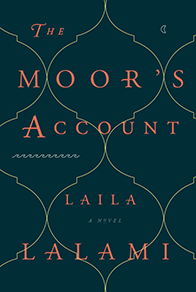
Alas, my conjuring wasn’t so fantastical. Five hundred years ago, a Muslim’s feet may have touched my ancestral land. His name was Mustafa, and Laila Lalami writes his story in the new novel, The Moor’s Account.
A gold rattle sets the novel in motion as the story unfolds through the voice of a real historical figure, Mustafa Al-Zamori, also known as Estebanico, a Moroccan-born slave who accompanied the doomed Narvaez Expedition that beached on Florida’s Gulf Coast in 1528. The novel landed in my hands during a time my mind was occupied with North Florida, the place of my birth. I grew up on the same land that Narvaez and Mustafa trudged through in search of riches, an area once part of Apalachee territory.
Five hundred and ninety-six men died during the expedition through a series of natural disasters, desertions, illnesses, or in clashes with indigenous nations. Eight years later, the four survivors reunited with their Spanish compatriots in Mexico after trekking through the American South and Southwest. They had lived among indigenous people, learned new languages, and experienced a part of the New World previously unknown to Europeans. Mustafa was one of four survivors, and is considered to be the first black explorer of the New World.
Another survivor, the expedition’s treasurer, recorded the Narvaez Expedition and this serves as the first travelogue describing this strange, enchanted land. Only one line in mentions Mustafa, an “Arab Negro from Azamor.” Lalami wanted to know more about her fellow Moroccan, and penned the richly researched The Moor’s Account to provide a fictional version of Mustafa’s narrative.
The expedition had planned to turn back until the discovery of that small gold ornament, an unearthing that encouraged troops deeper into North Florida in vain attempts to locate a mythical Indian kingdom thought to hold large reservoirs of the treasure. The decision to move inland proved ruinous. In Lalami’s narrative, it is Mustafa who first spots the gold, a development he later regrets.
In The Moor’s Account, Narvaez soldiers endure mishaps while enforcing the brutal power of colonization on land and people. Mustafa becomes aware that his discovery unintentionally unleashes events altering the expedition’s fate. Throughout the novel, he attempts to make amends for his personal greed that had led to his enslavement, as well as the desire to reclaim his identity from the Spaniards. For Mustafa, slavery was “a fate worse than death; it was a rebirth into an alien world, with its strange customs and unbearable rules.”
You mean, I thought as I read the novel, a Muslim potentially walked through my woods several hundred years ago? I felt like I had found the missing link – the historical nugget that somehow bound an Islamic identity to my American experience.
My first set of maternal ancestors landed in the South during the early 1800s as yeoman farmers begging riches from the earth. I understand that Narvaez’s presence, as well as the earlier conquistador, Ponce de Leon, altered history in a way that made is possible for my ancestors to arrive. I also understand the messy and contentious nature of America’s colonization. That aside, The Moor’s Account provided a cultural point of contact that hit home for me, in the literal sense.
People do strange things when they attempt to create their speculative histories. The possibility that Mustafa walked through the same woods where I grew up is difficult to prove, but historical records placed him in close proximity. Perhaps there is a collective consciousness. Perhaps my imaginative creation of that strange man in the cemetery was psychically tapping into a historical genealogy of early Muslim presence.
Identity is magical like that. Sometimes, identity is slippery in ways that defy explanation.
Lately, I’ve spend a great deal of time thinking about identity. Specifically, I ponder about the “point of contact” when identities start to morph into something new. The Moor’s Account explores various points of contacts: Spaniards are asked to challenge their whiteness, and Mustafa witnesses how the arrival of the Europeans alters indigenous existences. His observations highlight the horrors of colonizing power; specifically, the power to name and claim dominion.
Yet, at one point after years of being lost in the New World, Mustafa understands that the Spaniards “had stopped thinking of themselves as unchallenged Lords of this world, whose duty it was to put it into words.” The journey to the New World offered potential transformation for everyone.
***
The Moor’s Account reminds us that our identities are not an epidemiology. There are rarely clean causations to how someone becomes this-or-that. No clear origin, or “index identity,” exists. Yet, Muslim identity is one of the most contentious labels to claim to today’s cultural climate. There are those who act as if we are a modern day plague.
We experience a psychic pain waking up every morning to the Bill Mahers and Fox News anchors of the world. Some of the hurt comes from other Muslims, such as those who propagate ISIS or rigid, exclusionist interpretations. Sometimes, the agony arrives from our peaceful compatriots, those who insist that we can only reveal the halaal versions of ourselves even though we may find spiritual authenticity through our messiness.
I imagine that Mustafa experienced these feelings. His Islam was suspect from the start. Spain did not allow non-Christians to travel to the New World. Once he was enslaved, he was baptized and christened as Estebanico.
Lalami mentioned on National Public Radio that Mustafa/Estebanico was perhaps the first global citizen. He spoke multiple languages and negotiated the complexities of race, identity, and belonging in the New World in ways that mirror contemporary American society. Mustafa represents an early complicated New World subjectivity – an identity that challenged neat cartographic boundaries and colonist philosophies. Yes, he longed for home, but he longed for freedom more, and freedom arrived through the reinvention his identity made possible by the New World.
He contained multitudes. We all do.
Muslims are increasingly cultural hybrids, and that is one reason our various identities are so contentious. We are fuzzy coordinates. Even the mullahs seem scared of those who successfully engage cultural fluidity.
This hybridity is our power.
When Islam is allowed to be its best, it functions as a powerful way to deconstruct privilege and race with compassion and mercy as the center. If we ghetto our identities and deny the complexities of spiritual expression, then we are ill-equipped to dislodge the narratives that many feel enslave the Muslim experience. One way to counter overwhelming (and well-funded) Islamophobia is to take permission to tell our personal stories, halaal version or not. How long will we wait to assert our right to script the most celebratory stories about our place in the world, even if these stories involve Muslims who time travel through a redneck Tardis in graveyards; even if these stories involve messiness?
***
Lalami’s novel is brilliantly crafted, and the wisdom of The Moor’s Account lies in Mustafa’s perspective as a man who looked like the Indians, who was a slave, who understood other ways to experience the Divine, and someone who served as a go-between the whites and indigenous people. The things that made him weak in Europe afforded him a type of power in the New World that the Spaniards could not possess.
Sometimes, our identities feel lodged in narratives of loss. The point-of-origin of some Muslim identities is an ancestral country or culture somewhere else, or in a spiritual heritage that is often viewed as foreign invader and belonging outside of the Western experience. Muslim feels so bombarded by negative and untrue tropes that we are reluctant to display our vulnerabilities: the honor that we love and experience joy, we sometimes fail at life, we struggle with faith and identity in massively complex and global ways. We are imperfect people. But so is everyone else. These vulnerabilities make us human. We are at a critical cultural moment where humanizing our experience in the world is necessary.
In fiction such as The Moor’s Account, we see that a Muslim identity is a point of becoming: we have the potential to create new culture regardless of heritage. The practice of Islam is hybrid, a fluid experience that bends time and global space unparalleled by most spiritual traditions. Those of us who embrace our complexities will serve as the pulse that transcends the ugly version of the faith that dominates mainstream discourse.
Identity is not bound by place but located in possibility, as put forth by Lalami’s version of Mustafa: he was a free man who voluntarily entered slavery, who then became an explorer in a new land where he survived, and thrived, as a faith healer
As Mustafa remembers, so do we: “To God belongs the east and the west. Whichever way you turn, there is the face of God.”
_____
 Deonna Kelli Sayed is a Love, Inshallah contributor and a www.patheos.com/blogs/loveinshallah editor. She is a published author and an emerging digital storyteller. Her work is also found at altmuslimah.com, Muslimah Media Watch, and storyandchai. Deonna is currently working on a memoir with support a Regional Artist Grant from the North Carolina United Arts Council. To learn more, visit her website, and join her on Facebook and Twitter.
Previous Post

October 8, 2014
The Single Girl’s Survival Guide for Desi Weddings
Next Post

October 16, 2014 Tomorrow's Joy
Browse Our Archives
Select a Category Book Reviews Brown Girl Dreaming Editors Flirting with Fate and other Disasters of an Intersectional Muslimah Food, Love, & Memories Friday Love Halal Since 22 Integrity of Heart Life After Death Literary Mama Literature Love Inshallah Podcast Love InshAllah writers Media My Infidel Husband Not Without Love Poetry Monday Radical Love Reflections & Readings Reviews of Love InshAllah Salaam Love Writers Sex & The Ummah Single in the City Spotlight Story & Chai Book Club The Geekologist The Love Tour The Male Gaze Things I Wish I'd Known Thoughts of a Wasat Girl Uncategorized Your Sunny Side Up Your voices
Select a Month May 2015 April 2015 March 2015 February 2015 January 2015 December 2014 November 2014 October 2014 September 2014 August 2014 July 2014 June 2014 May 2014 April 2014 March 2014 February 2014 January 2014 December 2013 November 2013 October 2013 September 2013 August 2013 July 2013 June 2013 May 2013 April 2013 March 2013 February 2013 January 2013 December 2012 November 2012 October 2012 September 2012 August 2012 July 2012 June 2012 May 2012 April 2012 March 2012 February 2012 January 2012 December 2011 November 2011
Follow Us!
TAKE THE
Religious Wisdom Quiz
What did Satan claim was the reason for Job’s faithfulness?
Select your answer to see how you score.
That Job was a prophet That God had blessed him with wealth and protection That Job was unaware of suffering That Job had personally seen God
Related posts from Love, InshAllah



Hip-Hop Hijabis: Spitting Rhymes About Being Muslim And...

TRENDING AT PATHEOS Muslim

25 Years Later: How Much Has Changed for...
As we approach the 25th anniversary of September 11th, I’ve found myself...

Podcast: Third Spaces & The Rise of Yemeni...
In the latest episode of The Artistic Foodies Podcast, hosts Abbas...

HalalFest Picks: Best 60 Halal Spots for Super...
Back in 2016, I came up with a list of 29...

Unity Is America’s Strength — Division Is Its...
by Hidayatullah Ahsan When Valentina Gomez, a Republican candidate for Congress in...

Zohran Mamdani and New York’s Fight Against Islamophobia
This past June, against all odds, Zohran Mamdani won the Democratic primary...

What the Fourth of July Means to a...
As we mark another Fourth of July, millions of Americans will celebrate...
view all Muslim blogs
Ad-Free & Subscriber Log-In Subscription Support
- About Us
- 2026 Calendar
- Videos
- Podcasts
- Library of World Religions
- Faith In Media Tracker
- Advertise With Us
- Write for Us
- Privacy Policy
- Terms of Service
- Do Not Sell My Data
- Contact Us
- Radiant Digital
- Manage Newsletter Subscriptions
- Unsubscribe From Notifications
- Sitemap
Copyright 2008-2026, Patheos. All rights reserved.
Subscription Support Ad-Free & Subscriber Log-In
Follow Patheos