
BuddhistCatholicContemplativeEvangelicalGeneral ChristianHinduJewishLatter-day SaintMuslimNew VisionsProgressive Christian
Beliefs
- Buddhist
- Catholic
- Contemplative
- Evangelical
- General Christian
- Hindu
- Jewish
- Latter-day Saint
- More Voices
- Muslim
- New Visions
- Pagan
- Progressive Christian
Topics
- Religion News
- Food and Religion
- Sports and Religion
- Religious Art
- Religious Music and Entertainment
- Religious Events
- History and Religion
- Style and Religion
- Politics and Religion
- Women in Religion
- Recreation Outdoors and Religion
- Business Finance and Religion
- Careers Workplace and Religion
- Education and Religion
- Family Parenting and Religion
- Health Fitness and Religion
- Home and Religion
- Relationships and Religion
- Technology and Religion
- Travel and Religion
Columnists
- Buddhist Columnists
- Business Finance and Religion Columnists
- Careers Workplace and Religion Columnists
- Catholic Columnists
- Contemplative Columnists
- Education and Religion Columnists
- Evangelists Columnists
- Family Parenting and Religion Columnists
- General Christian Columnists
- Health Fitness and Religion Columnists
- Hindu Columnists
- History and Religion Columnists
- Home and Religion Columnists
- Jewish Columnists
- More Voices Columnists
- Latter Day Columnists
- Muslim Columnists
- New Visions Columnists
- Nonreligious Columnists
- Pagan Columnists
- Politics and Religion Columnists
- Progressive Columnists
- Recreation Outdoors and Religion Columnists
- Relationships and Religion Columnists
- Religion News Columnists
- Religious Art Columnists
- Religious Events Columnists
- Religious Music and Entertainment Columnists
- Sports and Religion Columnists
- Style and Religion Columnists
- Technology and Religion Columnists
- Travel and Religion Columnists
- Women in Religion Columnists
Resource Library
- 2026 Calendar
- Library of World Religions
- The 100 Most Holy Places on Earth
- Patheos Answers
- Podcasts
- Videos
- Faith Leaders Database
- Anglican Episcopalian
- Bahai
- Baptist
- Buddhism
- Christianity
- Confucianism
- Eastern Orthodoxy
- Hinduism
- Holiness and Pentecostal
- ISKCON
- Islam
- Judaism
- Lutheran
- Methodist
- The Church of Jesus Christ of Latter-day Saints
- New Age
- Paganism
- Presbytarian and Reformed
- Protestantism
- Religion Behind the Scenes
- Roman Catholic
- Scientology
- Shia Islam
- Sikhism
- Sufism
- Sunni Islam
- Taoism
- Zen
- See all religions
Research Tools
 Ad-Free & Subscriber Log-In Subscription Support
Ad-Free & Subscriber Log-In Subscription Support
Follow Patheos 

- Trending:
- Forgiveness
- |
- Marriage
- |
- Consciousness
- |
- Death Penalty
- |
- Election
- |
- Halloween
 Love, InshAllah
- Home
- Muslim
- Relationships and Religion
- Love Between The Lines
Love Between The Lines
Last updated on: November 3, 2014 at 11:14 am by Posted by The Editors
Love Between The Lines 2014-11-03T11:14:39-07:00 Posted by The Editors
Patheos Explore the world's faith through different perspectives on religion and spirituality! Patheos has the views of the prevalent religions and spiritualities of the world.
“‘I love you’ scares me,” he admitted, looking nervous. “I’m not sure I know what it even means.”
I sighed with exasperation. It means everything, I thought. You could paraphrase it as I see you. Better yet, I read you. There’s nothing else important to say, really.
I didn’t become a hopeful romantic because of rom-coms or Disney. I grew up without a television in a progressive household, and though my parents have a marriage suitable for any American dream story, I was raised to be an independent thinker. My parents turned gender roles on their heads and upended social norms about race and consumerism without ever uttering words like “feminism” and “capitalism.” Without a TV, books were my first love. Saturdays at the library were the highlight of my week as a child, where I’d pile volume after volume into stacks so tall I could barely carry them. I’d drag them home and arrange them beside my bed in order of decreasing appeal, so the book that most excited me was on top of the pile, ready for me to grab when I woke up on Sunday morning to start my day by reading.
It was only natural that I also became a writer. Before I was able to write I’d dictate my toddler musings (“today grandma and grandpa visited;” “Mommy made me cookies”) to my mother, who dutifully copied them into a notebook. The more I read the more I wrote, and the more I wrote the more I read. What was so magical about the written word, about language? I think I sensed, even as a child, its incredible power to create intersubjectivity. Language was how one person’s experiences and ideas could leave their mind and enter mine. With each book I was submersing myself in the universal current of humanity. I read stories about children living in very different circumstances from my own and felt compassion and the first sparks of my passion for social justice. The barriers between (even fictional) others and me were lowered as I let in their words and stories. In other words, the books worked on me – I felt so empathic toward the characters I met in those pages that something in me changed as a result. Collectively, those eye-opening stories I devoured so eagerly as a child were the first time I fell in love.
When I was in college, I had the opportunity to travel to the Dominican Republic as part of a medical service project. We sought to provide clinical care as well as partner with a community just outside the capital city in pursuit of lasting public health improvements through research and collaborative action. I distinctly remember the day we were making a house call to see a young man who had recently broken both legs in a motor vehicle accident. After examining him and providing what help we could, the team turned to his anxious mother. She told us about headaches, insomnia, and fatigue. “I think I’m just worried about my son,” she explained.
Suddenly I understood how being a doctor was an expression of love. While the physician in charge that day was not a Dominican mother living in that community with limited financial resources, his task was to put himself in her shoes as best he could in order to understand what she was going through and thereby provide the best treatment. Although I’d grown up in a house full of medicine (both my parents are physicians) that moment was an epiphany. By being a doctor I could live out the empathic intersubjectivity I’d experienced through books as a child. Medicine, at its best, was love, and it offered a tangible set of tools with which to take up the fight for social justice. It feels silly to admit that I had to travel abroad to discover this, but once I did I started seeing it everywhere, and I decided to go to medical school.
Throughout med school I have continued to write and – as time permits – read. I am increasingly aware of the inherent subversiveness of writing truthfully and openly. It’s hard enough to open up and be, vulnerably, yourself – even with just one other person. But when we share our writing we are vulnerable to many unknown readers, a prospect that is sometimes scarier. When we share with a significant other, the dialogue is (well, should be) constant, so that we continually clarify what we mean and thus create shared meanings. When we write, though, we get one shot. The reader reads, and we can only hope that those words will convey our meaning. And when we write as women of color in a society that continues to define us in mainstream culture by our femaleness and our color, then writing becomes a not only daring, but also radical, act. It is radical to tell our stories of being complicated, three-dimensional humans when society portrays us within the confines of gender, nationality, religion, sexuality, race, class, body type, and other social labels. Because it is radical it is necessary.
Writing is an act of love. We write to be seen, heard, understood. With every word we risk being misinterpreted, essentialized, or taken out of context. When we write truthfully, we don’t write just about the positive; we write about flaws, imperfections, and mistakes, because we know that the completeness of this picture creates authenticity that is essential to art. Similarly, reading requires wholehearted commitment to taking in and accepting all of a story, even if we disagree with the characters’ beliefs or actions. We know we cannot rewrite what the author has put on the page, so as readers we are faced with the task of attempting to understand and accept it.
Great love and great reading experiences both require getting outside ourselves to connect with something bigger. Relationships are not only about fulfilling personal desires, mutual attraction, and enjoyment; these things are short-lived and quickly dissolve when there is no shared commitment to the greater purpose of empathic mutual understanding. That’s why pleasant-to-read fad novels will not be remembered as classics, and the classics often require dedicated effort to grasp. Like great books, great relationships offer the possibility of a transcendental experience outside of the egoism of our own singular experiences and beliefs. Perhaps because I was so affected by the things I read as a child I developed a deep desire to live my life the way those fearless authors did – to put my words and self unapologetically into the world. Similarly, I wanted to fall in love with the people around me in the way that I loved books; I wanted to read and see and cherish them in an essential way. I’m the sort of writer and reader who will never hesitate to tell someone I love him, if I do – and I blame books for that.
A slightly different version of this essay originally appeared on Irene’s blog.
—
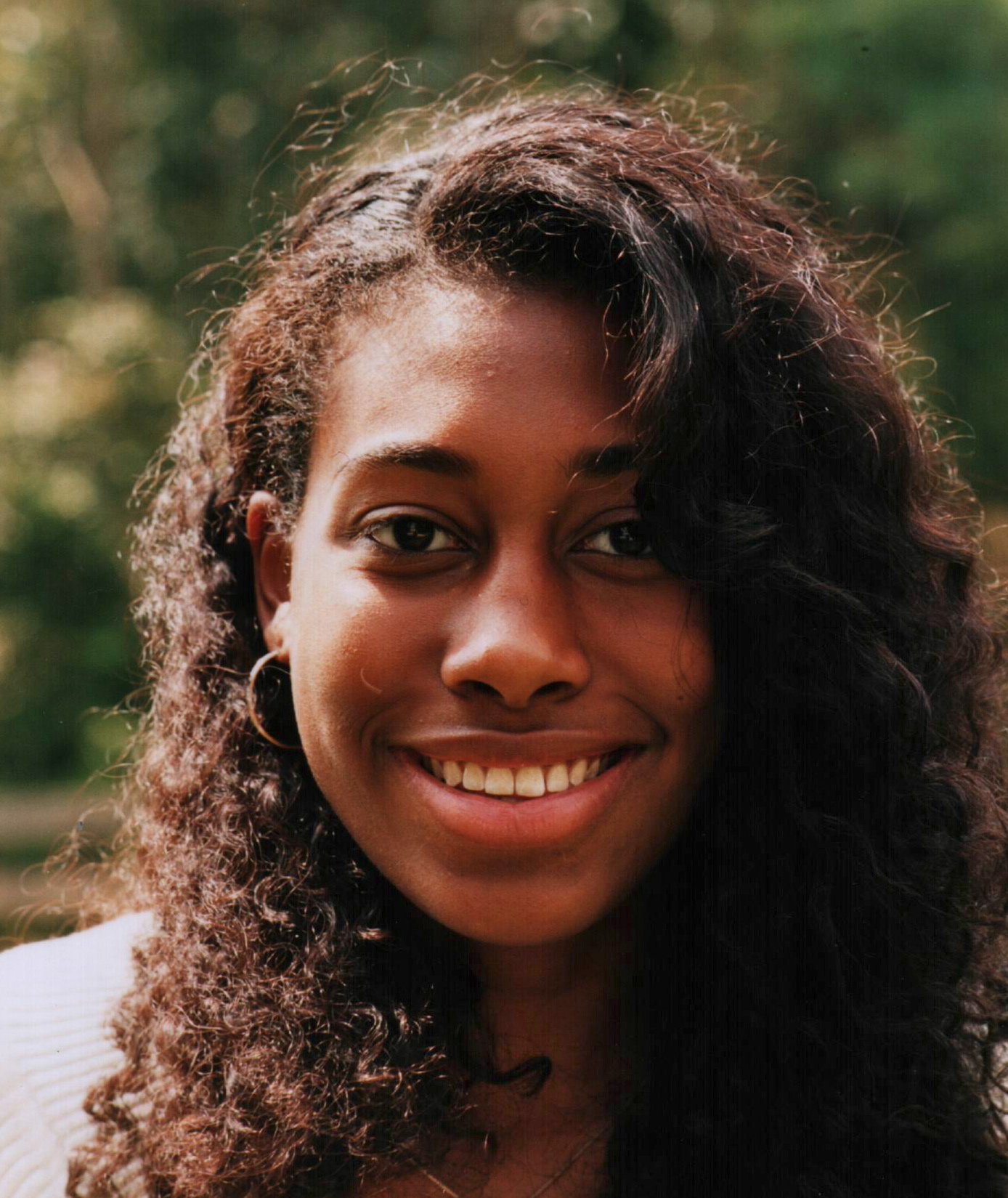
Irène Mathieu is a writer and medical student at Vanderbilt University. Before medical school she studied International Relations at the College of William and Mary and completed a Fulbright Fellowship in the Dominican Republic. Irène’s poetry, prose, and photography can be found in a diverse array of publications, including The Caribbean Writer, The Meadowland Review, Sole Literary Journal, Protest Poems, the Lindenwood Review, Muzzle Magazine, Magnapoets, Damselfly Press, Hinchas de Poesia, OVS Magazine, qarrtsiluni, Tabula Rasa, Extract(s), So to Speak, Diverse Voices Quarterly, Journal of General Internal Medicine, and more. Her poetry chapbook entitled the galaxy of origins is forthcoming in 2014 from Dancing Girl Press. She plans to become a community-engaged primary care physician and researcher who listens to and tells stories around the world. You can read her blog at and follow her on Twitter.
Previous Post

February 26, 2014
Just a friend
Next Post
February 28, 2014 The Muslim Protagonist
Browse Our Archives
Select a Category Book Reviews Brown Girl Dreaming Editors Flirting with Fate and other Disasters of an Intersectional Muslimah Food, Love, & Memories Friday Love Halal Since 22 Integrity of Heart Life After Death Literary Mama Literature Love Inshallah Podcast Love InshAllah writers Media My Infidel Husband Not Without Love Poetry Monday Radical Love Reflections & Readings Reviews of Love InshAllah Salaam Love Writers Sex & The Ummah Single in the City Spotlight Story & Chai Book Club The Geekologist The Love Tour The Male Gaze Things I Wish I'd Known Thoughts of a Wasat Girl Uncategorized Your Sunny Side Up Your voices
Select a Month May 2015 April 2015 March 2015 February 2015 January 2015 December 2014 November 2014 October 2014 September 2014 August 2014 July 2014 June 2014 May 2014 April 2014 March 2014 February 2014 January 2014 December 2013 November 2013 October 2013 September 2013 August 2013 July 2013 June 2013 May 2013 April 2013 March 2013 February 2013 January 2013 December 2012 November 2012 October 2012 September 2012 August 2012 July 2012 June 2012 May 2012 April 2012 March 2012 February 2012 January 2012 December 2011 November 2011
Follow Us!
TAKE THE
Religious Wisdom Quiz
Who said: "I am the Alpha and the Omega, who is, and who was, and who is to come, the Almighty"?
Select your answer to see how you score.
Jesus An angel God (the Lord God) John
Related posts from Love, InshAllah



Hip-Hop Hijabis: Spitting Rhymes About Being Muslim And...

TRENDING AT PATHEOS Muslim

25 Years Later: How Much Has Changed for...
As we approach the 25th anniversary of September 11th, I’ve found myself...

Podcast: Third Spaces & The Rise of Yemeni...
In the latest episode of The Artistic Foodies Podcast, hosts Abbas...

HalalFest Picks: Best 60 Halal Spots for Super...
Back in 2016, I came up with a list of 29...

Unity Is America’s Strength — Division Is Its...
by Hidayatullah Ahsan When Valentina Gomez, a Republican candidate for Congress in...

Zohran Mamdani and New York’s Fight Against Islamophobia
This past June, against all odds, Zohran Mamdani won the Democratic primary...

What the Fourth of July Means to a...
As we mark another Fourth of July, millions of Americans will celebrate...
view all Muslim blogs
Ad-Free & Subscriber Log-In Subscription Support
- About Us
- 2026 Calendar
- Videos
- Podcasts
- Library of World Religions
- Faith In Media Tracker
- Advertise With Us
- Write for Us
- Privacy Policy
- Terms of Service
- Do Not Sell My Data
- Contact Us
- Radiant Digital
- Manage Newsletter Subscriptions
- Unsubscribe From Notifications
- Sitemap
Copyright 2008-2026, Patheos. All rights reserved.
Subscription Support Ad-Free & Subscriber Log-In
Follow Patheos