
BuddhistCatholicContemplativeEvangelicalGeneral ChristianHinduJewishLatter-day SaintMuslimNew VisionsProgressive Christian
Beliefs
- Buddhist
- Catholic
- Contemplative
- Evangelical
- General Christian
- Hindu
- Jewish
- Latter-day Saint
- More Voices
- Muslim
- New Visions
- Pagan
- Progressive Christian
Topics
- Religion News
- Food and Religion
- Sports and Religion
- Religious Art
- Religious Music and Entertainment
- Religious Events
- History and Religion
- Style and Religion
- Politics and Religion
- Women in Religion
- Recreation Outdoors and Religion
- Business Finance and Religion
- Careers Workplace and Religion
- Education and Religion
- Family Parenting and Religion
- Health Fitness and Religion
- Home and Religion
- Relationships and Religion
- Technology and Religion
- Travel and Religion
Columnists
- Buddhist Columnists
- Business Finance and Religion Columnists
- Careers Workplace and Religion Columnists
- Catholic Columnists
- Contemplative Columnists
- Education and Religion Columnists
- Evangelists Columnists
- Family Parenting and Religion Columnists
- General Christian Columnists
- Health Fitness and Religion Columnists
- Hindu Columnists
- History and Religion Columnists
- Home and Religion Columnists
- Jewish Columnists
- More Voices Columnists
- Latter Day Columnists
- Muslim Columnists
- New Visions Columnists
- Nonreligious Columnists
- Pagan Columnists
- Politics and Religion Columnists
- Progressive Columnists
- Recreation Outdoors and Religion Columnists
- Relationships and Religion Columnists
- Religion News Columnists
- Religious Art Columnists
- Religious Events Columnists
- Religious Music and Entertainment Columnists
- Sports and Religion Columnists
- Style and Religion Columnists
- Technology and Religion Columnists
- Travel and Religion Columnists
- Women in Religion Columnists
Resource Library
- 2026 Calendar
- Library of World Religions
- The 100 Most Holy Places on Earth
- Patheos Answers
- Podcasts
- Videos
- Faith Leaders Database
- Anglican Episcopalian
- Bahai
- Baptist
- Buddhism
- Christianity
- Confucianism
- Eastern Orthodoxy
- Hinduism
- Holiness and Pentecostal
- ISKCON
- Islam
- Judaism
- Lutheran
- Methodist
- The Church of Jesus Christ of Latter-day Saints
- New Age
- Paganism
- Presbytarian and Reformed
- Protestantism
- Religion Behind the Scenes
- Roman Catholic
- Scientology
- Shia Islam
- Sikhism
- Sufism
- Sunni Islam
- Taoism
- Zen
- See all religions
Research Tools
 Ad-Free & Subscriber Log-In Subscription Support
Ad-Free & Subscriber Log-In Subscription Support
Follow Patheos 

- Trending:
- Forgiveness
- |
- Marriage
- |
- Consciousness
- |
- Death Penalty
- |
- Election
- |
- Halloween
 Love, InshAllah
- Home
- Muslim
- Relationships and Religion
- Burqas, Baseball, and Apple Pie
Burqas, Baseball, and Apple Pie
Last updated on: November 3, 2014 at 11:14 am by Posted by The Editors
Burqas, Baseball, and Apple Pie 2014-11-03T11:14:40-07:00 Posted by The Editors
Patheos Explore the world's faith through different perspectives on religion and spirituality! Patheos has the views of the prevalent religions and spiritualities of the world.
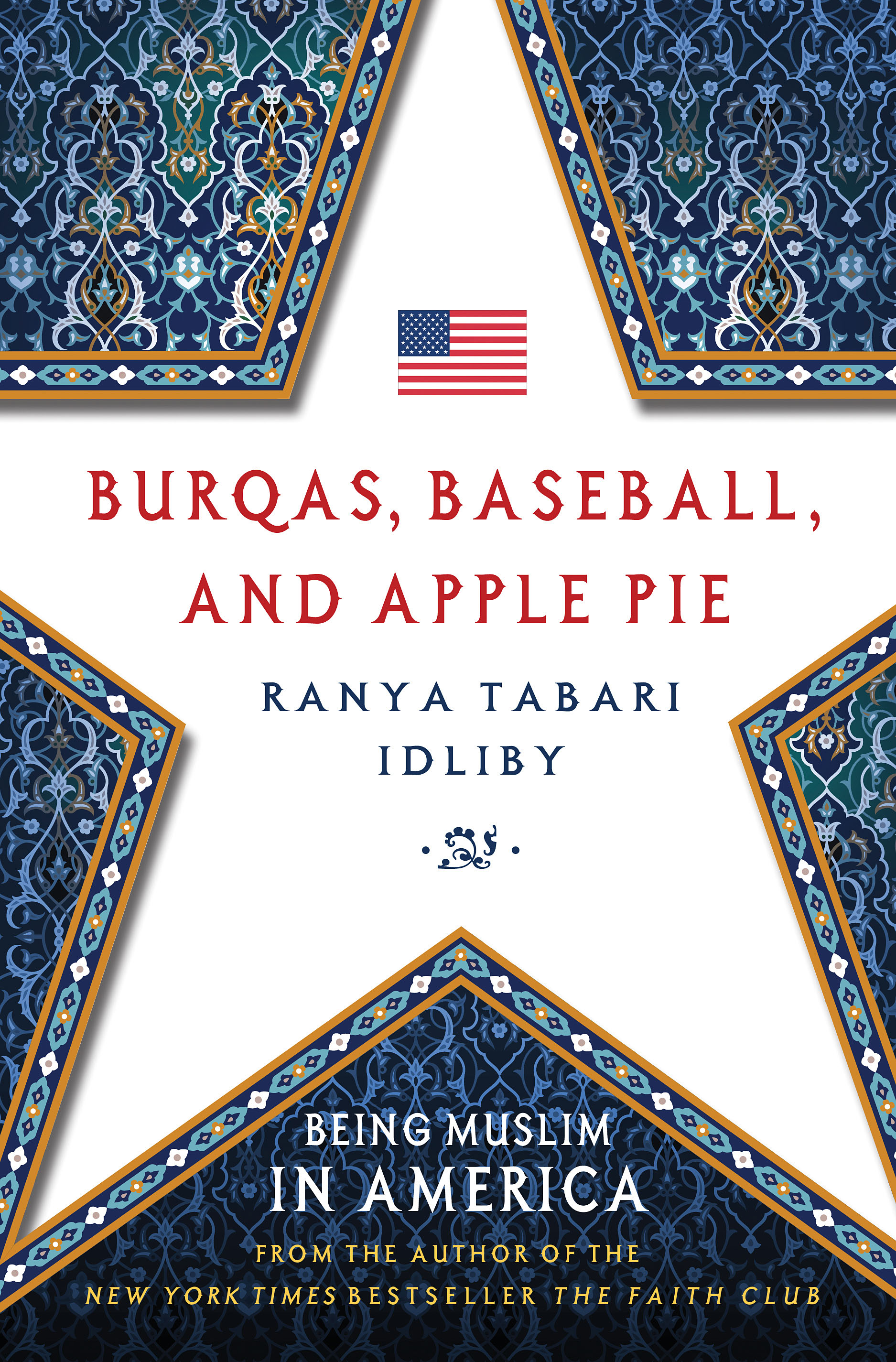
Love, Inshallah presents an author interview podcast with The Faith Club author, Ranya Tabari Idliby, as she discusses her memoir, Burqas, Baseball, and Apple Pie: Being Muslim in America.
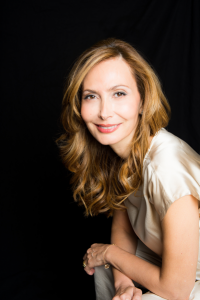
Deonna Kelli Sayed (DKS): This is Deonna Kelli Sayed for www.patheos.com/blogs/loveinshallah. Ranya Tabari Idliby is an American-Muslim writer. You’ve probably heard of her first book, the celebrated The Faith Club: A Muslim, a Christian, a Jew: Three Women Search for Understanding, which featured an interfaith group of female friends promoting common ground after the September 11th attacks. Ranya is an American-Muslim and a New Yorker who has raised her children in the city.
Ranya’s second book reveals more of her personal journey. In Burqas, Baseball, and Apple Pie: Being Muslim in America, she focuses on her story as a Palestinian, a Muslim, and a mother negotiating her family’s Islamic identity in celebration of America. The memoir interweaves the stories of three generations: her father came to America as a Palestinian refugee when he was sixteen years old; the details of her own global childhood as a Palestinian raised in the Gulf states, and the experiences of her two American-born children.
Burqas, Baseball, and Apple Pie echoes the sentiments of Loveinshallah – that Muslims in America – and anywhere, for that matter — can own and celebrate personal truths.
I spoke with Ranya over Skype, where she revealed that her journey started on September 11, 2001, and why these events became a turning point for Muslims all over the world.
[soundcloud url=”https://api.soundcloud.com/tracks/135381121″ params=”color=ff5500&auto_play=false&hide_related=false&show_artwork=true” width=”100%” height=”166″ iframe=”true” /]
Ranya Tabari Idliby (RTI): It is interesting because before 9/11, I would have told you that I identify — in terms of my heritage – I would not have necessarily said Muslim. I would have said American-Palestinian. I think that would have come before Muslim. Certainly after 9/11, the Islamic angle of my identity, our identity as a family, bringing up children in a post -9/11 America, it certainly made Islam seem like the issue to tackle.
DKS: She explains why being Muslim in America now carries so much weight — and potential.
RTI: I think 9/11 is a demarcation point. And I think the reason it has become such a thorny issue because assimilation can no longer happen in a neutral context. It is complicated and compounded by a very politicized agenda on both sides of the wall – within America and outside, in terms of American foreign policy in parts of the world there the majority are Muslim populations.
DKS: Ranya gained unique insight in how September 11th marked American perceptions of Islam as well as how Muslims identified with America. She traveled throughout the US speaking with many audiences during The Faith Club tour. Rayna felt the pulse of American attitudes towards Muslims, both positive and negative. Non-Muslims may be surprised that 9/11 actually became a powerful moment for Muslims to reflect upon the personal aspects of the faith beyond the political components. Ranya was no exception. She explains this process.
 RTI: What made me Other when I was in the Middle East was my Palestinian heritage. I was an outsider as I grew up in various Arab States; I grew up in Kuwait and spent a good amount of my childhood in Dubai. As I went through school in college and the States, I arrived here at sixteen – I thought of myself as a secular person. When 9/11 happened, I felt that Islam was on trial. I didn’t know what my Islam meant to me, and that basically started the journey that has me today here – an author of two books — because I myself needed to take ownership of my faith. To understand why I chose to be a Muslim rather than to be an accidental Muslim, an accident of birth. So this is the journey I am on right now.
DKS: Her new memoir explores the story of her parents, her marriage, motherhood, and how she started to deconstruct her faith in order to understand the larger issues. Ranya shared that there was a moment a few years ago when Burqas, Baseball, and Apple Pie began to take root.
RTI: The book started in many ways because of an incident I refer to Aisha, whose name means, “to live” or “she lives.” I remember coming home and having the BBC radio on and the reporting of her stoning to death. She is a 13-year-old girl who had gone to Somalia sharia court to report her rape and was accused of adultery stoned to death. I broke down at my kitchen table and started to cry. Whereas before I would have explained that in my mind as an aberration, as a case as a failed of Somalia state, political anarchy, and it is not really the true face of Islam…all of those things are true. But I think that, for me, that incident was a breaking point in the sense that it was no longer enough to for me distance our faith from these instances. I needed more. I needed Aisha’s fame to be part of our life, to become our reality. To bring her pain to our home and say, “This is unacceptable. We can no longer ever stone in the name of Muslim justice.”
DKS: And this hit home to her as a mother; she wanted something different for her two children who experienced the brunt of being Muslim in a post-September 11th world:
RTI: My children have always been my inspiration.
Without them there would be no material. They stumble on these issues whether it is my daughter when she was in kindergarten asking me if we celebrate Hanukah or Christmas. Or my son worrying about being a flag bearer at school because he has a foreign sounding name. They bring these issues to me, these questions. As a parent I have to think them through, research them and understand them in order for me to be able to parent, so it has always been a big part of the story.
DKS: The last few chapters of the book are specifically addressed to her daughter. Ranya explains how she made the decision to write to her children.
RTI: I came to write about the female specific issues, I was suddenly speaking to my daughter. And maybe it is because the underpinning of the book is that as much as I know my daughter will not be stoned to death, as much as I know that we will not have amputations here in America or in the large majority of the Muslim states, I don’t think it is no longer enough to just sit back and say that those are the exceptions. Perhaps I am personalizing it because I want to give it dynamic vivid accessible human voice – making it a more relevant issue for us Muslims.
DKS: She is quick to point out that Muslims need not to be apologists – but rather, cultural reformers.
RTI: The truth of the matter is Islam does suffer from issues within the faith and we need as Muslim need to develop a zero tolerance policy when it comes to values that are archaic, that do no belong the twenty-first century. We need to demand an Islam that of twenty-first century not one that celebrates or invested in some mythical, idealized seventh century Arabia.
DKS: And part of that effort is to tell new stories about who Muslims are:
RTI: I think Muslims need to engage. They need to be vocal. They need to try and write their own stories. Writing books, being artists, musicians, filmmakers. Doctors, lawyer. We need to own our faith, our narratives, our personal lives.
DKS: Ranya feels that America provides Muslims a unique environment for self-expression, and in doing so does not contradict American values, but celebrates them:
RTI: I am a believer in American exceptionalism. I think that America superpower and its super ability to assimilate is unique and its history and having asked, “Give me your wretched, your poor, your downtrodden.” No other nation has asked that. Yes, it has been less than ideal.
At the end of the day, America has never lost sight of its ultimate promise and ultimate vision. To me, as American Muslims, we are the most recent reiteration of that promise and of that journey.
DKS: Ranya explains her Burqas, Baseball, and Apple Pie as:
RTI: It is a book that is really ultimately a love story. For me it is a love we all share for our children, for our future, or common humanity, for our belief in what must be a better tomorrow. A more dignified, more enlightened tomorrow. To me, it is not just an American book or a Muslim book.
I write about America from a position of love and I write about Islam from a position of love.
God has said to us that diversity is the sign of His divine mercy, and how very American is that?
DKS: Burqas, Baseball, and Apple Pie: Being Muslim in America is out now and available from Palgrave Macmillan. This is Deonna Kelli Sayed. Thank you for visiting Love,Inshallah.
—–
Audio and music used in this podcast falls under Creative Commons
“Take Me Out To the Ballgame” Unknown
Sample audio of 911 calls in New York City regarding the Twin Towers from September 11, 2001
“Raped Child Stoned as Adulteress,” The Press Association
“Narcoleptic Emigrees” No Gura
“Zghailana” Traditional Moroccan folk music
“The Intro” Atom Wrath
“Star Spangled Banner ” George J. Gasken from The Free Music Archive
Previous Post

February 17, 2014
Inter-Dependent
Next Post
February 19, 2014 My Sci Fi Valentine
Browse Our Archives
Select a Category Book Reviews Brown Girl Dreaming Editors Flirting with Fate and other Disasters of an Intersectional Muslimah Food, Love, & Memories Friday Love Halal Since 22 Integrity of Heart Life After Death Literary Mama Literature Love Inshallah Podcast Love InshAllah writers Media My Infidel Husband Not Without Love Poetry Monday Radical Love Reflections & Readings Reviews of Love InshAllah Salaam Love Writers Sex & The Ummah Single in the City Spotlight Story & Chai Book Club The Geekologist The Love Tour The Male Gaze Things I Wish I'd Known Thoughts of a Wasat Girl Uncategorized Your Sunny Side Up Your voices
Select a Month May 2015 April 2015 March 2015 February 2015 January 2015 December 2014 November 2014 October 2014 September 2014 August 2014 July 2014 June 2014 May 2014 April 2014 March 2014 February 2014 January 2014 December 2013 November 2013 October 2013 September 2013 August 2013 July 2013 June 2013 May 2013 April 2013 March 2013 February 2013 January 2013 December 2012 November 2012 October 2012 September 2012 August 2012 July 2012 June 2012 May 2012 April 2012 March 2012 February 2012 January 2012 December 2011 November 2011
Follow Us!
TAKE THE
Religious Wisdom Quiz
What did the high priest wear on his chest as a symbol of the twelve tribes?
Select your answer to see how you score.
Breastplate Cloak Ring Headband
Related posts from Love, InshAllah



Hip-Hop Hijabis: Spitting Rhymes About Being Muslim And...

TRENDING AT PATHEOS Muslim

25 Years Later: How Much Has Changed for...
As we approach the 25th anniversary of September 11th, I’ve found myself...

Podcast: Third Spaces & The Rise of Yemeni...
In the latest episode of The Artistic Foodies Podcast, hosts Abbas...

HalalFest Picks: Best 60 Halal Spots for Super...
Back in 2016, I came up with a list of 29...

Unity Is America’s Strength — Division Is Its...
by Hidayatullah Ahsan When Valentina Gomez, a Republican candidate for Congress in...

Zohran Mamdani and New York’s Fight Against Islamophobia
This past June, against all odds, Zohran Mamdani won the Democratic primary...

What the Fourth of July Means to a...
As we mark another Fourth of July, millions of Americans will celebrate...
view all Muslim blogs
Ad-Free & Subscriber Log-In Subscription Support
- About Us
- 2026 Calendar
- Videos
- Podcasts
- Library of World Religions
- Faith In Media Tracker
- Advertise With Us
- Write for Us
- Privacy Policy
- Terms of Service
- Do Not Sell My Data
- Contact Us
- Radiant Digital
- Manage Newsletter Subscriptions
- Unsubscribe From Notifications
- Sitemap
Copyright 2008-2026, Patheos. All rights reserved.
Subscription Support Ad-Free & Subscriber Log-In
Follow Patheos