
BuddhistCatholicContemplativeEvangelicalGeneral ChristianHinduJewishLatter-day SaintMuslimNew VisionsProgressive Christian
Beliefs
- Buddhist
- Catholic
- Contemplative
- Evangelical
- General Christian
- Hindu
- Jewish
- Latter-day Saint
- More Voices
- Muslim
- New Visions
- Pagan
- Progressive Christian
Topics
- Religion News
- Food and Religion
- Sports and Religion
- Religious Art
- Religious Music and Entertainment
- Religious Events
- History and Religion
- Style and Religion
- Politics and Religion
- Women in Religion
- Recreation Outdoors and Religion
- Business Finance and Religion
- Careers Workplace and Religion
- Education and Religion
- Family Parenting and Religion
- Health Fitness and Religion
- Home and Religion
- Relationships and Religion
- Technology and Religion
- Travel and Religion
Columnists
- Buddhist Columnists
- Business Finance and Religion Columnists
- Careers Workplace and Religion Columnists
- Catholic Columnists
- Contemplative Columnists
- Education and Religion Columnists
- Evangelists Columnists
- Family Parenting and Religion Columnists
- General Christian Columnists
- Health Fitness and Religion Columnists
- Hindu Columnists
- History and Religion Columnists
- Home and Religion Columnists
- Jewish Columnists
- More Voices Columnists
- Latter Day Columnists
- Muslim Columnists
- New Visions Columnists
- Nonreligious Columnists
- Pagan Columnists
- Politics and Religion Columnists
- Progressive Columnists
- Recreation Outdoors and Religion Columnists
- Relationships and Religion Columnists
- Religion News Columnists
- Religious Art Columnists
- Religious Events Columnists
- Religious Music and Entertainment Columnists
- Sports and Religion Columnists
- Style and Religion Columnists
- Technology and Religion Columnists
- Travel and Religion Columnists
- Women in Religion Columnists
Resource Library
- 2026 Calendar
- Library of World Religions
- The 100 Most Holy Places on Earth
- Patheos Answers
- Podcasts
- Videos
- Faith Leaders Database
- Anglican Episcopalian
- Bahai
- Baptist
- Buddhism
- Christianity
- Confucianism
- Eastern Orthodoxy
- Hinduism
- Holiness and Pentecostal
- ISKCON
- Islam
- Judaism
- Lutheran
- Methodist
- The Church of Jesus Christ of Latter-day Saints
- New Age
- Paganism
- Presbytarian and Reformed
- Protestantism
- Religion Behind the Scenes
- Roman Catholic
- Scientology
- Shia Islam
- Sikhism
- Sufism
- Sunni Islam
- Taoism
- Zen
- See all religions
Research Tools
 Ad-Free & Subscriber Log-In Subscription Support
Ad-Free & Subscriber Log-In Subscription Support
Follow Patheos 

- Trending:
- Forgiveness
- |
- Marriage
- |
- Consciousness
- |
- Death Penalty
- |
- Election
- |
- Halloween
 Love, InshAllah
- Home
- Muslim
- Relationships and Religion
- My X-Men
My X-Men
Last updated on: November 3, 2014 at 11:16 am by Posted by The Editors
My X-Men 2014-11-03T11:16:14-07:00 Posted by The Editors
Patheos Explore the world's faith through different perspectives on religion and spirituality! Patheos has the views of the prevalent religions and spiritualities of the world.
I have opinions. About the X-Men.
I’m a child of the 1990’s, so my reference point is the amazing cartoon, “X-Men: The Animated Series,” which aired from 1992-1997 (like “Star Wars Episode I: The Phantom Menace,” the recent movies simply don’t exist in my brain database). Rogue was my favorite, she of the big hair, epic sass, and ability to fly. I had a crush on Gambit, and an inexplicable thing for guys with N’Awlins accents and the ability to handle a deck of playing cards ever since. As I got older, I appreciated Cyclops’ leadership, Wolverine’s unrequited love, and Storm’s wisdom (and seriously folks, that rockin’ mane of white hair was a force of nature in and of itself). Even Jean Grey managed to kick ass as the Phoenix.
But somehow, I managed to largely discount Professor Xavier, the man who created a school for those who were misunderstood or shunned, some even orphaned, literally and figuratively. He was the man with the plan. He gave society’s outcasts a future.
I found myself thinking of Professor X in Pakistan this past August, during my first trip back in ten years. Since coming back, I’ve been ruminating on Pakistan this time around and what it taught me. Pakistan, for all its damage and strange beauty, has always held lessons for me. I was born there, and though I’ve had the hyphenated Pakistani-American identity since I was one year and one month old, Pakistani earth makes up my skin and Punjab’s rivers flow through my veins.
From afar, it always seems like Pakistan is moving backwards. But up close, it’s a country that is currently moving both forwards and backwards, like the simultaneous expansion and contraction of the universe. I saw glimmers of hope, smidgens of change. And the harbingers are mini-superheroes.
 If you look for them, there are superheroes everywhere in Pakistan. There are flashes of change, havens of fortitude. A former sports star’s ideology has inspired civic engagement in a country where voting was considered “beneath” a certain class just a few years ago. A teenage girl brave enough to take a bullet for her beliefs speaks at the U.N. about global education initiatives and has created a ripple effect for women’s rights. Pakistan even has its own kickass superhero, the Burqa Avenger, a schoolteacher who fights the bad guys armed only with books and pens.
And nowhere was this more apparent than at the school made up of unimagined dreams.
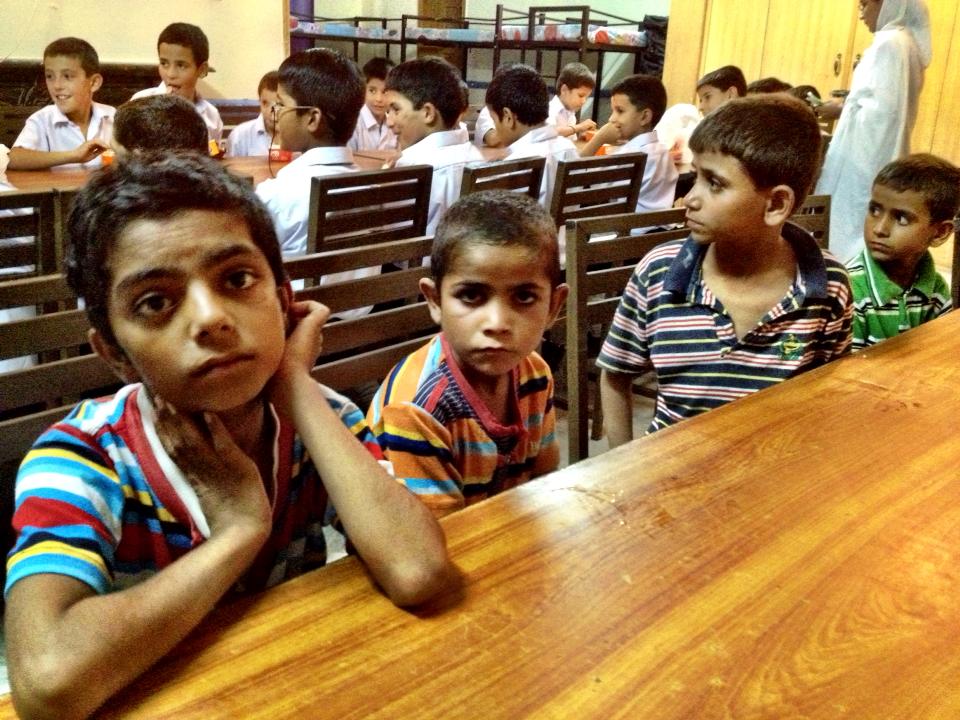
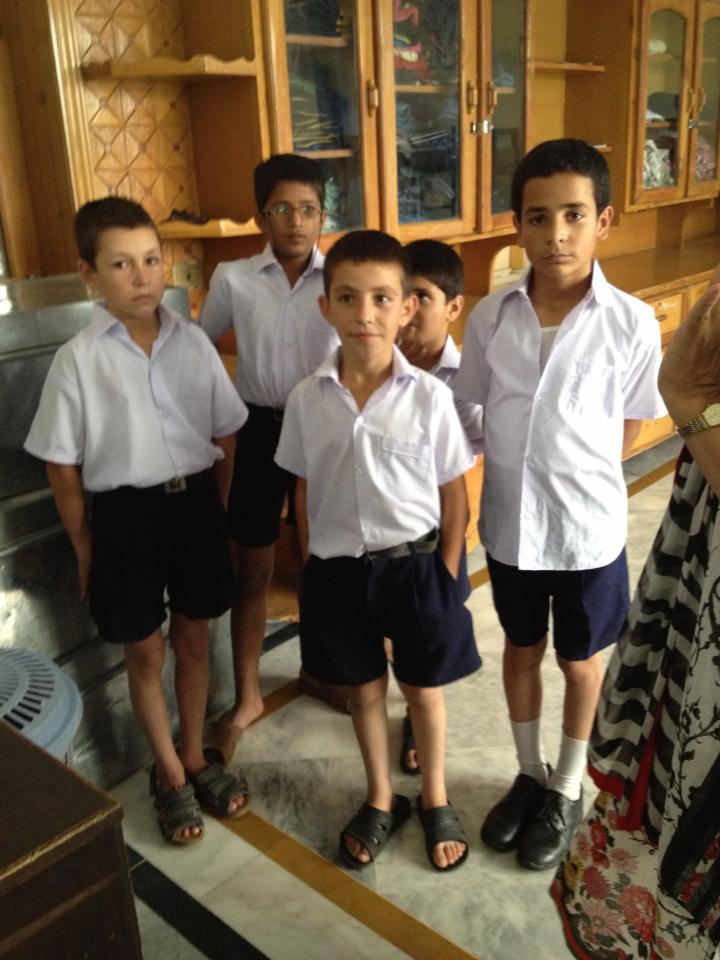
Nearly two years ago, my beautiful aunt Sonia gathered a group of people together to create opportunity for orphaned children –for in Pakistan, children are the casualties of the violence that ripples casually and destructively through the landscape. Sonia aunty, together with a group of women who agreed to be director, warden, teachers, and caretakers, took on responsibility for nearly 100 boys, all of whom have been orphaned in the Muslim definition of the word: they have lost fathers, but not always mothers. A handful of them are “yateem,” or true orphans, having lost both mother and father. They come from the northern areas of Pakistan – the Swat valley or surrounding regions – or from the tribal areas of Sindh and Balochistan. They have lost fathers in drone attacks, through sectarian violence, or because of old landmines that remain embedded in the countryside. Some have lost mothers to grief or to the harsh realities of widowhood.
The day we visited the school was the day after Pakistani Independence Day, two days after the boys had returned to Islamabad from their summer holidays at home. Flooding and landslides in some areas have prevented some children from returning, their arrival delayed by at least a week. The boys who are there are all between the ages of five and ten. Nearly 85 of boys have already spent a year at the school: they are in their uniforms, they know their routines. The light is coming back to their eyes and they are easier with one another, shy with newcomers.
A few of them sit silently looking at their hands – these are the ones with lingering psychological trauma. The boy who spent months in a religious madrassa after his father’s death and recites a verse from the Quran with a seriousness and a pain in his eyes that belies his age. The other boy who one morning desperately tried to stop his father from attending the tribal meeting which took his father’s life. The youngest child, barely five, who looks around with a permanent confusion, lost now that he has neither mother nor father.
In the beginning, all the boys were difficult to handle. The scars of sectarian violence seeped into the boys’ dealings with one another: the Balochis grouped together against the Sindhis and the northerners, the Sunnis pitted themselves against the Shias. There were knife fights, bed-wetting. Basic hygiene was not something any one of them was familiar with. But by the end of their first year, many didn’t want to leave the school’s haven for their homes. They are happy here.
There are four new boys. They don’t yet have uniforms, and their faces are still creased with worry, their eyes haunted. The other boys have been taught to speak only in Urdu, to prevent the linguistic groupings that had formed before, but these boys speak only Balochi. Sonia aunty calls over another boy to translate. There’s a stark difference between his manner and confidence and the wariness of the new boys. They sit apart from the others, their body language rife with fear. Your heart goes out to them, but you know also that they now have a future, and though they can’t yet see it, heretofore unimaginable opportunities.
The boys show us their bunks, their wardrobes, their shoe cabinets. We talk to the oldest group about what they want to be when they grow up. “A doctor!” says one. “A pilot,” says another, “so I can fly above the clouds.” They have been taught to dream, by real life superheroes who believe in them, who’ve taken society’s outcasts and built for them a safe haven. Just like Professor X and his School for Gifted Youngsters.
—-
www.patheos.com/blogs/loveinshallah columnist Zainab Chaudary works in politics by day and as a writer by night. Her blog, The Memorist, ruminates upon travel, religion, science, relationships, and the past, present, and future experiences that make up a life. She tweets @TheMemorist.
Pakistan and American-Muslim voices
Previous Post

September 17, 2013
Back to the Rooftop
Next Post
September 19, 2013 A Note To My Son
Browse Our Archives
Select a Category Book Reviews Brown Girl Dreaming Editors Flirting with Fate and other Disasters of an Intersectional Muslimah Food, Love, & Memories Friday Love Halal Since 22 Integrity of Heart Life After Death Literary Mama Literature Love Inshallah Podcast Love InshAllah writers Media My Infidel Husband Not Without Love Poetry Monday Radical Love Reflections & Readings Reviews of Love InshAllah Salaam Love Writers Sex & The Ummah Single in the City Spotlight Story & Chai Book Club The Geekologist The Love Tour The Male Gaze Things I Wish I'd Known Thoughts of a Wasat Girl Uncategorized Your Sunny Side Up Your voices
Select a Month May 2015 April 2015 March 2015 February 2015 January 2015 December 2014 November 2014 October 2014 September 2014 August 2014 July 2014 June 2014 May 2014 April 2014 March 2014 February 2014 January 2014 December 2013 November 2013 October 2013 September 2013 August 2013 July 2013 June 2013 May 2013 April 2013 March 2013 February 2013 January 2013 December 2012 November 2012 October 2012 September 2012 August 2012 July 2012 June 2012 May 2012 April 2012 March 2012 February 2012 January 2012 December 2011 November 2011
Follow Us!
TAKE THE
Religious Wisdom Quiz
What animal tricked Eve into eating the forbidden fruit?
Select your answer to see how you score.
Serpent Eagle Bear Lion
Related posts from Love, InshAllah



Guava Jam: Taste of my mother, taste of...
TRENDING AT PATHEOS Muslim

25 Years Later: How Much Has Changed for...
As we approach the 25th anniversary of September 11th, I’ve found myself...

Podcast: Third Spaces & The Rise of Yemeni...
In the latest episode of The Artistic Foodies Podcast, hosts Abbas...

HalalFest Picks: Best 60 Halal Spots for Super...
Back in 2016, I came up with a list of 29...

Unity Is America’s Strength — Division Is Its...
by Hidayatullah Ahsan When Valentina Gomez, a Republican candidate for Congress in...

Zohran Mamdani and New York’s Fight Against Islamophobia
This past June, against all odds, Zohran Mamdani won the Democratic primary...

What the Fourth of July Means to a...
As we mark another Fourth of July, millions of Americans will celebrate...
view all Muslim blogs
Ad-Free & Subscriber Log-In Subscription Support
- About Us
- 2026 Calendar
- Videos
- Podcasts
- Library of World Religions
- Faith In Media Tracker
- Advertise With Us
- Write for Us
- Privacy Policy
- Terms of Service
- Do Not Sell My Data
- Contact Us
- Radiant Digital
- Manage Newsletter Subscriptions
- Unsubscribe From Notifications
- Sitemap
Copyright 2008-2026, Patheos. All rights reserved.
Subscription Support Ad-Free & Subscriber Log-In
Follow Patheos