
BuddhistCatholicContemplativeEvangelicalGeneral ChristianHinduJewishLatter-day SaintMuslimNew VisionsProgressive Christian
Beliefs
- Buddhist
- Catholic
- Contemplative
- Evangelical
- General Christian
- Hindu
- Jewish
- Latter-day Saint
- More Voices
- Muslim
- New Visions
- Pagan
- Progressive Christian
Topics
- Religion News
- Food and Religion
- Sports and Religion
- Religious Art
- Religious Music and Entertainment
- Religious Events
- History and Religion
- Style and Religion
- Politics and Religion
- Women in Religion
- Recreation Outdoors and Religion
- Business Finance and Religion
- Careers Workplace and Religion
- Education and Religion
- Family Parenting and Religion
- Health Fitness and Religion
- Home and Religion
- Relationships and Religion
- Technology and Religion
- Travel and Religion
Columnists
- Buddhist Columnists
- Business Finance and Religion Columnists
- Careers Workplace and Religion Columnists
- Catholic Columnists
- Contemplative Columnists
- Education and Religion Columnists
- Evangelists Columnists
- Family Parenting and Religion Columnists
- General Christian Columnists
- Health Fitness and Religion Columnists
- Hindu Columnists
- History and Religion Columnists
- Home and Religion Columnists
- Jewish Columnists
- More Voices Columnists
- Latter Day Columnists
- Muslim Columnists
- New Visions Columnists
- Nonreligious Columnists
- Pagan Columnists
- Politics and Religion Columnists
- Progressive Columnists
- Recreation Outdoors and Religion Columnists
- Relationships and Religion Columnists
- Religion News Columnists
- Religious Art Columnists
- Religious Events Columnists
- Religious Music and Entertainment Columnists
- Sports and Religion Columnists
- Style and Religion Columnists
- Technology and Religion Columnists
- Travel and Religion Columnists
- Women in Religion Columnists
Resource Library
- 2026 Calendar
- Library of World Religions
- The 100 Most Holy Places on Earth
- Patheos Answers
- Podcasts
- Videos
- Faith Leaders Database
- Anglican Episcopalian
- Bahai
- Baptist
- Buddhism
- Christianity
- Confucianism
- Eastern Orthodoxy
- Hinduism
- Holiness and Pentecostal
- ISKCON
- Islam
- Judaism
- Lutheran
- Methodist
- The Church of Jesus Christ of Latter-day Saints
- New Age
- Paganism
- Presbytarian and Reformed
- Protestantism
- Religion Behind the Scenes
- Roman Catholic
- Scientology
- Shia Islam
- Sikhism
- Sufism
- Sunni Islam
- Taoism
- Zen
- See all religions
Research Tools
 Ad-Free & Subscriber Log-In Subscription Support
Ad-Free & Subscriber Log-In Subscription Support
Follow Patheos 

- Trending:
- Forgiveness
- |
- Marriage
- |
- Consciousness
- |
- Death Penalty
- |
- Election
- |
- Halloween
 Love, InshAllah
- Home
- Muslim
- Relationships and Religion
- Wasat Girl: The Fat Side of Life
Wasat Girl: The Fat Side of Life
Last updated on: November 3, 2014 at 11:16 am by Posted by The Editors
Wasat Girl: The Fat Side of Life 2014-11-03T11:16:59-07:00 Posted by The Editors
Patheos Explore the world's faith through different perspectives on religion and spirituality! Patheos has the views of the prevalent religions and spiritualities of the world.
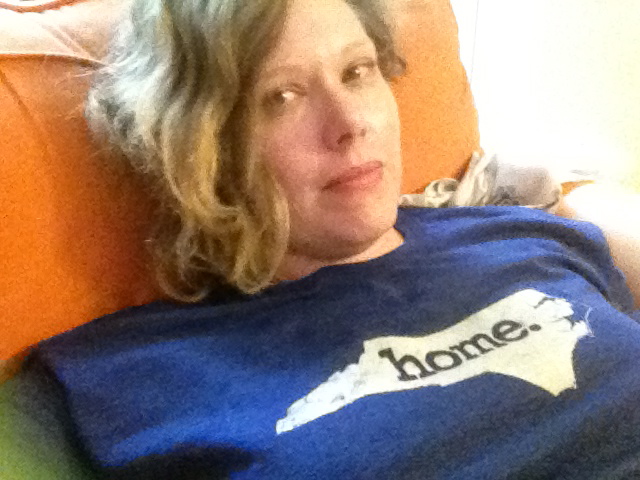
A “Wasat Girl” embraces being in-between multiple cultures, because this transcultured space is globalism living out loud. It was where culture happens, the place of power, that middle space – “wasat” culture.
Being a wasat girl is a cultural force, but there is a unique type of Third Space reserved for the overweight, the fat girls. If you grow up large, your life may be like crouching in a crevice, like in a fat roll, where you assume a type of invisibility even while knowing that people notice far more of you than they do the smaller folk. You are both inside and outside of public space: there is the sexual invisibility, the social biases, and sometimes, there is internal self-loathing because you feel that you will never measure up to Pretty Girl Space. You know that your girth enters the room before you do.
During the first few years of my marriage, there was a trip to Nairobi for an international conference. A large Maasai woman came up to me during an evening reception. She had remembered our first meeting at another reception in Washington, D.C., a few years prior.
On this African night, the Maasai woman, a Kenyan landmine activist, approached me and said hello again. She recalled that I was freshly married the last we met.
As she took my arm, she proclaimed, “Oh my! You’ve gotten so fat!”
[soundcloud url=”http://api.soundcloud.com/tracks/96002334″ params=”” width=” 100%” height=”166″ iframe=”true” /]
(Hear Deonna read this post!)
Of course, she read my mind. I felt fat. I was fat, and I felt even heavier while in Kenya in the only nice outfit I had, already worn once and in need of another use before washing.
Here I was in an elegant location, a room filled with the politically elite, being called out for my obesity by an African lady. (Incidentally, the same room appears in the 2005 movie, The Constant Gardner, in an eerily similar diplomatic reception scene featuring Rachel Weisz and Ralph Fiennes. You can imagine the glamour.) I was hoping that observers wouldn’t notice my weight. This imagined invisibility was a type of wasat-like mechanism I often employed; a desperate attempt to project thinness into some fictional Third Space. On that night, I walked around literally thinking, maybe people won’t really notice that I’m fat.
Then, this woman materialized and poked at the largest self-loathing scab I had.
“Well,” I stumbled, “I had a baby, you know. I haven’t lost the weight.”
She squeezed my arm tighter, her own being even fleshier than mine, and said, “Yes, you have definitely gotten fatter since the last time I saw you!” There was that lovely, wide, African smile moving across her face.
Who does something like this? Who comes up to a woman in public to decree that she has fleshed up and expanded? This Maasai woman, already tall like the rest of her kin, weighed twice as much as I did. Who was she to call me fat?
Yet, she was so beautiful; absolutely regal. She commanded such a presence that the particles in the air bent down in her honor.
My face reddened and I stood woefully embarrassed in this crowd of diplomats and international aid workers. I struggled to find excuses for my circumference, to make amends for the abundance of white, American flesh. This woman looked me up and down, patted me left and right, before saying in her cheery Swahili-Maasai tilt “Your husband must be making you very hap-py!”
In parts of Africa, a fat woman is a happy one. It means life is keeping well with her. This Maasai sister did not see deficiency or weakness when she canvased my benevolent, physical topography. What she saw was a vibrant, complete woman.
***
I’m single now, and one of the biggest fears I faced upon deciding to leave my marriage was the feeling that I was too large for any man to ever love. Oh, Deonna, my friends bellowed, you are just chubby. You are healthy. Your diet is better than most Americans, and you exercise. Really, most men don’t care as much about this as we think they do.
My mother called me up one day after reading a Facebook post about the matter and said, “Get over it.”
It is hard to get over a lifetime of apologizing for how a body inhabits space. These apologies become demons that are hard to expunge. One potential relationship I ruined because I felt too inadequate. As I bid him farewell, he said, “But you are so cool!”
Yeah, I thought, but don’t get too close because I’m still so fat.
I sabotaged another relationship, someone whom I love deeply, by flaying my insecurities at stealth speed. I undermined his presence in my life because, in part, I felt my weight flawed me so deeply that I was impossible to love. There is a real likelihood that because of my insecurity, I seek men who will never show up for me in the first place. So yes, if I want to move forward to a full complete life, I have to take my mother’s advice and just get over it.
***
Over dinner recently, I mentioned to my son that I needed a new life story. Not one to miss a chance to be witty, he promptly declared, “You need to stop thinking that you aren’t skinny and realize that you are skinner than you think.” He is eleven-years-old and has yet to deconstruct the relationship between language and power, but I appreciated how he did not use the word fat once that sentence; he used skinny twice, as if to make some sort of point about the liminal space of my body.
I have great friends in a small writing group who recently bitched-slapped me for hanging on to the old fatness script. They combed through the rough drafts of my memoir — prose disproportionately swelled in favor of my perceived inadequacies — and they said things like: Do you realize how strong you are? Your story is one of a woman who has done things most other women couldn’t do, and yet you don’t tell that story because you are too focused on perceived weaknesses. Stop it. You are a better writer when you aren’t allowing your insecurities to be your voice.
Change the script and you change the self.
***
One friend introduced me to a hadith by Imam Sadiq:
Verily, the servant has certain stations near God that cannot be realized without one of these two attributes: either the loss of his wealth or affliction in his body.
Perhaps this issue with my weight is a struggle that I need for an internal spiritual journey to realize my intrinsic value. Maybe, just maybe, it is like a crack for the light to shine through.
Another friend once said that writing is invocation. What these things in mind, I am beginning to write a new story, indeed. I am getting over it. I am starting to see myself as this regal, complete woman who doesn’t merely take up space in a room, but someone who bends the particles of the air when she enters. If I am going to be a wasat girl in mind, culture, and body, then I claiming this space as my homeland.
I am writing myself beautiful.
—
Deonna Kelli Sayed is a Love, Inshallah contributor and author of Paranormal Obsession: America’s Fascination with Ghosts & Hauntings, Spooks & Spirits. She has also contributes to altmuslimah.com and Muslimah Media Watch. Deonna is currently working on her memoir, The Way Will Be Made Clear, with support from the North Carolina United Arts Council Regional Artists’ Grant. To learn more, visit her website, and join her on Facebook and Twitter.
Previous Post

June 10, 2013
Poetry Monday: A Man Who Washes Dishes
Next Post
June 13, 2013 Advice: Dating Newbie
Browse Our Archives
Select a Category Book Reviews Brown Girl Dreaming Editors Flirting with Fate and other Disasters of an Intersectional Muslimah Food, Love, & Memories Friday Love Halal Since 22 Integrity of Heart Life After Death Literary Mama Literature Love Inshallah Podcast Love InshAllah writers Media My Infidel Husband Not Without Love Poetry Monday Radical Love Reflections & Readings Reviews of Love InshAllah Salaam Love Writers Sex & The Ummah Single in the City Spotlight Story & Chai Book Club The Geekologist The Love Tour The Male Gaze Things I Wish I'd Known Thoughts of a Wasat Girl Uncategorized Your Sunny Side Up Your voices
Select a Month May 2015 April 2015 March 2015 February 2015 January 2015 December 2014 November 2014 October 2014 September 2014 August 2014 July 2014 June 2014 May 2014 April 2014 March 2014 February 2014 January 2014 December 2013 November 2013 October 2013 September 2013 August 2013 July 2013 June 2013 May 2013 April 2013 March 2013 February 2013 January 2013 December 2012 November 2012 October 2012 September 2012 August 2012 July 2012 June 2012 May 2012 April 2012 March 2012 February 2012 January 2012 December 2011 November 2011
Follow Us!
TAKE THE
Religious Wisdom Quiz
What was the occupation of Lydia, the first European convert in Acts?
Select your answer to see how you score.
Tentmaker Fisherwoman Seller of purple cloth Baker
Related posts from Love, InshAllah



Hip-Hop Hijabis: Spitting Rhymes About Being Muslim And...

TRENDING AT PATHEOS Muslim

25 Years Later: How Much Has Changed for...
As we approach the 25th anniversary of September 11th, I’ve found myself...

Podcast: Third Spaces & The Rise of Yemeni...
In the latest episode of The Artistic Foodies Podcast, hosts Abbas...

HalalFest Picks: Best 60 Halal Spots for Super...
Back in 2016, I came up with a list of 29...

Unity Is America’s Strength — Division Is Its...
by Hidayatullah Ahsan When Valentina Gomez, a Republican candidate for Congress in...

Zohran Mamdani and New York’s Fight Against Islamophobia
This past June, against all odds, Zohran Mamdani won the Democratic primary...

What the Fourth of July Means to a...
As we mark another Fourth of July, millions of Americans will celebrate...
view all Muslim blogs
Ad-Free & Subscriber Log-In Subscription Support
- About Us
- 2026 Calendar
- Videos
- Podcasts
- Library of World Religions
- Faith In Media Tracker
- Advertise With Us
- Write for Us
- Privacy Policy
- Terms of Service
- Do Not Sell My Data
- Contact Us
- Radiant Digital
- Manage Newsletter Subscriptions
- Unsubscribe From Notifications
- Sitemap
Copyright 2008-2026, Patheos. All rights reserved.
Subscription Support Ad-Free & Subscriber Log-In
Follow Patheos