
BuddhistCatholicContemplativeEvangelicalGeneral ChristianHinduJewishLatter-day SaintMuslimNew VisionsProgressive Christian
Beliefs
- Buddhist
- Catholic
- Contemplative
- Evangelical
- General Christian
- Hindu
- Jewish
- Latter-day Saint
- More Voices
- Muslim
- New Visions
- Pagan
- Progressive Christian
Topics
- Religion News
- Food and Religion
- Sports and Religion
- Religious Art
- Religious Music and Entertainment
- Religious Events
- History and Religion
- Style and Religion
- Politics and Religion
- Women in Religion
- Recreation Outdoors and Religion
- Business Finance and Religion
- Careers Workplace and Religion
- Education and Religion
- Family Parenting and Religion
- Health Fitness and Religion
- Home and Religion
- Relationships and Religion
- Technology and Religion
- Travel and Religion
Columnists
- Buddhist Columnists
- Business Finance and Religion Columnists
- Careers Workplace and Religion Columnists
- Catholic Columnists
- Contemplative Columnists
- Education and Religion Columnists
- Evangelists Columnists
- Family Parenting and Religion Columnists
- General Christian Columnists
- Health Fitness and Religion Columnists
- Hindu Columnists
- History and Religion Columnists
- Home and Religion Columnists
- Jewish Columnists
- More Voices Columnists
- Latter Day Columnists
- Muslim Columnists
- New Visions Columnists
- Nonreligious Columnists
- Pagan Columnists
- Politics and Religion Columnists
- Progressive Columnists
- Recreation Outdoors and Religion Columnists
- Relationships and Religion Columnists
- Religion News Columnists
- Religious Art Columnists
- Religious Events Columnists
- Religious Music and Entertainment Columnists
- Sports and Religion Columnists
- Style and Religion Columnists
- Technology and Religion Columnists
- Travel and Religion Columnists
- Women in Religion Columnists
Resource Library
- 2026 Calendar
- Library of World Religions
- The 100 Most Holy Places on Earth
- Patheos Answers
- Podcasts
- Videos
- Faith Leaders Database
- Anglican Episcopalian
- Bahai
- Baptist
- Buddhism
- Christianity
- Confucianism
- Eastern Orthodoxy
- Hinduism
- Holiness and Pentecostal
- ISKCON
- Islam
- Judaism
- Lutheran
- Methodist
- The Church of Jesus Christ of Latter-day Saints
- New Age
- Paganism
- Presbytarian and Reformed
- Protestantism
- Religion Behind the Scenes
- Roman Catholic
- Scientology
- Shia Islam
- Sikhism
- Sufism
- Sunni Islam
- Taoism
- Zen
- See all religions
Research Tools
 Ad-Free & Subscriber Log-In Subscription Support
Ad-Free & Subscriber Log-In Subscription Support
Follow Patheos 

- Trending:
- Forgiveness
- |
- Marriage
- |
- Consciousness
- |
- Death Penalty
- |
- Election
- |
- Halloween
 Love, InshAllah
- Home
- Muslim
- Relationships and Religion
- I am a Muslim Woman and I Chose to Have an Abortion
I am a Muslim Woman and I Chose to Have an Abortion
Last updated on: November 3, 2014 at 11:17 am by Posted by The Editors
I am a Muslim Woman and I Chose to Have an Abortion 2014-11-03T11:17:02-07:00 Posted by The Editors
Patheos Explore the world's faith through different perspectives on religion and spirituality! Patheos has the views of the prevalent religions and spiritualities of the world.
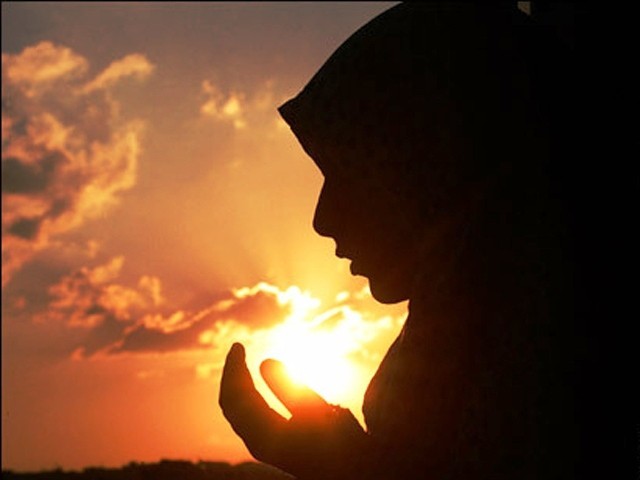
I am a Muslim woman and I chose to have an abortion. There are a few things you should know about me: I consider my religion to be the defining aspect of my life; I am an active member of my community, particularly in the area of women’s education and empowerment; and, I am a wife and mother who is nursing her baby while pursuing a post-graduate degree. I also do plan on having more children in the future, God willing.
I also want to make clear that I do not promote abortion as means of routine contraception, particularly in a world rife with sexual promiscuity, but I do believe that under certain circumstances, Islam does and should permit it. I have chosen to write anonymously about this experience in order to respect my family’s privacy, but I am prepared to deal with the potentially harsh criticism and judgment a writer inevitably opens herself up to when publishing a deeply personal story on a hotly debated issue. I am laying bare my story for one purpose: to offer up some benefit and insight to other women and couples who have been through an abortion or are considering one.
I accidently became pregnant at a time when another baby would be very difficult. Physically and emotionally I was not ready for another pregnancy. I vacillated for days over the decision to terminate the pregnancy. As a student, I had studied fiqh (Islamic legal rulings) on women’s bodies, but at the time I had been a neutral spectator, never imagining that I would one day find myself agonizing over the ethical and spiritual dimensions of those rulings, written by men, centuries before.
Add to that the fact that I consider myself pro-choice when it comes to the female body – to an extent. That extent is determined by the Divine Hand which guides us as human beings, but allows us to make choices, a faculty which we alone as children of Adam have been given.
As a pro-choice and deeply religious Muslim, the potential decision to terminate a pregnancy was doubly difficult for me. I researched every aspect of abortion, from medical and health perspectives to the views of different Islamic schools of thought. I even poured over the diverse standpoints of other religions, peering at the issue from both feminist and traditional lenses. Wrestling with this monumental decision forced me to closely reflect on the convictions I profess to stand for. I realized that despite years of study and work in women’s rights, my early socialization in a conservative community, in which the female body and sexuality were controlled, negated and commoditized, was still embedded in my sub-consciousness.
In beginning to consider an abortion, I looked first to the law. Islamic law makes allowances for abortion up to 16 weeks into the pregnancy (and beyond that when the mother’s life is at risk).
The Prophet Muhammad (pbuh) said:
“Verily, each of you is gathered together in his mother’s womb for forty days, in the form of a drop of fluid. Then it is a clinging object for a similar period. Thereafter, it is a lump looking like it has been chewed for a similar period. The angel is then sent to [the fetus] and breathes into [the fetus] the spirit.” (Hadith 6390, Book 33, Muslim)
Based on this hadith, the classical scholars theorized that ensoulment occurs between three to four months in-utero, and built their rulings of abortion on this time frame. The views of the different schools of thought differ considerably about when and why abortion is permissible, from the outright prohibited to the neutrally permissible. I was raised in the most liberal of the schools, the Hanafi, which allows abortion at any time before 120 days after conception, with some scholars even ruling that it can be performed without a specific reason or the permission of the pregnant woman’s husband, while other jurists require a reasonable justification. Marion Holmes Katz analyzed where the four Sunni legal schools stood on abortion in the book, “Islamic Ethics of Life: Abortion, War and Euthanasia,” noting that a basic feature of Islamic legal discussions on abortion is “their high level of tolerance for ambiguity and complexity, which avoids absolutist simplifications of the intricate moral issues raised by fetal life.”
My preliminary research reassured me that at six weeks pregnant, I was clearly far from the stage of ensoulment by the standards of classical Muslim jurists. Being in a devoted, monogamous marriage, having undergone miscarriage, pregnancy and childbirth before, I certainly was not capriciously choosing abortion as a means of contraception. Renowned Professor Tariq Ramadan’s book, “Radical Reform” confirmed my feeling that the excessive use of abortion in the modern world is harmful, but that it should be allowed under certain circumstances. Ramadan gave an example which described my situation perfectly. “In cases of involuntary or accidental pregnancies, especially when the family situation or the social context could prevent the family’s and/or the child’s fulfillment in life, [abortion should be permissible] …the procedure is never commendable, but the intervention can be considered when protecting a person’s [the mother’s] health, development, autonomy, welfare, education or dignity.”
After perusing all the scholarly material addressing the topic of abortion that I could find, and finding that options to terminate a pregnancy before 120 days into the pregnancy were well grounded in the Islamic tradition, I felt nearly ready to take my decision. The texts alone were not enough to give me the conviction I needed, I had to seek support and advice from the people closest to me.
I had not planned to become pregnant; in fact, I was using contraception at the time. I was working to complete my graduate studies, all the while juggling the demands of motherhood, which included breastfeeding and pacing the floors two-thirds of the night with my baby. In addition to that, I had committed to a spiritual learning process with my Shaykh in working toward Ijazah (licence) in the classical Islamic texts, and another pregnancy would have set this endeavor back by years.
When my husband and I began to discuss this monumental decision, he jolted me to self-realization by pointing out something I had not considered. He believed that deciding for termination, in my case, was actually the more difficult decision, struggle or jihad as he put it, because ending my pregnancy would mean reversing years of social conditioning which I had so long fought against. So, together, we came to the agonizing decision to terminate a six-week pregnancy. I could not have made this decision without my husband by my side, supportive and compassionate every step of the way, giving me courage, and caring, as he always does, for our children while I recovered. We unfortunately still live in a largely patriarchal world, but I am encouraged by men such as him, who challenge day after day the chauvinism and sexism which seek to control women’s lives and bodies.
While I am in a fortunate position to have the presence of people of both intellect and spirit in my life, who dealt with my questions with compassionate wisdom, there are so many Muslim women who do not have this luxury and I was alarmed at the lack of support, both in the virtual and corporeal Muslim communities. Fatawas (non-binding religious decrees) and articles abound on the internet, warning Muslims of the complete prohibition of abortion in Islam, conveniently leaving out hundreds of years of intellectual endeavor, which gave women choices, even if some were only circumstantial.
Feeling disheartened, I turned to two people for whom I have profound respect and love. The first is a professor of Islamic Studies, whose work informs much of my own gender sensitivities; I confronted her with my dilemma, and after a thoughtful pause, she replied, “Whatever emerges as your and your husband’s joint decision, [if] you have both made [it] with a sincere, prayerful and surrendered intention, [it] will be best. Keep in your heart’s eye that surrender to Allah is not always conforming to either established notions or even your own intellectual notions.” So I took down some walls and opened up space in my mind and heart to welcome whatever Allah wanted to communicate to me through this experience. Perhaps this trial, like most, was an opportunity to grapple with receiving the wisdom that will come through the very process of grappling. My professor’s words propelled me into deep introspection about my relationship with God, and gave me much needed succor in my heart to trust in the decision I would make.
The second person who I looked to for advice is someone for whom to ascribe the title “scholar” or “Shaykh” to is an injustice, for the depth and breadth of his knowledge and spirit encompass much more. His presence in my life has been that of divine light. I confessed to him the reasons for considering a termination shortly before the procedure. I had not realized the disquietude in my soul over this decision until he comforted me and I felt the anxiety leaving my spirit. I realized then that I had been missing true conviction in my decision, that “shar’an” (religiously) as he termed it, using decades of legal expertise in his matter-of-fact-way, I was making the right decision and it was pragmatic to do so. My beloved Shaykh reassured me that I was bold to take this difficult decision and would realize that it was indeed providential.
The women who run the discreet clinic I visited gave me startling insight into the world of Muslims and abortion, when they realized my hijab-clad self was not the type of Muslim they had encountered before – telling sordid tales of guilt-stricken and frightened women who sneak in to see them, of men who demand abortions for their wives at the 16 week cut-off time based on the gender of the baby. In a state of “conscious sedation,” in the oddest of settings, I found myself as usual having to explain and defend my religion. The two doctors who attended to me were wonderful women – and while I do not agree with all their views on sex and sexuality, their concern, kindness and empathy touched me to the core of my being. I realized that being pro-choice does not make one anti-life as those who are against abortion would have us believe.
The abortion itself was relatively painless, with only minor cramping, discomfort and bleeding. My thoughts were with those women who do not have access to safe, medically sound contraception and pregnancy termination options, forced to resort to untrained practitioners who use dangerous herbs, chemicals and instruments to induce abortion, risking their patients’ lives, health and future fertility in the process. My heart-to-hearts with my two learned mentors confirmed what my earlier research had shown—that in delicate situations like these, there are no clear-cut, black and white answers. The choices we make are the ones which God allows us to make when we search deep within ourselves.
It is essential in the current milieu of medical advancement and recognition of the importance of the psychological wellbeing of women to the family and society, for Muslims to look back into the classical legacy. We must work with the allowances which the jurists saw fit to dispense, rather than coercing women with guilt to resign themselves to accidental pregnancies, when in fact, our scholarly legacy is much more complex and pluralistic than a simple halal/haram declaration on the issue. To move beyond this kind of thinking, scholars and health practitioners as well as concerned women and men need to work together in promoting better understandings of the gendered dimension of biomedical ethics and Islam.
The process of ending a pregnancy is just that – a process. Post-abortion recovery is as important, particularly in coming to terms with the decision on the emotional and spiritual planes of being. I am comforted by knowing that I have a most-Compassionate, Loving God to turn to, a God whose love is described as more than a mother’s love for her children. As a mother myself, I am in awe of the intensity of such love and my inner-being is replenished, allowing me to be at peace with myself and my decisions. I remain perpetually in the shade of Allah’s mercy, accountable to Him alone for my actions.
—
Iman Ahmed is a lecturer and post-graduate candidate in Religious Studies, a mother of two little girls, and a writer and community activist.
This essay was originally published at altmuslimah.com
Previous Post

May 29, 2013
Me, Myself & I
Next Post
May 31, 2013 Friday Love: Men On Love
Browse Our Archives
Select a Category Book Reviews Brown Girl Dreaming Editors Flirting with Fate and other Disasters of an Intersectional Muslimah Food, Love, & Memories Friday Love Halal Since 22 Integrity of Heart Life After Death Literary Mama Literature Love Inshallah Podcast Love InshAllah writers Media My Infidel Husband Not Without Love Poetry Monday Radical Love Reflections & Readings Reviews of Love InshAllah Salaam Love Writers Sex & The Ummah Single in the City Spotlight Story & Chai Book Club The Geekologist The Love Tour The Male Gaze Things I Wish I'd Known Thoughts of a Wasat Girl Uncategorized Your Sunny Side Up Your voices
Select a Month May 2015 April 2015 March 2015 February 2015 January 2015 December 2014 November 2014 October 2014 September 2014 August 2014 July 2014 June 2014 May 2014 April 2014 March 2014 February 2014 January 2014 December 2013 November 2013 October 2013 September 2013 August 2013 July 2013 June 2013 May 2013 April 2013 March 2013 February 2013 January 2013 December 2012 November 2012 October 2012 September 2012 August 2012 July 2012 June 2012 May 2012 April 2012 March 2012 February 2012 January 2012 December 2011 November 2011
Follow Us!
TAKE THE
Religious Wisdom Quiz
Who received a coat of many colors?
Select your answer to see how you score.
Joseph Moses Jacob David
Related posts from Love, InshAllah



Hip-Hop Hijabis: Spitting Rhymes About Being Muslim And...

TRENDING AT PATHEOS Muslim

25 Years Later: How Much Has Changed for...
As we approach the 25th anniversary of September 11th, I’ve found myself...

Podcast: Third Spaces & The Rise of Yemeni...
In the latest episode of The Artistic Foodies Podcast, hosts Abbas...

HalalFest Picks: Best 60 Halal Spots for Super...
Back in 2016, I came up with a list of 29...

Unity Is America’s Strength — Division Is Its...
by Hidayatullah Ahsan When Valentina Gomez, a Republican candidate for Congress in...

Zohran Mamdani and New York’s Fight Against Islamophobia
This past June, against all odds, Zohran Mamdani won the Democratic primary...

What the Fourth of July Means to a...
As we mark another Fourth of July, millions of Americans will celebrate...
view all Muslim blogs
Ad-Free & Subscriber Log-In Subscription Support
- About Us
- 2026 Calendar
- Videos
- Podcasts
- Library of World Religions
- Faith In Media Tracker
- Advertise With Us
- Write for Us
- Privacy Policy
- Terms of Service
- Do Not Sell My Data
- Contact Us
- Radiant Digital
- Manage Newsletter Subscriptions
- Unsubscribe From Notifications
- Sitemap
Copyright 2008-2026, Patheos. All rights reserved.
Subscription Support Ad-Free & Subscriber Log-In
Follow Patheos