
BuddhistCatholicContemplativeEvangelicalGeneral ChristianHinduJewishLatter-day SaintMuslimNew VisionsProgressive Christian
Beliefs
- Buddhist
- Catholic
- Contemplative
- Evangelical
- General Christian
- Hindu
- Jewish
- Latter-day Saint
- More Voices
- Muslim
- New Visions
- Pagan
- Progressive Christian
Topics
- Religion News
- Food and Religion
- Sports and Religion
- Religious Art
- Religious Music and Entertainment
- Religious Events
- History and Religion
- Style and Religion
- Politics and Religion
- Women in Religion
- Recreation Outdoors and Religion
- Business Finance and Religion
- Careers Workplace and Religion
- Education and Religion
- Family Parenting and Religion
- Health Fitness and Religion
- Home and Religion
- Relationships and Religion
- Technology and Religion
- Travel and Religion
Columnists
- Buddhist Columnists
- Business Finance and Religion Columnists
- Careers Workplace and Religion Columnists
- Catholic Columnists
- Contemplative Columnists
- Education and Religion Columnists
- Evangelists Columnists
- Family Parenting and Religion Columnists
- General Christian Columnists
- Health Fitness and Religion Columnists
- Hindu Columnists
- History and Religion Columnists
- Home and Religion Columnists
- Jewish Columnists
- More Voices Columnists
- Latter Day Columnists
- Muslim Columnists
- New Visions Columnists
- Nonreligious Columnists
- Pagan Columnists
- Politics and Religion Columnists
- Progressive Columnists
- Recreation Outdoors and Religion Columnists
- Relationships and Religion Columnists
- Religion News Columnists
- Religious Art Columnists
- Religious Events Columnists
- Religious Music and Entertainment Columnists
- Sports and Religion Columnists
- Style and Religion Columnists
- Technology and Religion Columnists
- Travel and Religion Columnists
- Women in Religion Columnists
Resource Library
- 2026 Calendar
- Library of World Religions
- The 100 Most Holy Places on Earth
- Patheos Answers
- Podcasts
- Videos
- Faith Leaders Database
- Anglican Episcopalian
- Bahai
- Baptist
- Buddhism
- Christianity
- Confucianism
- Eastern Orthodoxy
- Hinduism
- Holiness and Pentecostal
- ISKCON
- Islam
- Judaism
- Lutheran
- Methodist
- The Church of Jesus Christ of Latter-day Saints
- New Age
- Paganism
- Presbytarian and Reformed
- Protestantism
- Religion Behind the Scenes
- Roman Catholic
- Scientology
- Shia Islam
- Sikhism
- Sufism
- Sunni Islam
- Taoism
- Zen
- See all religions
Research Tools
 Ad-Free & Subscriber Log-In Subscription Support
Ad-Free & Subscriber Log-In Subscription Support
Follow Patheos 

- Trending:
- Forgiveness
- |
- Marriage
- |
- Consciousness
- |
- Death Penalty
- |
- Election
- |
- Halloween
 Love, InshAllah
- Home
- Muslim
- Relationships and Religion
- Unexpected lessons in parenting
Unexpected lessons in parenting
Last updated on: November 3, 2014 at 11:19 am by Posted by The Editors
Unexpected lessons in parenting 2014-11-03T11:19:01-07:00 Posted by The Editors
Patheos Explore the world's faith through different perspectives on religion and spirituality! Patheos has the views of the prevalent religions and spiritualities of the world.
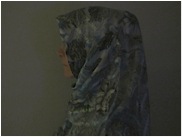
When I decided to participate in the Love, InshAllah anthology, I expected to be entertained with stories about love and love lost and love never found. I expected to read about a variety of paths traveled in the pursuit of love. I expected to know more about Muslim women living in the United States. I did not expect, however, to learn lessons about parenting. But that was what most affected me about the book as a whole. It reminded me once again about the challenges of raising Muslim children in a non-Muslim society; it educated me on the challenges that Muslim children face. I thought about how to meet these challenges in my own family. After all, I am a convert who accepted Islam as an adult after careful study and deliberation. My children did not have that choice—but they will.
One of my initial attractions to Islam was that it expects each of us to use our intelligence in spiritual matters, and questions about the religion are encouraged. In other words, there is no such thing as blind faith. Indeed, our study of the deen and refinement of our character should continue throughout our lives. Muslims are perpetual students because perfection is not possible. Knowing one’s religion becomes all the more crucial with the responsibility of parenthood.
Naturally, children will have questions, and this is especially true when many of their beliefs and practices are different from the mainstream society or if their parents’ cultural norms are conflated with religion. Parents need to be prepared when their child asks questions such as: Why do you wear a headscarf? Why do I have to pray 5 times a day? Why can’t I date? Our answers need to make sense, even if in some cases the answer may be as simple but as profound as, “God has asked us to.” While the reasons behind covering, praying, not dating, and many other Islamic practices are well understood through study of the Qur’an, Hadith, and scholarly works, not everything a Muslim does or believes has an apparent reason. In those instances, the answer must address the reasons why we choose to obey God’s commands. It is unreasonable to expect a child, or anyone else for that matter, to embrace a religion if questions are not intelligently answered or if a parent cannot distinguish her culture from the deen.
Equally important, parents cannot expect their children to practice their faith if they do not do so themselves. A young sister I interviewed a few years ago stated,
It’s really difficult to navigate I think because there are so many double standards today. I know plenty of people who look down upon dancing in public, but those same people eat meat that is not Zabiha. To me this makes no sense. If they can overlook that ‘rule’ because we are ‘in the west,’ than why can’t a little innocent dancing be permitted?
As parents, if we pick and choose what we practice of Islam how can we be upset with our children if they happen to pick and choose differently? One of the reasons that I started to wear a headscarf was because I had daughters. I did not want them to say when they got older that they do not cover because their mom never did.
According to tradition, a woman approached the Prophet Muhammad, sallAllahu alayhi wa salaam, after her husband had hit her. As the Prophet, sallAllahu alayhi wa salaam, was taking her to her husband to hit him back, verse 4:34 was revealed (an often mistranslated and misinterpreted verse that was meant to eliminate domestic violence). Upon its revelation, the Prophet, sallAllahu alayhi wa salaam, reportedly stated, “I wanted something, Allaah (swt) wanted something else.”
Perhaps we may not fully understand a belief or practice in Islam and we may even want something else. But if we believe that it comes from God, we know that there is Wisdom and Mercy in it. Islam requires a holistic approach. If we as parents do not approach it in that manner, we should not expect our children to do so.
Love, InshAllah taught me a few lessons about parenting—and quite unexpectedly, because I forgot that lessons come when they are needed and not necessarily when desired. Alhamdulillah.
—
J. Samia Mair is the author of two children’s books, Amira’s Totally Chocolate World, and The Perfect Gift. She is a Staff Writer for SISTERS Magazine and has published in magazines, books, anthologies, scientific journals, and elsewhere. Prior to her current writing, she was on the faculty of the Johns Hopkins Bloomberg School of Public Health, where her research focused on reducing violence and protecting the health of vulnerable populations. She also practiced law for over eight years, including several years in the Appeals Unit of the Philadelphia District Attorney’s Office. She lives in the United States with her husband and two daughters, whom she homeschools.
Previous Post

March 21, 2012
Media roundup: Magazines, radio, and TV! Oh my!
Next Post
March 27, 2012 Interfaith Marriage on a String
Browse Our Archives
Select a Category Book Reviews Brown Girl Dreaming Editors Flirting with Fate and other Disasters of an Intersectional Muslimah Food, Love, & Memories Friday Love Halal Since 22 Integrity of Heart Life After Death Literary Mama Literature Love Inshallah Podcast Love InshAllah writers Media My Infidel Husband Not Without Love Poetry Monday Radical Love Reflections & Readings Reviews of Love InshAllah Salaam Love Writers Sex & The Ummah Single in the City Spotlight Story & Chai Book Club The Geekologist The Love Tour The Male Gaze Things I Wish I'd Known Thoughts of a Wasat Girl Uncategorized Your Sunny Side Up Your voices
Select a Month May 2015 April 2015 March 2015 February 2015 January 2015 December 2014 November 2014 October 2014 September 2014 August 2014 July 2014 June 2014 May 2014 April 2014 March 2014 February 2014 January 2014 December 2013 November 2013 October 2013 September 2013 August 2013 July 2013 June 2013 May 2013 April 2013 March 2013 February 2013 January 2013 December 2012 November 2012 October 2012 September 2012 August 2012 July 2012 June 2012 May 2012 April 2012 March 2012 February 2012 January 2012 December 2011 November 2011
Follow Us!
TAKE THE
Religious Wisdom Quiz
Who was raised from the dead by Peter in Joppa?
Select your answer to see how you score.
Eutychus Tabitha Lazarus The widow's son
Related posts from Love, InshAllah



Hip-Hop Hijabis: Spitting Rhymes About Being Muslim And...

TRENDING AT PATHEOS Muslim

25 Years Later: How Much Has Changed for...
As we approach the 25th anniversary of September 11th, I’ve found myself...

Podcast: Third Spaces & The Rise of Yemeni...
In the latest episode of The Artistic Foodies Podcast, hosts Abbas...

HalalFest Picks: Best 60 Halal Spots for Super...
Back in 2016, I came up with a list of 29...

Unity Is America’s Strength — Division Is Its...
by Hidayatullah Ahsan When Valentina Gomez, a Republican candidate for Congress in...

Zohran Mamdani and New York’s Fight Against Islamophobia
This past June, against all odds, Zohran Mamdani won the Democratic primary...

What the Fourth of July Means to a...
As we mark another Fourth of July, millions of Americans will celebrate...
view all Muslim blogs
Ad-Free & Subscriber Log-In Subscription Support
- About Us
- 2026 Calendar
- Videos
- Podcasts
- Library of World Religions
- Faith In Media Tracker
- Advertise With Us
- Write for Us
- Privacy Policy
- Terms of Service
- Do Not Sell My Data
- Contact Us
- Radiant Digital
- Manage Newsletter Subscriptions
- Unsubscribe From Notifications
- Sitemap
Copyright 2008-2026, Patheos. All rights reserved.
Subscription Support Ad-Free & Subscriber Log-In
Follow Patheos