
BuddhistCatholicContemplativeEvangelicalGeneral ChristianHinduJewishLatter-day SaintMuslimNew VisionsProgressive Christian
Beliefs
- Buddhist
- Catholic
- Contemplative
- Evangelical
- General Christian
- Hindu
- Jewish
- Latter-day Saint
- More Voices
- Muslim
- New Visions
- Pagan
- Progressive Christian
Topics
- Religion News
- Food and Religion
- Sports and Religion
- Religious Art
- Religious Music and Entertainment
- Religious Events
- History and Religion
- Style and Religion
- Politics and Religion
- Women in Religion
- Recreation Outdoors and Religion
- Business Finance and Religion
- Careers Workplace and Religion
- Education and Religion
- Family Parenting and Religion
- Health Fitness and Religion
- Home and Religion
- Relationships and Religion
- Technology and Religion
- Travel and Religion
Columnists
- Buddhist Columnists
- Business Finance and Religion Columnists
- Careers Workplace and Religion Columnists
- Catholic Columnists
- Contemplative Columnists
- Education and Religion Columnists
- Evangelists Columnists
- Family Parenting and Religion Columnists
- General Christian Columnists
- Health Fitness and Religion Columnists
- Hindu Columnists
- History and Religion Columnists
- Home and Religion Columnists
- Jewish Columnists
- More Voices Columnists
- Latter Day Columnists
- Muslim Columnists
- New Visions Columnists
- Nonreligious Columnists
- Pagan Columnists
- Politics and Religion Columnists
- Progressive Columnists
- Recreation Outdoors and Religion Columnists
- Relationships and Religion Columnists
- Religion News Columnists
- Religious Art Columnists
- Religious Events Columnists
- Religious Music and Entertainment Columnists
- Sports and Religion Columnists
- Style and Religion Columnists
- Technology and Religion Columnists
- Travel and Religion Columnists
- Women in Religion Columnists
Resource Library
- 2026 Calendar
- Library of World Religions
- The 100 Most Holy Places on Earth
- Patheos Answers
- Podcasts
- Videos
- Faith Leaders Database
- Anglican Episcopalian
- Bahai
- Baptist
- Buddhism
- Christianity
- Confucianism
- Eastern Orthodoxy
- Hinduism
- Holiness and Pentecostal
- ISKCON
- Islam
- Judaism
- Lutheran
- Methodist
- The Church of Jesus Christ of Latter-day Saints
- New Age
- Paganism
- Presbytarian and Reformed
- Protestantism
- Religion Behind the Scenes
- Roman Catholic
- Scientology
- Shia Islam
- Sikhism
- Sufism
- Sunni Islam
- Taoism
- Zen
- See all religions
Research Tools
 Ad-Free & Subscriber Log-In Subscription Support
Ad-Free & Subscriber Log-In Subscription Support
Follow Patheos 

- Trending:
- Forgiveness
- |
- Marriage
- |
- Consciousness
- |
- Death Penalty
- |
- Election
- |
- Halloween
 Love Among the Ruins
- Home
- Catholic
- What Wallace Fought For: Thoughts on “Braveheart” for Father’s Day
What Wallace Fought For: Thoughts on “Braveheart” for Father’s Day
Last updated on: June 20, 2015 at 8:11 am by Christopher West
What Wallace Fought For: Thoughts on “Braveheart” for Father’s Day 2015-06-20T08:11:07-04:00 Christopher West
Patheos Explore the world's faith through different perspectives on religion and spirituality! Patheos has the views of the prevalent religions and spiritualities of the world.
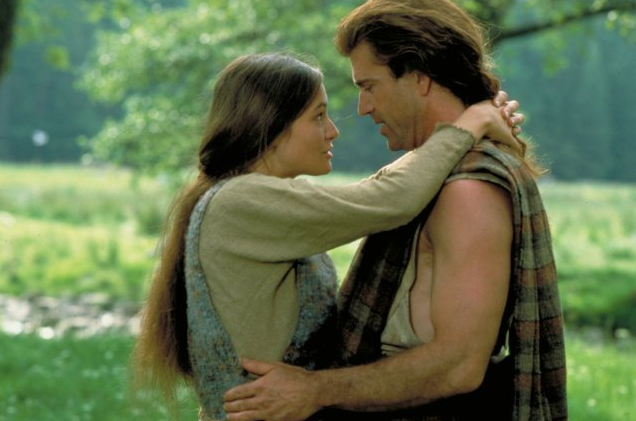
Image courtesy of IMDB.
[Editor’s Note: This post originally appeared on Father Robert Barron’s Word on Fire blog on May 22 in anticipation of 20th anniversary of the release of the film “Braveheart” on May 24. It is being republished here for Father’s Day. Thank you to the Cor Project for permission.]
Stunned. Overwhelmed. Speechless. As the credits rolled, so did the tears. My fiancée and I were the last to leave the theater and didn’t do so until we were practically kicked out. It’s hard to believe it’s been 20 years since the release of Braveheart – arguably the greatest guy-movie of all time – but my 20th wedding anniversary later this year should prove it to me.
Around the world, when I reference scenes from Braveheart in my lectures, there’s an immediate spike of testosterone in the room and an instant bond among the men. Guys love to brag about how many times they’ve seen it (ahem, 23 for me). They quote lines in regular conversation: the serious (“Your heart is free, have the courage to follow it…”); the humorous (“It’s my island!”); and the famous (“Freeeeedooooom!!”). And they watch it with their sons as a right of passage.
Men love Braveheart because it gives us something noble to aspire to as men. We don’t just admire William Wallace. We want to be William Wallace. We want to be the kind of man who’s courageous enough to fight, to lay it all down, to endure the most gruesome, bloody death for the sake of … of what?
Why did Wallace fight and die as he did? When I ask my audiences this question, inevitably someone shouts out the famous line quoted above. But the real answer comes from Hamish, Wallace’s big red-headed warrior-brother, when he insists, “It’s not about freedom William, it’s about Murron. You’re doin’ this because ya think she sees ya….”
Murron was William’s wife, and the English garrison had killed her to get to him. He spent his life fighting the “Anglish” against all odds and eventually died his torturous death to defend her honor. In this way Wallace is a Christ figure – a man who loves his wife “as Christ loves the Church” (Eph 5:25). As William is being cut open, bled out, and killed (cruciform, I might add), whom does he see walking through the crowd to welcome him into the next life? Murron, bearing the most affirming countenance of gratitude and appreciation.
I’m not trying to canonize Wallace. There are clearly some disturbing aspects of his character, some gangly weeds among the wheat. But the wheat is undeniable and nourishes a deep hunger in a man’s heart.
So few men in today’s world have had fathers who radiated the courage of authentic manhood, who modeled to their sons that there are causes worth dying for. William’s father, Malcolm, was such a man and it set the whole course of young William’s life. In turn, what Malcolm – and, after his death, Uncle Argyle – passed on to William, William passed on to others: namely, a sense of authentic, masculine identity. When William calmly asserts “I know who my father was” in response to a challenge to his manhood, he’s showing unflinching confidence in his own identity as a man.
In fact, the whole movie is a study of the father-son relationship and the identities carved therefrom. The next time you watch it, pay close attention to the different fathers and how they influence their sons. Hamish also had a strong father. Remember Campbell’s dying words to Hamish? Wounded from battle, having fought side by side as father and son, Campbell dies happily saying, “I’ve lived long enough to see you become the man you are.” Priceless. But look at Longshanks and the effect of his brutal tyranny on his son. And look at Robert the Bruce – his father’s leprous flesh the symbol of his interior corruption.
Every man wants to be William Wallace, but, if we’re honest with ourselves, we’re more like Robert the Bruce. We falter. We fall.
Oh! – that gripping scene when the Bruce is wrestling with his own moral failure before his father who had convinced him to betray Wallace….
“These men who bled the ground red at Falkirk, they fought for William Wallace and he fights for something that I’ve never had. And I took it from him when I betrayed him and I SAW it on his face on the battlefield and it’s TEARING me apart!”
His father, astonished, says, “Well all men betray. All lose heart….” – “I DON’T WANT TO LOSE HEART!” shouts Robert. “I want to BELIEVE. As he does. I will never be on the wrong side again.”
And here, I think, is why this film gives men who haven’t been properly fathered such hope: it holds out the possibility of second chances, of redemption after failure, in a word, of being re-fathered. Wallace, even after the Bruce’s bitter betrayal, forgives him and never loses faith in him.
All along, Wallace had been fathering the Bruce. He saw his weakness, but he could also say with utter conviction: “There’s strength in you, I see it!” Every man needs to hear that from a man he trusts. And remember how dumbfounded Robert the Bruce was when William spoke these words to him (or, rather, into him):
“Your title gives you claim to the throne of our country. But men don’t follow titles. They follow courage. … And if you would just have the courage to LEAD the people to freedom, they’d follow you. And so would I.”
This movie is as much about Robert the Bruce acquiring a brave heart through William as it is about William’s brave heart. By naming the Bruce’s strength – and by refusing to believe that his faults defined him – William also called his strength out: “You’ve bled with Wallace. Now bleed with me!” went the Bruce’s battle cry in the final scene of the film.
In the “making of” footage of Braveheart, Mel Gibson said, “I hope [those who see this movie] can’t talk at the end of it. I hope that they’re so moved and so inspired by it that … they’ve found something in themselves.”
You did it, Mel. Thank you. From the bottom of my aspiring-to-be brave heart, I thank you.
***
Christopher West is the author of several books on St. John Paul II’s Theology of the Body and lectures globally on the subject. You can receive ongoing formation from him by joining the Cor Project (corproject.com).

Next Post

June 25, 2015 Divine Reality in "Final Fantasy"
Browse Our Archives
Select a Category Uncategorized
Select a Month May 2016 April 2016 March 2016 February 2016 January 2016 December 2015 November 2015 October 2015 July 2015 June 2015 May 2015 April 2015 March 2015 February 2015 January 2015
TAKE THE
Religious Wisdom Quiz
How many stones did David take to fight Goliath?
Select your answer to see how you score.
5 7 3 4
Related posts from Love Among the Ruins
That Hideous Strength: When Marriage Saved the Universe

What if You Could Stop the Fall of...
Finding Redemption in the Blackness: Good Friday with...
TRENDING AT PATHEOS Catholic

Creation, Preservation, and Teleology in Catholic Theology
As I write this, it is very early Monday morning. Like millions...

The Parable Of The Sower And The Word...
One of Christ’s most famous parables is that of the sower who...

Rejecting Doom: Christian Hope And Human Action
Christianity is a religion of hope. We are to have hope and...

Why I Choose the Eucharist Over the Sermon
Choose the Eucharist, Not the Sermon What are we supposed to get...

5 Design Elements Found in Spiritually Rooted Homes
Putting Spirituality Into Home Decor Our homes are more than our living...

Credo: A Story of God Told with the...
About 10 years ago, I began to imagine a personal "Credo" that...
view all Catholic blogs
Ad-Free & Subscriber Log-In Subscription Support
- About Us
- 2026 Calendar
- Videos
- Podcasts
- Library of World Religions
- Faith In Media Tracker
- Advertise With Us
- Write for Us
- Privacy Policy
- Terms of Service
- Do Not Sell My Data
- Contact Us
- Radiant Digital
- Manage Newsletter Subscriptions
- Unsubscribe From Notifications
- Sitemap
Copyright 2008-2026, Patheos. All rights reserved.
Subscription Support Ad-Free & Subscriber Log-In
Follow Patheos