
BuddhistCatholicContemplativeEvangelicalGeneral ChristianHinduJewishLatter-day SaintMuslimNew VisionsProgressive Christian
Beliefs
- Buddhist
- Catholic
- Contemplative
- Evangelical
- General Christian
- Hindu
- Jewish
- Latter-day Saint
- More Voices
- Muslim
- New Visions
- Pagan
- Progressive Christian
Topics
- Religion News
- Food and Religion
- Sports and Religion
- Religious Art
- Religious Music and Entertainment
- Religious Events
- History and Religion
- Style and Religion
- Politics and Religion
- Women in Religion
- Recreation Outdoors and Religion
- Business Finance and Religion
- Careers Workplace and Religion
- Education and Religion
- Family Parenting and Religion
- Health Fitness and Religion
- Home and Religion
- Relationships and Religion
- Technology and Religion
- Travel and Religion
Columnists
- Buddhist Columnists
- Business Finance and Religion Columnists
- Careers Workplace and Religion Columnists
- Catholic Columnists
- Contemplative Columnists
- Education and Religion Columnists
- Evangelists Columnists
- Family Parenting and Religion Columnists
- General Christian Columnists
- Health Fitness and Religion Columnists
- Hindu Columnists
- History and Religion Columnists
- Home and Religion Columnists
- Jewish Columnists
- More Voices Columnists
- Latter Day Columnists
- Muslim Columnists
- New Visions Columnists
- Nonreligious Columnists
- Pagan Columnists
- Politics and Religion Columnists
- Progressive Columnists
- Recreation Outdoors and Religion Columnists
- Relationships and Religion Columnists
- Religion News Columnists
- Religious Art Columnists
- Religious Events Columnists
- Religious Music and Entertainment Columnists
- Sports and Religion Columnists
- Style and Religion Columnists
- Technology and Religion Columnists
- Travel and Religion Columnists
- Women in Religion Columnists
Resource Library
- 2026 Calendar
- Library of World Religions
- The 100 Most Holy Places on Earth
- Patheos Answers
- Podcasts
- Videos
- Faith Leaders Database
- Anglican Episcopalian
- Bahai
- Baptist
- Buddhism
- Christianity
- Confucianism
- Eastern Orthodoxy
- Hinduism
- Holiness and Pentecostal
- ISKCON
- Islam
- Judaism
- Lutheran
- Methodist
- The Church of Jesus Christ of Latter-day Saints
- New Age
- Paganism
- Presbytarian and Reformed
- Protestantism
- Religion Behind the Scenes
- Roman Catholic
- Scientology
- Shia Islam
- Sikhism
- Sufism
- Sunni Islam
- Taoism
- Zen
- See all religions
Research Tools
 Ad-Free & Subscriber Log-In Subscription Support
Follow Patheos 

- Trending:
- Advent
- |
- Forgiveness
- |
- Thanksgiving
- |
- Election
- |
- Seasonal Holidays
- |
- Marriage
 Love Among the Ruins
- Home
- Catholic
- Hunters, Gatherers, and Theologians: Endurance Running and the TOB
Hunters, Gatherers, and Theologians: Endurance Running and the TOB
Last updated on: April 16, 2015 at 7:56 am by Daniel Stewart
Hunters, Gatherers, and Theologians: Endurance Running and the TOB 2015-04-16T07:56:49-04:00 Daniel Stewart
Patheos Explore the world's faith through different perspectives on religion and spirituality! Patheos has the views of the prevalent religions and spiritualities of the world.

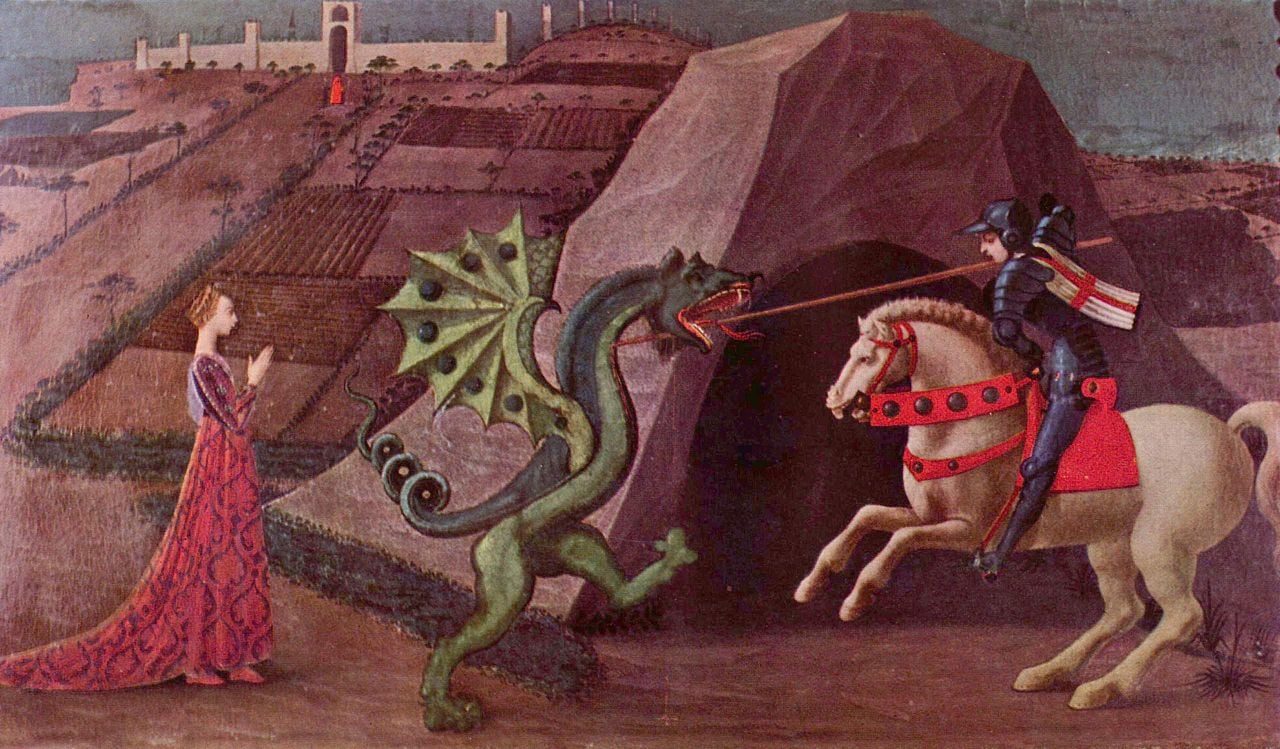
Image courtesy of Wikimedia Commons.
“We’re born with a body and how we use it matters.” This sounds like an introduction to the Catholic Theology of the Body. But the quote comes not from St. John Paul II but from the narrator of a new film, Fair Chase, which explores contemporary attempts to understand the ancient practice of persistence hunting.
Persistence hunting, sometimes called endurance hunting, involves a hunter tracking and wearing out his prey to the point of exhaustion. Wolves and wild dogs hunt this way occasionally. But they still use teeth to bring down prey. The only creature that practices true endurance hunting is man. The San people of the Kalahari desert still hunt this way. They will pursue an antelope through the desert during the hottest part of the day until the animal literally collapses.
Our astonishing ability to hunt in this manner has led some anthropologists to suggest that many of our evolutionary advantages come from just this sort of hunting. For one thing, our legs are pretty weird compared to every other mammal. Two legs are not what you want if your goal is to run fast. That’s why we’re very poor sprinters compared to other predators. Even hefty bears can outpace us for short distances. But two long legs are pretty nice to have if you want to go a long way. It’s an efficient way to use energy plus it allows you to carry things like water and weapons as you plod along. Perhaps more importantly than two legs, we humans do this weird thing called “sweating” which is a great way to cool off without having to slow down. Some other animals sweat but only humans and horses manage to use it effectively to cool off on the move. We have lots of other adaptations that help us run long distances: our lung shape, our thyroids, spines, even our toes. Take all of this together and you’ve got a pretty compelling theory for why our bodies are the way they are.
To explore this theory, the producers of Fair Chase gather a group of endurance runners and send them out into the New Mexico prairie to hunt a pronghorn (the fastest animal in the western hemisphere and second fastest in the entire world after the cheetah). But this movie doesn’t just chronicle a funny science experiment. It also celebrates human beings doing what they were made to do. People often say they were “born to do something” when they especially enjoy or do that thing well. But these filmmakers mean something quite different. They mean that the human body was clearly designed (by evolution, I assume) to run.
I’d heard of this idea before this movie. I run long distances myself and often spend time with other runners. The idea that we were made to run is a natural topic of conversation if you happen to be on a 20 mile run through the woods. Many runners agree with the statement I quoted earlier that what we do with our bodies matters. They also embrace the idea that the design of our bodies is not at all irrelevant to how we use them and easily accept that we can discern a telos here, a purpose, for our bodies. We were made to run and therefore we should run.
The trailer for Fair Chase also presents another kind of argument-from-design when a voice-over observes, “To run is to be alive in a way that you aren’t when you do anything else.” I know many non-runners who would balk at that statement. But this sentiment isn’t presented as mere opinion. It’s the conclusion of an argument that runs something like this “We were made to run. We should run. We are more ourselves when we run. This makes us happy.”
I’ve noticed the same idea in a recent series of ads from Reebok. The commercials don’t show elite athletes performing for cheering crowds or posing for the camera with their perfect figures. Instead, they show amateurs training in the streets early in the morning, hitting the gym after work, and staying up late into the night to run. Everyone looks muddy, sweaty, and decidedly unglamorous. The narrator acknowledges that these amateur athletes look a bit crazy. “So why do they do it?” he asks. The final answer he offers is also the ad campaign’s slogan. They do it to “Be more human.”
That’s quite a claim! Are our bodies really so important that how we use them has major bearing on what it actually means for us to be human? Reebok says Yes. So do many endurance runners. And so does the Catholic Church.
Of course, the Catholic Church makes claims about our bodies that are at once broader and much simpler than those made by Reebok and the makers of Fair Chase. As an avid long distance runner, I love the idea that we were made to run. But I’ll concede that maybe running isn’t the purpose of human existence. The evidence here isn’t indisputable. The Church’s claims, on the other hand, are undeniable. That is: men and women are sexually compatible, male and female reproductive organs go together, and the product of this union is children. We can say this without even having to credit a creator. Whether our bodies are a product of intelligent design or evolution, their purpose, sexually speaking, is clear. These facts are much more obvious and widely accepted than anything to do with running. Yet most in our culture would respond with outrage if you were to suggest that the fundamentals of human biology could actually speak to our purpose or that the design of reproductive organs says something about how those organs ought to be used.
Part of this disconnect arises from the exaggerated form of individualism we’ve adopted here in the West. This individualism is so extreme that we refuse to let anything, even biology, tell us how we ought to live. You can clearly see this now in a culture saturated with contraception. Despite the obvious design of our bodies, we insist loudly that sex and reproduction ought have nothing to do with each other. We even believe now that gender has nothing to do with biology. We are guided by a strange kind of secular-Gnosticism with an internal knowledge so secret it cannot be observed or understood by reason. This individualism really becomes a kind of nihilism as we are literally guided by nothing.
So why would such a culture accept an argument from design in favor of long distance running? Well, I doubt many will. The idea will be compelling mostly to those who already run. Still, it’s interesting to see this kind of argument outside the pasture of the Church. And the idea might just take root there which would be wonderful. Because how we use our bodies absolutely does matter.
***

Daniel Stewart is a Catholic, a husband, and a father. He loves okra, whiskey, and Flannery O’Connor. Daniel once ran 100 miles without stopping and only lost a few toenails in the process. You can follow his adventures at daniel-bearman.com.
Previous Post

April 8, 2015
Love Among the Ruins in "Mad Men"
Next Post

April 18, 2015 Good News About Sex & Marriage Found in "Kristin Lavransdatter"
Browse Our Archives
Select a Category Uncategorized
Select a Month May 2016 April 2016 March 2016 February 2016 January 2016 December 2015 November 2015 October 2015 July 2015 June 2015 May 2015 April 2015 March 2015 February 2015 January 2015
TAKE THE
Religious Wisdom Quiz
Who was struck dead instantly for lying about money they gave to the church?
Select your answer to see how you score.
Judas Iscariot and Mary Magdalene Ananias and Sapphira Simon the Sorcerer and Demas Aquila and Priscilla
Related posts from Love Among the Ruins

That Hideous Strength: When Marriage Saved the Universe

What if You Could Stop the Fall of...

Finding Redemption in the Blackness: Good Friday with...
TRENDING AT PATHEOS Catholic

If Baptism Washes Away Sin, Why Do Catholics...
The seven sacraments stand as the foundation of Catholic ecclesial life. The...

Far from promoting indifference, inaction, or quietism, Paul consistently tells us to...

The Power of Setting a Good Example
Remember last August when the Chicago White Sox hosted a "Pope Hat...

Theology As A Way of Life, Not Mere...
I enjoy the study of dogmatic and systematic theology. I like studying...

A Catholic Critique of Biblical Unitarianism
If the statistics are to be believed, Unitarianism is rising worldwide. Although...

How Grandma Tourism Helps Grandparents Live Their Vocation
Grandma, The New Travel Influencer What started as a nostalgia-inspired social media...
view all Catholic blogs
Ad-Free & Subscriber Log-In Subscription Support
- About Us
- 2026 Calendar
- Videos
- Podcasts
- Library of World Religions
- Faith In Media Tracker
- Advertise With Us
- Write for Us
- Privacy Policy
- Terms of Service
- Do Not Sell My Data
- Contact Us
- Radiant Digital
- Manage Newsletter Subscriptions
- Unsubscribe From Notifications
- Sitemap
Copyright 2008-2026, Patheos. All rights reserved.
Subscription Support Ad-Free & Subscriber Log-In
Follow Patheos