
BuddhistCatholicContemplativeEvangelicalGeneral ChristianHinduJewishLatter-day SaintMuslimNew VisionsProgressive Christian
Beliefs
- Buddhist
- Catholic
- Contemplative
- Evangelical
- General Christian
- Hindu
- Jewish
- Latter-day Saint
- More Voices
- Muslim
- New Visions
- Pagan
- Progressive Christian
Topics
- Religion News
- Food and Religion
- Sports and Religion
- Religious Art
- Religious Music and Entertainment
- Religious Events
- History and Religion
- Style and Religion
- Politics and Religion
- Women in Religion
- Recreation Outdoors and Religion
- Business Finance and Religion
- Careers Workplace and Religion
- Education and Religion
- Family Parenting and Religion
- Health Fitness and Religion
- Home and Religion
- Relationships and Religion
- Technology and Religion
- Travel and Religion
Columnists
- Buddhist Columnists
- Business Finance and Religion Columnists
- Careers Workplace and Religion Columnists
- Catholic Columnists
- Contemplative Columnists
- Education and Religion Columnists
- Evangelists Columnists
- Family Parenting and Religion Columnists
- General Christian Columnists
- Health Fitness and Religion Columnists
- Hindu Columnists
- History and Religion Columnists
- Home and Religion Columnists
- Jewish Columnists
- More Voices Columnists
- Latter Day Columnists
- Muslim Columnists
- New Visions Columnists
- Nonreligious Columnists
- Pagan Columnists
- Politics and Religion Columnists
- Progressive Columnists
- Recreation Outdoors and Religion Columnists
- Relationships and Religion Columnists
- Religion News Columnists
- Religious Art Columnists
- Religious Events Columnists
- Religious Music and Entertainment Columnists
- Sports and Religion Columnists
- Style and Religion Columnists
- Technology and Religion Columnists
- Travel and Religion Columnists
- Women in Religion Columnists
Resource Library
- 2026 Calendar
- Library of World Religions
- The 100 Most Holy Places on Earth
- Patheos Answers
- Podcasts
- Videos
- Faith Leaders Database
- Anglican Episcopalian
- Bahai
- Baptist
- Buddhism
- Christianity
- Confucianism
- Eastern Orthodoxy
- Hinduism
- Holiness and Pentecostal
- ISKCON
- Islam
- Judaism
- Lutheran
- Methodist
- The Church of Jesus Christ of Latter-day Saints
- New Age
- Paganism
- Presbytarian and Reformed
- Protestantism
- Religion Behind the Scenes
- Roman Catholic
- Scientology
- Shia Islam
- Sikhism
- Sufism
- Sunni Islam
- Taoism
- Zen
- See all religions
Research Tools
 Ad-Free & Subscriber Log-In Subscription Support
Ad-Free & Subscriber Log-In Subscription Support
Follow Patheos 

- Trending:
- Forgiveness
- |
- Marriage
- |
- Consciousness
- |
- Death Penalty
- |
- Election
- |
- Halloween

- Home
- Catholic
- Introducing John Howard Yoder, ‘The Politics of Jesus’
Introducing John Howard Yoder, ‘The Politics of Jesus’
Last updated on: January 3, 2022 at 10:58 am by Jack Hartjes
Introducing John Howard Yoder, ‘The Politics of Jesus’ 2022-01-03T10:58:57-06:00 Jack Hartjes
Patheos Explore the world's faith through different perspectives on religion and spirituality! Patheos has the views of the prevalent religions and spiritualities of the world.
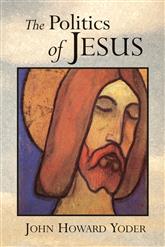
“The Politics of Jesus” by John Howard Yoder first published in 1972 greatly influenced subsequent Christian ethical thinking, especially with regard to social justice. (Image credit: Eerdmans Publishing Company)
In The Politics of Jesus John Howard Yoder aims to reorient the ethical teaching of the churches around the words and deeds of Jesus. That seems odd. Haven’t the churches always inculcated the moral teachings and example of Jesus? Not really. (See Postscript at the end of this post.) When you look with Yoder at what Jesus said and did, you find a lot there that is missing in the conventional, individual morality that the churches have usually taught. In fact you find social justice.
What would Jesus Do?
A footnote (p. 15) references the common question, “What would Jesus do?” The right thing, of course. But usually we know what’s right without thinking about Jesus. As Yoder points out, most Christian moral teaching is like that. Follow the rules that make living together possible, plus a few more around sexuality and an appeal for love. Nobody would kill you for teaching that kind of morality.
Yoder redirects that teaching around something that could put a Christian in danger. First, he explains why Christian moralists have paid little attention to Jesus. Among his reasons:
- Bible scholars often said Jesus thought this age of the world would end soon. Consequently, Jesus’ ethical sayings didn’t address the long term. Example: “Don’t store up riches. Give away your possessions; you will have treasure in heaven.” This is Jesus’ “interim ethic.” Actually, Bible scholars today debate whether Jesus foresaw the end of this “interim” age.
- Jesus was a rural, small-town figure. He knew the ethical issues of that setting, but not “problems of complex organization, of institutions and offices, cliques and power and crowds.” (p. 16-17) Yoder would deny this claim. In posts on “The Gospel of Mark” I show how concerned Jesus was about power relations between groups.
- Jesus dealt with spiritual matters. Miracles of bodily healing are signs of a more important healing of souls. Feeding the multitude symbolized the spiritual food of the heavenly banquet. But when Jesus spoke of the “Kingdom of Heaven,” he meant God’s reign on earth. Our spiritualizing bias leads us to downplay Jesus’ concern for people’s material, daily lives.
- Jesus’ death on the cross saves us. Even if Jesus did have ideas about how to live, that wasn’t his main concern. Other sages have taught morals just as well or better.
Yoder brings Jesus’ cross and ethics together.
“Why did Jesus die on the Cross?” “Why did Roman execute Jesus in the way it did, a punishment for terrorists and revolutionaries?” Long ago my religion lessons taught me the answer to the first question. They never even entertained the second. That’s odd. Whatever Jesus was doing that merited death in Roman eyes must have something to do with the meaning of Jesus’ death in Christian eyes.
That is the burden of Yoder’s next chapter. Chapter Two is a quick survey of the Gospel of Luke, the “social justice” gospel. There we’ll see that a spiritualizing reading of passages like Mary’s Magnificat is a lot of effort that doesn’t pay off. “
He has cast the mighty from their thrones and exalted the lowly. (Luke 1:52)
That’s just what it sounds like—a call for revolution. Turning the pages to near the end of this Gospel, we find Jesus in an act of civil disobedience in the Temple. It’s not just a cleansing aimed at some economic shenanigans that worked its way into Temple proceedings. It’s “a symbolic takeover of the Temple precinct by one who claims jurisdiction there.” (p. 49)
Both groups of the high and mighty, Roman occupiers and comfortable Jewish leaders, had reason to fear Jesus.
Postscript: Did Yoder exaggerate?
Have Christian Churches really ignored Jesus’ moral teaching to the extent that Yoder claims? Yoder’s book is now 50 years old. I thought it best not to rely on my memory of what I was taught back then. So I went to the most authoritative source on pre-Vatican II Catholicism that I possess. It’s a massive, leather-bound two-volume work I inherited from my maternal grandparents. Printed in 1906 and with endorsements from archbishops from all around the country, The Manual of the Holy Catholic Church would seem to typify Catholic catechesis in the first half of the 20th century.
I looked at the sections where I expected to find the Church’s moral teachings. There was copious quoting of both Old and New Testaments, but very little of Jesus’ own sayings. Jesus’ most specific statements on the moral life are in The Sermon on the Mount in Matthew’s Gospel. Here Jesus voices radical ideas about anger, lust, oath taking, revenge, love for enemies, judging others, storing up treasures, and not worrying. But these are missing in the “Manual.” There’s a section (disappointingly small) on the Ten Commandments. The great majority of statements of moral ideals is in a section of quotations from the saints.
The Church legitimately uses a variety of sources for its moral teaching. Natural law, discoverable by human reasoning, was a big one I remember from my training. The authority of Jesus did not seem to hold a very special place. If it had, the Church might have seen social justice as a major theme for Jesus and the Bible earlier than it did. Thank God, and thanks largely to John Howard Yoder, the Church sees it now. The hope of these posts is for more of that vision in Sunday homilies and weekday catechesis.
Postscript 2: Publisher’s description of The Politics of Jesus
Tradition has painted a portrait of a Savior aloof from governmental concerns and whose teachings point to an apolitical life for his disciples. How, then, are we to respond today to a world so thoroughly entrenched in national and international affairs? But such a picture of Jesus is far from accurate, argues John Howard Yoder.
Using the texts of the New Testament, Yoder critically examines the traditional portrait of Jesus as an apolitical figure and attempts to clarify the true impact of Jesus’ life, work, and teachings on his disciples’ social behavior.
The book first surveys the multiple ways the image of an apolitical Jesus has been propagated, then canvasses the Gospel narrative to reveal how Jesus is rightly portrayed as a thinker and leader immediately concerned with the agenda of politics and the related issues of power, status, and right relations. Selected passages from the epistles corroborate a Savior deeply concerned with social, political, and moral issues.
In this thorough revision of his acclaimed 1972 text, Yoder provides updated interaction with publications touching on this subject. Following most of the chapters are new “epilogues” that summarize research conducted during the last two decades–research that continues to support the insights set forth in Yoder’s original work.
Currently a standard in many college and seminary ethics courses, The Politics of Jesus is also an excellent resource for the general reader desiring to understand Christ’s response to the world of politics and his will for those who would follow him.
Next Post

January 5, 2022 God’s Army: Jesus Appraises Two Volunteers and a Recruit
Browse Our Archives
Select a Category Advent Christmas Amazon Synod Angels Being Consumed Bible Catholic Modern Creed Ecology Economics Elizabeth Johnson Eucharist Fragments and Filaments Gender and Sex Gospel of Mark Herzog Historical Jesus Liturgy Luke Opening Scriptures on Way to Emmaus Ordinary radicals Parables Pro-Life Reincarnation Rosary Sacraments science Social Justice Souls Stories of Jesus The Creed Torture and Eucharist Tracy Uncategorized War and Peace
Select a Month October 2026 June 2025 April 2025 March 2025 February 2025 January 2025 November 2024 July 2024 March 2024 December 2023 October 2023 September 2023 August 2023 May 2023 April 2023 March 2023 February 2023 January 2023 December 2022 November 2022 October 2022 September 2022 August 2022 July 2022 June 2022 April 2022 March 2022 February 2022 January 2022 December 2021 November 2021 October 2021 August 2021 July 2021 June 2021 April 2021 March 2021 February 2021 December 2020 November 2020 October 2020 August 2020 July 2020 June 2020 May 2020 April 2020 March 2020 February 2020 January 2020 December 2019 November 2019 October 2019 September 2019 August 2019 July 2019 June 2019 May 2019 April 2019 March 2019 February 2019 January 2019 December 2018 November 2018 October 2018 September 2018 August 2018 July 2018 June 2018 May 2018
Follow Us!
TAKE THE
Religious Wisdom Quiz
True or False: According to Romans, if God is for us, no one can be against us.
Select your answer to see how you score.
FALSE TRUE
Related posts from Lost in a One-Acre Wood

Axios News, Inflation, Justice, and Young Workers in...
Catholic Church Repudiates the Doctrine of Discovery

Holy Thursday Theology and the Scientific Quest for...
‘Render to Caesar’ – or Not. The Speech...
TRENDING AT PATHEOS Catholic

The Parable Of The Sower And The Word...
One of Christ’s most famous parables is that of the sower who...

Rejecting Doom: Christian Hope And Human Action
Christianity is a religion of hope. We are to have hope and...

Why I Choose the Eucharist Over the Sermon
Choose the Eucharist, Not the Sermon What are we supposed to get...

5 Design Elements Found in Spiritually Rooted Homes
Putting Spirituality Into Home Decor Our homes are more than our living...

Credo: A Story of God Told with the...
About 10 years ago, I began to imagine a personal "Credo" that...

The Anatomy of Divine Revelation in Catholic Thought
The claim that God has made Himself known to human beings is...
view all Catholic blogs
Ad-Free & Subscriber Log-In Subscription Support
- About Us
- 2026 Calendar
- Videos
- Podcasts
- Library of World Religions
- Faith In Media Tracker
- Advertise With Us
- Write for Us
- Privacy Policy
- Terms of Service
- Do Not Sell My Data
- Contact Us
- Radiant Digital
- Manage Newsletter Subscriptions
- Unsubscribe From Notifications
- Sitemap
Copyright 2008-2026, Patheos. All rights reserved.
Subscription Support Ad-Free & Subscriber Log-In
Follow Patheos