
BuddhistCatholicContemplativeEvangelicalGeneral ChristianHinduJewishLatter-day SaintMuslimNew VisionsProgressive Christian
Beliefs
- Buddhist
- Catholic
- Contemplative
- Evangelical
- General Christian
- Hindu
- Jewish
- Latter-day Saint
- More Voices
- Muslim
- New Visions
- Pagan
- Progressive Christian
Topics
- Religion News
- Food and Religion
- Sports and Religion
- Religious Art
- Religious Music and Entertainment
- Religious Events
- History and Religion
- Style and Religion
- Politics and Religion
- Women in Religion
- Recreation Outdoors and Religion
- Business Finance and Religion
- Careers Workplace and Religion
- Education and Religion
- Family Parenting and Religion
- Health Fitness and Religion
- Home and Religion
- Relationships and Religion
- Technology and Religion
- Travel and Religion
Columnists
- Buddhist Columnists
- Business Finance and Religion Columnists
- Careers Workplace and Religion Columnists
- Catholic Columnists
- Contemplative Columnists
- Education and Religion Columnists
- Evangelists Columnists
- Family Parenting and Religion Columnists
- General Christian Columnists
- Health Fitness and Religion Columnists
- Hindu Columnists
- History and Religion Columnists
- Home and Religion Columnists
- Jewish Columnists
- More Voices Columnists
- Latter Day Columnists
- Muslim Columnists
- New Visions Columnists
- Nonreligious Columnists
- Pagan Columnists
- Politics and Religion Columnists
- Progressive Columnists
- Recreation Outdoors and Religion Columnists
- Relationships and Religion Columnists
- Religion News Columnists
- Religious Art Columnists
- Religious Events Columnists
- Religious Music and Entertainment Columnists
- Sports and Religion Columnists
- Style and Religion Columnists
- Technology and Religion Columnists
- Travel and Religion Columnists
- Women in Religion Columnists
Resource Library
- 2026 Calendar
- Library of World Religions
- The 100 Most Holy Places on Earth
- Patheos Answers
- Podcasts
- Videos
- Faith Leaders Database
- Anglican Episcopalian
- Bahai
- Baptist
- Buddhism
- Christianity
- Confucianism
- Eastern Orthodoxy
- Hinduism
- Holiness and Pentecostal
- ISKCON
- Islam
- Judaism
- Lutheran
- Methodist
- The Church of Jesus Christ of Latter-day Saints
- New Age
- Paganism
- Presbytarian and Reformed
- Protestantism
- Religion Behind the Scenes
- Roman Catholic
- Scientology
- Shia Islam
- Sikhism
- Sufism
- Sunni Islam
- Taoism
- Zen
- See all religions
Research Tools
 Ad-Free & Subscriber Log-In Subscription Support
Ad-Free & Subscriber Log-In Subscription Support
Follow Patheos 

- Trending:
- Forgiveness
- |
- Marriage
- |
- Consciousness
- |
- Death Penalty
- |
- Election
- |
- Halloween

- Home
- Catholic
- Fragments Disrupt Oppressive Systems in ‘Fragments’ by David Tracy
Fragments Disrupt Oppressive Systems in ‘Fragments’ by David Tracy
Last updated on: October 28, 2021 at 10:20 am by Jack Hartjes
Fragments Disrupt Oppressive Systems in ‘Fragments’ by David Tracy 2021-10-28T10:20:15-06:00 Jack Hartjes
Patheos Explore the world's faith through different perspectives on religion and spirituality! Patheos has the views of the prevalent religions and spiritualities of the world.
On Fragments: The Existential Situation of Our Time, “Introduction”
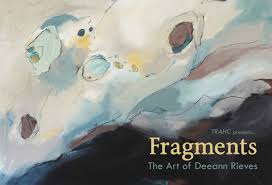
Besides theology, art and several other disciplines find fragments to be a useful concept for naming reality.
The first of David Tracy’s two new volumes of essays is about fragments and also a collection of fragments. As I begin this series of posts on Tracy’s latest published work, I have in mind a few key ideas. They are: fragments, the other, and the infinite, topics among which Tracy’s more recent thoughts have wandered. At the moment I’m thinking mostly of fragments.
Dangerous fragments
I see three ways Tracy uses the word “fragments.” Fragments are what things fall apart into. Tracy sees that happening in our many various worlds – the environment, society, even the Church. Fragments are also what we romantically retrieve from a long-lost, harmonious world of, say the Middle Ages – the Middle ages of our imaginations. Finally, strong fragments are what disrupt or fragment the stories we Christian first-worlders tell ourselves.
Among those stories is the history written by the victors of our economic and political history, explaining how society has evolved until it came to the point of “us.” Another tells how all the religions of the world are stages on the way to Christianity.
Among those fragments that disrupt the stories are the memories of oppressed peoples. Johann Baptist Metz, I think, first named them “dangerous memories.” Like the memory of the Cherokee “Trail of Tears” and the “middle passage” of the slave trade. Or there are the memories of Christian repression of the Jews, leading to the Holocaust, memories the Salem Witch Trials, memories of the Catholic Inquisition. These memories are dangerous because we cannot repress them. They haunt our conscience and strengthen the resolve of repressed peoples. They are not inert things but happenings. Tracy made up the word “frag-events” for these strong fragments.
Classics as frag-events
There are artworks that we can look at and move on as if nothing happened. We can read some books and not have to open them again. Many songs are entertaining enough to the ear but a burden when they stick around in the head. A classic is different. A classic requires us to go back again and again. It never runs out of things to say. It can be a burden, too, but that’s because it challenges us with a task we can’t complete. We can’t wrap up a classic and say now we have it down pat. A classic is always a fragment to us. There’s always more of it that we haven’t encountered – or that hasn’t encountered us.
Classics are two-way encounters; they address us as much as we bring ourselves to them. They are happenings; as fragments, they are frag-events. And, like the memories of forgotten peoples—which we might as well also call classics—they are dangerous. They open us to ever new worlds and call into question our old world. They bring to the fore possible ways of being in the world that weren’t even possible (because not thinkable) before. The “impossible” is another important category in Tracy’s later thought.
Frag-events, openings to the other and, perhaps, to the Infinite Other
Classical Western philosophy is about substance, “being” as a noun. Philosophers tried to figure out how a being could change and become something different. They found ideas like matter and form or atoms and the void—all things, substances. Classical Western science was pretty much the same: reality was ultimately things. Scientists could put them into classes or divide them up into tiny parts. Both philosophy and science, at about the same time, began to see reality another way, as process or event. Tracy says the “name” for ultimate reality, for either science or theology, is a verb. (p. 12) Reality doesn’t sit still long enough to name it properly.
I read that scientists a couple centuries back thought the story of the universe had essentially been told. Only details were left to fill in. That day is gone. Modern science has seen more than one revolution, and each new answer comes with more questions. In other words, our knowledge of the world is fragmentary and, perhaps, essentially and unavoidably so. At the edges of each fragment – now frag-events – is an opening to some other, something else. That other may be a previously hiding aspect of the world of science. It may be another, “impossible,” way of living in the world with other people, especially those whom we have ignored, and with nature, which we have ignorantly (or stupidly) abused.
There may even be, by way of fragments, an opening to infinity, which would be the Ultimately Real, an Other beyond any finite other. Buddhists, nihilists, philosophers, theologians, and artist have attempted to understand this infinite with names like “the Void,” “the Open,” “Creativity,” “Being” (as a verb), and “the Good beyond Being.” (p. 12)
Religion and the public
Interestingly, theologians and religious believers aren’t the only ones grappling with the concepts of fragment, the impossible, and the infinite. Tracy begins his Introduction:
Fragment emerged as an essential category in six distinct intellectual fields: classical studies, biblical studies, archaeology, literary theory, philosophy, and theology. My theory of the fragment can be cryptically stated as follows: Strong fragments shatter, fragment, negate any closed totality system. In the course of fragmenting all closed totalities, the most powerful fragments also show themselves not as substances but as events and positively open to liminal Infinity. (p. 1)
Fragments, the other, the infinite Other, and even the impossible are topics, Tracy thinks, on which religion and the unbelieving public can converse. In Chapter 1 Tracy will state:
It is with fragments that … theological and antitheological critics may finally listen to one another. (p. 22-23)
For Tracy, as my last post emphasized, Theology is a public discipline, and religion belongs in the public arena. Tracy hopes for a theology that will show “the public – indeed, the universal – character of all properly theological realities as frag-events.” Theological frag-events can “shatter, negate, and fragment all totality systems (including ‘Christendom’ as distinct from Christianity)….” (p. 15)
Response to suffering and other topics
At the end of Tracy’s Introduction we see several other topics forming the burden of this volume of “fragments”:
- Responses to suffering
- The invisible “as employed in mathematics, physics, philosophy, myth, religion, and theology”
- Metaphor, “a test case for religious texts”
- The mystical and the prophetic as Tracy sees these religious concepts in psychoanalysis
- Contemplation, a major contribution of the Orthodox churches to theology and any broad-minded philosophy
- Sunyata, emptiness, “a central contemplative category in Buddhism. (p. 12)
A thought from Tracy’s second volume, Filaments, is one way to sum up Tracy’s goal as a theologian. David Tracy wants to practice his discipline, like the ancient philosophers before theory got separated from practice, “on behalf of a way of life.” (p. 93)
Image credit: The Texarkana Regional Arts and Humanities Council
Previous Post

June 27, 2021
The Living God and Some New Quests
Next Post
June 29, 2021 The Liturgy of the Word: More than Listening
Browse Our Archives
Select a Category Advent Christmas Amazon Synod Angels Being Consumed Bible Catholic Modern Creed Ecology Economics Elizabeth Johnson Eucharist Fragments and Filaments Gender and Sex Gospel of Mark Herzog Historical Jesus Liturgy Luke Opening Scriptures on Way to Emmaus Ordinary radicals Parables Pro-Life Reincarnation Rosary Sacraments science Social Justice Souls Stories of Jesus The Creed Torture and Eucharist Tracy Uncategorized War and Peace
Select a Month October 2026 June 2025 April 2025 March 2025 February 2025 January 2025 November 2024 July 2024 March 2024 December 2023 October 2023 September 2023 August 2023 May 2023 April 2023 March 2023 February 2023 January 2023 December 2022 November 2022 October 2022 September 2022 August 2022 July 2022 June 2022 April 2022 March 2022 February 2022 January 2022 December 2021 November 2021 October 2021 August 2021 July 2021 June 2021 April 2021 March 2021 February 2021 December 2020 November 2020 October 2020 August 2020 July 2020 June 2020 May 2020 April 2020 March 2020 February 2020 January 2020 December 2019 November 2019 October 2019 September 2019 August 2019 July 2019 June 2019 May 2019 April 2019 March 2019 February 2019 January 2019 December 2018 November 2018 October 2018 September 2018 August 2018 July 2018 June 2018 May 2018
Follow Us!
TAKE THE
Religious Wisdom Quiz
What does Paul teach about boasting?
Select your answer to see how you score.
Boast in the Lord Never boast Boast in yourself Boast in riches
Related posts from Lost in a One-Acre Wood
Theologies and a New Paradigm: Mutually Critical Correlations
The Impossible and the Infinitely Loving God: Mystics...
Writing about the Infinite God – And Trying...
Suffering: No Why’s, No Theodicies, but a Crucified...
TRENDING AT PATHEOS Catholic

The Parable Of The Sower And The Word...
One of Christ’s most famous parables is that of the sower who...

Rejecting Doom: Christian Hope And Human Action
Christianity is a religion of hope. We are to have hope and...

Why I Choose the Eucharist Over the Sermon
Choose the Eucharist, Not the Sermon What are we supposed to get...

5 Design Elements Found in Spiritually Rooted Homes
Putting Spirituality Into Home Decor Our homes are more than our living...

Credo: A Story of God Told with the...
About 10 years ago, I began to imagine a personal "Credo" that...

The Anatomy of Divine Revelation in Catholic Thought
The claim that God has made Himself known to human beings is...
view all Catholic blogs
Ad-Free & Subscriber Log-In Subscription Support
- About Us
- 2026 Calendar
- Videos
- Podcasts
- Library of World Religions
- Faith In Media Tracker
- Advertise With Us
- Write for Us
- Privacy Policy
- Terms of Service
- Do Not Sell My Data
- Contact Us
- Radiant Digital
- Manage Newsletter Subscriptions
- Unsubscribe From Notifications
- Sitemap
Copyright 2008-2026, Patheos. All rights reserved.
Subscription Support Ad-Free & Subscriber Log-In
Follow Patheos