
BuddhistCatholicContemplativeEvangelicalGeneral ChristianHinduJewishLatter-day SaintMuslimNew VisionsProgressive Christian
Beliefs
- Buddhist
- Catholic
- Contemplative
- Evangelical
- General Christian
- Hindu
- Jewish
- Latter-day Saint
- More Voices
- Muslim
- New Visions
- Pagan
- Progressive Christian
Topics
- Religion News
- Food and Religion
- Sports and Religion
- Religious Art
- Religious Music and Entertainment
- Religious Events
- History and Religion
- Style and Religion
- Politics and Religion
- Women in Religion
- Recreation Outdoors and Religion
- Business Finance and Religion
- Careers Workplace and Religion
- Education and Religion
- Family Parenting and Religion
- Health Fitness and Religion
- Home and Religion
- Relationships and Religion
- Technology and Religion
- Travel and Religion
Columnists
- Buddhist Columnists
- Business Finance and Religion Columnists
- Careers Workplace and Religion Columnists
- Catholic Columnists
- Contemplative Columnists
- Education and Religion Columnists
- Evangelists Columnists
- Family Parenting and Religion Columnists
- General Christian Columnists
- Health Fitness and Religion Columnists
- Hindu Columnists
- History and Religion Columnists
- Home and Religion Columnists
- Jewish Columnists
- More Voices Columnists
- Latter Day Columnists
- Muslim Columnists
- New Visions Columnists
- Nonreligious Columnists
- Pagan Columnists
- Politics and Religion Columnists
- Progressive Columnists
- Recreation Outdoors and Religion Columnists
- Relationships and Religion Columnists
- Religion News Columnists
- Religious Art Columnists
- Religious Events Columnists
- Religious Music and Entertainment Columnists
- Sports and Religion Columnists
- Style and Religion Columnists
- Technology and Religion Columnists
- Travel and Religion Columnists
- Women in Religion Columnists
Resource Library
- 2026 Calendar
- Library of World Religions
- The 100 Most Holy Places on Earth
- Patheos Answers
- Podcasts
- Videos
- Faith Leaders Database
- Anglican Episcopalian
- Bahai
- Baptist
- Buddhism
- Christianity
- Confucianism
- Eastern Orthodoxy
- Hinduism
- Holiness and Pentecostal
- ISKCON
- Islam
- Judaism
- Lutheran
- Methodist
- The Church of Jesus Christ of Latter-day Saints
- New Age
- Paganism
- Presbytarian and Reformed
- Protestantism
- Religion Behind the Scenes
- Roman Catholic
- Scientology
- Shia Islam
- Sikhism
- Sufism
- Sunni Islam
- Taoism
- Zen
- See all religions
Research Tools
 Ad-Free & Subscriber Log-In Subscription Support
Follow Patheos 

- Trending:
- Advent
- |
- Forgiveness
- |
- Thanksgiving
- |
- Election
- |
- Seasonal Holidays
- |
- Marriage

- Home
- Catholic
- Theologies and a New Paradigm: Mutually Critical Correlations
Theologies and a New Paradigm: Mutually Critical Correlations
Last updated on: October 28, 2021 at 12:58 pm by Jack Hartjes
Theologies and a New Paradigm: Mutually Critical Correlations 2021-10-28T12:58:49-06:00 Jack Hartjes
Patheos Explore the world's faith through different perspectives on religion and spirituality! Patheos has the views of the prevalent religions and spiritualities of the world.
Part 7 On David Tracy’s Fragments, Chapter 6, on Interpretation Theory
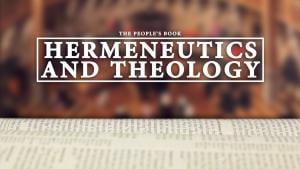
Hermeneutics, or interpretation theory, is the key to holding a plurality of theologies together, in David Tracy’s view.
David Tracy has repeated consistently a description of the task of theology since his early work Blessed Rage for Order. In Chapter 6 of his new book Fragments, he makes the case again for a concept of theology that is shared by many but not all theologians. Theologies, of which there are a plurality, Tracy holds, attempt to “develop mutually critical correlations between contemporary experience and the Christian tradition.” (p. 137) In other places Tracy specifies that the mutual criticism is between the best interpretations by the many sciences of common experience and theology’s best interpretations of the Christian tradition. Theology is a science that engages many other sciences.
That “mutual criticism” part, from a traditionalist’s point of view, is surprising and, maybe, disturbing. Tracy does not think that the job of religion or theology is simply to supply answers to the modern world’s ultimate questions. Rather, theology dialogues with the secular world’s attempts to understand itself. That engagement with the world’s quest is an essential part of theology’s efforts to understand its own Christian heritage. There are questions and answers, with truths, doubts, and enigmas in both quests.
The interesting back-and-forth between the two sides helps explain why I continue my avocation as an amateur theologian who is also committed to the project of modern science and the modern world’s struggles for understanding and change. And the world’s continuing openness to the quest for ultimate meaning, even though often wrongly conceived, supports my continuing decision to count myself a Christian.
Witness not enough; dialogue needed
There’s a trend in theology that says theologians’ work is only to explain their own biblical and church traditions. Theology should help church members show the world what human existence would be like in a realm where God presides. Along the same line, many have adopted a “Benedict option.” They advocate withdrawing, like “desert father” St. Benedict, into metaphorical “deserts.” Worldly ways of improving human life are critically compromised, “fallen” in Christian terminology. Rather than try to save, or baptize, that pursuit, Christians of this mind, in the midst of the world and its affairs, should form the kind of community that would attract people out of their worldly mess and into God’s “kingdom.”
While not downplaying the importance of Christian witness to the world, Tracy would say it’s not enough. Christians must also listen to the world because good and evil both are there. And, like it or not, Christians, including theologians, are involved in both. Tracy is fond of saying, “There is no innocent text or tradition,” including the Bible and his own work.
Modern hermeneutics, the sciences of interpretation
Tracy spent much of his career working out the methods by which theology proceeds. That’s true of Chapter 6 in Fragments, “Hermeneutical Reflections in the New Paradigm of Theology.” Tracy’s reflections on theories of interpretation (hermeneutics) get rather technical, but they boil down to one main point. That is, to follow rules in order to have an honest, responsible conversation, whether with another person, a symbol or event, or a classic text like the Bible. Not prior judgments but the subject matter guides the conversation.
In Chapter Six the conversation is mainly on the question, What is religion? Answers vary widely:
The prospective interpreter may believe either that religion is one of the great creative forces of the human spirit or that religion is a deadly confusion. In fact it is both. (p. 132)
Tracy continues: a religious phenomenon “will ordinarily provoke some fundamental existential question.” Examples include questions about finitude, fault, tragedy, and trust or distrust in reality. A religious expression may have an alien feel about it. That heightens the interpreter’s “consciousness of her preunderstanding.” (p. 133) When a conflict of understandings takes the form of a conversation, genuine interpretation begins. “Neither interpreter nor text [or religious expression], but the common subject matter takes over the entire interaction….” (p. 134)
The most interesting part of Tracy’s hermeneutical reflections concerns what needs to happen when conversation breaks down. I’ve had conversational breakdowns over subjects like wearing masks in a pandemic and who won the 2020 election. I suspect that my interlocutor’s a priori political commitment is hindering an accurate look at both these issues. I suppose the other side has their own suspicions about me. Notice the words “suspect” and “suspicions.” The technical word for this move to see what’s behind a failure of conversation is “hermeneutics of suspicion.”
When conversation with the Bible breaks down
With conversation you think of two people in dialogue. When that conversation, or dialogue, becomes the model for reading the Bible, something interesting happens. The subject matter, which is supposed to guide the conversation, is no longer the words of the text, as if you were studying for an exam. It’s not even an idea in the biblical author’s mind and certainly not an idea in your own mind. Tracy identifies the subject matter as “the world of meaning” that the text offers as “a possible way-of-being-in-the-world.” (p. 134) In a conversation we want more than an exchange of ideas. We are exploring the world, and we want truth.
Imagine dialoguing with the Bible on ways of being in the world like:
- slavery,
- homosexuality,
- being a woman in society,
- being a person in an established civil, political, economic, and social order,
- trying to act justly in a world of gross inequalities,
- humility vs. pride, trust vs. alienation, being thankful vs. taking credit or taking for granted.
Theologies and culture
Fellow Dying Inmate, one of my favorite bloggers on Patheos/Catholic, insists that the cultural world of Jesus and the Gospel writers was miles apart from what we experience. Add to that the fact that early Christians seem to have expected (wrongly) an imminent end to the world, or this age of the world at least. One can legitimately “suspect” that some of the Bible’s “answers” derive from something other than divine revelation.
We have a better answer to the slavery question than the Bible did, not that we always practice it. The Bible’s authors may not have known about homosexuality as a disposition, as distinct from homosexual acts. It’s safe to say the Bible advanced the position of women in society, but its record on that is inconsistent, and Christianity’s history is compromised. When it comes to a person’s place amid the many institutions that constitute society, it’s our modern emphasis on the individual that is most suspect. Our obsession with positive self-image could stand some biblical hermeneutics of suspicion. Also suspect, from the Bible’s point of view, is a concept of economic justice that places primary stress on the current distribution of wealth. Until social justice became an issue recent times, I and many other Christians didn’t notice the radicalism of some of our Scriptures.
Liberation theologies
There is no innocent tradition or text, including, Tracy says, his own. All contain “moral ambiguities that can become repressed … by still unconsciously and systematically present distortions.” (135) A variety of liberation theologies, including black, feminist, indigenous etc. theologies, use a hermeneutics of suspicion to expose these assumptions.
Tracy says sexism, racism, classicism and other distortions, so evident in our world, are also “operative in the Jewish, Christian, and Islamic religious classics.” (136) He concludes:
As a pluralistic and ambiguous phenomenon, religion not merely allows but also demands both hermeneutics of retrieval and suspicion.” (P. 136)
Different starting points lead to different theologies. Tracy asks us to imagine the difference a profound sense of trust would make as opposed to a sense of alienation or oppression. How might one’s idea of revelation be influenced by taking seriously the scientific revolution, the Enlightenment, and the awareness that all knowledge is historically conditioned? Or what if – as in liberation theologies – one tries to understand salvation “in the light of the counter-experience of massive global suffering”? (P. 139)
I can imagine that the differences would be huge. I wish Tracy had done more than raise the questions. But this is only one essay in Tracy’s collection called Fragments. Tracy recognizes a plurality of theologies but presses for a “theological community of inquiry” united around a consensus that he say already exists:
Our options, fortunately, are not exhausted by the unwelcome alternatives of chaos or fundamentalism. Rather, we find ourselves in a theological community of inquiry and commitment. In that community we attempt, individually and communally, to work out the most relatively adequate, mutually critical correlations between the Christian message and contemporary experience, in reard to the pressing theological questions of our day. (p. 143)
Previous Post

February 2, 2021
"The Pillar," New, Interesting Catholic News Source
Next Post
April 20, 2021 Address the Prayer of the Faithful to God, Please
Browse Our Archives
Select a Category Advent Christmas Amazon Synod Angels Being Consumed Bible Catholic Modern Creed Ecology Economics Elizabeth Johnson Eucharist Fragments and Filaments Gender and Sex Gospel of Mark Herzog Historical Jesus Liturgy Luke Opening Scriptures on Way to Emmaus Ordinary radicals Parables Pro-Life Reincarnation Rosary Sacraments science Social Justice Souls Stories of Jesus The Creed Torture and Eucharist Tracy Uncategorized War and Peace
Select a Month November 2026 October 2026 June 2025 April 2025 March 2025 February 2025 January 2025 November 2024 July 2024 March 2024 December 2023 October 2023 September 2023 August 2023 May 2023 April 2023 March 2023 February 2023 January 2023 December 2022 November 2022 October 2022 September 2022 August 2022 July 2022 June 2022 April 2022 March 2022 February 2022 January 2022 December 2021 November 2021 October 2021 August 2021 July 2021 June 2021 April 2021 March 2021 February 2021 December 2020 November 2020 October 2020 August 2020 July 2020 June 2020 May 2020 April 2020 March 2020 February 2020 January 2020 December 2019 November 2019 October 2019 September 2019 August 2019 July 2019 June 2019 May 2019 April 2019 March 2019 February 2019 January 2019 December 2018 November 2018 October 2018 September 2018 August 2018 July 2018 June 2018 May 2018
Follow Us!
TAKE THE
Religious Wisdom Quiz
Who is considered the ideal wife and mother in Proverbs?
Select your answer to see how you score.
Martha The Proverbs 31 woman Mary Magdalene Eve
Related posts from Lost in a One-Acre Wood
The Impossible and the Infinitely Loving God: Mystics...
Writing about the Infinite God – And Trying...
Suffering: No Why’s, No Theodicies, but a Crucified...
Ancient Greek Tragedy, a Response to Horror and...
TRENDING AT PATHEOS Catholic

The Kingdom Of God In Ordinary Life And...
The kingdom of God is all around us; it is in us...

How Discretion Guides Us Away From Extremes
Prudence is an important virtue for all of us. While we should...

If Baptism Washes Away Sin, Why Do Catholics...
The seven sacraments stand as the foundation of Catholic ecclesial life. The...

The Power of Setting a Good Example
Remember last August when the Chicago White Sox hosted a "Pope Hat...

A Catholic Critique of Biblical Unitarianism
If the statistics are to be believed, Unitarianism is rising worldwide. Although...

How Grandma Tourism Helps Grandparents Live Their Vocation
Grandma, The New Travel Influencer What started as a nostalgia-inspired social media...
view all Catholic blogs
Ad-Free & Subscriber Log-In Subscription Support
- About Us
- 2026 Calendar
- Videos
- Podcasts
- Library of World Religions
- Faith In Media Tracker
- Advertise With Us
- Write for Us
- Privacy Policy
- Terms of Service
- Do Not Sell My Data
- Contact Us
- Radiant Digital
- Manage Newsletter Subscriptions
- Unsubscribe From Notifications
- Sitemap
Copyright 2008-2026, Patheos, part of the Radiant Digital network of media brands. All rights reserved.
Subscription Support Ad-Free & Subscriber Log-In
Follow Patheos