
BuddhistCatholicContemplativeEvangelicalGeneral ChristianHinduJewishLatter-day SaintMuslimNew VisionsProgressive Christian
Beliefs
- Buddhist
- Catholic
- Contemplative
- Evangelical
- General Christian
- Hindu
- Jewish
- Latter-day Saint
- More Voices
- Muslim
- New Visions
- Pagan
- Progressive Christian
Topics
- Religion News
- Food and Religion
- Sports and Religion
- Religious Art
- Religious Music and Entertainment
- Religious Events
- History and Religion
- Style and Religion
- Politics and Religion
- Women in Religion
- Recreation Outdoors and Religion
- Business Finance and Religion
- Careers Workplace and Religion
- Education and Religion
- Family Parenting and Religion
- Health Fitness and Religion
- Home and Religion
- Relationships and Religion
- Technology and Religion
- Travel and Religion
Columnists
- Buddhist Columnists
- Business Finance and Religion Columnists
- Careers Workplace and Religion Columnists
- Catholic Columnists
- Contemplative Columnists
- Education and Religion Columnists
- Evangelists Columnists
- Family Parenting and Religion Columnists
- General Christian Columnists
- Health Fitness and Religion Columnists
- Hindu Columnists
- History and Religion Columnists
- Home and Religion Columnists
- Jewish Columnists
- More Voices Columnists
- Latter Day Columnists
- Muslim Columnists
- New Visions Columnists
- Nonreligious Columnists
- Pagan Columnists
- Politics and Religion Columnists
- Progressive Columnists
- Recreation Outdoors and Religion Columnists
- Relationships and Religion Columnists
- Religion News Columnists
- Religious Art Columnists
- Religious Events Columnists
- Religious Music and Entertainment Columnists
- Sports and Religion Columnists
- Style and Religion Columnists
- Technology and Religion Columnists
- Travel and Religion Columnists
- Women in Religion Columnists
Resource Library
- 2026 Calendar
- Library of World Religions
- The 100 Most Holy Places on Earth
- Patheos Answers
- Podcasts
- Videos
- Faith Leaders Database
- Anglican Episcopalian
- Bahai
- Baptist
- Buddhism
- Christianity
- Confucianism
- Eastern Orthodoxy
- Hinduism
- Holiness and Pentecostal
- ISKCON
- Islam
- Judaism
- Lutheran
- Methodist
- The Church of Jesus Christ of Latter-day Saints
- New Age
- Paganism
- Presbytarian and Reformed
- Protestantism
- Religion Behind the Scenes
- Roman Catholic
- Scientology
- Shia Islam
- Sikhism
- Sufism
- Sunni Islam
- Taoism
- Zen
- See all religions
Research Tools
 Ad-Free & Subscriber Log-In Subscription Support
Ad-Free & Subscriber Log-In Subscription Support
Follow Patheos 

- Trending:
- Forgiveness
- |
- Marriage
- |
- Consciousness
- |
- Death Penalty
- |
- Election
- |
- Halloween

- Home
- Catholic
- Suffering: No Why’s, No Theodicies, but a Crucified God Suffers with Us
Suffering: No Why’s, No Theodicies, but a Crucified God Suffers with Us
Last updated on: July 15, 2020 at 7:09 am by Jack Hartjes
Suffering: No Why’s, No Theodicies, but a Crucified God Suffers with Us 2020-07-15T07:09:50-06:00 Jack Hartjes
Patheos Explore the world's faith through different perspectives on religion and spirituality! Patheos has the views of the prevalent religions and spiritualities of the world.
On Tracy’s Fragments, Chapter 4, Christianity and Suffering
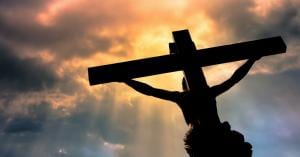
The Christian response to the suffering of the world is to follow Jesus’ way of the cross.
Suffering looms large in Tracy’s recent thought, so it’s disappointing that the chapter on “Christianity and Suffering” is the shortest in the book. This chapter also demonstrates a quality almost inevitable in a collection of essays written at different times in an author’s career. It repeats themes found elsewhere in the book without expanding on them much.
Central realities of suffering
Tracy lists five “central realities,” things we need to say about suffering (p. 83-84):
- No one can escape suffering in one’s own life and death and in the persons one cares about.
- Still, in the midst of pervasive, even intense, suffering, there are moments of great joy.
- Tracy identifies three ways people experience suffering. Some suffering is unavoidable in this life, including the anxiety of facing death. Some suffering we can, at least sometimes, choose, like the pain of childbirth or the much less intense pain of many creative endeavors. (Like wrestling thoughts into written words for me.) Finally some of us suffer as members of a suffering community. These communal experiences – plague, famine, persecution, colonization, slavery, genocide, purges – are mostly foreign to the rich and powerful. That lack would be the soul sickness of my own group, for whom a fundamental option for the poor is a necessary cure.
- There is no adequate philosophical or theological response to suffering. All theodicies, all attempts to justify God, “collapse in the face of radical suffering.” Instead of making sense out of suffering, Christians must “face attentively the reality of the cross of Jesus Christ.”
- Lastly, Tracy says, it is time to “rethink original sin.” Not all the suffering of this world is the result of sin, original or otherwise. There is plenty of suffering, even intense suffering, from natural causes (“not natural evils”).
The last two are the points I want to comment on.
Original sin, traditional interpretation
Since earliest Christianity, at least some scholars have recognized that the story of our first parents in the Garden of Eden is not straightforward history. That hasn’t excused theologians from the task of reconciling the essence of that story with scientific reality. The best traditional interpretation of that “original sin” that I know of goes like this:
- Whoever our first parents were, call them “Adam and Eve,” they belonged to a band of proto-humans descended from even earlier hominid species. Scientists say that to get the observed genetic diversity among humans today, you need an original pool of 2000 individuals or more, so there must have been more than one such band.
- These bands are on the verge of transitioning to truly human. They are developing symbols and language. At the right moment God instills a spiritual soul into one of the hominids. (It could have been two, a man and a woman, but not necessarily.) After a time the first sinful deed occurs, and this first sinner bequeaths to all his or her descendants a double legacy. We inherit both a spiritual soul and the negative consequences of that first sin.
- The Church teaches that all humans are descendants of that original sinner. Thus the human family is one. You might wonder, What about the couple thousand other proto-humans contemporary with that “Adam”? Wouldn’t some of us be descended from some of them? Perhaps all lines except those with spiritual souls died off. That’s what I think the writer who proposed this interpretation (in an article that I can’t locate), believed. But such a die-off is not necessary. After hundreds of thousands of years – in fact, long before that – lines of descent would have become so entangled that all of us would be directly descended from all of them. No lines needed to die out.
- Mythical and scientifically impossible features of the Bible story drop out. There is no Tree of Knowledge of Good and Evil or Tree of Life. God doesn’t walk in the garden in the cool of the evening. We are “humble clay” only in a metaphorical sense. More important, the “curses” of pain in childbirth and the sweat of one’s brow are nothing new. Pain and suffering didn’t first enter the world with that first sin. Life has always been a struggle for survival.
“Ancient sin”
Somewhere (not in this chapter) Tracy changes “original sin” to “ancient sin.” This retains the good in the previous account, namely that something evil happened. Not just pain but moral evil has invaded God’s good world. It also allows getting away from the idea of a single act by a single individual or pair. That relates better to the reality of the evil we experience. Evil is not just within individuals but looms above us in the form of communities, structures, and ideologies within which we live.
René Girard (see this post) tells a story of an ancient collective sin—scapegoating. Out of this common human sin come, first, hierarchical structures and, eventually, regular sacrifices. There’s a priesthood and a religion with myths that justify the system. In a later chapter Tracy refers to Girard’s work, not entirely positively. He thinks Girard’s “good insight” yields, as most insights tend to do, to “monomaniacal totalizing.” (p. 351)
One of the problems with reading David Tracy is that he has so much on his mind that one thought slips in while he’s pursuing another, and you wish he’d say more about the first. In this case I can’t tell what Tracy really thinks about Girard. For my part, I think what set humanity down the wrong path, with lasting effect, is more likely a communal injustice than private, individual sin.
The centrality of the cross
Tracy makes an interesting, surprising statement about the cross. The cross has not always been a central image for Christians. For the first four centuries of the Church, the image of the cross was not so common as it became later and still is. The cross “was not the shocking central symbol of [early] Christianity.” (p. 90) The symbols of Good Shepherd, Fish, and Eucharist were much more common. The cross was recognized then as a scandal, “as it should be recognized now.”
It seems that Christians have both gained and lost as time went by. We have gained an appreciation of the centrality of the cross but lost a sense of the cross as scandal. If I’m reading Tracy right, it’s a double scandal. First, as Tracy boldly puts it, God suffered. Tracy doesn’t qualify that suffering as “only” in the humanity of Jesus. He uses phrases like “God’s compassionate suffering in the cross of Jesus Christ.” This is the “loving God of Jesus Christ.” (p. 88) Even though Jesus is God, the God of Jesus is not exactly the same as Jesus. And that God suffers.
Again Tracy is too brief. The God of Jesus is the one Jesus called Father, and God the Father, as later trinitarian theology sees it, did not suffer on the cross. But compassion, which seems to imply a kind of suffering with another, surely is rightly said of the Father. But more needs to be said about what kind of suffering, if any, can be attributed appropriately to God.
Our only hope
The second part of the scandal of the cross is the fact that the cross is the main, and generally the only, thing Christians have to offer to a suffering world. We would like to find more optimistic things to say. Speaking to each other, of course, Christians can offer the hope of resurrection. That symbol says little to a world that either believes or doesn’t believe in its own form of existence after death. Or else it tells Christianity’s critics that Christians don’t care much about engagement in real life on earth.
People of any persuasion can appreciate the symbol of the cross, especially when Christians respond by following Jesus’ “way of the cross.” This many Christians have done throughout their history. Tracy says,
To pay attention to Christ’s cross as what gives Christians hope (not optimism) is to try to accept whatever pain, suffering, negativity life hands us by focusing on and participating in the divine and human compassion released by Christ’s cross, and to resist any injustice we observe, whether locally or globally. (p. 89-90)
Image credit: Crosswalk.com
Previous Post

July 2, 2020
Ancient Greek Tragedy, a Response to Horror and Suffering
Next Post
August 27, 2020 BirthStrike Movement to Dissolve Next Week
Browse Our Archives
Select a Category Advent Christmas Amazon Synod Angels Being Consumed Bible Catholic Modern Creed Ecology Economics Elizabeth Johnson Eucharist Fragments and Filaments Gender and Sex Gospel of Mark Herzog Historical Jesus Liturgy Luke Opening Scriptures on Way to Emmaus Ordinary radicals Parables Pro-Life Reincarnation Rosary Sacraments science Social Justice Souls Stories of Jesus The Creed Torture and Eucharist Tracy Uncategorized War and Peace
Select a Month October 2026 June 2025 April 2025 March 2025 February 2025 January 2025 November 2024 July 2024 March 2024 December 2023 October 2023 September 2023 August 2023 May 2023 April 2023 March 2023 February 2023 January 2023 December 2022 November 2022 October 2022 September 2022 August 2022 July 2022 June 2022 April 2022 March 2022 February 2022 January 2022 December 2021 November 2021 October 2021 August 2021 July 2021 June 2021 April 2021 March 2021 February 2021 December 2020 November 2020 October 2020 August 2020 July 2020 June 2020 May 2020 April 2020 March 2020 February 2020 January 2020 December 2019 November 2019 October 2019 September 2019 August 2019 July 2019 June 2019 May 2019 April 2019 March 2019 February 2019 January 2019 December 2018 November 2018 October 2018 September 2018 August 2018 July 2018 June 2018 May 2018
Follow Us!
TAKE THE
Religious Wisdom Quiz
Who preached the first Christian sermon on Pentecost in Acts?
Select your answer to see how you score.
Philip Paul James Peter
Related posts from Lost in a One-Acre Wood
Theologies and a New Paradigm: Mutually Critical Correlations

The Impossible and the Infinitely Loving God: Mystics...

Writing about the Infinite God – And Trying...
Ancient Greek Tragedy, a Response to Horror and...
TRENDING AT PATHEOS Catholic

Creation, Preservation, and Teleology in Catholic Theology
As I write this, it is very early Monday morning. Like millions...

The Parable Of The Sower And The Word...
One of Christ’s most famous parables is that of the sower who...

Rejecting Doom: Christian Hope And Human Action
Christianity is a religion of hope. We are to have hope and...

Why I Choose the Eucharist Over the Sermon
Choose the Eucharist, Not the Sermon What are we supposed to get...

5 Design Elements Found in Spiritually Rooted Homes
Putting Spirituality Into Home Decor Our homes are more than our living...

Credo: A Story of God Told with the...
About 10 years ago, I began to imagine a personal "Credo" that...
view all Catholic blogs
Ad-Free & Subscriber Log-In Subscription Support
- About Us
- 2026 Calendar
- Videos
- Podcasts
- Library of World Religions
- Faith In Media Tracker
- Advertise With Us
- Write for Us
- Privacy Policy
- Terms of Service
- Do Not Sell My Data
- Contact Us
- Radiant Digital
- Manage Newsletter Subscriptions
- Unsubscribe From Notifications
- Sitemap
Copyright 2008-2026, Patheos. All rights reserved.
Subscription Support Ad-Free & Subscriber Log-In
Follow Patheos