
BuddhistCatholicContemplativeEvangelicalGeneral ChristianHinduJewishLatter-day SaintMuslimNew VisionsProgressive Christian
Beliefs
- Buddhist
- Catholic
- Contemplative
- Evangelical
- General Christian
- Hindu
- Jewish
- Latter-day Saint
- More Voices
- Muslim
- New Visions
- Pagan
- Progressive Christian
Topics
- Religion News
- Food and Religion
- Sports and Religion
- Religious Art
- Religious Music and Entertainment
- Religious Events
- History and Religion
- Style and Religion
- Politics and Religion
- Women in Religion
- Recreation Outdoors and Religion
- Business Finance and Religion
- Careers Workplace and Religion
- Education and Religion
- Family Parenting and Religion
- Health Fitness and Religion
- Home and Religion
- Relationships and Religion
- Technology and Religion
- Travel and Religion
Columnists
- Buddhist Columnists
- Business Finance and Religion Columnists
- Careers Workplace and Religion Columnists
- Catholic Columnists
- Contemplative Columnists
- Education and Religion Columnists
- Evangelists Columnists
- Family Parenting and Religion Columnists
- General Christian Columnists
- Health Fitness and Religion Columnists
- Hindu Columnists
- History and Religion Columnists
- Home and Religion Columnists
- Jewish Columnists
- More Voices Columnists
- Latter Day Columnists
- Muslim Columnists
- New Visions Columnists
- Nonreligious Columnists
- Pagan Columnists
- Politics and Religion Columnists
- Progressive Columnists
- Recreation Outdoors and Religion Columnists
- Relationships and Religion Columnists
- Religion News Columnists
- Religious Art Columnists
- Religious Events Columnists
- Religious Music and Entertainment Columnists
- Sports and Religion Columnists
- Style and Religion Columnists
- Technology and Religion Columnists
- Travel and Religion Columnists
- Women in Religion Columnists
Resource Library
- 2026 Calendar
- Library of World Religions
- The 100 Most Holy Places on Earth
- Patheos Answers
- Podcasts
- Videos
- Faith Leaders Database
- Anglican Episcopalian
- Bahai
- Baptist
- Buddhism
- Christianity
- Confucianism
- Eastern Orthodoxy
- Hinduism
- Holiness and Pentecostal
- ISKCON
- Islam
- Judaism
- Lutheran
- Methodist
- The Church of Jesus Christ of Latter-day Saints
- New Age
- Paganism
- Presbytarian and Reformed
- Protestantism
- Religion Behind the Scenes
- Roman Catholic
- Scientology
- Shia Islam
- Sikhism
- Sufism
- Sunni Islam
- Taoism
- Zen
- See all religions
Research Tools
 Ad-Free & Subscriber Log-In Subscription Support
Ad-Free & Subscriber Log-In Subscription Support
Follow Patheos 

- Trending:
- Forgiveness
- |
- Marriage
- |
- Consciousness
- |
- Death Penalty
- |
- Election
- |
- Halloween

- Home
- Catholic
- Invisible Things and the Ultimate Infinite Invisible
Invisible Things and the Ultimate Infinite Invisible
Last updated on: October 28, 2021 at 11:13 am by Jack Hartjes
Invisible Things and the Ultimate Infinite Invisible 2021-10-28T11:13:33-06:00 Jack Hartjes
Patheos Explore the world's faith through different perspectives on religion and spirituality! Patheos has the views of the prevalent religions and spiritualities of the world.
Part 3 on David Tracy’s Fragments, Chapter Two
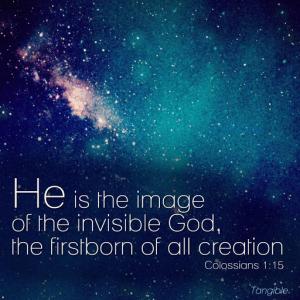
For Christians the invisible God becomes visible through the Word made flesh.
I’m returning to David Tracy and his new publication Fragments: The Existential Situation of Our Time. Two earlier posts on Fragments are here and here. In Chapter Two Tracy takes up two topics that most people associate with divinity–the invisible and the infinite. Questions on Tracy’s mind include:
- Do these concepts make sense, or are they just empty words when we apply them to God?
- Do these concepts apply to anything else besides God?
My other question as I approach this chapter: Are we saying something good about God with these two concepts, especially the concept of infinity?
Things invisible: The little ones
Tracy names some invisible things that don’t seem to have much to do with God. He says we inflict invisibility “on all marginalized persons and groups.” These include people of color, women, gay and transgender persons, prisoners, the homeless—a list that “seems to grow exponentially.” (p. 35-36) Tracy goes on to say he’s most interested in the intellectual forms of invisibility in mathematics and science. But before following him there I’ll pause over that list of persons we make invisible.
Although “invisible” here is a metaphor, it’s literally true that Jesus was a member of such a marginalized group. That tells us something about God. As prophets long before Jesus knew, God favors the invisible ones among us. Even more, God makes a home among them, becoming one of these little ones. God’s power, paradoxically stronger than strength, is the power of the invisible ones. These past days I’ve seen, and blogged about, God’s power acting through George Floyd, victim of police violence, and through the powerless but no longer dominated ones marching on his account.
Philosophers have named the ultimate invisible one. For Aristotle it’s the unmoved mover. Thomas Aquinas has Esse, or the To Be. Plato and others name the Good beyond Being. The three radical monotheisms, Judaism, Christianity, and Islam affirm the “Source, Creator, Sustainer, and End of all reality.” Christianity, unlike the others, is ambiguous about God’s invisibility. The invisible God becomes visible in Jesus. Jews and Muslims so stress God’s invisibility that they forbid images of God while in Christianity such images abound.
Islamic State, Tracy says, is “aniconic (anti-image) Islam gone mad.” It carries to a hideous extreme the anti-world tendency of some religions and philosophies. That would include some anti-body forms of Christianity. But hatred of bodies and the material world is hardly fitting, Tracy says, “in a religion based on a belief in a tangible, visible incarnation of God in human flesh. (p. 38)
Invisible mathematical and scientific things
Popular religion of many kinds attests to the human tendency to make images even of invisible things. That includes Christians’ finding an image of God in the poor. But such a tendency doesn’t take away, and may even add to, the doubt among those with a more intellectual bent that belief in an invisible God, Source, Good, or whatever has any real or even possible object. If Tracy is anything, He’s an intellectual. Tracy’s next step is to find the concept of invisibility operating in two highly intellectual disciplines – mathematics and science.
Tracy recalls the definition of a circle in ancient and modern mathematics: “a locus of coplanar points equidistant from the center.” It’s like a wheel with spokes radiating out from a central hub to the rim. Except every mathematician knows that it’s not like that. In fact, it’s not like any visible thing or even anything we can imagine. The perfect circle exists only as an intellectual construct, and the same is true of mathematical lines, points, and any figure of however many dimensions. Yet with these and similar concepts science quantifies our observations of the real world.
There is the real, visible world of ordinary experience, including things like the table made of wood that I sit down at for breakfast. Then there’s Arthur Eddington’s famous “other table,” consisting of things that we imagine as ultimate building blocks. In order of descending size and ascending ultimacy, we name molecules; atoms; protons, neutrons, and electrons; different flavors of quarks; and, finally maybe, strings.
Tracy asks, Which of Eddington’s two tables is more real, and his answer is intriguing. The “theoretical table,” Tracy says, “is ‘more’ real than the material table because it adds another understanding to the wooden table I see and touch.” (p. 43)
Clarifying Christian belief
I’m going to risk the question, What is Tracy doing with this excursion into invisibility in mathematics and science? I don’t believe he is trying to convince intellectual despisers that Christians don’t really believe in fairy-tale, invisible beings. Tracy’s is not the retort, “Well, you believe in invisible things, too.” He’s not offering evidence that another invisible being, God, exists. Tracy’s thinking doesn’t seem to go in those directions, and they don’t seem very helpful to me.
The examples of mathematics and science do help me to think about believing in a new way. It’s like what happens when you look at all of reality in a new way. Think about these momentous events:
- Humans learned to manipulate things mentally by means of number.
- Euclid and the Greeks invented geometry.
- Galileo and Newton applied mathematics to the motions of bodies, ushering in the age of modern science and, eventually, relativity and quantum mechanics.
Something like that is what happens with religious belief. It’s not like adding a new thing to our list of realities. (The world and God don’t make two any more than Eddington’s “two tables” are really two.) It’s looking at the world we always knew in a new way.
Tracy’s list of the ways different cultures and religions name the ultimate invisible also is useful in this way. Most of them don’t seem to be anything like a previously unknown being to add to the list of real things. Imagine:
- Buddhism’s Void
- The Chinese Tao
- Plato’s Good beyond being
- Plotinus’ One/Good
- Emerson’s Nature
- Heidegger’s the Open
- Even Thomas Aquinas’ Esse (To Be)
In such company “God,” which Tracy prefers, seems like an outlier, more thing-like and definitely more personal. But Tracy says try imagining “God” not as a noun but as a verb.
The artistic and religious invisible worlds
Great artists, Tracy says, “allow us to enter … another form of invisible reality.” (p. 43) He describes this new invisible world: “profoundly moving, intellectually illuminating, harmonious, rhythmic … beautiful even in its discordant notes and at times sublime in its deepest moments.” (p. 43) Tracy expects us to see truth in this realm “too deep for tears”:
Poets, like genuine mystics, seem to break through the usual rational boundaries to express truths different from and sometimes beyond the truths of science and philosophy, with their clearer limits. (p. 44)
Tracy’s use of the words “boundaries” and “limits” points toward what lies beyond those controlling restrictions. Not only artists and mystics know this realm. Certain experiences, situations, and questions surprise us with revelations of something beyond limits. These are:
- Limit-experiences – falling in love, spontaneous joy, ennui, despair
- Limit-situations – death of one’s beloved or an unbreakable sense of one’s own not-so-future death
- And limit-questions – Why be moral at all? How can science function so amazingly well if there is no intelligibility to the whole? (Einstein: “The most incomprehensible thing about the universe is that it is comprehensible.”) (p. 46)
Such extraordinary, but not so uncommon, moments bring us face-to-face with what one might call a religious, or spiritual, dimension of reality. By breaking through limits they provide Tracy with
… a name that informs all the names for the ultimate invisible – namely the all-important name and idea of the infinite in science, philosophy, theology, art, and religion…. Infinite open, Infinite Being, Infinite Good, the gods revealing infinite divine power, the Infinite God. (p. 46-47)
Naming God as infinite is too easy for us modern Christians. What does it mean? Is it even something good or just amorphous, chaotic? The next post in this series follows, with Tracy, the surprisingly difficult path by which people learned to call Ultimate Reality “infinite.”
Image credit: Cross Words
Previous Post

June 3, 2020
Analogy vs. Logic: Arguing Matters Close to the Heart
Browse Our Archives
Select a Category Advent Christmas Amazon Synod Angels Being Consumed Bible Catholic Modern Creed Ecology Economics Elizabeth Johnson Eucharist Fragments and Filaments Gender and Sex Gospel of Mark Herzog Historical Jesus Liturgy Luke Opening Scriptures on Way to Emmaus Ordinary radicals Parables Pro-Life Reincarnation Rosary Sacraments science Social Justice Souls Stories of Jesus The Creed Torture and Eucharist Tracy Uncategorized War and Peace
Select a Month October 2026 June 2025 April 2025 March 2025 February 2025 January 2025 November 2024 July 2024 March 2024 December 2023 October 2023 September 2023 August 2023 May 2023 April 2023 March 2023 February 2023 January 2023 December 2022 November 2022 October 2022 September 2022 August 2022 July 2022 June 2022 April 2022 March 2022 February 2022 January 2022 December 2021 November 2021 October 2021 August 2021 July 2021 June 2021 April 2021 March 2021 February 2021 December 2020 November 2020 October 2020 August 2020 July 2020 June 2020 May 2020 April 2020 March 2020 February 2020 January 2020 December 2019 November 2019 October 2019 September 2019 August 2019 July 2019 June 2019 May 2019 April 2019 March 2019 February 2019 January 2019 December 2018 November 2018 October 2018 September 2018 August 2018 July 2018 June 2018 May 2018
Follow Us!
TAKE THE
Religious Wisdom Quiz
What year was the first complete English Bible printed?
Select your answer to see how you score.
1382 1535 1450 1611
Related posts from Lost in a One-Acre Wood
Theologies and a New Paradigm: Mutually Critical Correlations

The Impossible and the Infinitely Loving God: Mystics...
Writing about the Infinite God – And Trying...

Suffering: No Why’s, No Theodicies, but a Crucified...
TRENDING AT PATHEOS Catholic

The Parable Of The Sower And The Word...
One of Christ’s most famous parables is that of the sower who...

Rejecting Doom: Christian Hope And Human Action
Christianity is a religion of hope. We are to have hope and...

Why I Choose the Eucharist Over the Sermon
Choose the Eucharist, Not the Sermon What are we supposed to get...

5 Design Elements Found in Spiritually Rooted Homes
Putting Spirituality Into Home Decor Our homes are more than our living...

Credo: A Story of God Told with the...
About 10 years ago, I began to imagine a personal "Credo" that...

The Anatomy of Divine Revelation in Catholic Thought
The claim that God has made Himself known to human beings is...
view all Catholic blogs
Ad-Free & Subscriber Log-In Subscription Support
- About Us
- 2026 Calendar
- Videos
- Podcasts
- Library of World Religions
- Faith In Media Tracker
- Advertise With Us
- Write for Us
- Privacy Policy
- Terms of Service
- Do Not Sell My Data
- Contact Us
- Radiant Digital
- Manage Newsletter Subscriptions
- Unsubscribe From Notifications
- Sitemap
Copyright 2008-2026, Patheos. All rights reserved.
Subscription Support Ad-Free & Subscriber Log-In
Follow Patheos