
BuddhistCatholicContemplativeEvangelicalGeneral ChristianHinduJewishLatter-day SaintMuslimNew VisionsProgressive Christian
Beliefs
- Buddhist
- Catholic
- Contemplative
- Evangelical
- General Christian
- Hindu
- Jewish
- Latter-day Saint
- More Voices
- Muslim
- New Visions
- Pagan
- Progressive Christian
Topics
- Religion News
- Food and Religion
- Sports and Religion
- Religious Art
- Religious Music and Entertainment
- Religious Events
- History and Religion
- Style and Religion
- Politics and Religion
- Women in Religion
- Recreation Outdoors and Religion
- Business Finance and Religion
- Careers Workplace and Religion
- Education and Religion
- Family Parenting and Religion
- Health Fitness and Religion
- Home and Religion
- Relationships and Religion
- Technology and Religion
- Travel and Religion
Columnists
- Buddhist Columnists
- Business Finance and Religion Columnists
- Careers Workplace and Religion Columnists
- Catholic Columnists
- Contemplative Columnists
- Education and Religion Columnists
- Evangelists Columnists
- Family Parenting and Religion Columnists
- General Christian Columnists
- Health Fitness and Religion Columnists
- Hindu Columnists
- History and Religion Columnists
- Home and Religion Columnists
- Jewish Columnists
- More Voices Columnists
- Latter Day Columnists
- Muslim Columnists
- New Visions Columnists
- Nonreligious Columnists
- Pagan Columnists
- Politics and Religion Columnists
- Progressive Columnists
- Recreation Outdoors and Religion Columnists
- Relationships and Religion Columnists
- Religion News Columnists
- Religious Art Columnists
- Religious Events Columnists
- Religious Music and Entertainment Columnists
- Sports and Religion Columnists
- Style and Religion Columnists
- Technology and Religion Columnists
- Travel and Religion Columnists
- Women in Religion Columnists
Resource Library
- 2026 Calendar
- Library of World Religions
- The 100 Most Holy Places on Earth
- Patheos Answers
- Podcasts
- Videos
- Faith Leaders Database
- Anglican Episcopalian
- Bahai
- Baptist
- Buddhism
- Christianity
- Confucianism
- Eastern Orthodoxy
- Hinduism
- Holiness and Pentecostal
- ISKCON
- Islam
- Judaism
- Lutheran
- Methodist
- The Church of Jesus Christ of Latter-day Saints
- New Age
- Paganism
- Presbytarian and Reformed
- Protestantism
- Religion Behind the Scenes
- Roman Catholic
- Scientology
- Shia Islam
- Sikhism
- Sufism
- Sunni Islam
- Taoism
- Zen
- See all religions
Research Tools
 Ad-Free & Subscriber Log-In Subscription Support
Ad-Free & Subscriber Log-In Subscription Support
Follow Patheos 

- Trending:
- Forgiveness
- |
- Marriage
- |
- Consciousness
- |
- Death Penalty
- |
- Election
- |
- Halloween

- Home
- Catholic
- Religion, Non-Reductive and Saturated, Gains Respect in Post-Modern Academic World
Religion, Non-Reductive and Saturated, Gains Respect in Post-Modern Academic World
Last updated on: October 28, 2021 at 10:55 am by Jack Hartjes
Religion, Non-Reductive and Saturated, Gains Respect in Post-Modern Academic World 2021-10-28T10:55:59-06:00 Jack Hartjes
Patheos Explore the world's faith through different perspectives on religion and spirituality! Patheos has the views of the prevalent religions and spiritualities of the world.
Some tricky vocabulary in Tracy’s Fragments, Chapter One
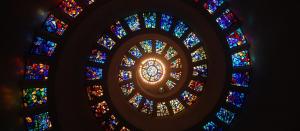
Religion, a fragmentary phenomenon, resists being caught in a system.
A philosophical dictionary or some background in phenomenology is useful in reading David Tracy’s Fragments. Like when he says, “It may well be, as several contemporary phenomenologists claim, that religion is the nonreductive saturated phenomenon par excellence.” (p. 20)
It’s no secret that modern academic thought in general has not been particularly kind to religion. Tracy includes even some theological theories in that modern anti-religious, or better, anti-God sentiment. Much of the gradually passing modern age, especially its Enlightenment variety, aimed at control of the world and the self through technology and theory. The phenomenon of religious experience turned out to be particularly hard to control. Here’s a secret that hasn’t spread too far outside the post-modern academic world: Some of these later thinkers, including non-believers, increasingly find religion to be fascinating.
Religion is nonreductive.
One religion-controlling tactic was to interpret religious as something else. It was bad psychology, transferring our feelings of love and dread toward our human fathers onto a Father in the sky. Or it was bad science, explaining mysterious events by way of unseen but powerful beings. But practitioners of phenomenology, the branch of philosophy that starts from a careful analysis of experience, say that that only explains some of what religious people experience and only some of the time. You can’t reduce religion that way without a remainder that isn’t accounted for.
Religion isn’t bad science or bad psychology as say some atheists, who deny truth to any field except the sciences. But neither can theologians dream up a system that would be fitting for God. Every “ism,” including theism, deism, pantheism, and panentheism, at bottom reduces God to manageable proportions. That last “ism,” panentheism, was a viewpoint Tracy earlier had tried to develop in process categories. He now sees it also as too controlling for a phenomenon that can’t be controlled. (See “David Tracy” in Boston Collaborative Encyclopedia of Western Theology.) Religion is “nonreductive.”
Phenomenological reduction
I suspect, though I don’t know for sure, that religion for Tracy is nonreductive in a more profound sense. The Internet Encyclopedia of Philosophy defines phenomenological reduction as a practice “whereby one, as a phenomenologist, is able to liberate oneself from the captivation in which one is held by all that one accepts as being the case.” As a philosophy student, I learned to call this procedure a “bracketing” of the question of existence to look merely at how things show up in consciousness. It’s like taking your “self” with its commitments and biases out of the process.
It could be, though, that some phenomena don’t lend themselves to this abstract treatment or attitude. A profound experience of a work of art may be nonreductive in that sense. So might be the more everyday experience of astonishment. Or it might be the experience of a conversation that just flows without any self-consciousness among the speakers. Or a game that seems to play itself, especially when an athlete is “in the zone.” How does one liberate oneself from an experience in which there is so little self to begin with?
Some religious experiences may be like that. Not everyone has them, but some do. A fellow Patheos blogger and “Fellow Dying Inmate” has a lot to say about altered states of consciousness. They’re very common in the Bible and across history and cultures. (Maybe not modern Western cultures so much.) Tracy denies having such experiences. He’s not a mystic, he says, but he still insists theologians need to take such experiences seriously. This may be another way religious phenomena are nonreductive. It’s impossible to be abstract about them, to understand them from the outside.
Saturated phenomena
It may even be impossible to understand a religious experience from the inside. That’s what I think Tracy is getting at when he says religion is a “saturated phenomenon,” or “the nonreductive, saturated phenomenon par excellence.”
I’ll begin by going back again to what I learned in my long-ago student days. Think of your mind as stretching out to some object, but the object isn’t there. It’s what phenomenology’s founder Edmund Husserl calls an “empty” intention. The object is only a concept or an image in your mind. Your intention begins to be “filled” when the object approaches or you approach the object. As you get a better and better view, that intention is more and more filled. It becomes “saturated” at the moment of maximum or clearest presence of the thing.
I think Tracy takes a related but different idea of “saturated” phenomena from his colleague at the Chicago Divinity School Jean-Luc Marion. “According to Marion, some phenomena give more intuition [or presence of something] than is needed to fill a subject’s intention. Such phenomena are ‘saturated’ with intention, and exceed any concepts or limiting horizons that a [person] could impose upon them.”
Such a presence explodes whatever inklings or anticipations we might have had, including the most general categories of space, time, quantity, quality, causality, and relation. A historical event like the Holocaust, when it strikes us in its full force, say, at the Holocaust Museum in Washington, D.C., might be such a mind-blowing experience. It seems climate change was something similar for Greta Thunberg. (See this post.) I’m thinking also of more ordinary things like the experiences I described above of art, a conversation, or a game. Or the face of a loved one. Sometimes we just can’t find the right words to describe an experience.
Religious experience and fragments from tradition
But there will be words, including truthful ones. (Science can’t have all the truth.) Or the truth comes out in other forms like art, music, and dance. A famous dancer once answered a fan who asked her what her dance meant, “If I could say it, I wouldn’t have to dance it.”
When words come, they won’t necessarily fit in nicely with “all that one accepts as being the case.” They might even be closer to what one previously considered impossible. Jesus’ words were like that.
When words come, they will come from somewhere. Jesus interpreted his experience of God in words he found in his Scriptures. The first Christians drew from the same source to interpret their experience of Jesus and the Spirit. Words like “Kingdom,” “Christ/Messiah” (anointed), “Son of God” (a title kings claimed), “Son of Man” (human one but gradually morphing into divine-like), and, most daring, “Lord.”
Scholars have long recognized that the Old Testament doesn’t present one coherent picture. It is fragments, sometimes jarring with other fragments, coming from many different experiences and forms of life. Selected fragments from the past come together in the memories and writings of the early Christians, but not into a coherent whole. They remain fragments. For example, it’s impossible to piece all the resurrection stories of the Gospels into a coherent picture.
Tracy’s present program
In Fragments and even more in the next volume, Filaments, Tracy deals with fragments from Christian experiences through the centuries. “Fragments are our spiritual situation,” Tracy says. Three different groups approach fragments in three very different ways. Radical (or neo-) conservatives see fragments “with regret and nostalgia, as all that is left of what was once a unified culture.” Radical postmodernists’ love for fragments is part of their love for extremes, transgression, and excess” and for offering a way out of “the deadening hand of the reigning totality system.” A third unnamed group, with which Tracy aligns, sees fragments “as saturated and auratic [like an aura] bearers of infinity and sacred hope.” (p. 23-24)
Tracy learns from all three of these philosophical and theological types. He also subjects them to critical analysis. Fragments continues with a look at some of Tracy’s favorite fragmentary themes. Following is the Table of Contents for the rest of Part One (there are four parts) of this volume:
- The Ultimate Invisible: The Infinite
- Responses to Horror and Suffering: The Responses of Tragedy and Some Religions
- Christianity and Suffering
- Metaphysics, Theology, and Mysticism
Previous Post

May 23, 2020
Fragments Disrupt Oppressive Systems: David Tracy's 'Fragments'
Next Post
May 30, 2020 Racism and Sympathies and Minneapolis Riots
Browse Our Archives
Select a Category Advent Christmas Amazon Synod Angels Being Consumed Bible Catholic Modern Creed Ecology Economics Elizabeth Johnson Eucharist Fragments and Filaments Gender and Sex Gospel of Mark Herzog Historical Jesus Liturgy Luke Opening Scriptures on Way to Emmaus Ordinary radicals Parables Pro-Life Reincarnation Rosary Sacraments science Social Justice Souls Stories of Jesus The Creed Torture and Eucharist Tracy Uncategorized War and Peace
Select a Month October 2026 June 2025 April 2025 March 2025 February 2025 January 2025 November 2024 July 2024 March 2024 December 2023 October 2023 September 2023 August 2023 May 2023 April 2023 March 2023 February 2023 January 2023 December 2022 November 2022 October 2022 September 2022 August 2022 July 2022 June 2022 April 2022 March 2022 February 2022 January 2022 December 2021 November 2021 October 2021 August 2021 July 2021 June 2021 April 2021 March 2021 February 2021 December 2020 November 2020 October 2020 August 2020 July 2020 June 2020 May 2020 April 2020 March 2020 February 2020 January 2020 December 2019 November 2019 October 2019 September 2019 August 2019 July 2019 June 2019 May 2019 April 2019 March 2019 February 2019 January 2019 December 2018 November 2018 October 2018 September 2018 August 2018 July 2018 June 2018 May 2018
Follow Us!
TAKE THE
Religious Wisdom Quiz
What does Paul teach about boasting?
Select your answer to see how you score.
Boast in the Lord Never boast Boast in yourself Boast in riches
Related posts from Lost in a One-Acre Wood
Theologies and a New Paradigm: Mutually Critical Correlations
The Impossible and the Infinitely Loving God: Mystics...
Writing about the Infinite God – And Trying...

Suffering: No Why’s, No Theodicies, but a Crucified...
TRENDING AT PATHEOS Catholic

The Parable Of The Sower And The Word...
One of Christ’s most famous parables is that of the sower who...

Rejecting Doom: Christian Hope And Human Action
Christianity is a religion of hope. We are to have hope and...

Why I Choose the Eucharist Over the Sermon
Choose the Eucharist, Not the Sermon What are we supposed to get...

5 Design Elements Found in Spiritually Rooted Homes
Putting Spirituality Into Home Decor Our homes are more than our living...

Credo: A Story of God Told with the...
About 10 years ago, I began to imagine a personal "Credo" that...

The Anatomy of Divine Revelation in Catholic Thought
The claim that God has made Himself known to human beings is...
view all Catholic blogs
Ad-Free & Subscriber Log-In Subscription Support
- About Us
- 2026 Calendar
- Videos
- Podcasts
- Library of World Religions
- Faith In Media Tracker
- Advertise With Us
- Write for Us
- Privacy Policy
- Terms of Service
- Do Not Sell My Data
- Contact Us
- Radiant Digital
- Manage Newsletter Subscriptions
- Unsubscribe From Notifications
- Sitemap
Copyright 2008-2026, Patheos. All rights reserved.
Subscription Support Ad-Free & Subscriber Log-In
Follow Patheos