
BuddhistCatholicContemplativeEvangelicalGeneral ChristianHinduJewishLatter-day SaintMuslimNew VisionsProgressive Christian
Beliefs
- Buddhist
- Catholic
- Contemplative
- Evangelical
- General Christian
- Hindu
- Jewish
- Latter-day Saint
- More Voices
- Muslim
- New Visions
- Pagan
- Progressive Christian
Topics
- Religion News
- Food and Religion
- Sports and Religion
- Religious Art
- Religious Music and Entertainment
- Religious Events
- History and Religion
- Style and Religion
- Politics and Religion
- Women in Religion
- Recreation Outdoors and Religion
- Business Finance and Religion
- Careers Workplace and Religion
- Education and Religion
- Family Parenting and Religion
- Health Fitness and Religion
- Home and Religion
- Relationships and Religion
- Technology and Religion
- Travel and Religion
Columnists
- Buddhist Columnists
- Business Finance and Religion Columnists
- Careers Workplace and Religion Columnists
- Catholic Columnists
- Contemplative Columnists
- Education and Religion Columnists
- Evangelists Columnists
- Family Parenting and Religion Columnists
- General Christian Columnists
- Health Fitness and Religion Columnists
- Hindu Columnists
- History and Religion Columnists
- Home and Religion Columnists
- Jewish Columnists
- More Voices Columnists
- Latter Day Columnists
- Muslim Columnists
- New Visions Columnists
- Nonreligious Columnists
- Pagan Columnists
- Politics and Religion Columnists
- Progressive Columnists
- Recreation Outdoors and Religion Columnists
- Relationships and Religion Columnists
- Religion News Columnists
- Religious Art Columnists
- Religious Events Columnists
- Religious Music and Entertainment Columnists
- Sports and Religion Columnists
- Style and Religion Columnists
- Technology and Religion Columnists
- Travel and Religion Columnists
- Women in Religion Columnists
Resource Library
- 2026 Calendar
- Library of World Religions
- The 100 Most Holy Places on Earth
- Patheos Answers
- Podcasts
- Videos
- Faith Leaders Database
- Anglican Episcopalian
- Bahai
- Baptist
- Buddhism
- Christianity
- Confucianism
- Eastern Orthodoxy
- Hinduism
- Holiness and Pentecostal
- ISKCON
- Islam
- Judaism
- Lutheran
- Methodist
- The Church of Jesus Christ of Latter-day Saints
- New Age
- Paganism
- Presbytarian and Reformed
- Protestantism
- Religion Behind the Scenes
- Roman Catholic
- Scientology
- Shia Islam
- Sikhism
- Sufism
- Sunni Islam
- Taoism
- Zen
- See all religions
Research Tools
 Ad-Free & Subscriber Log-In Subscription Support
Ad-Free & Subscriber Log-In Subscription Support
Follow Patheos 

- Trending:
- Forgiveness
- |
- Marriage
- |
- Consciousness
- |
- Death Penalty
- |
- Election
- |
- Halloween

- Home
- Catholic
- David Tracy, Theologian for the ‘Publics,’ Publishes Two New Books
David Tracy, Theologian for the ‘Publics,’ Publishes Two New Books
Last updated on: October 28, 2021 at 10:35 am by Jack Hartjes
David Tracy, Theologian for the ‘Publics,’ Publishes Two New Books 2021-10-28T10:35:29-06:00 Jack Hartjes
Patheos Explore the world's faith through different perspectives on religion and spirituality! Patheos has the views of the prevalent religions and spiritualities of the world.
Out This Year — Fragments: The Existential Situation of our Time and Filaments: Theological Profiles
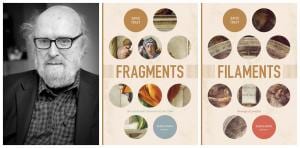
The University of Chicago Press has published these two new volumes of essays by David Tracy.
For a David Tracy fan, it’s been a long wait – 25 years since his last book. This year Chicago University Press published a two-volume collection of Tracy’s essays. Since his last book, On Naming the Present: God, Hermeneutics, and Church, the academic world has been waiting for the “God book” that Tracy has been promising. It doesn’t appear that these collections of essays are it. However, I don’t think these books are the last that David Tracy has to offer.
I knew Fr. Tracy from my student years in philosophy at The Catholic University of America. In the midst of finishing his doctorate at Gregorian University in Rome, he undertook his first teaching assignment there. In the course of two years he so impressed his theology students that they compiled and published notes from several classes. I still have my copies of those notes.
Why this series … a dedication
David Tracy and his new publications will be occupying my blog for quite some time, so an explanation is in order. I have known Fr. Tracy for a brief period in person and much longer through his books and articles and even You Tube. In that time I’ve come to this conclusion: David Tracy has never met an honest thought or point of view that he couldn’t engage in an honest and fruitful conversation. That fruitfulness is for Tracy himself as well as for his conversation partner. Conversation is the largest, though not only, part of Tracy’s theological method. And honest means the ultimate in respect for the other as other, not a confused or simply inferior version of the self.
Two very important people in my life are a daughter and a nephew, both of whom, in their honest and thoughtful ways, have left the Catholicism of their early years. I can’t read very much of David Tracy without thinking of one or the other of them. It might be Tracy’s opposition to totality systems, what my nephew calls “isms.” As the title of the first of the new books says, Tracy likes fragments instead. Not a “consoling ism” but an “awesome and terrifying hope beyond hope” might help us to name God. Or it might be his rejection of imperialisms that often lay claim to “absolute truth.” My daughter just might appreciate Tracy’s non-authoritarian notion of truth. She’s also like his turn to the oppressed non-white, -male, -Western “other,” including the natural world, for their strong, destabilizing fragments.
Since these two souls are so much on my mind, it’s to them that I dedicate this series.
Helping David Tracy
Doing justice to Tracy’s thought will be a struggle for me. Tracy writes for professional, academic theologians—I’m an amateur at best. But he insists that theology has three publics – the academy, the Church, and society. That last public may be the most important. Along with Tracy I’m convinced that religion must converse with the world in something like a common language. It’s theology’s job to help religion do that. That view is more common among Catholic theologians than Protestants, but it’s far from unanimous in either tradition. The alternative is for a religious body to speak its own language to its own members, not in order to shut the world out but to grow into the kind of body that will invite others in. Tracy argues, instead, for a religion that goes out to meet the world in mutual understanding and, where necessary, mutual criticism.
My job in this blog series will be to help Tracy help religion have this conversation with the world. Simplifying Tracy, of course, risks oversimplifying and, in my case, getting things wrong as well. On the other hand, “I don’t think I’m that obscure” is Tracy’s response to quips about his writing style. Indeed, my first quick reading of Fragments finds some of Tracy’s most abstract discussions suddenly but seamlessly veering into areas that politicians, economists, and ordinary people often think about.
David Tracy, “God-obsessed” and broadly human
I marvel at the breadth of Tracy’s interests and his ability to bring a variety of resources to a problem. Wondering about the person behind all this learning, I turned to Wikipedia and a David Gibson article in Commonweal, “God-obsessed: David Tracy’s Theological Quest.”
David Tracy was born January 6, 1939, in Yonkers, New York. His father was a union organizer. Wikipedia says he loved to read to his three sons from historian Henry Adams, of the family with the two presidents. Tracy entered the high school seminary for the Archdiocese of New York in 1952. There he nurtured a strong love for literature. “He read all the time, and he read very widely,” a fellow seminarian says. After eight years, equipped now with a classical as well as religious education and a B.A. in philosophy, he entered theology studies at the Gregorianum in Rome.
It was the time of the Second Vatican Council. Tracy was ordained in Rome in December 1963. He spent a year as a parish priest in Stamford, Connecticut, then returned to Rome to pursue his second calling, to the academic life. Gibson relates a couple incidents from that parish experience:
- A parishioner, the conservative William Buckley, had reservations about the “new Mass.” Buckley recalls how this “very intelligent and bright curate” convinced him to become a lector.
Gibson retells another story:
- A young couple was seeking marriage counseling. The distraught husband called from “exile” at the YMCA one night. “Tracy racked his brain for something to say… [T]he man hung up and immediately called his wife to share the news that the priest had advised him to go bowling. They laughed so much that the ice broke, and they reconciled that very night. ‘And people say I have no pastoral sense!’ Tracy laughs.
An academic life
“Beloved as a priest and highly regarded as a homilist,” the Commonweal article goes on, “Tracy showed his greatest promise as a theologian.” He studied under the great Catholic theologian Bernard Lonergan in the exciting atmosphere of the Second Vatican Council. Tracy received his doctorate in theology from Gregorian in 1969. He had already begun teaching at Catholic University.
Tracy’s two years at Catholic saw controversy erupt. Tracy was one of hundreds of theologians who openly dissented from the teaching of Pope Paul VI on artificial birth control. He was dismissed along with 21 other faculty members. They sued, won their case, and got their jobs back.
Meanwhile Chicago Divinity School, desiring a larger Catholic presence, was offering an opportunity Tracy could not refuse. Tracy rapidly became ensconced there, winning awards and honorary doctorates, joining and sometimes leading prestigious scholarly groups, publishing slowly, and, most important, conversing regularly with world-renowned scholars. Just to name ones famous enough for me to know of, there are or have been at the Divinity School: Mircea Eliade, Langdon Gilkey, Andrew Greeley, and Jean-Luc Marion.
Unlike some other theologians, whom Tracy has dared to defend, Tracy himself has never been disciplined or forbidden to teach in a Catholic institution. Perhaps leaving Catholic U. when he did saved him from some scrutiny. Or it may have been “his notoriously idiosyncratic prose and the complexity of his arguments,” Gibson offers in the Commonweal article. But he hasn’t escaped notice entirely. Another story:
Cardinal Joseph Ratzinger approached Tracy after his talk on Vatican II in America. “I hear many different kinds of things about you,” the cardinal said. “Some good, I hope,” said Tracy. “Some,” Ratzinger answered and walked off. Tracy laughs about it today: “I like him. He knows how to leave a room.”
Books and lectures
Of Tracy’s nine books I’m happy to say I have seven—all except the first and the fourth listed below. He has written numerous articles, of which I have a few, and he’s also on You Tube, giving lectures. The eight books are:
- The Achievement of Bernard Lonergan (1970),
- Blessed Rage for Order:The New Pluralism in Theology (1975),
- The Analogical Imagination: Christian Theology and the Culture of Pluralism(1981),
- Talking About God: Doing Theology in the Context of Modern Pluralism(with John Cobb, 1983),
- A Catholic Vision(with Stephen Happel, 1984),
- A Short History of the Interpretation of the Bible(with Robert Grant, 2d. ed. 1984),
- Plurality and Ambiguity: Hermeneutics, Religion, and Hope (1987), 1990.
- Dialogue with the Other: The Inter-Religious Dialogue (1990),
- On Naming the Present: God, Hermeneutics, and Church (1994).
This web page links to David Tracy on You Tube, giving the following lectures:
- Faith in God and Church Order: The Catholic Case of Martin Luther, Nov. 13, 2003
- Tragic Vision: The Abandoned Vision of the West? Oct. 2, 2017
- Father David Tracy Receives the Sacred Heart U. Medal – Part 1 and Part 2, July 11, 2010
- God as Infinite: Ethical Implications, June 2014
- Augustine: Theological and Philosophical Conversations, Dec. 17, 2015
- 2016 Costan Lecture at Georgetown University, “Gregory of Nyssa, An Infinite, Incomprehensible, Infinitely Loving God” Feb 20, 2017
- Zabriskie Lecture: “Philosophy and Theology: Descartes and Fenelon on the Infinite God, Sep. 5, 2017
- Theology and Mysticism, Oct. 25, 2018
Final thoughts about and by David Tracy
- Richard McBrien (theology chairman, Notre Dame): ”Tracy reaches beyond theology into the cognate sciences and returns to theology with new questions as well as new answers. He is very creative because, more than any other theologian, he really does understand modern philosophy, literature and language, and he can see connections nobody has seen before.” (From Eugene Kennedy, “A Dissenting Voice: Catholic Theologian David Tracy,” New York Times article)
- Along the same line, the Commonweal article says, “Tracy will invoke Euripedes and Derrida, Ricoeur and Nietzsche, Simone Weil and Saturday Night Live all in the same riff, and somehow it all makes sense, even if you’re not always sure how.”
- Scott Holland quotes Tracy revealing one of his major concerns: “God reveals Godself in hiddenness: in the cross and negativity, above all in the suffering of those others whom the grand narrative of modernity has set aside as non-peoples, non-memories, in a word, non-history.” (from “This Side of God: A Conversation with David Tracy,” by Scott Holland.
Image credit: University of Chicago Press via Twitter
Previous Post

May 9, 2020
Economic Scarcity and Eucharistic Abundance: Two Stories about the World
Next Post
May 23, 2020 Fragments Disrupt Oppressive Systems: David Tracy's 'Fragments'
Browse Our Archives
Select a Category Advent Christmas Amazon Synod Angels Being Consumed Bible Catholic Modern Creed Ecology Economics Elizabeth Johnson Eucharist Fragments and Filaments Gender and Sex Gospel of Mark Herzog Historical Jesus Liturgy Luke Opening Scriptures on Way to Emmaus Ordinary radicals Parables Pro-Life Reincarnation Rosary Sacraments science Social Justice Souls Stories of Jesus The Creed Torture and Eucharist Tracy Uncategorized War and Peace
Select a Month October 2026 June 2025 April 2025 March 2025 February 2025 January 2025 November 2024 July 2024 March 2024 December 2023 October 2023 September 2023 August 2023 May 2023 April 2023 March 2023 February 2023 January 2023 December 2022 November 2022 October 2022 September 2022 August 2022 July 2022 June 2022 April 2022 March 2022 February 2022 January 2022 December 2021 November 2021 October 2021 August 2021 July 2021 June 2021 April 2021 March 2021 February 2021 December 2020 November 2020 October 2020 August 2020 July 2020 June 2020 May 2020 April 2020 March 2020 February 2020 January 2020 December 2019 November 2019 October 2019 September 2019 August 2019 July 2019 June 2019 May 2019 April 2019 March 2019 February 2019 January 2019 December 2018 November 2018 October 2018 September 2018 August 2018 July 2018 June 2018 May 2018
Follow Us!
TAKE THE
Religious Wisdom Quiz
What does "Boaz" mean in Hebrew?
Select your answer to see how you score.
God is my salvation Righteous One Strength Redeemer
Related posts from Lost in a One-Acre Wood
Theologies and a New Paradigm: Mutually Critical Correlations
The Impossible and the Infinitely Loving God: Mystics...
Writing about the Infinite God – And Trying...
Suffering: No Why’s, No Theodicies, but a Crucified...
TRENDING AT PATHEOS Catholic

Creation, Preservation, and Teleology in Catholic Theology
As I write this, it is very early Monday morning. Like millions...

The Parable Of The Sower And The Word...
One of Christ’s most famous parables is that of the sower who...

Rejecting Doom: Christian Hope And Human Action
Christianity is a religion of hope. We are to have hope and...

Why I Choose the Eucharist Over the Sermon
Choose the Eucharist, Not the Sermon What are we supposed to get...

5 Design Elements Found in Spiritually Rooted Homes
Putting Spirituality Into Home Decor Our homes are more than our living...

Credo: A Story of God Told with the...
About 10 years ago, I began to imagine a personal "Credo" that...
view all Catholic blogs
Ad-Free & Subscriber Log-In Subscription Support
- About Us
- 2026 Calendar
- Videos
- Podcasts
- Library of World Religions
- Faith In Media Tracker
- Advertise With Us
- Write for Us
- Privacy Policy
- Terms of Service
- Do Not Sell My Data
- Contact Us
- Radiant Digital
- Manage Newsletter Subscriptions
- Unsubscribe From Notifications
- Sitemap
Copyright 2008-2026, Patheos. All rights reserved.
Subscription Support Ad-Free & Subscriber Log-In
Follow Patheos