
BuddhistCatholicContemplativeEvangelicalGeneral ChristianHinduJewishLatter-day SaintMuslimNew VisionsProgressive Christian
Beliefs
- Buddhist
- Catholic
- Contemplative
- Evangelical
- General Christian
- Hindu
- Jewish
- Latter-day Saint
- More Voices
- Muslim
- New Visions
- Pagan
- Progressive Christian
Topics
- Religion News
- Food and Religion
- Sports and Religion
- Religious Art
- Religious Music and Entertainment
- Religious Events
- History and Religion
- Style and Religion
- Politics and Religion
- Women in Religion
- Recreation Outdoors and Religion
- Business Finance and Religion
- Careers Workplace and Religion
- Education and Religion
- Family Parenting and Religion
- Health Fitness and Religion
- Home and Religion
- Relationships and Religion
- Technology and Religion
- Travel and Religion
Columnists
- Buddhist Columnists
- Business Finance and Religion Columnists
- Careers Workplace and Religion Columnists
- Catholic Columnists
- Contemplative Columnists
- Education and Religion Columnists
- Evangelists Columnists
- Family Parenting and Religion Columnists
- General Christian Columnists
- Health Fitness and Religion Columnists
- Hindu Columnists
- History and Religion Columnists
- Home and Religion Columnists
- Jewish Columnists
- More Voices Columnists
- Latter Day Columnists
- Muslim Columnists
- New Visions Columnists
- Nonreligious Columnists
- Pagan Columnists
- Politics and Religion Columnists
- Progressive Columnists
- Recreation Outdoors and Religion Columnists
- Relationships and Religion Columnists
- Religion News Columnists
- Religious Art Columnists
- Religious Events Columnists
- Religious Music and Entertainment Columnists
- Sports and Religion Columnists
- Style and Religion Columnists
- Technology and Religion Columnists
- Travel and Religion Columnists
- Women in Religion Columnists
Resource Library
- 2026 Calendar
- Library of World Religions
- The 100 Most Holy Places on Earth
- Patheos Answers
- Podcasts
- Videos
- Faith Leaders Database
- Anglican Episcopalian
- Bahai
- Baptist
- Buddhism
- Christianity
- Confucianism
- Eastern Orthodoxy
- Hinduism
- Holiness and Pentecostal
- ISKCON
- Islam
- Judaism
- Lutheran
- Methodist
- The Church of Jesus Christ of Latter-day Saints
- New Age
- Paganism
- Presbytarian and Reformed
- Protestantism
- Religion Behind the Scenes
- Roman Catholic
- Scientology
- Shia Islam
- Sikhism
- Sufism
- Sunni Islam
- Taoism
- Zen
- See all religions
Research Tools
 Ad-Free & Subscriber Log-In Subscription Support
Ad-Free & Subscriber Log-In Subscription Support
Follow Patheos 

- Trending:
- Forgiveness
- |
- Marriage
- |
- Consciousness
- |
- Death Penalty
- |
- Election
- |
- Halloween

- Home
- Catholic
- Thin Places, McDonald’s World, and the Difference the Eucharist Makes
Thin Places, McDonald’s World, and the Difference the Eucharist Makes
Last updated on: April 15, 2023 at 5:43 am by Jack Hartjes
Thin Places, McDonald’s World, and the Difference the Eucharist Makes 2023-04-15T05:43:13-06:00 Jack Hartjes
Patheos Explore the world's faith through different perspectives on religion and spirituality! Patheos has the views of the prevalent religions and spiritualities of the world.
Part 6 on Being Consumed: Economics and Christian Desire
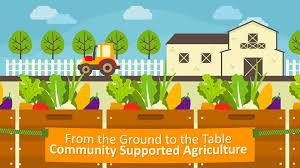
Community, or Church, Supported Agriculture emphasizes the local and the personal in economic relations.
A few years back a Presbyterian pastor gave a sermon on thin places. I hadn’t heard that term before but have several times since. Thin places are places “where the distance between heaven and earth collapses and we’re able to catch glimpses of the divine, or the transcendent….” That’s how a New York Times article describes them. Travel brochures say there are a lot of thin places in Ireland and Scotland.
I like the idea of thin places. I think I’ve experienced some on walks in the mountains and even in church, not, of course, with just the five senses. Some part of this world thins out and becomes, even if only momentarily, translucent to a reality beyond.
William T. Cavanaugh, in Being Consumed, doesn’t refer explicitly to thin places, but he mentions a passage in Hans Urs von Balthasar, which does. (I pick up Balthasar once in a while for the challenge of it, so I went to my Balthasar reader, p. 194-195.) Balthasar sees points of transparency to the divine as highlights of non-biblical religion. The divine that thus shows through is like a common denominator of the religious urges of all humankind. Investigators into the phenomenon of religious pluralism often emphasize that commonality. Cavanaugh, Balthasar, and one other writer whom I will mention, are some Christian theologians who don’t want to stop there.
Thin places and power in economics: McDonald’s hamburgers
Cultural and religious pluralism is a reality that no one can avoid in a world of mass communication and movement among peoples. Television likes to socialize children into this world. Kenneth Surin recalls watching one such children’s program with his granddaughter. The children characters were singing, “We’re all different, we’re all the same.” Surin writes he found himself longing for the days when Wiley Coyote got an anvil dropped on his head. Aside from the excessive preachiness of today’s children’s TV, Surin thinks the message is disastrous.
Surin’s investigations of pluralism focus on the relations of power among people of different cultures and world religions. He thinks it’s easy enough for a Western Christian to talk about how much we’re all alike, but a member of the developing world, unless she has been successfully westernized, sees a rather different subtext. We say, “We’re all different” without ever thinking about the most important difference of all–how some people have power and others don’t. When we add, “We’re all the same,” it comes across as a lie.
There’s hardly a better illustration of that lie than the success of McDonald’s throughout the world. We’re all the same now because we all like McDonald’s hamburgers. How trivial that is! McDonald’s and Coke and Levi Strauss and so on have all the power. Western power shines through every hamburger and coke and Levi jean bought and sold in the developing world (but in entirely Westernized establishments). In the developing world Western power is the new transcendent Beyond. Western products are the thin places for this reality that is out of reach for so many.
Liberals and cultural imperialism
It eases the Western conscience to believe all religions, all cultures, all people are the same. But it’s just another abuse of unequal power relationships, Surin says. Liberal Christians especially like to imagine all our different paths lead to the same goal, that our different doctrines aim at the same truth, that one religion is as good as another and essentially no different from another. So we can all hope to go to the same heaven.
But if the particular ways all lead to the same place, then no one’s way is important in itself. Cavanaugh says our well-intentioned inclusiveness buries all particulars in an oppressive, overarching unity. It’s the Western world that supposes there is a Truth, with a capital T, independent of place, time, and culture. We Western liberals hate cultural imperialism, but we don’t necessarily avoid it.
The difference the Eucharist makes
The Eucharist shows how you can hate Western imperialism and still love truth. Only it’s not a truth that reigns above, indifferent to all humanity’s strivings. In Eucharistic practice and belief the many worshipers become one in Jesus. Christians remember this individual as the one who said, “I am the Truth.” It’s an odd statement, and there’s something funny also — from a modern Western perspective — about Christians “remembering” Jesus. But Jesus could still be Truth and the way to it and Life and all the things that God is, even if he never said it.
That possibility becomes more likely, or more worthy of belief, in light of what Christians have experienced of the post-Good Friday Jesus, including around their Eucharistic table. Around that table especially, but not only then, they would sometimes experience a strange new kind of unity. As a cradle Catholic perhaps too used to the wonders of liturgy, I need a name for this experience. I need to study it in order to feel it.
The apostle Paul names the experience that some of the earliest followers were feeling:
As a body is one though it has many parts, and all the parts of the body, though many, are one body, so also Christ. For in one Spirit we were all baptized into one body, whether Jews or Greeks, slaves or free persons…. Now you are Christ’s body, and individually parts of it. (1 Cor 12:12-13, 27)
Referring to the Eucharist, he says:
The cup of blessing that we bless, is it not a participation in the blood of Christ? The bread that we break, is it not a participation in the body of Christ. Because the loaf of bread is one, we, though many, are one body, for we all partake of the one loaf. (1 Cor 10:16-17)
When “Jews or Greeks, slaves or free persons” come together, it’s their varied and intensely particular gifts that build up the one body.
An economy of places and people
A McDonald’s world is a world where all places look alike. That same world, of large-scale agribusiness and world-wide distribution, hasn’t worked so well in the time of Covid-19. We have efficiency at the cost of flexibility and systems beyond the control of individual actors.
Cavanaugh sees in the world economy the triumph of the one overarching system over the many producers and consumers. As the economy turns global, individuals’ economic relationships are with the system rather than with other individuals whom they know personally. The price I pay for food bears almost no relationship to the wage of the laborer in the field. It’s beyond my control and even my knowledge.
An important part of Cavanaugh’s purpose in Being Consumed is to identify ways people are engaging in a more people-centered economy. Cavanaugh mentioned the fair-trade movement and the cooperative business model in previous chapters. Now he touts a movement with the initials CSA — Community, or Church, Supported Agriculture. As Covid-19 rages, CSA looks even more desirable as this article in The Guardian points out.
Cavanaugh says churches or communities are
… creating alternative kinds of economic spaces in which they resist the abstraction of globalization by face-to-face encounters between producers and consumers. (p. 87)
CSA emphasizes locally, often organically or sustainably produced food. It includes farmers’ markets but can go beyond individual food purchases. Consumers can buy a share in the farmer’s operation at the beginning of the season. It helps the farmer through times of low income and gives the shareholder a regular supply of the farm’s produce. There is a sharing of both risks and benefits and an overcoming of the anonymity of globalized agriculture.
Cavanaugh sums up the theological implications. CSA
… opens up the possibility of forms of exchange that are based neither on self-interest nor self-sacrifice but on seeing the concrete other as not other, as part of the same body. The Christian is called not to replace one universal system with another, but to attempt to ‘realize’ the universal body of Christ in every particular exchange. (p. 88)
Image credit: KidZCommunity via Google Images
Next Post

May 1, 2020 The DREAM Act was Introduced in Congress First by … Not a Democrat!
Browse Our Archives
Select a Category Advent Christmas Amazon Synod Angels Being Consumed Bible Catholic Modern Creed Ecology Economics Elizabeth Johnson Eucharist Fragments and Filaments Gender and Sex Gospel of Mark Herzog Historical Jesus Liturgy Luke Opening Scriptures on Way to Emmaus Ordinary radicals Parables Pro-Life Reincarnation Rosary Sacraments science Social Justice Souls Stories of Jesus The Creed Torture and Eucharist Tracy Uncategorized War and Peace
Select a Month October 2026 June 2025 April 2025 March 2025 February 2025 January 2025 November 2024 July 2024 March 2024 December 2023 October 2023 September 2023 August 2023 May 2023 April 2023 March 2023 February 2023 January 2023 December 2022 November 2022 October 2022 September 2022 August 2022 July 2022 June 2022 April 2022 March 2022 February 2022 January 2022 December 2021 November 2021 October 2021 August 2021 July 2021 June 2021 April 2021 March 2021 February 2021 December 2020 November 2020 October 2020 August 2020 July 2020 June 2020 May 2020 April 2020 March 2020 February 2020 January 2020 December 2019 November 2019 October 2019 September 2019 August 2019 July 2019 June 2019 May 2019 April 2019 March 2019 February 2019 January 2019 December 2018 November 2018 October 2018 September 2018 August 2018 July 2018 June 2018 May 2018
Follow Us!
TAKE THE
Religious Wisdom Quiz
What king was known for writing many proverbs?
Select your answer to see how you score.
David Saul Hezekiah Solomon
Related posts from Lost in a One-Acre Wood

Axios News, Inflation, Justice, and Young Workers in...

“Drink the Cup” – Liturgy Teaches Us Eucharistic...
Catholic Church Repudiates the Doctrine of Discovery

Holy Thursday Theology and the Scientific Quest for...
TRENDING AT PATHEOS Catholic

Creation, Preservation, and Teleology in Catholic Theology
As I write this, it is very early Monday morning. Like millions...

The Parable Of The Sower And The Word...
One of Christ’s most famous parables is that of the sower who...

Rejecting Doom: Christian Hope And Human Action
Christianity is a religion of hope. We are to have hope and...

Why I Choose the Eucharist Over the Sermon
Choose the Eucharist, Not the Sermon What are we supposed to get...

5 Design Elements Found in Spiritually Rooted Homes
Putting Spirituality Into Home Decor Our homes are more than our living...

Credo: A Story of God Told with the...
About 10 years ago, I began to imagine a personal "Credo" that...
view all Catholic blogs
Ad-Free & Subscriber Log-In Subscription Support
- About Us
- 2026 Calendar
- Videos
- Podcasts
- Library of World Religions
- Faith In Media Tracker
- Advertise With Us
- Write for Us
- Privacy Policy
- Terms of Service
- Do Not Sell My Data
- Contact Us
- Radiant Digital
- Manage Newsletter Subscriptions
- Unsubscribe From Notifications
- Sitemap
Copyright 2008-2026, Patheos. All rights reserved.
Subscription Support Ad-Free & Subscriber Log-In
Follow Patheos