
BuddhistCatholicContemplativeEvangelicalGeneral ChristianHinduJewishLatter-day SaintMuslimNew VisionsProgressive Christian
Beliefs
- Buddhist
- Catholic
- Contemplative
- Evangelical
- General Christian
- Hindu
- Jewish
- Latter-day Saint
- More Voices
- Muslim
- New Visions
- Pagan
- Progressive Christian
Topics
- Religion News
- Food and Religion
- Sports and Religion
- Religious Art
- Religious Music and Entertainment
- Religious Events
- History and Religion
- Style and Religion
- Politics and Religion
- Women in Religion
- Recreation Outdoors and Religion
- Business Finance and Religion
- Careers Workplace and Religion
- Education and Religion
- Family Parenting and Religion
- Health Fitness and Religion
- Home and Religion
- Relationships and Religion
- Technology and Religion
- Travel and Religion
Columnists
- Buddhist Columnists
- Business Finance and Religion Columnists
- Careers Workplace and Religion Columnists
- Catholic Columnists
- Contemplative Columnists
- Education and Religion Columnists
- Evangelists Columnists
- Family Parenting and Religion Columnists
- General Christian Columnists
- Health Fitness and Religion Columnists
- Hindu Columnists
- History and Religion Columnists
- Home and Religion Columnists
- Jewish Columnists
- More Voices Columnists
- Latter Day Columnists
- Muslim Columnists
- New Visions Columnists
- Nonreligious Columnists
- Pagan Columnists
- Politics and Religion Columnists
- Progressive Columnists
- Recreation Outdoors and Religion Columnists
- Relationships and Religion Columnists
- Religion News Columnists
- Religious Art Columnists
- Religious Events Columnists
- Religious Music and Entertainment Columnists
- Sports and Religion Columnists
- Style and Religion Columnists
- Technology and Religion Columnists
- Travel and Religion Columnists
- Women in Religion Columnists
Resource Library
- 2026 Calendar
- Library of World Religions
- The 100 Most Holy Places on Earth
- Patheos Answers
- Podcasts
- Videos
- Faith Leaders Database
- Anglican Episcopalian
- Bahai
- Baptist
- Buddhism
- Christianity
- Confucianism
- Eastern Orthodoxy
- Hinduism
- Holiness and Pentecostal
- ISKCON
- Islam
- Judaism
- Lutheran
- Methodist
- The Church of Jesus Christ of Latter-day Saints
- New Age
- Paganism
- Presbytarian and Reformed
- Protestantism
- Religion Behind the Scenes
- Roman Catholic
- Scientology
- Shia Islam
- Sikhism
- Sufism
- Sunni Islam
- Taoism
- Zen
- See all religions
Research Tools
 Ad-Free & Subscriber Log-In Subscription Support
Ad-Free & Subscriber Log-In Subscription Support
Follow Patheos 

- Trending:
- Forgiveness
- |
- Marriage
- |
- Consciousness
- |
- Death Penalty
- |
- Election
- |
- Halloween

- Home
- Catholic
- Thomas, a Saint for Social Media, and Another Thought from Divine Mercy Sunday’s Gospel
Thomas, a Saint for Social Media, and Another Thought from Divine Mercy Sunday’s Gospel
Last updated on: April 20, 2020 at 12:45 pm by Jack Hartjes
Thomas, a Saint for Social Media, and Another Thought from Divine Mercy Sunday’s Gospel 2020-04-20T12:45:26-06:00 Jack Hartjes
Patheos Explore the world's faith through different perspectives on religion and spirituality! Patheos has the views of the prevalent religions and spiritualities of the world.
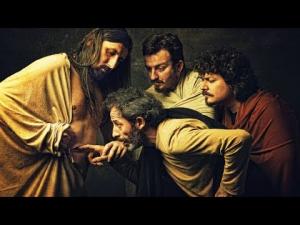
Doubting Thomas, a saint for an age that could use more fact checking
People used to say, “I’m from Missouri, show me” — and you didn’t even have to be from Missouri. We still hear about the skeptical age that we’re supposedly in. When it comes to social media, however, gullible is more like it. Where is St. Thomas when we need him?
In John’s Gospel Jesus appears to the disciples Easter Sunday evening. Thomas was not with them and refused to believe their story. A week later Jesus again appeared. Thomas was there this time, and the sight of Jesus, to say nothing of the invitation to touch Jesus’ wounds, convinced him: “My Lord and my God!”
On this occasion Jesus blesses “the ones who have not seen and have believed.” But elsewhere in the Bible Jesus warns against falling for any and every claim one might want to believe. (Matthew 24:26) Then the subject was the Messiah. Jesus doesn’t disparage a healthy skepticism in matters of faith. In worldly matters, too, Jesus warns, “Take care what you hear.” (Mark 4:24)
“I’m hearing more and more”
My rule for judging claims that come to me on Facebook or by email is this: If it’s too good (or too bad) to be true, it probably isn’t. For many people who thrive on social media, the rule seems to be: If it affirms my most cynical suspicions, pass it on. Especially when it comes to people’s natural, and somewhat healthy, suspicions about authorities, this is dangerous.
In a time of pandemic we hear vaccinations are a preliminary to world government. In a time when fear, anger, and hatred are prime political motivators, we hear traditional news organs publish “fake news.” The more you hear something, regardless of source, the more believable it becomes. That’s our president’s rule or the one he makes work for him. We must believe his otherwise baseless statements because “I’m hearing it more and more.”
Where is St. Thomas when we need him? Whatever happened to “I’m from Missouri, show me”? Showing is too slow and old-fashioned in a social media culture. You can’t do showing virtually.
Forgive us our debts as we forgive our debtors
Catholics make perhaps unwarranted use of another piece of the Gospel for Divine Mercy Sunday. Jesus breathes on the disciples and says:
Receive the Holy Spirit. Whose sins you forgive are forgiven them, and whose sins you retain are retained. (John 20 22-23)
In seminary I learned this passage validated our sacrament of Reconciliation. “Obviously” it refers to this Catholic practice because how can a priest know whether to forgive or retain unless we tell him our sins? In that long ago day we did too much biblical proof-texting. Much better is to accept that Jesus really did give authority to the Church, for example in the matter of sacramental discipline.
I’m inclined to think Jesus had no sacred rite in mind at all but was simply referring, as he often did, to the ordinary practice of mercy. He wasn’t giving a command or instituting an ordinance. He was simply stating an ordinary fact. If you forgive somebody, reconciliation happens; if you don’t, it doesn’t.
As I heard this passage last Sunday I thought of a traditional translation of the Lord’s Prayer:
Forgive us our debts as we forgive our debtors.
I thought of the paralytic lowered through the roof, whose sins (i.e. debts in one interpretation) Jesus forgave. (See this post.) And I thought of national debts, rising in the rich countries as they rescue their economies with huge spending packages. But the coronavirus pandemic also harms poor countries’ economies, already sinking under national debt. So some economists call for national debt relief, just as some politicians in this country call for personal debt relief.
Mercy takes many forms. Divine Mercy Sunday gives us much to think about.
Image credit: The New Theological Movement
Previous Post

April 16, 2020
Father J. P. Grayland on Clerics' Eucharistic Fast during Pandemic
Next Post
April 19, 2020 About Butterflies and the Afterlife -- A Neat Thought Heard on Public Radio
Browse Our Archives
Select a Category Advent Christmas Amazon Synod Angels Being Consumed Bible Catholic Modern Creed Ecology Economics Elizabeth Johnson Eucharist Fragments and Filaments Gender and Sex Gospel of Mark Herzog Historical Jesus Liturgy Luke Opening Scriptures on Way to Emmaus Ordinary radicals Parables Pro-Life Reincarnation Rosary Sacraments science Social Justice Souls Stories of Jesus The Creed Torture and Eucharist Tracy Uncategorized War and Peace
Select a Month October 2026 June 2025 April 2025 March 2025 February 2025 January 2025 November 2024 July 2024 March 2024 December 2023 October 2023 September 2023 August 2023 May 2023 April 2023 March 2023 February 2023 January 2023 December 2022 November 2022 October 2022 September 2022 August 2022 July 2022 June 2022 April 2022 March 2022 February 2022 January 2022 December 2021 November 2021 October 2021 August 2021 July 2021 June 2021 April 2021 March 2021 February 2021 December 2020 November 2020 October 2020 August 2020 July 2020 June 2020 May 2020 April 2020 March 2020 February 2020 January 2020 December 2019 November 2019 October 2019 September 2019 August 2019 July 2019 June 2019 May 2019 April 2019 March 2019 February 2019 January 2019 December 2018 November 2018 October 2018 September 2018 August 2018 July 2018 June 2018 May 2018
Follow Us!
TAKE THE
Religious Wisdom Quiz
Who said, "Surely this man was the Son of God!" at Jesus' crucifixion?
Select your answer to see how you score.
A Roman centurion Pilate Judas Peter
Related posts from Lost in a One-Acre Wood

Credo: A Story of God Told with the...

With Carbon Dioxide, 0.014 is a big number
Crucifixion as Breakthrough, Horsley’s Nerviest Claim

Jesus’ Politics of Resistance and Renewal
TRENDING AT PATHEOS Catholic

Rejecting Doom: Christian Hope And Human Action
Christianity is a religion of hope. We are to have hope and...

It’s What Comes From Within Which Matters
One of the most difficult things for us to understand is why...

Why I Choose the Eucharist Over the Sermon
Choose the Eucharist, Not the Sermon What are we supposed to get...

5 Design Elements Found in Spiritually Rooted Homes
Putting Spirituality Into Home Decor Our homes are more than our living...

Credo: A Story of God Told with the...
About 10 years ago, I began to imagine a personal "Credo" that...

The Anatomy of Divine Revelation in Catholic Thought
The claim that God has made Himself known to human beings is...
view all Catholic blogs
Ad-Free & Subscriber Log-In Subscription Support
- About Us
- 2026 Calendar
- Videos
- Podcasts
- Library of World Religions
- Faith In Media Tracker
- Advertise With Us
- Write for Us
- Privacy Policy
- Terms of Service
- Do Not Sell My Data
- Contact Us
- Radiant Digital
- Manage Newsletter Subscriptions
- Unsubscribe From Notifications
- Sitemap
Copyright 2008-2026, Patheos. All rights reserved.
Subscription Support Ad-Free & Subscriber Log-In
Follow Patheos