
BuddhistCatholicContemplativeEvangelicalGeneral ChristianHinduJewishLatter-day SaintMuslimNew VisionsProgressive Christian
Beliefs
- Buddhist
- Catholic
- Contemplative
- Evangelical
- General Christian
- Hindu
- Jewish
- Latter-day Saint
- More Voices
- Muslim
- New Visions
- Pagan
- Progressive Christian
Topics
- Religion News
- Food and Religion
- Sports and Religion
- Religious Art
- Religious Music and Entertainment
- Religious Events
- History and Religion
- Style and Religion
- Politics and Religion
- Women in Religion
- Recreation Outdoors and Religion
- Business Finance and Religion
- Careers Workplace and Religion
- Education and Religion
- Family Parenting and Religion
- Health Fitness and Religion
- Home and Religion
- Relationships and Religion
- Technology and Religion
- Travel and Religion
Columnists
- Buddhist Columnists
- Business Finance and Religion Columnists
- Careers Workplace and Religion Columnists
- Catholic Columnists
- Contemplative Columnists
- Education and Religion Columnists
- Evangelists Columnists
- Family Parenting and Religion Columnists
- General Christian Columnists
- Health Fitness and Religion Columnists
- Hindu Columnists
- History and Religion Columnists
- Home and Religion Columnists
- Jewish Columnists
- More Voices Columnists
- Latter Day Columnists
- Muslim Columnists
- New Visions Columnists
- Nonreligious Columnists
- Pagan Columnists
- Politics and Religion Columnists
- Progressive Columnists
- Recreation Outdoors and Religion Columnists
- Relationships and Religion Columnists
- Religion News Columnists
- Religious Art Columnists
- Religious Events Columnists
- Religious Music and Entertainment Columnists
- Sports and Religion Columnists
- Style and Religion Columnists
- Technology and Religion Columnists
- Travel and Religion Columnists
- Women in Religion Columnists
Resource Library
- 2026 Calendar
- Library of World Religions
- The 100 Most Holy Places on Earth
- Patheos Answers
- Podcasts
- Videos
- Faith Leaders Database
- Anglican Episcopalian
- Bahai
- Baptist
- Buddhism
- Christianity
- Confucianism
- Eastern Orthodoxy
- Hinduism
- Holiness and Pentecostal
- ISKCON
- Islam
- Judaism
- Lutheran
- Methodist
- The Church of Jesus Christ of Latter-day Saints
- New Age
- Paganism
- Presbytarian and Reformed
- Protestantism
- Religion Behind the Scenes
- Roman Catholic
- Scientology
- Shia Islam
- Sikhism
- Sufism
- Sunni Islam
- Taoism
- Zen
- See all religions
Research Tools
 Ad-Free & Subscriber Log-In Subscription Support
Ad-Free & Subscriber Log-In Subscription Support
Follow Patheos 

- Trending:
- Forgiveness
- |
- Marriage
- |
- Consciousness
- |
- Death Penalty
- |
- Election
- |
- Halloween

- Home
- Catholic
- The Person and a Balthasarian Thought about Who I Am
The Person and a Balthasarian Thought about Who I Am
Last updated on: April 2, 2020 at 7:24 am by Jack Hartjes
The Person and a Balthasarian Thought about Who I Am 2020-04-02T07:24:51-06:00 Jack Hartjes
Patheos Explore the world's faith through different perspectives on religion and spirituality! Patheos has the views of the prevalent religions and spiritualities of the world.

Who is this being that seems to be the person I call Me?
Who am I? It’s a question addressed in parlor games, odd moments of reflection and the dense prose of theologian Hans Urs von Balthasar. Wading through The von Balthasar Reader, I got to a short section on what it means to be a person. Balthasar names two approaches to an answer. I can compile a list of things that make me unique among all the human species. Or I can get to the heart of the matter and risk encountering God. I found myself remembering times when I took the first of these.
The non-essential “me”
Being a member of the human species, I share with others a lot of exciting qualities. I can be self-conscious and creative, fret about the purpose of my life, and try to imagine what it’s like to be dead. Besides all that it seems there should be something that gives me my own special uniqueness. I want to be different from everybody else. So I look for a quality or combination of qualities that only I possess.
Those who know me can no doubt make their own lists of Jack Hartjes oddities. From the sublime to the ridiculous, I name just two.
- I have composed 20 verses to “Michael Row the Boat Ashore,” all about stories from the Old Testament. (See my series of posts “Rowing through the Old Testament.”) Maybe nobody else has done that exact same thing.
- I swim laps at the local Microtel while recounting the Fibonacci series. Not being such a great swimmer, I tire easily on the front crawl. I have to catch my breath with other strokes like breaststroke and elementary back stroke. When I do the crawl, I gradually ramp up the challenge with Fibonacci. I start with 3 laps (skipping 0, 1, 1, and 2). After some resting strokes I go back to the crawl and do 5 laps. Next time 8, and finally – if I feel up to it – 13 laps forth and back across that small pool. It’s possible I’m the only swimmer in the world who crawls to the Fibonacci series.
Balthasar would be quite right in saying neither of these nor any combination of such oddities makes me who I am. These are mere accidents. I would still be the person I am without them.
The interpersonal way
Balthasar says, and modern psychology agrees:
[A] spiritual subject can awaken to itself and to its own actuality only if it is addressed by one or more others who find it valuable, perhaps indispensable. (Balthasar Reader, p. 91)
A child learns its own worth and even uniqueness as a person from its mother. But is this affirmation and the regard of others in our lives enough to hang the concept of person on? After all, someone who treasures and loves us can only tell us who we are for him or her. And that treasuring can always be taken back.
Everything remains stuck in a mesh of relative and mutually temporary evaluations and reevaluations, recognitions and denials. (Reader, p. 91)
Balthasar began this section on person by saying we can get along without the concept “much longer than we are accustomed to think.” Neither from our interesting but non-essential characteristics nor from the regard of others, can we get “an abiding concept of [our] personal uniqueness.” (p. 90-91) Maybe there is no such thing as a person. Maybe I just walk down the same path as everybody else with at most my little quirky ways of being human or a Pisces or a consumer in the global economic order.
A person and God
Balthasar concludes that only with God can we hold on to a meaningful concept of person. Only God can give us more than “doubtful, precarious assurances” of who we are.
There, where God tells a spirit-subject to its face who it is for him, the eternally abiding and faithful or truthful God, where he tells it in the same breath why it exists—thus conferring on it its divinely attested mission—there it can be said of a spirit-subject that it is person. (p. 92)
Balthasar hasn’t proven that this absolute yet personally involved God exists. Only that our preference for thinking of ourselves as persons is pretty fragile without such a God.
Image credit: Wikimedia Commons
Previous Post

March 24, 2020
Remembering Oscar Romero on his Feast Day
Next Post
April 6, 2020 Pandemic Prayer to Mary by Pope Francis
Browse Our Archives
Select a Category Advent Christmas Amazon Synod Angels Being Consumed Bible Catholic Modern Creed Ecology Economics Elizabeth Johnson Eucharist Fragments and Filaments Gender and Sex Gospel of Mark Herzog Historical Jesus Liturgy Luke Opening Scriptures on Way to Emmaus Ordinary radicals Parables Pro-Life Reincarnation Rosary Sacraments science Social Justice Souls Stories of Jesus The Creed Torture and Eucharist Tracy Uncategorized War and Peace
Select a Month October 2026 June 2025 April 2025 March 2025 February 2025 January 2025 November 2024 July 2024 March 2024 December 2023 October 2023 September 2023 August 2023 May 2023 April 2023 March 2023 February 2023 January 2023 December 2022 November 2022 October 2022 September 2022 August 2022 July 2022 June 2022 April 2022 March 2022 February 2022 January 2022 December 2021 November 2021 October 2021 August 2021 July 2021 June 2021 April 2021 March 2021 February 2021 December 2020 November 2020 October 2020 August 2020 July 2020 June 2020 May 2020 April 2020 March 2020 February 2020 January 2020 December 2019 November 2019 October 2019 September 2019 August 2019 July 2019 June 2019 May 2019 April 2019 March 2019 February 2019 January 2019 December 2018 November 2018 October 2018 September 2018 August 2018 July 2018 June 2018 May 2018
Follow Us!
TAKE THE
Religious Wisdom Quiz
What year was the King James Bible first published?
Select your answer to see how you score.
1611 1492 1701 1517
Related posts from Lost in a One-Acre Wood

Credo: A Story of God Told with the...

With Carbon Dioxide, 0.014 is a big number
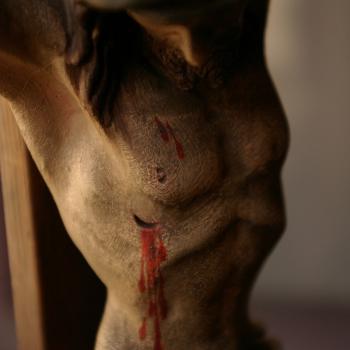
Crucifixion as Breakthrough, Horsley’s Nerviest Claim

Jesus’ Politics of Resistance and Renewal
TRENDING AT PATHEOS Catholic

Creation, Preservation, and Teleology in Catholic Theology
As I write this, it is very early Monday morning. Like millions...

The Parable Of The Sower And The Word...
One of Christ’s most famous parables is that of the sower who...

Rejecting Doom: Christian Hope And Human Action
Christianity is a religion of hope. We are to have hope and...

Why I Choose the Eucharist Over the Sermon
Choose the Eucharist, Not the Sermon What are we supposed to get...

5 Design Elements Found in Spiritually Rooted Homes
Putting Spirituality Into Home Decor Our homes are more than our living...

Credo: A Story of God Told with the...
About 10 years ago, I began to imagine a personal "Credo" that...
view all Catholic blogs
Ad-Free & Subscriber Log-In Subscription Support
- About Us
- 2026 Calendar
- Videos
- Podcasts
- Library of World Religions
- Faith In Media Tracker
- Advertise With Us
- Write for Us
- Privacy Policy
- Terms of Service
- Do Not Sell My Data
- Contact Us
- Radiant Digital
- Manage Newsletter Subscriptions
- Unsubscribe From Notifications
- Sitemap
Copyright 2008-2026, Patheos. All rights reserved.
Subscription Support Ad-Free & Subscriber Log-In
Follow Patheos