
BuddhistCatholicContemplativeEvangelicalGeneral ChristianHinduJewishLatter-day SaintMuslimNew VisionsProgressive Christian
Beliefs
- Buddhist
- Catholic
- Contemplative
- Evangelical
- General Christian
- Hindu
- Jewish
- Latter-day Saint
- More Voices
- Muslim
- New Visions
- Pagan
- Progressive Christian
Topics
- Religion News
- Food and Religion
- Sports and Religion
- Religious Art
- Religious Music and Entertainment
- Religious Events
- History and Religion
- Style and Religion
- Politics and Religion
- Women in Religion
- Recreation Outdoors and Religion
- Business Finance and Religion
- Careers Workplace and Religion
- Education and Religion
- Family Parenting and Religion
- Health Fitness and Religion
- Home and Religion
- Relationships and Religion
- Technology and Religion
- Travel and Religion
Columnists
- Buddhist Columnists
- Business Finance and Religion Columnists
- Careers Workplace and Religion Columnists
- Catholic Columnists
- Contemplative Columnists
- Education and Religion Columnists
- Evangelists Columnists
- Family Parenting and Religion Columnists
- General Christian Columnists
- Health Fitness and Religion Columnists
- Hindu Columnists
- History and Religion Columnists
- Home and Religion Columnists
- Jewish Columnists
- More Voices Columnists
- Latter Day Columnists
- Muslim Columnists
- New Visions Columnists
- Nonreligious Columnists
- Pagan Columnists
- Politics and Religion Columnists
- Progressive Columnists
- Recreation Outdoors and Religion Columnists
- Relationships and Religion Columnists
- Religion News Columnists
- Religious Art Columnists
- Religious Events Columnists
- Religious Music and Entertainment Columnists
- Sports and Religion Columnists
- Style and Religion Columnists
- Technology and Religion Columnists
- Travel and Religion Columnists
- Women in Religion Columnists
Resource Library
- 2026 Calendar
- Library of World Religions
- The 100 Most Holy Places on Earth
- Patheos Answers
- Podcasts
- Videos
- Faith Leaders Database
- Anglican Episcopalian
- Bahai
- Baptist
- Buddhism
- Christianity
- Confucianism
- Eastern Orthodoxy
- Hinduism
- Holiness and Pentecostal
- ISKCON
- Islam
- Judaism
- Lutheran
- Methodist
- The Church of Jesus Christ of Latter-day Saints
- New Age
- Paganism
- Presbytarian and Reformed
- Protestantism
- Religion Behind the Scenes
- Roman Catholic
- Scientology
- Shia Islam
- Sikhism
- Sufism
- Sunni Islam
- Taoism
- Zen
- See all religions
Research Tools
 Ad-Free & Subscriber Log-In Subscription Support
Ad-Free & Subscriber Log-In Subscription Support
Follow Patheos 

- Trending:
- Forgiveness
- |
- Marriage
- |
- Consciousness
- |
- Death Penalty
- |
- Election
- |
- Halloween

- Home
- Catholic
- Globalization, the One and the Many, and Jesus
Globalization, the One and the Many, and Jesus
Last updated on: March 10, 2020 at 7:58 am by Jack Hartjes
Globalization, the One and the Many, and Jesus 2020-03-10T07:58:27-06:00 Jack Hartjes
Patheos Explore the world's faith through different perspectives on religion and spirituality! Patheos has the views of the prevalent religions and spiritualities of the world.
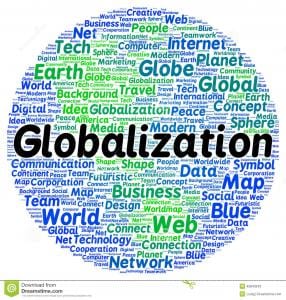
How much do our individual differences matter in a world become one through globalization?
In economics globalization seems inevitable if anything is. But at a recent Vatican meeting of finance ministers and experts,
Meeting participants agreed it was no longer acceptable science to consider any market philosophy or policy as being “natural,” invisible or inevitable, but that economics is all about people picking and choosing specific rules and frameworks. (Catholic News Service article, reprinted in Chicago Catholic)
Pope Francis also spoke at the meeting, sponsored by the Pontifical Academy of Social Sciences.
World leaders may not know it, but economic theory has moved past Milton Friedman style neo-liberalism. That theory proposed that markets, free of state intervention, should operate solely according to laws of supply and demand and the self-interest of supposedly free individuals. Markets may have been free in that system, but individuals definitely were not. (See this post.)
In Being Consumed: Economics and Christian Desire, William T. Cavanaugh says economics is neither an exact science nor a description of anything inevitable. Cultural, moral, and even theological factors are basic to market systems. This fifth post on Cavanaugh’s book covers Chapter 3, “The Global and the Local.” It puts globalization in the context of a philosophical problem, the one and the many. Cavanaugh says Jesus and the Eucharist offer a better solution.
Globalization and a philosophical problem
As a student of philosophy I learned about the problem of the one and the many. It was pretty abstract. Is there one invisible, overarching or underlying principle or reality holding things together and bestowing worth and meaning? Or are the individual things in their wide variety meaningful and good enough by themselves? William T. Cavanaugh brings this philosophical problem down to earth and economics and Jesus and Eucharist. He asks, Has globalization finally reconciled, in its sphere, the many with the one. And is that a good thing?
To the first question the answer could well be, Yes. Two opposite things are happening with globalization—unification and particularization, increasingly wide variety within an increasingly united global system.
Unification
The world’s various, local economic systems are being integrated more and more into one framework. Cavanaugh calls this the end of Fordism. Henry Ford, we were taught in elementary school, dared to pay his employees enough so they could buy the cars they made. Commercial enterprises and local communities thrived together in “factory towns.” (p. 61) Starting in the 1970’s a corporation’s labor market became the whole world. Production, largely overseas with cheap labor, became separate from consumption. In small towns, such as where I live, there is pressure to “buy local.” But,
The new order eschews loyalty to workers, products, corporate structures, businesses, factories, communities, even the nation. (p. 62, quoting the New York Times)
International agreements like NAFTA (new or old version) and GATT (General Agreement on Tariffs and Trade) strike down barriers to free trade. There is “a detachment from the local and a commitment to the hypermobility of capital.” P. 63)
Particularization
Three factors bring the local and the particular back into the picture. Of these, two opposite ones are the rise of fundamentalisms and the move toward multiculturalism. (p. 65-66) Fundamentalism replaces the one with another one. Fundamentalism objects to the world dominating lifestyle. Each variety of fundamentalism promotes its own narrow but “true” worldview and morality. Multiculturalism does the opposite. It replaces the one with many. Multiculturalism rejoices in many different styles of life and regards them all as equally valid. Fundamentalism reacts against the Americanizing and secularizing of the world. Multiculturalism is an especially American and secular phenomenon.
The third particularizing factor works well with multiculturalism. It is the sheer abundance and amazing variety of goods and services that people, at least in affluent societies, can access. On any number of streets in America I can run into a world of music, food, clothing, ways of playing and praying, and all the colors of the people who make these cultures of the world. At a reasonable price, mostly, I can share in any or all of these options.
Take away the narrowness of the fundamentalisms, and we have an integration of the one and the many. One worldwide economic system allows an abundance of particular cultures to exist in close proximity. They can get to know and appreciate each other each other. In terms of one and many, it seems an ideal world that globalization makes possible. But is it?
The triumph of the one
On my shelves I have a beautiful book with the appealing title The Bridge of Stars: 365 Prayers, Blessings and Meditations from Around the World. The bridge metaphor seems to say that we can connect all these beautiful “stars.” At any rate, I can taste a different way of being human each day of the year.
That book is sample of the multicultural smorgasbord that economic globalization holds out for me. I could take up a single option and stick with it, but …
To make a tradition the subject of choice … is to kill it as a tradition. (p. 68)
This economy grows through maximizing choices. It coopts the world’s traditions, the more the better, as offerings for consumption. It has no interest in my actually having any tradition. In fact, best if I don’t but just keep on sampling. Globalization has a way of integrating the one and the many. It swallows up the many. Their differences from each other hardly matter.
I have an image in my mind of all the traditions, cultures, religions, ways of life and thought all over the world. They are arrows aiming at a single target — Truth with a capital T. It’s too grand for any one particular arrow so there must be many. Each of them is true in its own way. None of them is worthy of my final commitment, but by adding one arrow to another to another I can get as close as possible to that distant mark, the One that partly inhabits each particular, the universal Truth.
That’s a formula that works for many religions of the world. For some time I adopted the formula as my own way of living with the variety of world religions. But it’s about the opposite of Christianity.
The concrete universal
“Roman Catholic,” the name of my Christian tradition, sounds like an oxymoron. “Catholic” means universal, one church for the whole world. “Roman” is particular, a culture that often hinders or distorts Christianity’s mission to the rest of the world. But what if “universal” means not gaining acceptance all around the world but rather,
… cohesion around a center that unites the disparate elements in their very diversity. (p. 70-71)
And what if that center is only accidentally a place called Rome but essentially a person? Finally, what if that person is the concrete universal?
Poets deal in concrete universals. There’s a scene, image, event, or ordinary object in which the poet finds a universe of meaning. The poetic urge is
- To see a world in a grain of Sand
- And Heaven in a Wild Flower
- Hold Infinity in the palm of your hand
- And Eternity in an hour. (William Blake, “Auguries of Innocence”)
But an hour isn’t really eternity. Infinity doesn’t fit in the palm of one’s hand. What would be the good of it, anyway, if what the poet says and many similar things were literally true? Then everything would be like everything else. Infinity wherever you turn. There’d be no getting away from it.
If there really is a concrete universal, a place where infinity and the world meet, a particular point in all the world and the expanse of time where totality resides, there can only be one. That point, Christianity says, is Jesus, God in human flesh.
A center isn’t much good unless the world can gather around it. That gathering happens in the Eucharist. With that thought this series of posts on Cavanaugh’s book on “economics and Christian desire” will continue.
Image credit: Dreamstime.com via Google Images
Previous Post

March 4, 2020
Bishop Robert Barron Pens “Letter” on Clergy Sex Abuse
Next Post
March 14, 2020 Maximilian of Thavaste, Martyr, First Recorded Conscientious Objector
Browse Our Archives
Select a Category Advent Christmas Amazon Synod Angels Being Consumed Bible Catholic Modern Creed Ecology Economics Elizabeth Johnson Eucharist Fragments and Filaments Gender and Sex Gospel of Mark Herzog Historical Jesus Liturgy Luke Opening Scriptures on Way to Emmaus Ordinary radicals Parables Pro-Life Reincarnation Rosary Sacraments science Social Justice Souls Stories of Jesus The Creed Torture and Eucharist Tracy Uncategorized War and Peace
Select a Month October 2026 June 2025 April 2025 March 2025 February 2025 January 2025 November 2024 July 2024 March 2024 December 2023 October 2023 September 2023 August 2023 May 2023 April 2023 March 2023 February 2023 January 2023 December 2022 November 2022 October 2022 September 2022 August 2022 July 2022 June 2022 April 2022 March 2022 February 2022 January 2022 December 2021 November 2021 October 2021 August 2021 July 2021 June 2021 April 2021 March 2021 February 2021 December 2020 November 2020 October 2020 August 2020 July 2020 June 2020 May 2020 April 2020 March 2020 February 2020 January 2020 December 2019 November 2019 October 2019 September 2019 August 2019 July 2019 June 2019 May 2019 April 2019 March 2019 February 2019 January 2019 December 2018 November 2018 October 2018 September 2018 August 2018 July 2018 June 2018 May 2018
Follow Us!
TAKE THE
Religious Wisdom Quiz
What does Paul say he does not do the good he wants to do, but instead does?
Select your answer to see how you score.
The evil he does not want to do What is sinful What displeases God What leads to death
Related posts from Lost in a One-Acre Wood

Economic Scarcity and Eucharistic Abundance: Two Stories about...

Thin Places, McDonald’s World, and the Difference the...

Consumer Culture Forms us Morally and Spiritually. So...
Detachment or Attachment: Being Consumed Chapter 2, Part...
TRENDING AT PATHEOS Catholic

Rejecting Doom: Christian Hope And Human Action
Christianity is a religion of hope. We are to have hope and...

It’s What Comes From Within Which Matters
One of the most difficult things for us to understand is why...

Why I Choose the Eucharist Over the Sermon
Choose the Eucharist, Not the Sermon What are we supposed to get...

5 Design Elements Found in Spiritually Rooted Homes
Putting Spirituality Into Home Decor Our homes are more than our living...

Credo: A Story of God Told with the...
About 10 years ago, I began to imagine a personal "Credo" that...

The Anatomy of Divine Revelation in Catholic Thought
The claim that God has made Himself known to human beings is...
view all Catholic blogs
Ad-Free & Subscriber Log-In Subscription Support
- About Us
- 2026 Calendar
- Videos
- Podcasts
- Library of World Religions
- Faith In Media Tracker
- Advertise With Us
- Write for Us
- Privacy Policy
- Terms of Service
- Do Not Sell My Data
- Contact Us
- Radiant Digital
- Manage Newsletter Subscriptions
- Unsubscribe From Notifications
- Sitemap
Copyright 2008-2026, Patheos. All rights reserved.
Subscription Support Ad-Free & Subscriber Log-In
Follow Patheos