
BuddhistCatholicContemplativeEvangelicalGeneral ChristianHinduJewishLatter-day SaintMuslimNew VisionsProgressive Christian
Beliefs
- Buddhist
- Catholic
- Contemplative
- Evangelical
- General Christian
- Hindu
- Jewish
- Latter-day Saint
- More Voices
- Muslim
- New Visions
- Pagan
- Progressive Christian
Topics
- Religion News
- Food and Religion
- Sports and Religion
- Religious Art
- Religious Music and Entertainment
- Religious Events
- History and Religion
- Style and Religion
- Politics and Religion
- Women in Religion
- Recreation Outdoors and Religion
- Business Finance and Religion
- Careers Workplace and Religion
- Education and Religion
- Family Parenting and Religion
- Health Fitness and Religion
- Home and Religion
- Relationships and Religion
- Technology and Religion
- Travel and Religion
Columnists
- Buddhist Columnists
- Business Finance and Religion Columnists
- Careers Workplace and Religion Columnists
- Catholic Columnists
- Contemplative Columnists
- Education and Religion Columnists
- Evangelists Columnists
- Family Parenting and Religion Columnists
- General Christian Columnists
- Health Fitness and Religion Columnists
- Hindu Columnists
- History and Religion Columnists
- Home and Religion Columnists
- Jewish Columnists
- More Voices Columnists
- Latter Day Columnists
- Muslim Columnists
- New Visions Columnists
- Nonreligious Columnists
- Pagan Columnists
- Politics and Religion Columnists
- Progressive Columnists
- Recreation Outdoors and Religion Columnists
- Relationships and Religion Columnists
- Religion News Columnists
- Religious Art Columnists
- Religious Events Columnists
- Religious Music and Entertainment Columnists
- Sports and Religion Columnists
- Style and Religion Columnists
- Technology and Religion Columnists
- Travel and Religion Columnists
- Women in Religion Columnists
Resource Library
- 2026 Calendar
- Library of World Religions
- The 100 Most Holy Places on Earth
- Patheos Answers
- Podcasts
- Videos
- Faith Leaders Database
- Anglican Episcopalian
- Bahai
- Baptist
- Buddhism
- Christianity
- Confucianism
- Eastern Orthodoxy
- Hinduism
- Holiness and Pentecostal
- ISKCON
- Islam
- Judaism
- Lutheran
- Methodist
- The Church of Jesus Christ of Latter-day Saints
- New Age
- Paganism
- Presbytarian and Reformed
- Protestantism
- Religion Behind the Scenes
- Roman Catholic
- Scientology
- Shia Islam
- Sikhism
- Sufism
- Sunni Islam
- Taoism
- Zen
- See all religions
Research Tools
 Ad-Free & Subscriber Log-In Subscription Support
Ad-Free & Subscriber Log-In Subscription Support
Follow Patheos 

- Trending:
- Forgiveness
- |
- Marriage
- |
- Consciousness
- |
- Death Penalty
- |
- Election
- |
- Halloween

- Home
- Catholic
- Being Consumed: A look at William T. Cavanaugh’s Book on Economics and Christian Desire
Being Consumed: A look at William T. Cavanaugh’s Book on Economics and Christian Desire
Last updated on: June 29, 2021 at 3:12 pm by Jack Hartjes
Being Consumed: A look at William T. Cavanaugh’s Book on Economics and Christian Desire 2021-06-29T15:12:21-06:00 Jack Hartjes
Patheos Explore the world's faith through different perspectives on religion and spirituality! Patheos has the views of the prevalent religions and spiritualities of the world.
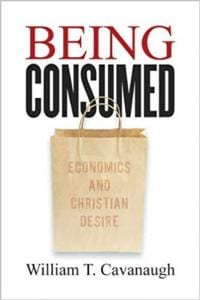 Being Consumed: Economics and Christian Desire is the second book by William T. Cavanaugh to find a place on “Lost in a One-Acre Wood.” Earlier I posted on Torture and Eucharist. The first in that series also contains information about Cavanaugh, the author, plus a list of his major works. In Being Consumed: Economics and Christian Desire, Cavanaugh delves into economics and desires for their spiritual core. I borrow language from elsewhere[i], to describe Cavanaugh’s accomplishment. He identifies demonic elements in economics and proposes some angelic alternatives.
In four chapters Being Consumed deals with
- The free market – “Freedom and Unfreedom”
- Consumerism – “Detachment and Attachment”
- Globalization – “The Global and the Local”
- And scarcity – “Scarcity and Abundance”
Key questions are: When is a market free? How do we consume rightly? How can we be both global and local? And must scarcity be the force driving human economic activity; why not abundance? Cavanaugh brings Christian resources, especially the Eucharist, to bear on these questions. At various points he identifies living economic practices that show at least the possibility of turning today’s economic devils into angels.
Cavanaugh wrote Being Consumed to show Christians that they must take their spirituality out of the realm of souls and heaven. It belongs in the midst of the most materialistic of human endeavors. I think one can also start from the other end and see that serious economic issues almost beg for application of concepts and ideals such as Christianity offers.
Being Consumed: Quotes
A few quotes will give a taste of what will be coming in the following posts on Being Consumed.
Chapter 1, Freedom and Unfreedom – “[T]o determine whether a person is acting freely, we need to know much more than whether that person is acting on his or her desires without the interference of others…. Humans need a community of virtue in which to learn to desire rightly.” (p. 9)
Chapter 2, Detachment and Attachment – “[C]hanges in the economy and society in general have detached us from material production, producers, and even the products we buy.” (p. 36-37) Consumers are subject to a process that General Motors once called “the organized creation of dissatisfaction.” (p.46)
Chapter 3, The Global and the Local –“The Fair Trade movement … is an example of how Christians can be global in a way that does not lead to detachment from the local…. Fair Trade sees the distant neighbor in all of her or his particular dignity: a person with concrete needs, one whose particular pains and joys are shared by the other members of Christ’s body, which is simultaneously global and local.” (p. 87-88)
Chapter 4, Scarcity and Abundance – “We live our lives at the intersection of two stories about the world: the Eucharist and the market.” (p. 89) “One story the market tells … is that of scarcity miraculously turned into abundance by consumption itself, a contemporary loaves-and-fishes saga.” (p. 93) “The Eucharist tells a different story about who we – the hungry and the filled – really are and where we are going. (p.100)
Image credit: Amazon
[i] See posts on Walter Wink.
Previous Post

February 19, 2020
James Groppi, Milwaukee Priest, Civil Rights Activist
Next Post
February 24, 2020 Freedom and Unfreedom in the Free Market: Being Consumed, Chapter 1
Browse Our Archives
Select a Category Advent Christmas Amazon Synod Angels Being Consumed Bible Catholic Modern Creed Ecology Economics Elizabeth Johnson Eucharist Fragments and Filaments Gender and Sex Gospel of Mark Herzog Historical Jesus Liturgy Luke Opening Scriptures on Way to Emmaus Ordinary radicals Parables Pro-Life Reincarnation Rosary Sacraments science Social Justice Souls Stories of Jesus The Creed Torture and Eucharist Tracy Uncategorized War and Peace
Select a Month October 2026 June 2025 April 2025 March 2025 February 2025 January 2025 November 2024 July 2024 March 2024 December 2023 October 2023 September 2023 August 2023 May 2023 April 2023 March 2023 February 2023 January 2023 December 2022 November 2022 October 2022 September 2022 August 2022 July 2022 June 2022 April 2022 March 2022 February 2022 January 2022 December 2021 November 2021 October 2021 August 2021 July 2021 June 2021 April 2021 March 2021 February 2021 December 2020 November 2020 October 2020 August 2020 July 2020 June 2020 May 2020 April 2020 March 2020 February 2020 January 2020 December 2019 November 2019 October 2019 September 2019 August 2019 July 2019 June 2019 May 2019 April 2019 March 2019 February 2019 January 2019 December 2018 November 2018 October 2018 September 2018 August 2018 July 2018 June 2018 May 2018
Follow Us!
TAKE THE
Religious Wisdom Quiz
Who was Bathsheba's husband, sent to the front lines by David?
Select your answer to see how you score.
Joab Absalom Abner Uriah the Hittite
Related posts from Lost in a One-Acre Wood

Economic Scarcity and Eucharistic Abundance: Two Stories about...

Thin Places, McDonald’s World, and the Difference the...

Globalization, the One and the Many, and Jesus
Consumer Culture Forms us Morally and Spiritually. So...
TRENDING AT PATHEOS Catholic

Rejecting Doom: Christian Hope And Human Action
Christianity is a religion of hope. We are to have hope and...

It’s What Comes From Within Which Matters
One of the most difficult things for us to understand is why...

Why I Choose the Eucharist Over the Sermon
Choose the Eucharist, Not the Sermon What are we supposed to get...

5 Design Elements Found in Spiritually Rooted Homes
Putting Spirituality Into Home Decor Our homes are more than our living...

Credo: A Story of God Told with the...
About 10 years ago, I began to imagine a personal "Credo" that...

The Anatomy of Divine Revelation in Catholic Thought
The claim that God has made Himself known to human beings is...
view all Catholic blogs
Ad-Free & Subscriber Log-In Subscription Support
- About Us
- 2026 Calendar
- Videos
- Podcasts
- Library of World Religions
- Faith In Media Tracker
- Advertise With Us
- Write for Us
- Privacy Policy
- Terms of Service
- Do Not Sell My Data
- Contact Us
- Radiant Digital
- Manage Newsletter Subscriptions
- Unsubscribe From Notifications
- Sitemap
Copyright 2008-2026, Patheos. All rights reserved.
Subscription Support Ad-Free & Subscriber Log-In
Follow Patheos