
BuddhistCatholicContemplativeEvangelicalGeneral ChristianHinduJewishLatter-day SaintMuslimNew VisionsProgressive Christian
Beliefs
- Buddhist
- Catholic
- Contemplative
- Evangelical
- General Christian
- Hindu
- Jewish
- Latter-day Saint
- More Voices
- Muslim
- New Visions
- Pagan
- Progressive Christian
Topics
- Religion News
- Food and Religion
- Sports and Religion
- Religious Art
- Religious Music and Entertainment
- Religious Events
- History and Religion
- Style and Religion
- Politics and Religion
- Women in Religion
- Recreation Outdoors and Religion
- Business Finance and Religion
- Careers Workplace and Religion
- Education and Religion
- Family Parenting and Religion
- Health Fitness and Religion
- Home and Religion
- Relationships and Religion
- Technology and Religion
- Travel and Religion
Columnists
- Buddhist Columnists
- Business Finance and Religion Columnists
- Careers Workplace and Religion Columnists
- Catholic Columnists
- Contemplative Columnists
- Education and Religion Columnists
- Evangelists Columnists
- Family Parenting and Religion Columnists
- General Christian Columnists
- Health Fitness and Religion Columnists
- Hindu Columnists
- History and Religion Columnists
- Home and Religion Columnists
- Jewish Columnists
- More Voices Columnists
- Latter Day Columnists
- Muslim Columnists
- New Visions Columnists
- Nonreligious Columnists
- Pagan Columnists
- Politics and Religion Columnists
- Progressive Columnists
- Recreation Outdoors and Religion Columnists
- Relationships and Religion Columnists
- Religion News Columnists
- Religious Art Columnists
- Religious Events Columnists
- Religious Music and Entertainment Columnists
- Sports and Religion Columnists
- Style and Religion Columnists
- Technology and Religion Columnists
- Travel and Religion Columnists
- Women in Religion Columnists
Resource Library
- 2026 Calendar
- Library of World Religions
- The 100 Most Holy Places on Earth
- Patheos Answers
- Podcasts
- Videos
- Faith Leaders Database
- Anglican Episcopalian
- Bahai
- Baptist
- Buddhism
- Christianity
- Confucianism
- Eastern Orthodoxy
- Hinduism
- Holiness and Pentecostal
- ISKCON
- Islam
- Judaism
- Lutheran
- Methodist
- The Church of Jesus Christ of Latter-day Saints
- New Age
- Paganism
- Presbytarian and Reformed
- Protestantism
- Religion Behind the Scenes
- Roman Catholic
- Scientology
- Shia Islam
- Sikhism
- Sufism
- Sunni Islam
- Taoism
- Zen
- See all religions
Research Tools
 Ad-Free & Subscriber Log-In Subscription Support
Ad-Free & Subscriber Log-In Subscription Support
Follow Patheos 

- Trending:
- Forgiveness
- |
- Marriage
- |
- Consciousness
- |
- Death Penalty
- |
- Election
- |
- Halloween

- Home
- Catholic
- Ecological Sin — It Makes Sense … and Controversy
Ecological Sin — It Makes Sense … and Controversy
Last updated on: January 29, 2020 at 9:14 am by Jack Hartjes
Ecological Sin — It Makes Sense … and Controversy 2020-01-29T09:14:37-06:00 Jack Hartjes
Patheos Explore the world's faith through different perspectives on religion and spirituality! Patheos has the views of the prevalent religions and spiritualities of the world.
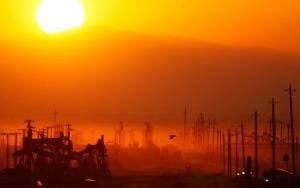
Former “fossil sinner” oil exec predicts sunset on fossil fuel industry in article in The Telegraph.
“Ecological sin: Idea of updating catechism sparks debate.” Catholic News Service ran this article as the year was just beginning. Several news organs reproduced it, including National Catholic Reporter in its EarthBeat section. Pope Francis had announced his intention to add a new category of sin to the catechism – ecological sin. It was one of the recommendations of the recently concluded Amazon Synod.
Offhand, it seems that there must be such a thing as ecological sin. All sorts of bad things are happening to the environment, for which people are responsible. How could this not involve sins? Yet people are objecting to the category of ecological sin.
Harming people is a sin, the CNS article quotes, but not harming the environment. The objector goes on: “as if the environment were a being.” It’s “too much like politics.” One person wondered, sarcastically, “how many extra squares of toilet paper a Catholic can use before it becomes a sin.”
Sarcastic or serious, that last quote at least brings the problem of ecological sin down to everyday life. The last paragraph in the article is more serious, but it raises the same issue:
The problem with the challenge we face is that such changes [to the environment] are both cumulative but also often invisible. It is hard to take moral responsibility for them as we don’t visibly ‘see’ what is happening.
So how do we know when we are sinning, or what does it even mean to sin ecologically? The article ends without an answer. I think an answer is both necessary and possible.
Ecological sin
I actually do think about how much toilet paper I use, as opposed to how much I should use. Even more, I think about how much hot water I waste when showering; and I do feel some guilt. I feel guilty about the amount of meat I consume and the food I waste, and the fact that I have not yet switched to an electric car. My daughter thinks I’m sinning when I flush the toilet, and it may be so. It may depend on where I am in the country. There is such a thing as objective reality, to which I have not conformed my life. That is the plain natural-law meaning of sin.
I suppose practically everything bad we do to the environment has always been a sin in one category or another. It was gluttony, stealing, murder etc. I think it’s the new situation of humanity and the world that makes the new category necessary. We are in the anthropological age. Human activity is what drives the development of the natural world more than any other factor. Before the modern age any pillaging of the earth that you could do was limited in space and time. You would hurt people but not the whole earth. Today we have the power, for better or for worse, to change the world for as far into the future as we can see. And we are doing that for the worse.
Gluttony isn’t just gluttony anymore. It may be poisoning the land, water, and air. Conspicuous consumption isn’t just stealing from the one who hasn’t enough to live. It’s a theft of the earth, which should be the inheritance of all future generations, besides having its own intrinsic value. By my actions today today in Minnesota I may be accessory to deaths on the far side of the planet and far into the future. That’s a qualitatively new situation.
Public and private sinners
Still my private actions’ effect on the world is rather small. I don’t fly around the world in a private jet. It’s hard to imagine that I’m murdering someone every time I leave the lights on. But there are public as well as private sins and sinners. It’s not hard to imagine the contribution to death, sickness, and reduced quality of life from public sins such as:
- A commercial enterprise that poisons the environment,
- A government policy that promotes or allows harm to the environment,
- A scientist who cherry-picks evidence to cast doubt on established ecological science,
- Lies and misleading statements that sway elections.
Here, I think, the category of ecological sin is most useful.
In a former age a pope could require kings to do public penance for especially egregious public sins. Today still, the Church deals with public sin, rightly or wrongly. A Catholic school fires a teacher for disobeying the Church’s marriage laws. A bishop bars a politician from Communion for his or her position on abortion. I don’t know of any Catholic politician or Church employee who has experienced ecclesiastical discipline for a public action that harms the environment. Why not?
A well-established concept of ecological sin would back up a bishop’s stand that might otherwise seem merely political. Bishops’ conferences could call particular actions what they are, sins. With abortion we don’t limit ourselves to sanctity of life language. We use the language of sin and intrinsic evil. The same language should apply to harming the environment. The new category of ecological sin may encourage bishops to use it.
Fossil fuel sinners, fossil fuel slaves
Jack Gladstone, member of the Blackfeet tribe and “Montana’s Troubadour,” sings about a “Fossil Fuel Sinner.” In the song he also names this person a “fossil fuel slave.” With that phrase Gladstone names my situation in the world. I’m a slave to fossil fuels. In the natural and social environment in which I live, it’s nearly impossible to live sustainably on the earth. Unwillingly, but not completely so, I participate in ecological sin.
Jesus makes a strange statement that seems relevant:
Woe to the world because of things that cause sin! Such things must come, but woe to the one through whom they come. (Matthew 18, 7)
Sin causes more sin. The world we live in is not just full of personal sins. It is structurally sinful. Especially today it is ecologically sinful. May we not be among the ones through whom such causes of sin come. May we be among those helping to free the world from ecological slavery.
Image credit: The Telegraph
Next Post

January 31, 2020 At the Consecration: To Elevate or to Show? Liturgical Wishes, Part 2
Browse Our Archives
Select a Category Advent Christmas Amazon Synod Angels Being Consumed Bible Catholic Modern Creed Ecology Economics Elizabeth Johnson Eucharist Fragments and Filaments Gender and Sex Gospel of Mark Herzog Historical Jesus Liturgy Luke Opening Scriptures on Way to Emmaus Ordinary radicals Parables Pro-Life Reincarnation Rosary Sacraments science Social Justice Souls Stories of Jesus The Creed Torture and Eucharist Tracy Uncategorized War and Peace
Select a Month October 2026 June 2025 April 2025 March 2025 February 2025 January 2025 November 2024 July 2024 March 2024 December 2023 October 2023 September 2023 August 2023 May 2023 April 2023 March 2023 February 2023 January 2023 December 2022 November 2022 October 2022 September 2022 August 2022 July 2022 June 2022 April 2022 March 2022 February 2022 January 2022 December 2021 November 2021 October 2021 August 2021 July 2021 June 2021 April 2021 March 2021 February 2021 December 2020 November 2020 October 2020 August 2020 July 2020 June 2020 May 2020 April 2020 March 2020 February 2020 January 2020 December 2019 November 2019 October 2019 September 2019 August 2019 July 2019 June 2019 May 2019 April 2019 March 2019 February 2019 January 2019 December 2018 November 2018 October 2018 September 2018 August 2018 July 2018 June 2018 May 2018
Follow Us!
TAKE THE
Religious Wisdom Quiz
I am an animal that chews the cud and has split hooves. What am I?
Select your answer to see how you score.
An unclean animal A sacrifical animal A clean animal A protected animal
Related posts from Lost in a One-Acre Wood

Global Warming, Glaciers, and Nearly Silent Catholic Wisdom
Norman Wirzba Roots Humanity in a Sacred World
Faith Leaders on Climate Change: “Future Generations Will...

BirthStrike Movement to Dissolve Next Week
TRENDING AT PATHEOS Catholic

Rejecting Doom: Christian Hope And Human Action
Christianity is a religion of hope. We are to have hope and...

It’s What Comes From Within Which Matters
One of the most difficult things for us to understand is why...

Why I Choose the Eucharist Over the Sermon
Choose the Eucharist, Not the Sermon What are we supposed to get...

5 Design Elements Found in Spiritually Rooted Homes
Putting Spirituality Into Home Decor Our homes are more than our living...

Credo: A Story of God Told with the...
About 10 years ago, I began to imagine a personal "Credo" that...

The Anatomy of Divine Revelation in Catholic Thought
The claim that God has made Himself known to human beings is...
view all Catholic blogs
Ad-Free & Subscriber Log-In Subscription Support
- About Us
- 2026 Calendar
- Videos
- Podcasts
- Library of World Religions
- Faith In Media Tracker
- Advertise With Us
- Write for Us
- Privacy Policy
- Terms of Service
- Do Not Sell My Data
- Contact Us
- Radiant Digital
- Manage Newsletter Subscriptions
- Unsubscribe From Notifications
- Sitemap
Copyright 2008-2026, Patheos. All rights reserved.
Subscription Support Ad-Free & Subscriber Log-In
Follow Patheos