
BuddhistCatholicContemplativeEvangelicalGeneral ChristianHinduJewishLatter-day SaintMuslimNew VisionsProgressive Christian
Beliefs
- Buddhist
- Catholic
- Contemplative
- Evangelical
- General Christian
- Hindu
- Jewish
- Latter-day Saint
- More Voices
- Muslim
- New Visions
- Pagan
- Progressive Christian
Topics
- Religion News
- Food and Religion
- Sports and Religion
- Religious Art
- Religious Music and Entertainment
- Religious Events
- History and Religion
- Style and Religion
- Politics and Religion
- Women in Religion
- Recreation Outdoors and Religion
- Business Finance and Religion
- Careers Workplace and Religion
- Education and Religion
- Family Parenting and Religion
- Health Fitness and Religion
- Home and Religion
- Relationships and Religion
- Technology and Religion
- Travel and Religion
Columnists
- Buddhist Columnists
- Business Finance and Religion Columnists
- Careers Workplace and Religion Columnists
- Catholic Columnists
- Contemplative Columnists
- Education and Religion Columnists
- Evangelists Columnists
- Family Parenting and Religion Columnists
- General Christian Columnists
- Health Fitness and Religion Columnists
- Hindu Columnists
- History and Religion Columnists
- Home and Religion Columnists
- Jewish Columnists
- More Voices Columnists
- Latter Day Columnists
- Muslim Columnists
- New Visions Columnists
- Nonreligious Columnists
- Pagan Columnists
- Politics and Religion Columnists
- Progressive Columnists
- Recreation Outdoors and Religion Columnists
- Relationships and Religion Columnists
- Religion News Columnists
- Religious Art Columnists
- Religious Events Columnists
- Religious Music and Entertainment Columnists
- Sports and Religion Columnists
- Style and Religion Columnists
- Technology and Religion Columnists
- Travel and Religion Columnists
- Women in Religion Columnists
Resource Library
- 2026 Calendar
- Library of World Religions
- The 100 Most Holy Places on Earth
- Patheos Answers
- Podcasts
- Videos
- Faith Leaders Database
- Anglican Episcopalian
- Bahai
- Baptist
- Buddhism
- Christianity
- Confucianism
- Eastern Orthodoxy
- Hinduism
- Holiness and Pentecostal
- ISKCON
- Islam
- Judaism
- Lutheran
- Methodist
- The Church of Jesus Christ of Latter-day Saints
- New Age
- Paganism
- Presbytarian and Reformed
- Protestantism
- Religion Behind the Scenes
- Roman Catholic
- Scientology
- Shia Islam
- Sikhism
- Sufism
- Sunni Islam
- Taoism
- Zen
- See all religions
Research Tools
 Ad-Free & Subscriber Log-In Subscription Support
Ad-Free & Subscriber Log-In Subscription Support
Follow Patheos 

- Trending:
- Forgiveness
- |
- Marriage
- |
- Consciousness
- |
- Death Penalty
- |
- Election
- |
- Halloween

- Home
- Catholic
- Watch Night, Celebrating the Emancipation Proclamation, Started Dec. 31, 1862
Watch Night, Celebrating the Emancipation Proclamation, Started Dec. 31, 1862
Last updated on: February 13, 2023 at 9:23 am by Jack Hartjes
Watch Night, Celebrating the Emancipation Proclamation, Started Dec. 31, 1862 2023-02-13T09:23:46-06:00 Jack Hartjes
Patheos Explore the world's faith through different perspectives on religion and spirituality! Patheos has the views of the prevalent religions and spiritualities of the world.
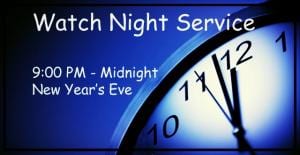
On the first Watch Night, December 31, 1862, African descent Americans sang and prayed in anticipation of freedom. The Emancipation Proclamation, freeing slaves in the Southern states, would become law the following day. A tradition of celebrating this event and the struggle for freedom by oppressed groups continues.
Established in African-American communities on December 31, 1862, Watch Night is a gathering to celebrate the Emancipation Proclamation becoming law. When the clock struck midnight on January 31, 1863, all slaves in the Confederate States were proclaimed free. Since that date … African-Americans have celebrated the good news of freedom in local churches on New Year’s Eve. Like the slaves who first gathered while the Civil War raged on, we proclaim freedom for all captives in Jesus’ name, knowing that for millions, freedom is not a reality. Our celebration is a commitment to join modern-day slaves and undocumented workers in their struggle for justice.
That’s how my favorite prayer book describes what others call New Year’s Eve. The prayer book is Common Prayer: A Liturgy for Ordinary Radicals. This post is another in the series about people I call “Ordinary Radicals.” In this case the ordinary radicals are the people of color and of every other oppressed group in the United States. Watch Night can be a time not only for celebrations in Black churches but also for dominant groups to search their souls about the long road to true freedom for all that still remains.
The first Watch Night
Booker T. Washington was born six years before Lincoln issued the famous Proclamation. Later he wrote about the first Watch Night:
As the great day grew nearer, there was more singing in the slave quarters than usual. It was bolder, had more ring, and lasted later into the night. Ture, they had sung those same verses before, but they had been careful to explain that the ‘freedom’ in these songs referred to the next world, and had not connection with life in this world. Now they gradually threw off the mask. [They] were not afraid to let it be known that the ‘freedom’ in their songs meant freedom of the body in this world. (Common Prayer)
On December 31 Blacks across the country, slaves and free, gathered in churches and homes, waiting for the Emancipation Proclamation to become law. African American Registry notes that another name for this night is Freedom’s Eve. The tradition “still brings us together at this time every year to celebrate ‘how we got over.’” Church services begin “anywhere from 7 p.m. to 10 p.m.” and go on until midnight.
Lincoln’s other motive
Lincoln believed that participation by Black people would be essential to the Union’s success in the Civil War. African Americans, says the African American Civil War Museum, “were ‘watching’ for the opportunity to fight for freedom.” A preacher in Washington, D.C., Henry M. Turner, said:
Abraham Lincoln can get anything he wants from the colored people here from a company to a corps. I would not be surprised to see myself carrying a musket before long.
Turner became a chaplain in the Union army.
The Emancipation Proclamation was a war measure. It freed slaves in the Southern states only. Jefferson Davis, the Confederate president, later in 1863 gloated that the Union could not subdue the South on its own, i.e., without the help of blacks.
The Civil War Museum goes on to say that the celebrations of Watch Night commemorate a “watching for.” Blacks watched for government policy to align “with the prayers of the oppressed.” We celebrate the “contributions of African descent patriots.”
[A]rmed with the musket and the Emancipation Proclamation, [they] marched on to victory over secession and slavery.
Image credit: Solomon Community Temple, United Methodist church
Previous Post

December 28, 2019
The Communion Rite, the Dangerous Work of the Liturgy
Browse Our Archives
Select a Category Advent Christmas Amazon Synod Angels Being Consumed Bible Catholic Modern Creed Ecology Economics Elizabeth Johnson Eucharist Fragments and Filaments Gender and Sex Gospel of Mark Herzog Historical Jesus Liturgy Luke Opening Scriptures on Way to Emmaus Ordinary radicals Parables Pro-Life Reincarnation Rosary Sacraments science Social Justice Souls Stories of Jesus The Creed Torture and Eucharist Tracy Uncategorized War and Peace
Select a Month October 2026 June 2025 April 2025 March 2025 February 2025 January 2025 November 2024 July 2024 March 2024 December 2023 October 2023 September 2023 August 2023 May 2023 April 2023 March 2023 February 2023 January 2023 December 2022 November 2022 October 2022 September 2022 August 2022 July 2022 June 2022 April 2022 March 2022 February 2022 January 2022 December 2021 November 2021 October 2021 August 2021 July 2021 June 2021 April 2021 March 2021 February 2021 December 2020 November 2020 October 2020 August 2020 July 2020 June 2020 May 2020 April 2020 March 2020 February 2020 January 2020 December 2019 November 2019 October 2019 September 2019 August 2019 July 2019 June 2019 May 2019 April 2019 March 2019 February 2019 January 2019 December 2018 November 2018 October 2018 September 2018 August 2018 July 2018 June 2018 May 2018
Follow Us!
TAKE THE
Religious Wisdom Quiz
In 1 Peter, what does Peter say Christ was chosen before but revealed in when?
Select your answer to see how you score.
Before Abraham was born, revealed at his baptism Before the creation of the world, revealed in these last times Before time began, revealed at the resurrection Before the prophets spoke, revealed at Pentecost
Related posts from Lost in a One-Acre Wood

Axios News, Inflation, Justice, and Young Workers in...
Catholic Church Repudiates the Doctrine of Discovery

Holy Thursday Theology and the Scientific Quest for...
‘Render to Caesar’ – or Not. The Speech...
TRENDING AT PATHEOS Catholic

Creation, Preservation, and Teleology in Catholic Theology
As I write this, it is very early Monday morning. Like millions...

The Parable Of The Sower And The Word...
One of Christ’s most famous parables is that of the sower who...

Rejecting Doom: Christian Hope And Human Action
Christianity is a religion of hope. We are to have hope and...

Why I Choose the Eucharist Over the Sermon
Choose the Eucharist, Not the Sermon What are we supposed to get...

5 Design Elements Found in Spiritually Rooted Homes
Putting Spirituality Into Home Decor Our homes are more than our living...

Credo: A Story of God Told with the...
About 10 years ago, I began to imagine a personal "Credo" that...
view all Catholic blogs
Ad-Free & Subscriber Log-In Subscription Support
- About Us
- 2026 Calendar
- Videos
- Podcasts
- Library of World Religions
- Faith In Media Tracker
- Advertise With Us
- Write for Us
- Privacy Policy
- Terms of Service
- Do Not Sell My Data
- Contact Us
- Radiant Digital
- Manage Newsletter Subscriptions
- Unsubscribe From Notifications
- Sitemap
Copyright 2008-2026, Patheos. All rights reserved.
Subscription Support Ad-Free & Subscriber Log-In
Follow Patheos