
BuddhistCatholicContemplativeEvangelicalGeneral ChristianHinduJewishLatter-day SaintMuslimNew VisionsProgressive Christian
Beliefs
- Buddhist
- Catholic
- Contemplative
- Evangelical
- General Christian
- Hindu
- Jewish
- Latter-day Saint
- More Voices
- Muslim
- New Visions
- Pagan
- Progressive Christian
Topics
- Religion News
- Food and Religion
- Sports and Religion
- Religious Art
- Religious Music and Entertainment
- Religious Events
- History and Religion
- Style and Religion
- Politics and Religion
- Women in Religion
- Recreation Outdoors and Religion
- Business Finance and Religion
- Careers Workplace and Religion
- Education and Religion
- Family Parenting and Religion
- Health Fitness and Religion
- Home and Religion
- Relationships and Religion
- Technology and Religion
- Travel and Religion
Columnists
- Buddhist Columnists
- Business Finance and Religion Columnists
- Careers Workplace and Religion Columnists
- Catholic Columnists
- Contemplative Columnists
- Education and Religion Columnists
- Evangelists Columnists
- Family Parenting and Religion Columnists
- General Christian Columnists
- Health Fitness and Religion Columnists
- Hindu Columnists
- History and Religion Columnists
- Home and Religion Columnists
- Jewish Columnists
- More Voices Columnists
- Latter Day Columnists
- Muslim Columnists
- New Visions Columnists
- Nonreligious Columnists
- Pagan Columnists
- Politics and Religion Columnists
- Progressive Columnists
- Recreation Outdoors and Religion Columnists
- Relationships and Religion Columnists
- Religion News Columnists
- Religious Art Columnists
- Religious Events Columnists
- Religious Music and Entertainment Columnists
- Sports and Religion Columnists
- Style and Religion Columnists
- Technology and Religion Columnists
- Travel and Religion Columnists
- Women in Religion Columnists
Resource Library
- 2026 Calendar
- Library of World Religions
- The 100 Most Holy Places on Earth
- Patheos Answers
- Podcasts
- Videos
- Faith Leaders Database
- Anglican Episcopalian
- Bahai
- Baptist
- Buddhism
- Christianity
- Confucianism
- Eastern Orthodoxy
- Hinduism
- Holiness and Pentecostal
- ISKCON
- Islam
- Judaism
- Lutheran
- Methodist
- The Church of Jesus Christ of Latter-day Saints
- New Age
- Paganism
- Presbytarian and Reformed
- Protestantism
- Religion Behind the Scenes
- Roman Catholic
- Scientology
- Shia Islam
- Sikhism
- Sufism
- Sunni Islam
- Taoism
- Zen
- See all religions
Research Tools
 Ad-Free & Subscriber Log-In Subscription Support
Ad-Free & Subscriber Log-In Subscription Support
Follow Patheos 

- Trending:
- Forgiveness
- |
- Marriage
- |
- Consciousness
- |
- Death Penalty
- |
- Election
- |
- Halloween

- Home
- Catholic
- The Mass — Is it still the Same?
The Mass — Is it still the Same?
Last updated on: June 17, 2021 at 6:58 am by Jack Hartjes
The Mass — Is it still the Same? 2021-06-17T06:58:44-06:00 Jack Hartjes
Patheos Explore the world's faith through different perspectives on religion and spirituality! Patheos has the views of the prevalent religions and spiritualities of the world.
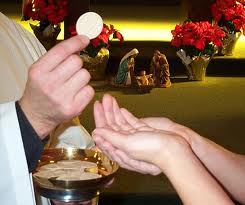
Catholic experience of Communion today (and of the Mass as a whole) is different from the days before liturgical reform.
If you’re a traditionalist Catholic looking at the modern Mass, you might think the liturgical reforms changed the Mass beyond recognition. But let’s try to imagine a more neutral observer. My imaginary observer is going to be an alien from another planet. This being will have superb powers of observation, including the ability to read minds. He/she/it/they came to earth in the early ‘60’s and happened to take in a Catholic Mass. A certain Jack Hartjes was there. Returning 50 some years later “she” (to simplify things) found the same Jack Hartjes worshiping at another, but somewhat different, Mass.
This is the first in a series that will take a look at the way the Mass is celebrated in Catholic churches today.
After about half a century, most Catholics have gotten used to the new way of celebrating the Mass. Its new features don’t startle us anymore. In fact, we either don’t know or don’t think about the way the Mass used to be. But, as an older Catholic, I find that having a past to compare our liturgies to helps me see better what we’re doing today. This series on the Mass will take advantage of that double perspective.
A look inside one believer
My imaginary alien with the special powers of observation peers inside the Catholic that I was just as he’s getting up from the Communion rail. What does she see? The host is still on his tongue. The worshiper is having a little trouble swallowing that host, without chewing it, of course. That wouldn’t be reverent. He’s remembering what he was taught—that the real presence of Jesus remains just as long as the host maintains the appearance, the outward properties, of bread. He’s wondering, “What if the host dissolves in my mouth? Is Jesus still there, and will I still have received Communion if he isn’t?”
Getting back to his pew, having successfully swallowed the host, he kneels in silent contemplation. He’s trying to keep his mind on Jesus, who will be really with him for whatever seconds or minutes it takes to digest that host. (It’s a small, thin wafer, designed, not intentionally but effectively to make the real presence of Jesus last only a veryshort time. Also it wa slightly s economical.)
Same believer, older now
Liturgical reform has changed the experience of receiving Communion. My imaginary observer, on her second tour of earth notices the difference. This time the worshiper receives a larger host and chews it before swallowing. He still believes in the Real Presence of Jesus as bread, especially as reserved in the tabernacle. But he doesn’t think chewing is irreverent. He doesn’t concern himself with a scientific question like how long ingested bread stays bread. He has a more expansive Real Presence in mind, the presence of Jesus in the assembly’s sharing of a meal. Instead of privately meditating, he joins the other worshipers in song.
Memory can be an exercise in nostalgia, but there is good reason to think back on the details of our pre-Vatican II experiences. Those details and the way they have changed with liturgical renewal show in what ways our understanding of the celebration has changed. Remembering the changes can help us notice things about today’s liturgy that might otherwise be taken for granted. Finding the reasons why these things changed can help us understand Eucharist better.
The new Mass and the old, briefly
Coming posts in this series will examine each of the major parts of the Mass. It will be as if seeing through the eyes of that imaginary observer. She is not accustomed to seeing things like this, but she remembers what she saw 50 years ago. It looks like a change from
- individual piety to communal celebration,
- attendance to participation,
- small symbolic objects to large symbolic actions,
- respite from last week, preparation for the next week of life in the world and the actual work of enacting harmony and unity in the world now to — well — in all those respects and many more the Mass is essentially unchanged.
Is this a new Mass, or is it simply the Mass, showing more clearly to Catholics and to the world, which just might be watching, how God’s Kingdom becomes real in the world?
Image credit: “Liturgical Reflections” blog
Previous Post

October 22, 2019
If Not Women Priests, then Women Cardinals
Next Post
October 29, 2019 Introductory Rites: “Please, Stand for Some Important Work”
Browse Our Archives
Select a Category Advent Christmas Amazon Synod Angels Being Consumed Bible Catholic Modern Creed Ecology Economics Elizabeth Johnson Eucharist Fragments and Filaments Gender and Sex Gospel of Mark Herzog Historical Jesus Liturgy Luke Opening Scriptures on Way to Emmaus Ordinary radicals Parables Pro-Life Reincarnation Rosary Sacraments science Social Justice Souls Stories of Jesus The Creed Torture and Eucharist Tracy Uncategorized War and Peace
Select a Month October 2026 June 2025 April 2025 March 2025 February 2025 January 2025 November 2024 July 2024 March 2024 December 2023 October 2023 September 2023 August 2023 May 2023 April 2023 March 2023 February 2023 January 2023 December 2022 November 2022 October 2022 September 2022 August 2022 July 2022 June 2022 April 2022 March 2022 February 2022 January 2022 December 2021 November 2021 October 2021 August 2021 July 2021 June 2021 April 2021 March 2021 February 2021 December 2020 November 2020 October 2020 August 2020 July 2020 June 2020 May 2020 April 2020 March 2020 February 2020 January 2020 December 2019 November 2019 October 2019 September 2019 August 2019 July 2019 June 2019 May 2019 April 2019 March 2019 February 2019 January 2019 December 2018 November 2018 October 2018 September 2018 August 2018 July 2018 June 2018 May 2018
Follow Us!
TAKE THE
Religious Wisdom Quiz
What does Paul say in 1 Thessalonians about the day of the Lord?
Select your answer to see how you score.
It will come like a thief in the night It will come with great signs It will come after the tribulation It will come when peace is declared
Related posts from Lost in a One-Acre Wood

“Drink the Cup” – Liturgy Teaches Us Eucharistic...

Kneeling Through the Communion Rite: Now I Get...
Ministries in the Church, Momentum for Change, Again
Address the Prayer of the Faithful to God,...
TRENDING AT PATHEOS Catholic

The Parable Of The Sower And The Word...
One of Christ’s most famous parables is that of the sower who...

Rejecting Doom: Christian Hope And Human Action
Christianity is a religion of hope. We are to have hope and...

Why I Choose the Eucharist Over the Sermon
Choose the Eucharist, Not the Sermon What are we supposed to get...

5 Design Elements Found in Spiritually Rooted Homes
Putting Spirituality Into Home Decor Our homes are more than our living...

Credo: A Story of God Told with the...
About 10 years ago, I began to imagine a personal "Credo" that...

The Anatomy of Divine Revelation in Catholic Thought
The claim that God has made Himself known to human beings is...
view all Catholic blogs
Ad-Free & Subscriber Log-In Subscription Support
- About Us
- 2026 Calendar
- Videos
- Podcasts
- Library of World Religions
- Faith In Media Tracker
- Advertise With Us
- Write for Us
- Privacy Policy
- Terms of Service
- Do Not Sell My Data
- Contact Us
- Radiant Digital
- Manage Newsletter Subscriptions
- Unsubscribe From Notifications
- Sitemap
Copyright 2008-2026, Patheos. All rights reserved.
Subscription Support Ad-Free & Subscriber Log-In
Follow Patheos