
BuddhistCatholicContemplativeEvangelicalGeneral ChristianHinduJewishLatter-day SaintMuslimNew VisionsProgressive Christian
Beliefs
- Buddhist
- Catholic
- Contemplative
- Evangelical
- General Christian
- Hindu
- Jewish
- Latter-day Saint
- More Voices
- Muslim
- New Visions
- Pagan
- Progressive Christian
Topics
- Religion News
- Food and Religion
- Sports and Religion
- Religious Art
- Religious Music and Entertainment
- Religious Events
- History and Religion
- Style and Religion
- Politics and Religion
- Women in Religion
- Recreation Outdoors and Religion
- Business Finance and Religion
- Careers Workplace and Religion
- Education and Religion
- Family Parenting and Religion
- Health Fitness and Religion
- Home and Religion
- Relationships and Religion
- Technology and Religion
- Travel and Religion
Columnists
- Buddhist Columnists
- Business Finance and Religion Columnists
- Careers Workplace and Religion Columnists
- Catholic Columnists
- Contemplative Columnists
- Education and Religion Columnists
- Evangelists Columnists
- Family Parenting and Religion Columnists
- General Christian Columnists
- Health Fitness and Religion Columnists
- Hindu Columnists
- History and Religion Columnists
- Home and Religion Columnists
- Jewish Columnists
- More Voices Columnists
- Latter Day Columnists
- Muslim Columnists
- New Visions Columnists
- Nonreligious Columnists
- Pagan Columnists
- Politics and Religion Columnists
- Progressive Columnists
- Recreation Outdoors and Religion Columnists
- Relationships and Religion Columnists
- Religion News Columnists
- Religious Art Columnists
- Religious Events Columnists
- Religious Music and Entertainment Columnists
- Sports and Religion Columnists
- Style and Religion Columnists
- Technology and Religion Columnists
- Travel and Religion Columnists
- Women in Religion Columnists
Resource Library
- 2026 Calendar
- Library of World Religions
- The 100 Most Holy Places on Earth
- Patheos Answers
- Podcasts
- Videos
- Faith Leaders Database
- Anglican Episcopalian
- Bahai
- Baptist
- Buddhism
- Christianity
- Confucianism
- Eastern Orthodoxy
- Hinduism
- Holiness and Pentecostal
- ISKCON
- Islam
- Judaism
- Lutheran
- Methodist
- The Church of Jesus Christ of Latter-day Saints
- New Age
- Paganism
- Presbytarian and Reformed
- Protestantism
- Religion Behind the Scenes
- Roman Catholic
- Scientology
- Shia Islam
- Sikhism
- Sufism
- Sunni Islam
- Taoism
- Zen
- See all religions
Research Tools
 Ad-Free & Subscriber Log-In Subscription Support
Ad-Free & Subscriber Log-In Subscription Support
Follow Patheos 

- Trending:
- Forgiveness
- |
- Marriage
- |
- Consciousness
- |
- Death Penalty
- |
- Election
- |
- Halloween

- Home
- Catholic
- Priests: Through Holy Orders God’s Supports Us as We Do God’s Work
Priests: Through Holy Orders God’s Supports Us as We Do God’s Work
Last updated on: October 2, 2019 at 9:15 am by Jack Hartjes
Priests: Through Holy Orders God’s Supports Us as We Do God’s Work 2019-10-02T09:15:13-06:00 Jack Hartjes
Patheos Explore the world's faith through different perspectives on religion and spirituality! Patheos has the views of the prevalent religions and spiritualities of the world.
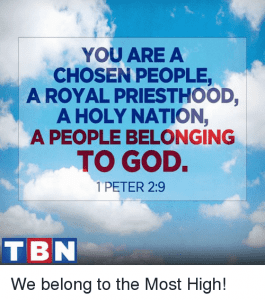
Ordained priests are a servant part of the priesthood of the People of God.
The sacrament of Holy Orders is not about a separate class of Christians whom God blesses above the rest. Priests don’t have one more guardian angel than the rest of us, as one young priest preached at a children’s Mass. If there’s an ontological difference between priests and lay people, it only serves to bind together, not separate. The office of priesthood is one of service, but that service focuses not so much on God as on God’s people, the primary servants of God.
I spent nine years studying for the Catholic priesthood, for which I am grateful. But I can only think it was God’s grace that saved me from the mistake of going through with ordination. I would have been a horrible priest, but I didn’t know that at the time. What I knew, or thought I knew, is that priests have special powers related to the sacraments, e.g., to consecrate bread and wine. Other than that, I figured, with the Vatican II a recent phenomenon, there was nothing priests could do that lay persons couldn’t. Much as I loved the sacraments, I did not want to give up the possibility of marriage for the role of distributor of the sacraments.
I opted for the excitement of being a Catholic lay person. If I had known what I have learned since about the role of priests in the Church, I might have decided differently. I might have entered the exciting space of one who gets to know people, shares their joys and sorrows and the circumstances of their lives, and finds ways to encourage them to fulfill their hopes and their destinies in God’s Kingdom. But, though I didn’t know it, I was not then and still am not what in those days one called a “people person.”
Priests, signs of God’s faith in us
Like the married couple, ordained priests, deacons, and bishops are a signs of God’s love that lasts far beyond the celebration of the sacrament. In the sacrament of Holy Orders and in the sign of the ordained person, we come to see that God’s is no condescending love, giving everything and demanding nothing. God’s love includes a call for all of us to participate in the priestly work of Christ and support for us when we do. It’s unnerving to see how much faith God has in us.
Holy Orders is a Catholic sacrament that Protestants don’t recognize. Protestants want to safeguard two truths: Christ is the one priest, and the people of God are a holy priesthood. So it’s important to state that Holy Orders does not set up a number of priests alongside Christ, offering up sacrifices for the People of God. Rather, the ordained priesthood is a sign of the priestly work that Christ does everywhere all the time. And to this priestly work, which includes the work of the Church’s liturgical celebrations, Christ invites the entire People of God.
A clear call to do God’s work comes to each of us with Baptism. The special grace of our ordained ministers is to recognize and call forth the gift for service that each of the baptized possesses. Their role is leadership, a supporting, facilitating leadership. Their work for God is to help all of us, God’s people, fulfill our priestly vocation.
Priests and sacraments
The priest has a special role in the sacraments, but this role has been wrongly interpreted in the past and the role of the assembly nearly lost. I remember thinking that what is special about the priest is the “power” to consecrate the bread and wine, an idea that has been with the Church since the Middle Ages, but not earlier than that. I remember thinking about the priest’s hands. At ordination they were anointed with oil, a minor rite added to the ordination ceremony in the Middle Ages, so I thought only priests were allowed to touch the consecrated hosts with their hands.
Before Vaticlan II priests, facing away from the people before ahigh altar at the farthest end of the church, seemed higher than the rest of us. They prayed directly to God while the people seemingly prayed to God through them. (Except that, looking closer, you could have seen many in the congregation saying their own private prayers). That elevation above the people continued outside of Mass in the way we treated our priests and in the way we expected them to dress and act.
Without the priest, without the sacrament of Holy Orders, there can’t be a Mass. That doesn’t mean that the priest has some sort of power bestowed at ordination or that priests are closer to God or separate from other people. You can see what is special about ordained ministers in all their work at liturgy, their work of supporting, gathering, preaching, and presiding over liturgical celebrations. This understanding puts the priest in relation to the rest of the assembly. It says, better than the idea that I grew up with, that the priest represents Christ and so acts like Christ. Jesus didn’t operate at a distance from people.
In a sacrament people come together to worship in a local parish church. They gather as the Body of Christ around one who represents Christ the Head. This person is the ordained priest, who leads the celebration and recites most of its spoken prayers, including the central Eucharistic Prayer. The people’s “Amen” says that it’s their prayer, too. The priest encourages and honors the use of the parishioners’ gifts for service, whether in the world or in the liturgy. The priest helps make that liturgy one prayer of God’s people.
Apostolic succession
The main symbol in the ceremony of Holy Orders is the laying on of hands by the bishop. There may be other bishops and probably will be several priests present. They all lay their hands on the head of the one being ordained. It is a powerful reminder of the entire history of the Church.
We can’t prove that the apostles and early Church leaders always used that gesture to consecrate new leaders. But for millennia the Church has used that sign. Here’s the point: That 2000-year history is not just past. The connection with the apostles that we sometimes call apostolic succession is not only about things that have happened. Apostolic succession does not mean, “It would be best if we could have lived in the time of the Apostles, and this is the next best thing.”
The Spirit stays with the Church as well as the authority, the power of the keys, to act on the promptings of the Spirit, to learn and change. As Jesus did once and without faltering, so the Church, though often with steps that wander, can grow “in wisdom and age and favor before God and man.” The Church may often act out of fear of change, but apostolic succession is far from a conservative idea.
The Church’s history is one of the graces that God is giving to the Church now. When we try to know God’s new graces better, we often look to what the Church did and understood in the past. The Church has many reminders of its history—ancient prayers and creeds, ancient songs, ancient buildings and artifacts and relics—but nothing makes me feel part of this history quite like being present for the laying on of hands.
Summary
Newly ordained priests do not suddenly become ministers, workers in the field, channels of grace somehow bridging God and humankind. Those descriptions apply to Christ and the entire People of God. The ordained priest’s role does not center on the sanctuary while the laity do God’s work in the world. Priests, bishops, and deacons, called from the people but not separate from them, are signs and instruments of the support God gives all of us when, in the secular world or in the sacred space of the Church’s worship, we do God’s work.
Think again:
How can the sign of the ordained priesthood in today’s Church help you know you are doing God’s work? What helps you believe that you participate in Christ’s priesthood? When have you felt that you needed support in doing God’s work? What support do you derive from celebrating the liturgy? From personal contact with deacons, priests, or your bishop? From the actions and teachings of the universal Church?
Image credit: me.me via Google Images
Previous Post

September 27, 2019
How Holy Matrimony Saves Sex
Next Post
October 4, 2019 Season of Creation Segues to Amazon Synod with Pope’s Tree Planting
Browse Our Archives
Select a Category Advent Christmas Amazon Synod Angels Being Consumed Bible Catholic Modern Creed Ecology Economics Elizabeth Johnson Eucharist Fragments and Filaments Gender and Sex Gospel of Mark Herzog Historical Jesus Liturgy Luke Opening Scriptures on Way to Emmaus Ordinary radicals Parables Pro-Life Reincarnation Rosary Sacraments science Social Justice Souls Stories of Jesus The Creed Torture and Eucharist Tracy Uncategorized War and Peace
Select a Month October 2026 June 2025 April 2025 March 2025 February 2025 January 2025 November 2024 July 2024 March 2024 December 2023 October 2023 September 2023 August 2023 May 2023 April 2023 March 2023 February 2023 January 2023 December 2022 November 2022 October 2022 September 2022 August 2022 July 2022 June 2022 April 2022 March 2022 February 2022 January 2022 December 2021 November 2021 October 2021 August 2021 July 2021 June 2021 April 2021 March 2021 February 2021 December 2020 November 2020 October 2020 August 2020 July 2020 June 2020 May 2020 April 2020 March 2020 February 2020 January 2020 December 2019 November 2019 October 2019 September 2019 August 2019 July 2019 June 2019 May 2019 April 2019 March 2019 February 2019 January 2019 December 2018 November 2018 October 2018 September 2018 August 2018 July 2018 June 2018 May 2018
Follow Us!
TAKE THE
Religious Wisdom Quiz
Which Christian denomination emphasizes adult baptism over infant baptism?
Select your answer to see how you score.
Baptist Methodist Catholic Lutheran
Related posts from Lost in a One-Acre Wood

“Drink the Cup” – Liturgy Teaches Us Eucharistic...

Kneeling Through the Communion Rite: Now I Get...
Ministries in the Church, Momentum for Change, Again
Address the Prayer of the Faithful to God,...
TRENDING AT PATHEOS Catholic

Creation, Preservation, and Teleology in Catholic Theology
As I write this, it is very early Monday morning. Like millions...

The Parable Of The Sower And The Word...
One of Christ’s most famous parables is that of the sower who...

Rejecting Doom: Christian Hope And Human Action
Christianity is a religion of hope. We are to have hope and...

Why I Choose the Eucharist Over the Sermon
Choose the Eucharist, Not the Sermon What are we supposed to get...

5 Design Elements Found in Spiritually Rooted Homes
Putting Spirituality Into Home Decor Our homes are more than our living...

Credo: A Story of God Told with the...
About 10 years ago, I began to imagine a personal "Credo" that...
view all Catholic blogs
Ad-Free & Subscriber Log-In Subscription Support
- About Us
- 2026 Calendar
- Videos
- Podcasts
- Library of World Religions
- Faith In Media Tracker
- Advertise With Us
- Write for Us
- Privacy Policy
- Terms of Service
- Do Not Sell My Data
- Contact Us
- Radiant Digital
- Manage Newsletter Subscriptions
- Unsubscribe From Notifications
- Sitemap
Copyright 2008-2026, Patheos. All rights reserved.
Subscription Support Ad-Free & Subscriber Log-In
Follow Patheos