
BuddhistCatholicContemplativeEvangelicalGeneral ChristianHinduJewishLatter-day SaintMuslimNew VisionsProgressive Christian
Beliefs
- Buddhist
- Catholic
- Contemplative
- Evangelical
- General Christian
- Hindu
- Jewish
- Latter-day Saint
- More Voices
- Muslim
- New Visions
- Pagan
- Progressive Christian
Topics
- Religion News
- Food and Religion
- Sports and Religion
- Religious Art
- Religious Music and Entertainment
- Religious Events
- History and Religion
- Style and Religion
- Politics and Religion
- Women in Religion
- Recreation Outdoors and Religion
- Business Finance and Religion
- Careers Workplace and Religion
- Education and Religion
- Family Parenting and Religion
- Health Fitness and Religion
- Home and Religion
- Relationships and Religion
- Technology and Religion
- Travel and Religion
Columnists
- Buddhist Columnists
- Business Finance and Religion Columnists
- Careers Workplace and Religion Columnists
- Catholic Columnists
- Contemplative Columnists
- Education and Religion Columnists
- Evangelists Columnists
- Family Parenting and Religion Columnists
- General Christian Columnists
- Health Fitness and Religion Columnists
- Hindu Columnists
- History and Religion Columnists
- Home and Religion Columnists
- Jewish Columnists
- More Voices Columnists
- Latter Day Columnists
- Muslim Columnists
- New Visions Columnists
- Nonreligious Columnists
- Pagan Columnists
- Politics and Religion Columnists
- Progressive Columnists
- Recreation Outdoors and Religion Columnists
- Relationships and Religion Columnists
- Religion News Columnists
- Religious Art Columnists
- Religious Events Columnists
- Religious Music and Entertainment Columnists
- Sports and Religion Columnists
- Style and Religion Columnists
- Technology and Religion Columnists
- Travel and Religion Columnists
- Women in Religion Columnists
Resource Library
- 2026 Calendar
- Library of World Religions
- The 100 Most Holy Places on Earth
- Patheos Answers
- Podcasts
- Videos
- Faith Leaders Database
- Anglican Episcopalian
- Bahai
- Baptist
- Buddhism
- Christianity
- Confucianism
- Eastern Orthodoxy
- Hinduism
- Holiness and Pentecostal
- ISKCON
- Islam
- Judaism
- Lutheran
- Methodist
- The Church of Jesus Christ of Latter-day Saints
- New Age
- Paganism
- Presbytarian and Reformed
- Protestantism
- Religion Behind the Scenes
- Roman Catholic
- Scientology
- Shia Islam
- Sikhism
- Sufism
- Sunni Islam
- Taoism
- Zen
- See all religions
Research Tools
 Ad-Free & Subscriber Log-In Subscription Support
Ad-Free & Subscriber Log-In Subscription Support
Follow Patheos 

- Trending:
- Forgiveness
- |
- Marriage
- |
- Consciousness
- |
- Death Penalty
- |
- Election
- |
- Halloween

- Home
- Catholic
- Look Outside the Sacramental Celebration. It’s not a Distraction.
Look Outside the Sacramental Celebration. It’s not a Distraction.
Last updated on: June 29, 2021 at 3:26 pm by Jack Hartjes
Look Outside the Sacramental Celebration. It’s not a Distraction. 2021-06-29T15:26:50-06:00 Jack Hartjes
Patheos Explore the world's faith through different perspectives on religion and spirituality! Patheos has the views of the prevalent religions and spiritualities of the world.
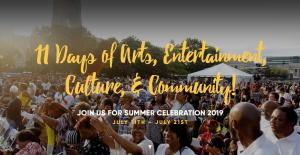
A party doesn’t need a reason, but a celebration, whether in the secular world or in church, is about something.
Celebrations of Grace: The Sacraments of the Catholic Church, Part 7
Sacraments are celebrations. That seemed like a new idea after the Council. Actually, the idea was there before but far in the background, behind more practical descriptions of Catholic worship like “service” and “spiritual food.” Now it seems to me that “celebration” describes sacraments perfectly.
Formerly, if I thought about celebrating at all, I might have thought: Jesus, who died for me, is alive and comes to me in this sacrament. I’m as close to God as I can be. I should feel like celebrating. Now I can’t look only in church for something worth celebrating. The reason for the celebration, the reason for going to church, is everywhere all along.
In the secular world we might celebrate a victory, the birth of a country or of an individual, the harvest, work, an important event—something outside the celebration. We also mark sad events. We have funerals to mark the death of a friend and country-western songs to help us deal with lost loves. These are also a kind of celebration.
Sacramental celebrations are like that. God is around us, behind us, in front of us in happy times and sad. We come together to celebrate the many ways that God has graced us with life and love, all the things God is doing, has done, and wants to do in our lives, in our world, in our history. We lament the wrongs we have done and the sorrows of the world. It’s not just that we get close to God in church. In our liturgies we bear in mind God’s constant presence and work in the world.
The celebrators
Before the Council the fact that the Mass is a celebration was there vaguely: We called one person “celebrant”—the priest who “said” the Mass and “administered” the sacraments to us individually. We “attended” Mass, made a “spiritual offering” to God, tried hard to have the right interior disposition, and “received” the sacraments. I don’t recall thinking of my part as celebrating.
Now the priest is presider over a whole assembly of celebrators. They participate in the work of the Mass, and they have special tasks that they alone can do. Interior disposition gets a big boost from knowing that our exterior participation matters. All of us assembled celebrate as a community.
Signs in the celebrations
Sacraments are signs. The once familiar catechism told us that, and it said exactly what the sign or signs were for each of the sacraments. To me it was wonderful that God comes to us through water, oil, bread, and wine. It made the ordinary things of life special because they had such highly honored “relatives.” The important thing, though, was the real, sacramental presence of Christ. No sign would ever look like that, I thought. The whole liturgy, solemn, mysterious and deeply moving, was there, I thought, to help me think only of the reality hiding “under” the sacramental signs.
What if the priest got his hands really wet, or you actually had to chew the bread and drink from a cup? What if the actions at the altar started to look like what people do when they share food and drink? Bolder signs like these might point us toward similar things outside church. I thought it was important to think only of the presence of Christ in the sacrament. I didn’t want to be “distracted.”
But Jesus is present in all those mundane activities like sharing a meal among family and friends. That’s what the signs of the sacraments can help us see. Signs do that best when they are close and large and boldly done. Today’s liturgy revels in bold signs, primary sacramental signs that are not just water, bread, wine, oil but the actions of people. These make the connection between sacraments and our ordinary lives visible.
Tasting the Kingdom of God
An interesting thing happens when people become involved in a liturgy that is a celebration. Its symbolic actions—coming together, sharing words of love and encouragement, sharing a community meal—really do look like the Kingdom of God, and it’s easy to believe that Jesus is with us. Jesus’ real presence isn’t so hidden in the sacramental signs as we used to think.
Celebration and sign—two ways of naming the connection between sacraments and our everyday lives. Celebrations are about something outside the celebration. Signs point away from themselves toward something else. Sacramental signs and celebrations point outward toward grace that is already occurring in our lives. They point backward to God’s action in history, especially through God’s Son, Jesus. They point forward to what God wants us to be and to the time when God makes all things new and Jesus returns. The signs help us see that all the things around us are graced even before some of them are honored as sacramental signs.
It’s OK if the Eucharistic banquet looks like a meal and makes us think of other loving meals shared with family and friends or, perhaps, of meals that we wish could be as peaceful and loving as this one. That’s not a distraction; it’s paying close attention to Jesus where we most often find him and to what Jesus wants us to be.
Think again:
Can you name something in particular that you felt it was important to celebrate in church? What is the difference between a distraction and the real meaning of the liturgy? When have you had the feeling that something that happened in church was like the Kingdom of God?
Image credit: Summercelebration.net via Google Images
Previous Post

July 22, 2019
Metaphor: The Right Kind of Language for a Limitless God
Next Post
July 26, 2019 Sacraments, in the World, and for the New World
Browse Our Archives
Select a Category Advent Christmas Amazon Synod Angels Being Consumed Bible Catholic Modern Creed Ecology Economics Elizabeth Johnson Eucharist Fragments and Filaments Gender and Sex Gospel of Mark Herzog Historical Jesus Liturgy Luke Opening Scriptures on Way to Emmaus Ordinary radicals Parables Pro-Life Reincarnation Rosary Sacraments science Social Justice Souls Stories of Jesus The Creed Torture and Eucharist Tracy Uncategorized War and Peace
Select a Month October 2026 June 2025 April 2025 March 2025 February 2025 January 2025 November 2024 July 2024 March 2024 December 2023 October 2023 September 2023 August 2023 May 2023 April 2023 March 2023 February 2023 January 2023 December 2022 November 2022 October 2022 September 2022 August 2022 July 2022 June 2022 April 2022 March 2022 February 2022 January 2022 December 2021 November 2021 October 2021 August 2021 July 2021 June 2021 April 2021 March 2021 February 2021 December 2020 November 2020 October 2020 August 2020 July 2020 June 2020 May 2020 April 2020 March 2020 February 2020 January 2020 December 2019 November 2019 October 2019 September 2019 August 2019 July 2019 June 2019 May 2019 April 2019 March 2019 February 2019 January 2019 December 2018 November 2018 October 2018 September 2018 August 2018 July 2018 June 2018 May 2018
Follow Us!
TAKE THE
Religious Wisdom Quiz
How many books are in the Old Testament?
Select your answer to see how you score.
39 42 66 27
Related posts from Lost in a One-Acre Wood

“Drink the Cup” – Liturgy Teaches Us Eucharistic...

Kneeling Through the Communion Rite: Now I Get...
Ministries in the Church, Momentum for Change, Again
Address the Prayer of the Faithful to God,...
TRENDING AT PATHEOS Catholic

Creation, Preservation, and Teleology in Catholic Theology
As I write this, it is very early Monday morning. Like millions...

The Parable Of The Sower And The Word...
One of Christ’s most famous parables is that of the sower who...

Rejecting Doom: Christian Hope And Human Action
Christianity is a religion of hope. We are to have hope and...

Why I Choose the Eucharist Over the Sermon
Choose the Eucharist, Not the Sermon What are we supposed to get...

5 Design Elements Found in Spiritually Rooted Homes
Putting Spirituality Into Home Decor Our homes are more than our living...

Credo: A Story of God Told with the...
About 10 years ago, I began to imagine a personal "Credo" that...
view all Catholic blogs
Ad-Free & Subscriber Log-In Subscription Support
- About Us
- 2026 Calendar
- Videos
- Podcasts
- Library of World Religions
- Faith In Media Tracker
- Advertise With Us
- Write for Us
- Privacy Policy
- Terms of Service
- Do Not Sell My Data
- Contact Us
- Radiant Digital
- Manage Newsletter Subscriptions
- Unsubscribe From Notifications
- Sitemap
Copyright 2008-2026, Patheos. All rights reserved.
Subscription Support Ad-Free & Subscriber Log-In
Follow Patheos