
BuddhistCatholicContemplativeEvangelicalGeneral ChristianHinduJewishLatter-day SaintMuslimNew VisionsProgressive Christian
Beliefs
- Buddhist
- Catholic
- Contemplative
- Evangelical
- General Christian
- Hindu
- Jewish
- Latter-day Saint
- More Voices
- Muslim
- New Visions
- Pagan
- Progressive Christian
Topics
- Religion News
- Food and Religion
- Sports and Religion
- Religious Art
- Religious Music and Entertainment
- Religious Events
- History and Religion
- Style and Religion
- Politics and Religion
- Women in Religion
- Recreation Outdoors and Religion
- Business Finance and Religion
- Careers Workplace and Religion
- Education and Religion
- Family Parenting and Religion
- Health Fitness and Religion
- Home and Religion
- Relationships and Religion
- Technology and Religion
- Travel and Religion
Columnists
- Buddhist Columnists
- Business Finance and Religion Columnists
- Careers Workplace and Religion Columnists
- Catholic Columnists
- Contemplative Columnists
- Education and Religion Columnists
- Evangelists Columnists
- Family Parenting and Religion Columnists
- General Christian Columnists
- Health Fitness and Religion Columnists
- Hindu Columnists
- History and Religion Columnists
- Home and Religion Columnists
- Jewish Columnists
- More Voices Columnists
- Latter Day Columnists
- Muslim Columnists
- New Visions Columnists
- Nonreligious Columnists
- Pagan Columnists
- Politics and Religion Columnists
- Progressive Columnists
- Recreation Outdoors and Religion Columnists
- Relationships and Religion Columnists
- Religion News Columnists
- Religious Art Columnists
- Religious Events Columnists
- Religious Music and Entertainment Columnists
- Sports and Religion Columnists
- Style and Religion Columnists
- Technology and Religion Columnists
- Travel and Religion Columnists
- Women in Religion Columnists
Resource Library
- 2026 Calendar
- Library of World Religions
- The 100 Most Holy Places on Earth
- Patheos Answers
- Podcasts
- Videos
- Faith Leaders Database
- Anglican Episcopalian
- Bahai
- Baptist
- Buddhism
- Christianity
- Confucianism
- Eastern Orthodoxy
- Hinduism
- Holiness and Pentecostal
- ISKCON
- Islam
- Judaism
- Lutheran
- Methodist
- The Church of Jesus Christ of Latter-day Saints
- New Age
- Paganism
- Presbytarian and Reformed
- Protestantism
- Religion Behind the Scenes
- Roman Catholic
- Scientology
- Shia Islam
- Sikhism
- Sufism
- Sunni Islam
- Taoism
- Zen
- See all religions
Research Tools
 Ad-Free & Subscriber Log-In Subscription Support
Ad-Free & Subscriber Log-In Subscription Support
Follow Patheos 

- Trending:
- Forgiveness
- |
- Marriage
- |
- Consciousness
- |
- Death Penalty
- |
- Election
- |
- Halloween

- Home
- Catholic
- Emotions in Play: Liking or (Only) Loving the Sacraments
Emotions in Play: Liking or (Only) Loving the Sacraments
Last updated on: September 6, 2019 at 4:54 pm by Jack Hartjes
Emotions in Play: Liking or (Only) Loving the Sacraments 2019-09-06T16:54:28-06:00 Jack Hartjes
Patheos Explore the world's faith through different perspectives on religion and spirituality! Patheos has the views of the prevalent religions and spiritualities of the world.
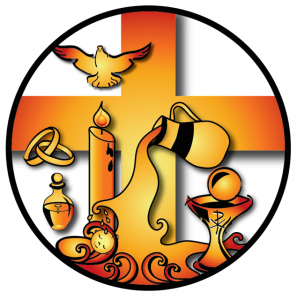
The signs of the sacraments can point us outward to things we get emotional about in our everyday lives.
Celebrations of Grace: The Sacraments of the Catholic Church, Part 5
Catholics through the ages have loved the sacraments, loved the grace, the closeness to God, they find in church. Other things that happen in our everyday lives, however, bring out in us more various and down-to-earth emotions.
We enjoy things, we suffer them, we endure them, we get wild about them, we feel bound by them, or we freely commit ourselves to them. When you look close enough, all these things that stir up such varied emotions in us turn out to be graces, too. Since the Second Vatican Council, all these graces outside the church building have come into clearer view. I believe the liturgy is playing a mostly subconscious role in this change. I want to focus on that role.
Vertical or horizontal emotions
I used to picture what sacraments do vertically. Sacraments lift us up out of the ordinariness of life with a unique grace and presence of God. So naturally we love the sacraments, but that can be a bit abstract. Now I imagine sacraments pointing in different directions first, and with that come emotions more concrete.
Sacraments point backward to ways God has been present all along in the world. That includes, as the leading instance, God’s presence in Jesus—the flesh-and-blood Jesus, living, toiling, and dying at a particular time in history. They point forward to what God is calling us to be, ultimately with the resurrected Jesus, who will come again. Sacraments point outward to the grace that is alive now in people and things all over God’s world.
Sacraments don’t just signify; they make present. All those things that the sacraments point to aren’t just ideas and memories. In a mystical way, as graces God is giving now, they are “really present.”
Liking the sacraments
The Second Vatican Council was a decisive event for the members of the Catholic Church. It made a lot of changes; many more things stayed the same. One really big difference concerns our attitude toward the world. The best expression the old attitude ever got was in a Catechism answer that I still know by heart:
God made me to know him, to love him, and to serve him in this world so that I can be happy with him forever in heaven.
Too often that would have translated (and still does) to finding no intrinsic value in this world. The Second Vatican Council opened the windows and doors of the Church to the world.
It’s like a change in orientation. We can look outward and backward and forward for the God who meets us everywhere. It’s not just in privileged spaces where we meet God who would draw us up and away.
We can see this change whenever we gather for liturgy, if we remember we are there to celebrate and when the signs of the liturgy are clear and powerful. That’s when the sacraments, our most visible encounter with the invisible God, become a way of meeting up with the real stuff—that means the grace—of everyday life, the things we enjoy, suffer, get wild about, fight if necessary, or serve with calm commitment. That’s when it’s especially easy for me to like the sacraments.
Think again:
Does the liturgy that you participate in feel like something that draws you away from everyday life? Prepares you for life? Celebrates your life? Challenges your life? What is it about the liturgy that does any of these things? Is it only the short homily that connects to your life, or do other signs and actions do so as well. What emotions does the liturgy press upon you.
Previous Post

July 14, 2019
Two HomiliesToday, and the One in Action was Better
Next Post
July 19, 2019 Learning about Sacramental Signs
Browse Our Archives
Select a Category Advent Christmas Amazon Synod Angels Being Consumed Bible Catholic Modern Creed Ecology Economics Elizabeth Johnson Eucharist Fragments and Filaments Gender and Sex Gospel of Mark Herzog Historical Jesus Liturgy Luke Opening Scriptures on Way to Emmaus Ordinary radicals Parables Pro-Life Reincarnation Rosary Sacraments science Social Justice Souls Stories of Jesus The Creed Torture and Eucharist Tracy Uncategorized War and Peace
Select a Month October 2026 June 2025 April 2025 March 2025 February 2025 January 2025 November 2024 July 2024 March 2024 December 2023 October 2023 September 2023 August 2023 May 2023 April 2023 March 2023 February 2023 January 2023 December 2022 November 2022 October 2022 September 2022 August 2022 July 2022 June 2022 April 2022 March 2022 February 2022 January 2022 December 2021 November 2021 October 2021 August 2021 July 2021 June 2021 April 2021 March 2021 February 2021 December 2020 November 2020 October 2020 August 2020 July 2020 June 2020 May 2020 April 2020 March 2020 February 2020 January 2020 December 2019 November 2019 October 2019 September 2019 August 2019 July 2019 June 2019 May 2019 April 2019 March 2019 February 2019 January 2019 December 2018 November 2018 October 2018 September 2018 August 2018 July 2018 June 2018 May 2018
Follow Us!
TAKE THE
Religious Wisdom Quiz
I am a ladder reaching to heaven with angels ascending and descending. What am I?
Select your answer to see how you score.
Heaven's gate Jacob's ladder The way to God A vision
Related posts from Lost in a One-Acre Wood

“Drink the Cup” – Liturgy Teaches Us Eucharistic...

Kneeling Through the Communion Rite: Now I Get...
Ministries in the Church, Momentum for Change, Again
Address the Prayer of the Faithful to God,...
TRENDING AT PATHEOS Catholic

The Parable Of The Sower And The Word...
One of Christ’s most famous parables is that of the sower who...

Rejecting Doom: Christian Hope And Human Action
Christianity is a religion of hope. We are to have hope and...

Why I Choose the Eucharist Over the Sermon
Choose the Eucharist, Not the Sermon What are we supposed to get...

5 Design Elements Found in Spiritually Rooted Homes
Putting Spirituality Into Home Decor Our homes are more than our living...

Credo: A Story of God Told with the...
About 10 years ago, I began to imagine a personal "Credo" that...

The Anatomy of Divine Revelation in Catholic Thought
The claim that God has made Himself known to human beings is...
view all Catholic blogs
Ad-Free & Subscriber Log-In Subscription Support
- About Us
- 2026 Calendar
- Videos
- Podcasts
- Library of World Religions
- Faith In Media Tracker
- Advertise With Us
- Write for Us
- Privacy Policy
- Terms of Service
- Do Not Sell My Data
- Contact Us
- Radiant Digital
- Manage Newsletter Subscriptions
- Unsubscribe From Notifications
- Sitemap
Copyright 2008-2026, Patheos. All rights reserved.
Subscription Support Ad-Free & Subscriber Log-In
Follow Patheos