
BuddhistCatholicContemplativeEvangelicalGeneral ChristianHinduJewishLatter-day SaintMuslimNew VisionsProgressive Christian
Beliefs
- Buddhist
- Catholic
- Contemplative
- Evangelical
- General Christian
- Hindu
- Jewish
- Latter-day Saint
- More Voices
- Muslim
- New Visions
- Pagan
- Progressive Christian
Topics
- Religion News
- Food and Religion
- Sports and Religion
- Religious Art
- Religious Music and Entertainment
- Religious Events
- History and Religion
- Style and Religion
- Politics and Religion
- Women in Religion
- Recreation Outdoors and Religion
- Business Finance and Religion
- Careers Workplace and Religion
- Education and Religion
- Family Parenting and Religion
- Health Fitness and Religion
- Home and Religion
- Relationships and Religion
- Technology and Religion
- Travel and Religion
Columnists
- Buddhist Columnists
- Business Finance and Religion Columnists
- Careers Workplace and Religion Columnists
- Catholic Columnists
- Contemplative Columnists
- Education and Religion Columnists
- Evangelists Columnists
- Family Parenting and Religion Columnists
- General Christian Columnists
- Health Fitness and Religion Columnists
- Hindu Columnists
- History and Religion Columnists
- Home and Religion Columnists
- Jewish Columnists
- More Voices Columnists
- Latter Day Columnists
- Muslim Columnists
- New Visions Columnists
- Nonreligious Columnists
- Pagan Columnists
- Politics and Religion Columnists
- Progressive Columnists
- Recreation Outdoors and Religion Columnists
- Relationships and Religion Columnists
- Religion News Columnists
- Religious Art Columnists
- Religious Events Columnists
- Religious Music and Entertainment Columnists
- Sports and Religion Columnists
- Style and Religion Columnists
- Technology and Religion Columnists
- Travel and Religion Columnists
- Women in Religion Columnists
Resource Library
- 2026 Calendar
- Library of World Religions
- The 100 Most Holy Places on Earth
- Patheos Answers
- Podcasts
- Videos
- Faith Leaders Database
- Anglican Episcopalian
- Bahai
- Baptist
- Buddhism
- Christianity
- Confucianism
- Eastern Orthodoxy
- Hinduism
- Holiness and Pentecostal
- ISKCON
- Islam
- Judaism
- Lutheran
- Methodist
- The Church of Jesus Christ of Latter-day Saints
- New Age
- Paganism
- Presbytarian and Reformed
- Protestantism
- Religion Behind the Scenes
- Roman Catholic
- Scientology
- Shia Islam
- Sikhism
- Sufism
- Sunni Islam
- Taoism
- Zen
- See all religions
Research Tools
 Ad-Free & Subscriber Log-In Subscription Support
Ad-Free & Subscriber Log-In Subscription Support
Follow Patheos 

- Trending:
- Forgiveness
- |
- Marriage
- |
- Consciousness
- |
- Death Penalty
- |
- Election
- |
- Halloween

- Home
- Catholic
- The Mystery that is Not Hidden in the Sacraments
The Mystery that is Not Hidden in the Sacraments
Last updated on: September 6, 2019 at 4:50 pm by Jack Hartjes
The Mystery that is Not Hidden in the Sacraments 2019-09-06T16:50:07-06:00 Jack Hartjes
Patheos Explore the world's faith through different perspectives on religion and spirituality! Patheos has the views of the prevalent religions and spiritualities of the world.
Celebrations of Grace: The Sacraments of the Catholic Church, Part 3
A reflection on the mystery of the sacraments can be about an entire world of mystery as well. The way we do sacraments expresses our understanding of the world and our place in it. Now, many years after the Second Vatican Council, you can read in the new shape of the Church’s sacramental celebrations an understanding of the world that we live in.
You can contrast that with the understanding that the Church’s public worship seemed to support before the changes that the Council brought. “Seemed” is an important word. I think the liturgy changed more than the Church’s theology.
Catholics always saw Christ’s action in the sacraments as pouring grace out into the world. To that picture the renewed liturgy makes a remarkable addition: the world itself is a place of grace. In the sacraments we celebrate the grace that God gives all the time and everywhere. This graced world is not a new idea in theology, but it’s a new thing for the Church’s liturgy to show it clearly.
Catholics also always knew that the world is a place of sin. Liturgy challenges the sin of the world, and the new shape of the liturgy makes that challenge clearer than before.
The work of the people
I have known and loved the Catholic sacraments before and after the Second Vatican Council. I knew a sense of mystery in the Latin Mass enacted on a distant high altar. But even before the Council the Church saw that it wasn’t enough. The people had to participate. Of course, interior disposition and understanding were important.
Our teachers in Catholic elementary school had already made sure we could follow the priest’s prayers in our English missals. We knew, or thought we knew, what was happening at every moment. Later, congregational singing became important, although often tentative and meek. But our parts were like decorations or teaching aids or prayer aids added to the real mystery. Then came the council, and we watched as the Church took one step after another toward fully integrating the whole assembly into an all-English liturgy in the literal meaning of that word: Liturgy means “work of the people.”
The larger mystery
Liturgy feels less mysterious than before since we have realized that liturgy is our work. But mystery is an even larger part of Christian life and worship. More than a presence hidden on a distant altar or under the forms of bread and wine, the mystery is a work in the midst of people. Our work is God’s work. Liturgy is brightly shining and close up. With its light we can see a dimension in ourselves and in our world that usually is hidden. God is present and active in our lives. Liturgy sends us into that mystery.
The sacramental light shining outward and what it can reveal about the graced, sinful world we live in is the guiding theme of these essays on the sacraments of the Catholic Church. I pay a lot attention to the grace that is before and around the sacraments. Sacraments are not the biggest parts of God’s grace, though of all graces they are the easiest to see.
Sacraments can teach us how to see more clearly. With their help a whole world of grace that we might easily miss can start catching our attention. I looked for the many ways sacraments can provide that help, and in doing so I found keys to greater understanding of the sacraments themselves. It’s not the only way, but it is one way of getting to the meaning and mystery of the sacraments. Each sacrament has its own message about graces God is always giving us.
I start the following meditations thinking about the sacraments in a general way. Then I look at the seven individual sacraments plus the sacrament of the visible Church and our relationship with Jesus, the original sacrament. After each section some questions invite you to “Think Again.”
You might also ask yourself:
- Do I agree or disagree with particular ideas in this post?
- Do I find a thought that challenges me to grow or change?
- What is missing that ought to be there?
We are not done with liturgical renewal when liturgists and church authorities have made their findings and decisions and all the decorations are in place and the rubrics down pat. Renewal happens every time priests, liturgical ministers, and committees work to make liturgy feel like a celebration of something and make the signs of the sacraments look like they mean something. Liturgical renewal happens also as people take another look at the mystery they are celebrating when they come to church. That includes the presence and work of God in their lives.
Image credit: A Desert Father via Google Images
Previous Post

July 8, 2019
Old Soul – Now I Know what it Means, Sadly
Next Post
July 12, 2019 A Good Liturgical Celebration Speaks Clearly. Believing it is what's hard.
Browse Our Archives
Select a Category Advent Christmas Amazon Synod Angels Being Consumed Bible Catholic Modern Creed Ecology Economics Elizabeth Johnson Eucharist Fragments and Filaments Gender and Sex Gospel of Mark Herzog Historical Jesus Liturgy Luke Opening Scriptures on Way to Emmaus Ordinary radicals Parables Pro-Life Reincarnation Rosary Sacraments science Social Justice Souls Stories of Jesus The Creed Torture and Eucharist Tracy Uncategorized War and Peace
Select a Month October 2026 June 2025 April 2025 March 2025 February 2025 January 2025 November 2024 July 2024 March 2024 December 2023 October 2023 September 2023 August 2023 May 2023 April 2023 March 2023 February 2023 January 2023 December 2022 November 2022 October 2022 September 2022 August 2022 July 2022 June 2022 April 2022 March 2022 February 2022 January 2022 December 2021 November 2021 October 2021 August 2021 July 2021 June 2021 April 2021 March 2021 February 2021 December 2020 November 2020 October 2020 August 2020 July 2020 June 2020 May 2020 April 2020 March 2020 February 2020 January 2020 December 2019 November 2019 October 2019 September 2019 August 2019 July 2019 June 2019 May 2019 April 2019 March 2019 February 2019 January 2019 December 2018 November 2018 October 2018 September 2018 August 2018 July 2018 June 2018 May 2018
Follow Us!
TAKE THE
Religious Wisdom Quiz
I am a period of seven years times seven, followed by a year of liberty and restoration. What am I?
Select your answer to see how you score.
A year of rest The Year of Jubilee The Sabbath year A holy year
Related posts from Lost in a One-Acre Wood

“Drink the Cup” – Liturgy Teaches Us Eucharistic...

Kneeling Through the Communion Rite: Now I Get...
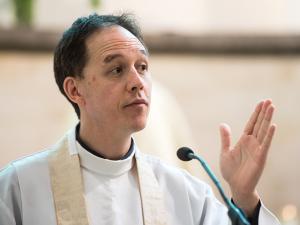
Ministries in the Church, Momentum for Change, Again
Address the Prayer of the Faithful to God,...
TRENDING AT PATHEOS Catholic

Creation, Preservation, and Teleology in Catholic Theology
As I write this, it is very early Monday morning. Like millions...

The Parable Of The Sower And The Word...
One of Christ’s most famous parables is that of the sower who...

Rejecting Doom: Christian Hope And Human Action
Christianity is a religion of hope. We are to have hope and...

Why I Choose the Eucharist Over the Sermon
Choose the Eucharist, Not the Sermon What are we supposed to get...

5 Design Elements Found in Spiritually Rooted Homes
Putting Spirituality Into Home Decor Our homes are more than our living...

Credo: A Story of God Told with the...
About 10 years ago, I began to imagine a personal "Credo" that...
view all Catholic blogs
Ad-Free & Subscriber Log-In Subscription Support
- About Us
- 2026 Calendar
- Videos
- Podcasts
- Library of World Religions
- Faith In Media Tracker
- Advertise With Us
- Write for Us
- Privacy Policy
- Terms of Service
- Do Not Sell My Data
- Contact Us
- Radiant Digital
- Manage Newsletter Subscriptions
- Unsubscribe From Notifications
- Sitemap
Copyright 2008-2026, Patheos. All rights reserved.
Subscription Support Ad-Free & Subscriber Log-In
Follow Patheos