
BuddhistCatholicContemplativeEvangelicalGeneral ChristianHinduJewishLatter-day SaintMuslimNew VisionsProgressive Christian
Beliefs
- Buddhist
- Catholic
- Contemplative
- Evangelical
- General Christian
- Hindu
- Jewish
- Latter-day Saint
- More Voices
- Muslim
- New Visions
- Pagan
- Progressive Christian
Topics
- Religion News
- Food and Religion
- Sports and Religion
- Religious Art
- Religious Music and Entertainment
- Religious Events
- History and Religion
- Style and Religion
- Politics and Religion
- Women in Religion
- Recreation Outdoors and Religion
- Business Finance and Religion
- Careers Workplace and Religion
- Education and Religion
- Family Parenting and Religion
- Health Fitness and Religion
- Home and Religion
- Relationships and Religion
- Technology and Religion
- Travel and Religion
Columnists
- Buddhist Columnists
- Business Finance and Religion Columnists
- Careers Workplace and Religion Columnists
- Catholic Columnists
- Contemplative Columnists
- Education and Religion Columnists
- Evangelists Columnists
- Family Parenting and Religion Columnists
- General Christian Columnists
- Health Fitness and Religion Columnists
- Hindu Columnists
- History and Religion Columnists
- Home and Religion Columnists
- Jewish Columnists
- More Voices Columnists
- Latter Day Columnists
- Muslim Columnists
- New Visions Columnists
- Nonreligious Columnists
- Pagan Columnists
- Politics and Religion Columnists
- Progressive Columnists
- Recreation Outdoors and Religion Columnists
- Relationships and Religion Columnists
- Religion News Columnists
- Religious Art Columnists
- Religious Events Columnists
- Religious Music and Entertainment Columnists
- Sports and Religion Columnists
- Style and Religion Columnists
- Technology and Religion Columnists
- Travel and Religion Columnists
- Women in Religion Columnists
Resource Library
- 2026 Calendar
- Library of World Religions
- The 100 Most Holy Places on Earth
- Patheos Answers
- Podcasts
- Videos
- Faith Leaders Database
- Anglican Episcopalian
- Bahai
- Baptist
- Buddhism
- Christianity
- Confucianism
- Eastern Orthodoxy
- Hinduism
- Holiness and Pentecostal
- ISKCON
- Islam
- Judaism
- Lutheran
- Methodist
- The Church of Jesus Christ of Latter-day Saints
- New Age
- Paganism
- Presbytarian and Reformed
- Protestantism
- Religion Behind the Scenes
- Roman Catholic
- Scientology
- Shia Islam
- Sikhism
- Sufism
- Sunni Islam
- Taoism
- Zen
- See all religions
Research Tools
 Ad-Free & Subscriber Log-In Subscription Support
Ad-Free & Subscriber Log-In Subscription Support
Follow Patheos 

- Trending:
- Forgiveness
- |
- Marriage
- |
- Consciousness
- |
- Death Penalty
- |
- Election
- |
- Halloween

- Home
- Catholic
- The New Catholic Left in the Turbulent 1960’s
The New Catholic Left in the Turbulent 1960’s
Last updated on: June 17, 2019 at 10:48 am by Jack Hartjes
The New Catholic Left in the Turbulent 1960’s 2019-06-17T10:48:48-06:00 Jack Hartjes
Patheos Explore the world's faith through different perspectives on religion and spirituality! Patheos has the views of the prevalent religions and spiritualities of the world.
The last post in the series on Catholic Modern by James Chappel.
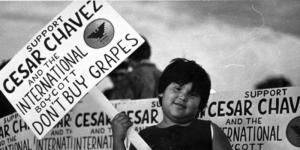
Catholics engaged in new forms of political activism in the 1960’s.
The turbulent 1960’s included the sexual revolution, feminism, the civil rights movement, worker uprisings, and the identification and rejection of Western Imperialism. These secular movements did not leave the Church untouched. In fact, the Second Vatican Council tried to respond to Pope John XXIII’s call to “open the windows” of the Church to the world. In this last chapter of Catholic Modern, James Chappel identifies a part of the Catholic response to new social realities that he calls the new “Catholic Left.”
The Church by now had gotten used to being modern in the sense of being responsible for a private space and giving up pretensions to rule in the public, political arena. Chappel covers three figures from three European countries who reimagined the relationship between religion and the public sphere. All were examples of the rising Catholic Left:
- Bernard Häring, a German priest, was at the forefront of Catholic moral thinking in light of the sexual revolution.
- Paul Vigneau, a French philosopher and trade unionist, advocated a new approach to the economy and labor activism.
- Frederich Heer, a journalist from Austria, influenced many other thinkers as they confronted racism, the “throne-and-altar” alliance, and the Holocaust. (p. 231)
Bernard Häring, authority, and the sexual revolution
Bernard Häring’s was a soldier in the German army and prisoner on the Eastern Front. His experience convinced him that overrating obedience to authority leads to disaster. After the war he became one of the Church’s leading moral theologians. He retained a place for law and obedience but rated responsibility and freedom of conscience higher. (p. 233)
Häring started out as part of the earlier movement that valued sex for more than procreation. Still, at that early stage he was conservative on today’s hot-button issues, including gender roles and contraception. In 1963 Pope John appointed to a commission to study whether the Church should change its stand on artificial means of birth control. Häring was a member of this commission. His work there included talking with Catholic couples about finding their way amid the vicissitudes of contemporary married life. In the end he helped author that commission’s majority report, allowing that the Church could reverse its prohibition of contraception. By that time a new pope, Paul VI, decided to go with the commission’s minority and the traditional view. In 1968 he published Humanae Vitae, reasserting the Church’s prohibition of artificial contraception.
At the time I was a college student at Catholic University in Washington, D.C., and caught up in that controversy. Students acquired a leaked copy of the papal commission’s minority and majority reports. When the pope reiterated the Church’s traditional teaching, it was no secret that he had rejected the view of a substantial majority. I believe it was 40 or 45 of the commission’s 50 members, some of whom were Paul’s own appointees.
Intention and responsibility
As I understood the debate, the difference came down to a biological versus a personalist view of sex. Did each act of intercourse need to be free of any deliberate attempt to interfere with its natural purposes, including procreation? Or did the long-term intentions of a conscientious man and women, to seek love and sexual fulfillment and raise a responsible number of children, determine the morality of their sex life as a whole?
The majority on the commission retained the Church’s rejection of a “contraceptive mentality” that places “personal pleasure over the holy meaning of sex.” What was new in the report was the responsibility handed over to married couoples. They would decide, “in dialogue with their priest and their conscience,”on the morality of contraception in their case. (p. 235)
Chappel doesn’t exaggerate when he says,
Soon after the release of Humanae Vitae [in 1968], Catholics around the world exploded in protest. (p. 236)
That protest included a statement of dissent prepared by Catholic University’s Charles Curran and eventually signed by over 500 theologians. Häring himself published critical essays in periodicals around the world. His focus was not on contraception itself but on the power of a small group of men versus the authority of a person’s conscience. (p. 237)
Another leading voice in the Church, Marie-Dominique Chenu, wrote to the French bishops,
It could be that Rome has lost, in a stroke, the authority that it took sixteen centuries to construct. (p. 236)
The Catholic Left and a crisis of authority
The Church was coming under increasing criticism for its past of anti-Semitism and its failure to condemn the Vietnam War. In Germany and elsewhere, lay Catholics and some parishes had been experimenting with new forms of ecumenism. Novel forms of socialism appealed to Catholic students as to their Protestant and secular colleagues. But
… it was only in the wake of 1968 that the Church became a site of genuine conflict, as a new generation of theologians, priests, laymen, and students laid claim to a Church that had, in their view, become too cozy with the establishment. (p. 238)
Although sympathetic with the Catholic Left, I believed, and still do, that the Church’s loss of authority was a loss for the world. Encouraged by theologians like Häring, many Catholics forged ahead of the Church leadership with anti-nuclear protests, poverty concerns, feminism, and environmentalism. But nothing like unity reestablished itself, even when bishops caught up and made progressive statements on these issues.
Paul Vignaux, revived fraternalism, and the economy
The focus on individual conscience in sexual matters moved Catholics away from paternalistic, top-down thinking. Fraternal modernism that had been part of the Catholic scene since the 1930’s got a new life. In economics Catholics directed that fraternal spirit toward the Catholic tradition of trade unionism, among other things.
Paul Vignaux was a veteran of 1930’s French fraternal modernism. A philosopher, he also founded France’s largest trade union of the time. Amid the rightward turn of the 1950’s, he wrote critically of the continent’s Christian Democratic parties. He thought that natural-law theories the Church inherited from the Middle Ages led Catholics to accept an unjust status quo. Drawing on a different strain of Medieval thought, he distinguished God’s absolute power from the patterns of the natural and social worlds. Without divine support for the way things always were, people would be free to craft their own history. Faith could offer resources to aid this process.
The Christian conscience, while it cannot provide a coherent politics, can provide a healthy dose of Christian realism. The world is fallen. No utopian kingdom is possible, but God has granted us the tools to improve our lot. (p. 242)
Vignaux’s Catholic Left vision criticized both Communists and Capitalists, finding contradictions in both systems. Communists had given up on realism while Capitalists refused to see the alienation and class conflict inherent in their system.
Trade unionism and civil rights
Vignaux’s leftist commitment to trade unionism was essentially Catholic Left. It rejected materialist metaphysics and calls for insurgency. He believed in more flexible means of defending the interests of the masses, of different races, and of underdeveloped overseas peoples. Instead of cooperation between Catholic and non-Catholic unions, Vignaux argued for abandoning any explicit Catholic identity. He would have a true pluralism that would welcome participation of all on issues independent of metaphysical beliefs. (p. 243)
It didn’t mean abandoning Catholic principles or Catholic influence. Union officials pointed out similarities with traditional Catholic social teaching. They noted a strong coincidence among a union’s new statutes, the U.N. Declaration of Human Rights, and John XXIII’s encyclical Pacem in Terris.
The example of non-violent Catholic Left union activism I am familiar with is the U.S. farm worker’s movement. In the 1960’s and 70’s Cesar Chavez led mostly migrant farm workers in efforts to unionize. He used non-violent means of boycotts and strikes, eventually winning the right of farm workers to organize. Grape and lettuce boycotts garnered enough support across the country to force owners to bargain with Chavez’ United Farmworkers Union. In a successful effort to keep his movement non-violent, and gain popularity for “la Causa,” Chavez endured several extended fasts.
Martin Luther King’s role in the U.S. civil rights movement is familiar to all. Less well-known is the activism of a Catholic priest in Milwaukee, Wisconsin, on behalf of people of color. Fr. James Groppi organized a long-running protest against segregation in housing in Milwaukee. He organized an all-black group called the Milwaukee Commandos to guarantee that the demonstrators remained non-violent. His efforts led to the passing of an open-housing law in the city. Later a similar “Fair Housing Act” was enacted for the country.
These and similar Catholic Left movements in Europe, Chappel says, demonstrated a Catholic spirit of “experimental, collaborative, and democratic socialism.” (p. 247)
Friedrich Heer and political theologies and the weakness of the Church’s a-political modernism
It doesn’t seem that the Catholic Church has ever succeeded in keeping itself out of politics, either in support or in opposition to current regimes. Modernism does keep the Church, but not individual members, away from the levers of power. But, whether teaching or lobbying or imposing sentences of excommunication on politicians, priests and bishops do seek to influence governments. Still, the Church seems reconciled to exercising religious authority in the private realm where souls are fed and consciences formed. Bishops speak authoritatively on the morality of an issue and leave political applications and resolution of conflicting values to individual voters and politicians. Unfortunately, they also fudge that distinction by paying much more attention to some issues than others.
On the whole, then, it seems that politics and religion are supposed to inhabit somewhat separate spheres. On that assumption, political theology would be an oxymoron. But since the 1960’s, at least in some quarters, several forms of political theology have risen and proved influential. Taking the name “liberation,” they find Christianity has something to say wherever there is oppression, including:
- Economic and political oppression in the global South and East and in poor areas of rich countries,
- Racist oppression against any of the various peoples of color,
- Sexist oppression of women and sexual minorities,
- Even the oppression of nature and the earth
So we have the Catholic Left theorizing by way of environmental theology, feminist theology, black and Latino theology. All of these, and others, fall under the umbrella of liberation theology. Liberation, more than growth, becomes the way to justice. The 1950’s imagined justice would come about through economic development in the Capitalist system. Catholic theologians like Gustavo Gutierrez, the Latin American father of liberation theology, and Johann Bapatiste Metz in Germany disagreed. They realized that development was merely further empowering global elites. (p. 248) Chappel traces the roots of liberationist ideas to an Austrian named Friedrich Heer.
Owning up to the past and engaging the present
The Catholic Left was equally critical of the United States and the Soviet Union. Heer argued that both were engaged in “bringing the world under unprecedented forms of domination.” (p. 249) There was a utopian element in Heer’s thinking, an imagination which he drew from Teilhard de Chardin that the world was entering a new age beyond nationalism and the “Christian West.” More practically, he proposed that the Church take on a culture of encounter and collaboration with atheists and socialists. He saw Church history as a constant evolution and incorporation of the insights of every culture it met, including its enemies. All this was even before the 1950’s had gotten a good start.
In the 1950’s Heer criticized the Church for its preoccupation with sexual matters when it should have been finding the kernels of Christian truth in the modern currents of existentialism, psychoanalysis, and Marxism. (p. 250-51) Like Metz after him, he thought the Church had to own up to its past sins, especially anti-Semitism. He believed the Church could find its proper path forward and even recover elements of its own tradition in dialogue with two famous Jews, Marx and Freud. (p. 253-54)
With Freud, especially, Heer saw a difficult road ahead. He believed Catholic modernism involved an unresolved relationship with God the Father. It wasn’t God the Father’s fault but Catholics’ own neurosis. Their Church was a bureaucracy “stocked with father figures calling for unqualified deference.” In the midst of complicity with the world’s violence and unfilled potential, Catholic confessionals heard petty sins, sins of sex and of the flesh. (p. 254)
In the 1960’s the Church made a start at confronting its anti-Semitism. Vatican II’s Nostra Aetate declared the Jewish people as a whole innocent of the death of Jesus, removing any theological basis for discrimination against Jews. It did not clearly reject the goal of converting the Jews, but that would come later. Vatican II embraced freedom of religion, but that was in opposition to, rather than dialogue with, atheists and the secular world. (op. 252)
Memory and guilt, where politics and religion meet
In the late 1960’s German theologian Johann Baptist Metz was getting worldwide attention, including from some of us divinity students at Catholic University. According to him, “the faith, by restricting itself to a narrow private sphere, had abandoned the revolutionary spirit of Christ.” He did not want to go back to a near synthesis of Church and state as in the Middle Ages. But he was not content to leave explicitly Christian reasoning out of political debates. That reasoning, political and Christian, would take the form of memory:
Memory of Christ’s sympathy with the poor but also and especially the memory of Christianity’s Jewish roots, the Church’s turn toward anti-Semitism, and the great horror of Auschwitz. (p. 249)
Heer had previously put memory and guilt in central places in the Church’s life in the world. He believed Nazism was not a momentary aberration but something European history led naturally to. (p. 251) He wrote:
Catholicism will become believable again only when it takes its place squarely in the world’s solidarity in guilt.
And
Today it is our duty to ask if there is a bit of Eichmann in each of us. (p. 252)
Today there are Catholics taking a stand for and refugees, the environment, indigenous peoples and other minorities, oppressed people of every sort. Chappel says Heer pointed the way forward for this Catholic Left idealism. In Heer’s words, the Church would validate “global responsibility, love, sex, fraternity, political partnership, national and international responsibility, humanity, [and] universal mankind.”(p. 255)
Legacies of the Catholic Left and Catholic modernism generally
In this last chapter Chappel has explored the paths of fraternal Catholic modernism, the Catholic Left. The paternal, more conservative variety, he assumes, is well enough known and experienced. Chappel’s obvious preference, and mine, is for fraternal Catholicism. Whether the modernism part is adequate for the future is another question I have. Liberation theologians may yet find a way to deal with that.
Fraternalism “has found expression in all manner of lay movements since Vatican II, and in the papacy of Pope Francis,” Chappel says. (p. 255) In Laudato Si, Francis says nothing about sexual decadence but criticizes the consuming family, a favorite institution since the 1950’s. (p. 256) But paternal Catholic modernism has also been “a path to social justice…. It has served Catholics well … with a compelling and plausible interpretation of their political and social environment.” (p. 256)
Chappel’s main lesson concerns the survival of the Church in any form in the 20th century. Confronted with huge challenges it was not at all obvious that it would be able to navigate the world’s transition to modernity. It did so with the help of Catholic intellectuals, “primarily among the laity,” who addressed the modern world out of one part or another of a long Catholic history and tradition. Chappel concludes,
Catholic modernism has been a force for good, and a force for evil, but above all it has been a force that mattered…. It will be a force that matters in the future, too. (p. 258)
Image credit: Colorlines via Google Images
Previous Post

June 14, 2019
Catholic Consensus in the Consumer Society of the ‘Long 1950’s’
Next Post
June 19, 2019 Minnesota was Fourth State to Make Juneteenth State Holiday
Browse Our Archives
Select a Category Advent Christmas Amazon Synod Angels Being Consumed Bible Catholic Modern Creed Ecology Economics Elizabeth Johnson Eucharist Fragments and Filaments Gender and Sex Gospel of Mark Herzog Historical Jesus Liturgy Luke Opening Scriptures on Way to Emmaus Ordinary radicals Parables Pro-Life Reincarnation Rosary Sacraments science Social Justice Souls Stories of Jesus The Creed Torture and Eucharist Tracy Uncategorized War and Peace
Select a Month October 2026 June 2025 April 2025 March 2025 February 2025 January 2025 November 2024 July 2024 March 2024 December 2023 October 2023 September 2023 August 2023 May 2023 April 2023 March 2023 February 2023 January 2023 December 2022 November 2022 October 2022 September 2022 August 2022 July 2022 June 2022 April 2022 March 2022 February 2022 January 2022 December 2021 November 2021 October 2021 August 2021 July 2021 June 2021 April 2021 March 2021 February 2021 December 2020 November 2020 October 2020 August 2020 July 2020 June 2020 May 2020 April 2020 March 2020 February 2020 January 2020 December 2019 November 2019 October 2019 September 2019 August 2019 July 2019 June 2019 May 2019 April 2019 March 2019 February 2019 January 2019 December 2018 November 2018 October 2018 September 2018 August 2018 July 2018 June 2018 May 2018
Follow Us!
TAKE THE
Religious Wisdom Quiz
Who said: "Anyone who listens to the word but does not do what it says is like someone who looks at his face in a mirror"?
Select your answer to see how you score.
James Paul Jesus Peter
Related posts from Lost in a One-Acre Wood
Catholic Consensus in the Consumer Society of the ‘Long...
Christian Democrats. The Center-Right Post-War Years
Pluralism, Anti-Fascism, and Fraternal Catholic Modernism, 1929-1944

Anti-Communism, Human Rights, and Paternal Catholic Modernism, 1929-1944
TRENDING AT PATHEOS Catholic

Rejecting Doom: Christian Hope And Human Action
Christianity is a religion of hope. We are to have hope and...

It’s What Comes From Within Which Matters
One of the most difficult things for us to understand is why...

Why I Choose the Eucharist Over the Sermon
Choose the Eucharist, Not the Sermon What are we supposed to get...

5 Design Elements Found in Spiritually Rooted Homes
Putting Spirituality Into Home Decor Our homes are more than our living...

Credo: A Story of God Told with the...
About 10 years ago, I began to imagine a personal "Credo" that...

The Anatomy of Divine Revelation in Catholic Thought
The claim that God has made Himself known to human beings is...
view all Catholic blogs
Ad-Free & Subscriber Log-In Subscription Support
- About Us
- 2026 Calendar
- Videos
- Podcasts
- Library of World Religions
- Faith In Media Tracker
- Advertise With Us
- Write for Us
- Privacy Policy
- Terms of Service
- Do Not Sell My Data
- Contact Us
- Radiant Digital
- Manage Newsletter Subscriptions
- Unsubscribe From Notifications
- Sitemap
Copyright 2008-2026, Patheos. All rights reserved.
Subscription Support Ad-Free & Subscriber Log-In
Follow Patheos