
BuddhistCatholicContemplativeEvangelicalGeneral ChristianHinduJewishLatter-day SaintMuslimNew VisionsProgressive Christian
Beliefs
- Buddhist
- Catholic
- Contemplative
- Evangelical
- General Christian
- Hindu
- Jewish
- Latter-day Saint
- More Voices
- Muslim
- New Visions
- Pagan
- Progressive Christian
Topics
- Religion News
- Food and Religion
- Sports and Religion
- Religious Art
- Religious Music and Entertainment
- Religious Events
- History and Religion
- Style and Religion
- Politics and Religion
- Women in Religion
- Recreation Outdoors and Religion
- Business Finance and Religion
- Careers Workplace and Religion
- Education and Religion
- Family Parenting and Religion
- Health Fitness and Religion
- Home and Religion
- Relationships and Religion
- Technology and Religion
- Travel and Religion
Columnists
- Buddhist Columnists
- Business Finance and Religion Columnists
- Careers Workplace and Religion Columnists
- Catholic Columnists
- Contemplative Columnists
- Education and Religion Columnists
- Evangelists Columnists
- Family Parenting and Religion Columnists
- General Christian Columnists
- Health Fitness and Religion Columnists
- Hindu Columnists
- History and Religion Columnists
- Home and Religion Columnists
- Jewish Columnists
- More Voices Columnists
- Latter Day Columnists
- Muslim Columnists
- New Visions Columnists
- Nonreligious Columnists
- Pagan Columnists
- Politics and Religion Columnists
- Progressive Columnists
- Recreation Outdoors and Religion Columnists
- Relationships and Religion Columnists
- Religion News Columnists
- Religious Art Columnists
- Religious Events Columnists
- Religious Music and Entertainment Columnists
- Sports and Religion Columnists
- Style and Religion Columnists
- Technology and Religion Columnists
- Travel and Religion Columnists
- Women in Religion Columnists
Resource Library
- 2026 Calendar
- Library of World Religions
- The 100 Most Holy Places on Earth
- Patheos Answers
- Podcasts
- Videos
- Faith Leaders Database
- Anglican Episcopalian
- Bahai
- Baptist
- Buddhism
- Christianity
- Confucianism
- Eastern Orthodoxy
- Hinduism
- Holiness and Pentecostal
- ISKCON
- Islam
- Judaism
- Lutheran
- Methodist
- The Church of Jesus Christ of Latter-day Saints
- New Age
- Paganism
- Presbytarian and Reformed
- Protestantism
- Religion Behind the Scenes
- Roman Catholic
- Scientology
- Shia Islam
- Sikhism
- Sufism
- Sunni Islam
- Taoism
- Zen
- See all religions
Research Tools
 Ad-Free & Subscriber Log-In Subscription Support
Follow Patheos 

- Trending:
- Advent
- |
- Forgiveness
- |
- Thanksgiving
- |
- Election
- |
- Seasonal Holidays
- |
- Marriage

- Home
- Catholic
- A New Christendom Fails to Challenge the State
A New Christendom Fails to Challenge the State
Last updated on: April 22, 2023 at 7:52 am by Jack Hartjes
A New Christendom Fails to Challenge the State 2023-04-22T07:52:55-06:00 Jack Hartjes
Patheos Explore the world's faith through different perspectives on religion and spirituality! Patheos has the views of the prevalent religions and spiritualities of the world.
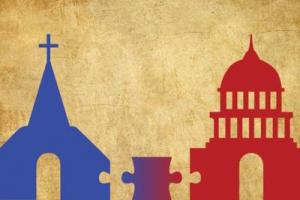
Separate spheres for church and state was a hallmark of the New Christendom. As an ideology it left the Church in Chile too weak to respond to abuses of state power.
My last post on Chapter Three of Torture and Eucharist saw William Cavanaugh’s exposition and critique of Catholic Action. This was the early- and mid-20th-century response of the Church to new, secular, social and political realities. It grew out of a vision of the Church as a New Christendom. In the former Christendom the Church had wielded more secular power than modern states could tolerate.
Catholic theologians, like Jacques Maritain, whom I knew as a leading voice in the pre-Vatican II Church, laid the theoretical foundations for this New Christendom. They welcomed the modern movement toward de-sacrilizing the state. It left the Church free, presumably, to operate in its area of expertise, the things of the spirit. The state would take care of bodily needs and leave the soul to the Church. The state would be competent in its realm, but – so the thinking went – that realm was subordinate to the spiritual. Maritain envisioned two planes, with the spiritual above the material as the eternal transcends the temporal.
On Chapter Four of Torture and Eucharist: Theology, Politics, and the Body of Christ. Seventh in the series on William T. Cavanaugh. He is a Catholic theologian who writes about the Church and its role in culture, politics, and economics. Introduction to Cavanaugh and links to blogs in the series as they appear are here.
Cavanaugh’s criticism of Maritain
That Cavanaugh takes the well-respected Jacques Maritain to task, even if respectfully, surprised me. Cavanaugh says he drew the Church out of one false self-image and into another. With Maritain, among others, the Church correctly forswore its earlier direct involvement in the matters of the state. Unfortunately, in Cavanaugh’s estimation the Church gave away too much.
The Church would form the consciences of Christians. They would take that morality into politics, the workplace, the family, and every other stage where life is lived. The Christian influence would be through persuasion, reasoning toward positive, secular goals with secular, not theological, arguments. That was thought to be only fitting for the laity, whose expertise was, supposedly, in secular, not spiritual affairs. Their job was to realize, not the Kingdom of God on earth, but the temporal, secular common good. (p. 170)
For many in Latin America, who became aware of the Bible’s and the Church’s commitment to social justice, it was a progressive stand. More accurately, however, the supra-political stance of the Church, its self-described lack of competence in worldly affairs, could turn to the advantage of whoever was in power. By the 1960’s liberation theologian Gustavo Gutierrez claimed the New Christendom was only upholding the status quo. (p. 178-79) When that status quo became diabolic under Pinochet, the Church, having given up so much bodily territory to the state, found it hard to respond.
Church as body and ‘contrast society’
A true understanding of the Church, Cavanaugh says, does not give territory away as the New Christendom did. The Church is a social body in its own right and a “contrast society” in the face of the state. (p. 180) The Church has
its own bodily performances, its own “politics,” its own set of social practices which are neither purely otherworldly nor reducible to some “purely temporal” discourse.” (p. 181)
A traditional saying has it that the Church is “in the world but not of the world.” Maritain, says Cavanaugh, tended to see the Church as neither in nor of the world but dwelling in souls, the realm of the spirit. Really, the Church is both in and of the world if “of” means composed of the world’s stuff. In the usual translation, Jesus says, “My kingdom is not of this world.” But a better translation is “not from this world.” In Cavanaugh’s words, “Jesus’ kingly authority comes from God.” (p. 184) Far from separating salvation from efforts to change the world, God’s authority challenges worldly authorities.
Human rights and the Gospel
Human rights became an important theme in the 20th century, and the Church found that the Gospels “inspire” the push for human rights. But that human-rights language had “little apparent effect on the Pinochet regime.” (p. 187) And the Church had difficulty convincing regime apologists that it should have more. Cavanaugh explains:
… true rights emerge only from particular tradition-formed communities….
That is, not from some soul-like recesses of each individual. If the Church lives only in the interior of the soul, then only the state is left to be that right-establishing community.
Jesus’ conflict with the Pharisees over paying tax to Caesar confirms that the Kingdom of God is more than an interior disposition of the soul. How, otherwise, could there even be a conflict? One of the ways Maritain goes wrong is in paying almost no attention to the actual incarnational, in-the-body and in-the-community life of Jesus. (p. 185)
Freedom of Religion and Catholics in Enlightenment England
One consequence of the Enlightenment in England was the recognition of the human right to have one’s own religious beliefs. John Locke, whose political theory greatly influenced American Democracy, proposes
… that the state cannot coerce religious belief because it is a matter of the internal conscience. But for the very same reason he flatly denied the social nature of the church…. (p. 191)
Interestingly, Catholics did not share in this freedom of religion. The Toleration Act of 1689 excluded Catholics “because they had as yet refused to interiorize the church and transfer their ultimate loyalty to the sovereign.” (p. 192)
Catholics at that time were still a risk to the state, and state-sponsored human rights are tied to the states’ own security. When the state manages to interiorize the Church, or the Church interiorizes itself, the risk from the Church disappears. Maritain declares that the Church’s plane is higher than the states and the only true sovereign is God. But
once the church has been individualized and eliminated as Christ’s body in the world, only the state is left to impersonate God. (p. 193)
From New Christendom to where?
Chile in the Pinochet years is an especially hideous example that explains why a Church that is only the soul of society fails to be even that. The answer is not a return to the old Christendom and a Church that exercises the physical, coercive power typical of states. The Church
… must reclaim not only its body but its soul from the state, and institute a discipline which is truly Christlike – a power based in compassion and martyrdom, suffering and reconciliation.” (p. 197)
The Church’s disciplines, including the sacraments and good works, are peaceful soul-body practices that can counteract the violent soul-body practices of the state. In this way the Church enacts the Body of Christ. That is the subject of Cavanaugh’s next chapter. One of the things I learn there is to distinguish “True Body” from “Mystical Body” as they relate to the Church and the Eucharist.
Image credit: Vermilion via Google Images
Previous Post

May 11, 2019
Minnesota Bishops’ Integral Ecology Document Disappoints
Next Post
May 15, 2019 The Mystical Body and the True Body of Christ
Browse Our Archives
Select a Category Advent Christmas Amazon Synod Angels Being Consumed Bible Catholic Modern Creed Ecology Economics Elizabeth Johnson Eucharist Fragments and Filaments Gender and Sex Gospel of Mark Herzog Historical Jesus Liturgy Luke Opening Scriptures on Way to Emmaus Ordinary radicals Parables Pro-Life Reincarnation Rosary Sacraments science Social Justice Souls Stories of Jesus The Creed Torture and Eucharist Tracy Uncategorized War and Peace
Select a Month November 2026 October 2026 June 2025 April 2025 March 2025 February 2025 January 2025 November 2024 July 2024 March 2024 December 2023 October 2023 September 2023 August 2023 May 2023 April 2023 March 2023 February 2023 January 2023 December 2022 November 2022 October 2022 September 2022 August 2022 July 2022 June 2022 April 2022 March 2022 February 2022 January 2022 December 2021 November 2021 October 2021 August 2021 July 2021 June 2021 April 2021 March 2021 February 2021 December 2020 November 2020 October 2020 August 2020 July 2020 June 2020 May 2020 April 2020 March 2020 February 2020 January 2020 December 2019 November 2019 October 2019 September 2019 August 2019 July 2019 June 2019 May 2019 April 2019 March 2019 February 2019 January 2019 December 2018 November 2018 October 2018 September 2018 August 2018 July 2018 June 2018 May 2018
Follow Us!
TAKE THE
Religious Wisdom Quiz
Who is considered the ideal wife and mother in Proverbs?
Select your answer to see how you score.
Mary Magdalene The Proverbs 31 woman Martha Eve
Related posts from Lost in a One-Acre Wood
“Drink the Cup” – Liturgy Teaches Us Eucharistic...
Holy Thursday Theology and the Scientific Quest for...
Kneeling Through the Communion Rite: Now I Get...
Economic Scarcity and Eucharistic Abundance: Two Stories about...
TRENDING AT PATHEOS Catholic

How Discretion Guides Us Away From Extremes
Prudence is an important virtue for all of us. While we should...

Bad Survey Questions Distort Eucharistic Theology
It seems to be the newest thing: someone conducts a bad survey...

If Baptism Washes Away Sin, Why Do Catholics...
The seven sacraments stand as the foundation of Catholic ecclesial life. The...

The Power of Setting a Good Example
Remember last August when the Chicago White Sox hosted a "Pope Hat...

A Catholic Critique of Biblical Unitarianism
If the statistics are to be believed, Unitarianism is rising worldwide. Although...

How Grandma Tourism Helps Grandparents Live Their Vocation
Grandma, The New Travel Influencer What started as a nostalgia-inspired social media...
view all Catholic blogs
Ad-Free & Subscriber Log-In Subscription Support
- About Us
- 2026 Calendar
- Videos
- Podcasts
- Library of World Religions
- Faith In Media Tracker
- Advertise With Us
- Write for Us
- Privacy Policy
- Terms of Service
- Do Not Sell My Data
- Contact Us
- Radiant Digital
- Manage Newsletter Subscriptions
- Unsubscribe From Notifications
- Sitemap
Copyright 2008-2026, Patheos, part of the Radiant Digital network of media brands. All rights reserved.
Subscription Support Ad-Free & Subscriber Log-In
Follow Patheos