
BuddhistCatholicContemplativeEvangelicalGeneral ChristianHinduJewishLatter-day SaintMuslimNew VisionsProgressive Christian
Beliefs
- Buddhist
- Catholic
- Contemplative
- Evangelical
- General Christian
- Hindu
- Jewish
- Latter-day Saint
- More Voices
- Muslim
- New Visions
- Pagan
- Progressive Christian
Topics
- Religion News
- Food and Religion
- Sports and Religion
- Religious Art
- Religious Music and Entertainment
- Religious Events
- History and Religion
- Style and Religion
- Politics and Religion
- Women in Religion
- Recreation Outdoors and Religion
- Business Finance and Religion
- Careers Workplace and Religion
- Education and Religion
- Family Parenting and Religion
- Health Fitness and Religion
- Home and Religion
- Relationships and Religion
- Technology and Religion
- Travel and Religion
Columnists
- Buddhist Columnists
- Business Finance and Religion Columnists
- Careers Workplace and Religion Columnists
- Catholic Columnists
- Contemplative Columnists
- Education and Religion Columnists
- Evangelists Columnists
- Family Parenting and Religion Columnists
- General Christian Columnists
- Health Fitness and Religion Columnists
- Hindu Columnists
- History and Religion Columnists
- Home and Religion Columnists
- Jewish Columnists
- More Voices Columnists
- Latter Day Columnists
- Muslim Columnists
- New Visions Columnists
- Nonreligious Columnists
- Pagan Columnists
- Politics and Religion Columnists
- Progressive Columnists
- Recreation Outdoors and Religion Columnists
- Relationships and Religion Columnists
- Religion News Columnists
- Religious Art Columnists
- Religious Events Columnists
- Religious Music and Entertainment Columnists
- Sports and Religion Columnists
- Style and Religion Columnists
- Technology and Religion Columnists
- Travel and Religion Columnists
- Women in Religion Columnists
Resource Library
- 2026 Calendar
- Library of World Religions
- The 100 Most Holy Places on Earth
- Patheos Answers
- Podcasts
- Videos
- Faith Leaders Database
- Anglican Episcopalian
- Bahai
- Baptist
- Buddhism
- Christianity
- Confucianism
- Eastern Orthodoxy
- Hinduism
- Holiness and Pentecostal
- ISKCON
- Islam
- Judaism
- Lutheran
- Methodist
- The Church of Jesus Christ of Latter-day Saints
- New Age
- Paganism
- Presbytarian and Reformed
- Protestantism
- Religion Behind the Scenes
- Roman Catholic
- Scientology
- Shia Islam
- Sikhism
- Sufism
- Sunni Islam
- Taoism
- Zen
- See all religions
Research Tools
 Ad-Free & Subscriber Log-In Subscription Support
Ad-Free & Subscriber Log-In Subscription Support
Follow Patheos 

- Trending:
- Forgiveness
- |
- Marriage
- |
- Consciousness
- |
- Death Penalty
- |
- Election
- |
- Halloween

- Home
- Catholic
- Minnesota Bishops’ Integral Ecology Document Disappoints
Minnesota Bishops’ Integral Ecology Document Disappoints
Last updated on: May 11, 2019 at 6:24 am by Jack Hartjes
Minnesota Bishops’ Integral Ecology Document Disappoints 2019-05-11T06:24:30-06:00 Jack Hartjes
Patheos Explore the world's faith through different perspectives on religion and spirituality! Patheos has the views of the prevalent religions and spiritualities of the world.
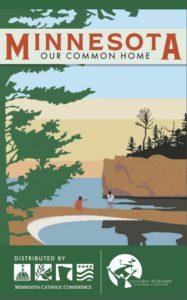
Minnesota Bishops published this document in early 2019.
I’ve been posting about the response of the bishops of Chile to the oppression of the Chilean people under the Pinochet regime. This post is about another emergency and another group of bishops. Now it’s in the U.S. state of Minnesota. Here the bishop’s response to the way we oppress the natural world comes in a document advocating an integral ecology. “Minnesota, Our Common Home” it’s theologically profound, but, Like the initial actions of the Chilean bishops, it’s also timid, weak, and limited to generalities.
The Catholic Church in Chile eventually had the courage to act forcefully, naming and condemning specific individuals and abuses. Future posts will show the role the bishops and the Church played in Pinochet’s downfall in 1990 after 17 years in power. We don’t have that much time to solve the ecology crisis. The Catholic Church, worldwide and in the U.S., knows that and is responding. As a Minnesota Catholic, I look to my bishops for more forceful action.
Excellent background for environmental concern, but it’s very late
Integral ecology is a theme in Pope Francis’ second encyclical, Laudato Si. The bishops refer to his publication throughout their statement. I want to commend them for taking on this issue. I received this document in February as a participant in the lobbying action “Catholics at the Capitol.” Calling for an integral ecology, the document looks at the big picture of humankind’s relationship to nature. It explains well why Christians especially should be concerned for the health of the planet—God’s gift and our common home.
Unfortunately, the devil, as they say, is in the details; and it’s there that “Minnesota, Our Common Home” falls short. A few quotes will show both the lofty tone of the document and what it leaves out.
INTRODUCTION
- Cooperation, not domination, is at the heart of our call ‘to till and to keep’ the garden of creation…. Ecological concern is … no longer optional or a secondary aspect of our faith.
Part 1, A CRISIS OF NATURE
- We … tend to experience a profound alienation from our own ‘embodiedness.’ … We lost a sense of our own interconnectedness.
- Technology is not morally neutral…. The … logic of technology is seductive and, if unchecked, quickly starts to dominate everything.
- We need a complete transformation—a conversion to an ecological vision of the human person, creation, and Creator.
- A technological worldview is blind to the intrinsic value of things, seeing only what is advantageous.
- The ecological crisis is certainly urgent, but it is also a symptom of something deeper: the need to recover a strong sense of the nature of things and to see once more that creation is not a blank canvas but God’s work of art. We are nature’s stewards, not its masters.
Part 2, ECOLOGICAL CONVERSION
- We are woven into the fabric of creation…. There is no such thing as a solitary human person.
- The task of stewardship is not a burden arbitrarily imposed on us, but a response to the love and mercy that God has poured into our lives.
- We must learn to see the created world as God sees it, and to treat created things with the reverence due to God’s design.
Part 3, INTEGRAL ECOLOGY
- The natural ecology and the human ecology comprise one unified reality. … Each is dependent on the other.
In this last part the bishops get a little more specific. They turn to three areas of concern to Minnesotans and integral ecology. They speak of the need to “cherish and protect” natural resources. A section on agriculture lauds farmers’ markets and small-scale, sustainable farming. It opposes “practices that harm the environment, farming communities, and consumers.” The bishops are most specific in addressing “an ecological view of the human person.” Integral ecology, they assert, includes accepting and caring for our bodies as masculine and feminine. They decry contraception as unnatural and gender theory as ideological colonization. They name assisted suicide as one of the chief ways our distorted dominion over nature expresses itself.
As a philosophical and theological foundation for the proper way to relate to the earth, this document works. Unfortunately, that was a task for about four or five decades ago. You don’t pause to wonder “Why am I doing this?” in the middle of a hard-fought campaign. That is where we are in the worldwide campaign to save the earth for future generations. In fact, we are at the crucial point, and we are losing.
A missed opportunity
This Minnesota bishops’ document on integral ecology is a missed opportunity in a number of ways. It fails to address major environmental issues and the skepticism about established science that still exists, including in Minnesota. While Pope Francis calls care for our common home a pro-life issue, the bishops never make that connection. That would have appealed to many Minnesota Catholics. Francis is clear that political action is an important part, though not all, of a Christian response to environmental crisis. Politics doesn’t appear in “Common Home.”
I read the document without noticing anything like a sense of urgency in it. A final section proposes that
our ecology, derived first and foremost from love for the Creator, need never be worried or anxious—whether over greenhouse gases, apocalyptic weather events, or even our own extinction—but always filled with hope…. No crisis that we face is greater than the sovereign Providence of God, who draws everything in love to Himself.
Obviously the bishops didn’t mean to say we can relax our ecological vigilance, but compare this statement with Laudato Si:
Doomsday predictions can no longer be met with irony or disdain. We may well be leaving to coming generations debris, desolation and filth. The pace of consumption, waste and environmental change has so stretched the planet’s capacity that our contemporary lifestyle, unsustainable as it is, can only precipitate catastrophes, such as those which even now periodically occur in different areas of the world. The effects of the present imbalance can only be reduced by our decisive action, here and now. (#161)
A step back
By comparison with Laudato Si, this document is a step back when it could have been a step ahead. Climate change, which takes up five pages in Laudato Si, here gets only a footnote. The bishops could have said, to a state where doubters are still a vocal minority, human-caused climate change is real.
Species extinction, happening at possibly 1000 times the natural rate, gets no mention at all. “Before a thing is useful, a thing is, and its existence is good,” the bishops state. We hear nothing about the value of keeping “a thing” from going extinct or the danger such rapid loss of biodiversity poses to ecological systems.
The bishops treat agriculture, an important part of Minnesota life, without mentioning the very live issues of soil erosion and water pollution from agricultural runoff. Live responsibly is about the extent of the solutions the bishops offer on any issue.
What role for the Church?
Thinking back to those bishops in Chile dealing with an oppressive state—the question they wrestled with arises here too. What is the Church’s proper role in the secular world? Shouldn’t the bishops be shepherding souls instead of dabbling in politics, and economics? The answer, the Chilean bishops learned, is that the Church’s business is not souls but people. When the people suffered, including in their bodies, it was the Church in Chile that suffered; and the Church had the duty to respond.
We do not exist as souls who happen to have bodies. So too we do not exist as individuals who happen to have a world of other people and things. As the bishops state, everything is interconnected. When the environment suffers, the Church suffers. Whatever benefits or harms come to the earth the coming Kingdom of God notices. Pope Saint John Paul II knew that nothing in politics or economics is beyond the Church’s area of concern. This is from “The Ecological Crisis: A Common Responsibility, January 1, 1990:
The right to a safe environment is ever more insistently presented today as a right that must be included in an updated Charter of Human Rights.
It must also be said that the proper ecological balance will not be found without directly addressing the structural forms of poverty that exist throughout the world. (Sections 9 and 11)
“Minnesota, Our Common Home,” a collaborative effort of many parties, is a collaboration with God’s Kingdom and our earthly home. It will surely help some Minnesotans. But what it offers is too little; and it’s really very late.
Image credit: Minnesota Catholic Conference
Previous Post

May 8, 2019
Catholic Action and the Ecclesiology of a Disappearing Church
Next Post
May 13, 2019 A New Christendom Fails to Challenge the State
Browse Our Archives
Select a Category Advent Christmas Amazon Synod Angels Being Consumed Bible Catholic Modern Creed Ecology Economics Elizabeth Johnson Eucharist Fragments and Filaments Gender and Sex Gospel of Mark Herzog Historical Jesus Liturgy Luke Opening Scriptures on Way to Emmaus Ordinary radicals Parables Pro-Life Reincarnation Rosary Sacraments science Social Justice Souls Stories of Jesus The Creed Torture and Eucharist Tracy Uncategorized War and Peace
Select a Month October 2026 June 2025 April 2025 March 2025 February 2025 January 2025 November 2024 July 2024 March 2024 December 2023 October 2023 September 2023 August 2023 May 2023 April 2023 March 2023 February 2023 January 2023 December 2022 November 2022 October 2022 September 2022 August 2022 July 2022 June 2022 April 2022 March 2022 February 2022 January 2022 December 2021 November 2021 October 2021 August 2021 July 2021 June 2021 April 2021 March 2021 February 2021 December 2020 November 2020 October 2020 August 2020 July 2020 June 2020 May 2020 April 2020 March 2020 February 2020 January 2020 December 2019 November 2019 October 2019 September 2019 August 2019 July 2019 June 2019 May 2019 April 2019 March 2019 February 2019 January 2019 December 2018 November 2018 October 2018 September 2018 August 2018 July 2018 June 2018 May 2018
Follow Us!
TAKE THE
Religious Wisdom Quiz
What does "Hosanna" mean?
Select your answer to see how you score.
Praise Hurry Save us Rejoice
Related posts from Lost in a One-Acre Wood

Global Warming, Glaciers, and Nearly Silent Catholic Wisdom
Norman Wirzba Roots Humanity in a Sacred World
Faith Leaders on Climate Change: “Future Generations Will...

BirthStrike Movement to Dissolve Next Week
TRENDING AT PATHEOS Catholic

The Parable Of The Sower And The Word...
One of Christ’s most famous parables is that of the sower who...

Rejecting Doom: Christian Hope And Human Action
Christianity is a religion of hope. We are to have hope and...

Why I Choose the Eucharist Over the Sermon
Choose the Eucharist, Not the Sermon What are we supposed to get...

5 Design Elements Found in Spiritually Rooted Homes
Putting Spirituality Into Home Decor Our homes are more than our living...

Credo: A Story of God Told with the...
About 10 years ago, I began to imagine a personal "Credo" that...

The Anatomy of Divine Revelation in Catholic Thought
The claim that God has made Himself known to human beings is...
view all Catholic blogs
Ad-Free & Subscriber Log-In Subscription Support
- About Us
- 2026 Calendar
- Videos
- Podcasts
- Library of World Religions
- Faith In Media Tracker
- Advertise With Us
- Write for Us
- Privacy Policy
- Terms of Service
- Do Not Sell My Data
- Contact Us
- Radiant Digital
- Manage Newsletter Subscriptions
- Unsubscribe From Notifications
- Sitemap
Copyright 2008-2026, Patheos. All rights reserved.
Subscription Support Ad-Free & Subscriber Log-In
Follow Patheos