
BuddhistCatholicContemplativeEvangelicalGeneral ChristianHinduJewishLatter-day SaintMuslimNew VisionsProgressive Christian
Beliefs
- Buddhist
- Catholic
- Contemplative
- Evangelical
- General Christian
- Hindu
- Jewish
- Latter-day Saint
- More Voices
- Muslim
- New Visions
- Pagan
- Progressive Christian
Topics
- Religion News
- Food and Religion
- Sports and Religion
- Religious Art
- Religious Music and Entertainment
- Religious Events
- History and Religion
- Style and Religion
- Politics and Religion
- Women in Religion
- Recreation Outdoors and Religion
- Business Finance and Religion
- Careers Workplace and Religion
- Education and Religion
- Family Parenting and Religion
- Health Fitness and Religion
- Home and Religion
- Relationships and Religion
- Technology and Religion
- Travel and Religion
Columnists
- Buddhist Columnists
- Business Finance and Religion Columnists
- Careers Workplace and Religion Columnists
- Catholic Columnists
- Contemplative Columnists
- Education and Religion Columnists
- Evangelists Columnists
- Family Parenting and Religion Columnists
- General Christian Columnists
- Health Fitness and Religion Columnists
- Hindu Columnists
- History and Religion Columnists
- Home and Religion Columnists
- Jewish Columnists
- More Voices Columnists
- Latter Day Columnists
- Muslim Columnists
- New Visions Columnists
- Nonreligious Columnists
- Pagan Columnists
- Politics and Religion Columnists
- Progressive Columnists
- Recreation Outdoors and Religion Columnists
- Relationships and Religion Columnists
- Religion News Columnists
- Religious Art Columnists
- Religious Events Columnists
- Religious Music and Entertainment Columnists
- Sports and Religion Columnists
- Style and Religion Columnists
- Technology and Religion Columnists
- Travel and Religion Columnists
- Women in Religion Columnists
Resource Library
- 2026 Calendar
- Library of World Religions
- The 100 Most Holy Places on Earth
- Patheos Answers
- Podcasts
- Videos
- Faith Leaders Database
- Anglican Episcopalian
- Bahai
- Baptist
- Buddhism
- Christianity
- Confucianism
- Eastern Orthodoxy
- Hinduism
- Holiness and Pentecostal
- ISKCON
- Islam
- Judaism
- Lutheran
- Methodist
- The Church of Jesus Christ of Latter-day Saints
- New Age
- Paganism
- Presbytarian and Reformed
- Protestantism
- Religion Behind the Scenes
- Roman Catholic
- Scientology
- Shia Islam
- Sikhism
- Sufism
- Sunni Islam
- Taoism
- Zen
- See all religions
Research Tools
 Ad-Free & Subscriber Log-In Subscription Support
Ad-Free & Subscriber Log-In Subscription Support
Follow Patheos 

- Trending:
- Forgiveness
- |
- Marriage
- |
- Consciousness
- |
- Death Penalty
- |
- Election
- |
- Halloween

- Home
- Catholic
- Evolving Ecclesiology in Chile: COPACHI, the Vicariate and Excommunications
Evolving Ecclesiology in Chile: COPACHI, the Vicariate and Excommunications
Last updated on: April 15, 2023 at 6:50 am by Jack Hartjes
Evolving Ecclesiology in Chile: COPACHI, the Vicariate and Excommunications 2023-04-15T06:50:32-06:00 Jack Hartjes
Patheos Explore the world's faith through different perspectives on religion and spirituality! Patheos has the views of the prevalent religions and spiritualities of the world.
Torture and Eucharist, Chapter Two: The Church Learns How to be Oppressed
Forming the Committee of Cooperation for Peace in Chile was a first step in the bishops’ evolving ecclesiology in face of oppression.
William T. Cavanaugh’s second chapter in Torture and Eucharist is a history of the troubles of the people of Chile under the Pinochet regime. The plot of the story, however, revolves around the developing ecclesiology of the Chilean Church. Its concept of itself, its relation to the oppressed people of Chile, and its role in their world all changed in the years from the military coup in 1973 to the regime’s end in 1990. What further changes in ecclesiology may be necessary today?
On Chapter Two of Torture and Eucharist: Theology, Politics, and the Body of Christ. Fifth in the series on William T. Cavanaugh, a Catholic theologian who writes about the Church and its role in culture, politics, and economics. Introduction to Cavanaugh and links to blogs in the series as they appear are here.
The Church in Chile saw long itself as the conscience, or soul, of society, standing above the fray of politics. It encouraged all factors to act for the good of all. Eventually it came to see itself as, not just soul, but body too, a social body, the Body of Christ. In the early days of its relationship with the Pinochet regime, the Church saw itself as the Mystical Body of Christ. It wold be a union of “all Catholics, torturers and tortured alike, in spiritual, not bodily, union.” (96) Not yet did the Church see itself as incarnated in flesh, an extension of the first incarnation. Cavanaugh says,
If the church is [only] the soul of Chile, the military is its incarnation, its body. (p. 86)
It took harsh experience for the Church’s ecclesiology to change.
Church neutral toward the regime while helping victims
For a long time after the 1973 coup the bishops of Chile kept to a neutral stance with respect to the Pinochet regime. It had done the same under Allende’s Popular Unity, socialist government. They condemned violence and urged cooperation and peace. An too spiritual ecclesiology and the fear of being charged with political meddling kept them from a more effective stand. Meanwhile the regime was demonizing politics as such.
The church sought a mystical communion of Chileans above the party political fray; the military regime wanted to eliminate party politics altogether. (p. 85)
In the weeks after the coup tens of thousands were killed or arrested, thousands lost their jobs, and many went into hiding. The church was the only civil institution that survived the regime’s onslaught against any possible organized threat. Daily people by the hundreds came to the offices of the cardinal archbishop of Santiago. Cardinal Silva formed the Committee of Cooperation for Peace in Chile (COPACHI) to coordinate assistance efforts. (p. 87)
While these efforts continued, the bishops urged Catholic groups to suspend meetings and follow the new restrictive laws. They believed by cooperation and diplomacy they could have more influence with the government.
A half year after the coup there was no change in the regime’s attacks on perceived enemies. The bishops began to “navigate dangerous waters of confrontation with the regime.” (p. 92) They expressed their “concerns” about fear and insecurity, increasing poverty and unemployment, and changes in school curriculum. These concerns, however, were placed in the context of respect for the regime’s “good will.” The bishops echoed state propaganda about “the previous regime’s chaos” and “armed resistance against the current regime.” At that time armed resistance was minimal. (p. 93) The bishops were too timid to mount an effective challenge.
Finally opposing the regime: a secretly taped off-the-record comment
Those who carried out the regime’s policies, whether soldiers or members of the security apparatus, were Catholics. As members of a “body,” the army or the state, they had to obey orders. Though these orders might conflict with church teaching, the Church couldn’t impose the same sort of discipline as the army. The church does not control the person’s body but only speaks to his conscience. For individual soldiers, “the necessities of the body overruled the misgivings of the soul.” (p. 97)
For two years after the coup, the country’s bishops were unwilling to jostle that soldier’s conscience too vehemently. They denounced torture, to be sure, but never publicly and explicitly claiming that torture existed. A bishop’s off-the-record, frank comment, secretly taped by a Bolivian newspaperman, changed that.
Bishop Carol Camus, September 30, 1975, expressed privately what most bishops were feeling. He blamed the regime for a “climate of hate.” Church-state conflict, he said, “is the result of the church’s defense of the poor and persecuted against the ‘brute force’ of the regime.” (p.98) These secretly taped comments didn’t stay secret. Soon a storm of protest from the government and state-controlled media burst forth. The bishops backed Camus.
The following month saw another dangerous incident for the Church. Priests and sisters were assisting the escape of some members of the imperiled Revolutionary Left Movement. The regime publicly attacked the church and accused the hierarchy of communist sympathies. The regime’s chief legal adviser, a Catholic, denounced the church’s policy of offering mercy to all regardless of political beliefs. He insisted that all good Catholics “turn in anyone fleeing from justice, even if they seek the protection of the church.” (p. 100-101)
Excommunication
The bishops reacted swiftly, threatening to use the one power that they had—excommunication. A new period of confrontation had begun. COPACHI stepped up its activities to the point where the police arrested 10 of its functionaries. Pinochet demanded that COPACHI disband. Since this was an association with both Catholic and Protestant members, Pinochet had legal means available if the church refused. The Cardinal Silva complied.
The regime’s security apparatus soon became even more aggressive, and the cardinal reacted with another tool. This would be an entirely Catholic “Vicariate,” directly depending on the archdiocese and harder for the government to interrupt. Silva reportedly told Pinochet, “You can’t interfere with the Vicariate! And if you try to, I’ll put the refugees under my bed if necessary.” (p. 103)
Throughout 1976 church-state relations went further downhill. In August three Chilean bishops were returning from a conference in Ecuador. Actually, they’d been imprisoned along with bishops from other countries. Released the following day after a storm of international protest (but not from Chile), they returned to Santiago. There a demonstratiion met them with shouting and shoving and a hail of rocks and no intervention by the police.
A response by the bishops showed they finally realized it was a hostile power they were facing. The bishops abandoned generalities. They identified agents directing the airport mob, and named two newspapers and a TV channel. Their coverage had colored the bishops as traitors. The bishops declared that the incident was part of a pattern of abusive actions by the government. They invoked the power of excommunication again, this time not just as a threat. It applies automatically, they said, for violence against a bishop, referring to Canon Law.
Changing ecclesiology and redefining what counts as religion
Cavanaugh notes that what moved the bishops to act was hostile action directed against them, against the hierarchy. They hadn’t seen the disappearances, torture, and deprivation of rights of all Chileans as attacks against the church. Nevertheless, they finally saw themselves as suffering in solidarity with those others. Their statements have changed from exhortation to condemnation. As this chapter’s title says, the Church was learning “how to be oppressed.”
They also took on delicate matters of political parties, freedom of expression, and the economic situation, chastising the regime for the lack of opportunities and the undue burden the poor bore under the economic policies of the regime’s ‘technocratic elite.’ (p. 107)
The separation between the spiritual Kingdom of Christ and the material, political kingdom of this world still held sway in bishops’ thinking. But “from this point on, what counted as ‘politics’ underwent something of a redefinition.” (p. 109) The bishops laid more emphasis on the “visible and communal aspects of the Church.” Since the church is “entrusted by Christ not with ‘souls’ but with ‘men,’ nothing human can be alien to [her].” (p. 110) It was a significant turn in the Chilean Church’s ecclesiology.
In December 1980, after torture was again on the rise, seven bishops issued a decree of excommunication for those responsible.
Excommunication is an exercise of church order which makes, however temporarily and faintly, the true church visible as an alternative society of peace and justice where torture has no place. (p. 117)
The division between religion and politics had made the political realm safe for the regime in power. The bishops of Chile had to re-imagine the categories religion and politics.
The Church is a social body. Is it more than that?
Over the first 10 years of General Pinochet’s reign of terror, the bishops of Chile gradually shifted their ecclesiology, their thinking about the church. No longer could the church be just the soul and conscience of society, speaking with a voice from the centers of church hierarchy. When the people suffered, the bishops came to see, it was the Church that was suffering. The church is a social body, an extension of Christ’s incarnation of God in the world.
In the face of constant accusations of interfering in politics, the church gradually made clear its refusal to leave bodily matters such as employment and torture to the state – in other words, to hand over the bodies of its members to the state. (p. 120)
The Church in Chile had learned to be oppressed with its people. Today it occurs to me to wonder: Does the body of the Church extend only to people? Of the many forms that oppression takes in this world, surely an attack on the natural environment is one. Can the Church see that it suffers also with the earth?
Image credit: acronymsandslang.com via Google Images
Previous Post

May 3, 2019
Greta Thunberg, Pope Francis agree: It’s an Emergency
Next Post
May 8, 2019 Catholic Action and the Ecclesiology of a Disappearing Church
Browse Our Archives
Select a Category Advent Christmas Amazon Synod Angels Being Consumed Bible Catholic Modern Creed Ecology Economics Elizabeth Johnson Eucharist Fragments and Filaments Gender and Sex Gospel of Mark Herzog Historical Jesus Liturgy Luke Opening Scriptures on Way to Emmaus Ordinary radicals Parables Pro-Life Reincarnation Rosary Sacraments science Social Justice Souls Stories of Jesus The Creed Torture and Eucharist Tracy Uncategorized War and Peace
Select a Month October 2026 June 2025 April 2025 March 2025 February 2025 January 2025 November 2024 July 2024 March 2024 December 2023 October 2023 September 2023 August 2023 May 2023 April 2023 March 2023 February 2023 January 2023 December 2022 November 2022 October 2022 September 2022 August 2022 July 2022 June 2022 April 2022 March 2022 February 2022 January 2022 December 2021 November 2021 October 2021 August 2021 July 2021 June 2021 April 2021 March 2021 February 2021 December 2020 November 2020 October 2020 August 2020 July 2020 June 2020 May 2020 April 2020 March 2020 February 2020 January 2020 December 2019 November 2019 October 2019 September 2019 August 2019 July 2019 June 2019 May 2019 April 2019 March 2019 February 2019 January 2019 December 2018 November 2018 October 2018 September 2018 August 2018 July 2018 June 2018 May 2018
Follow Us!
TAKE THE
Religious Wisdom Quiz
Which prophet was told not to marry or have children as a sign?
Select your answer to see how you score.
Micah Ezra Isaiah Jeremiah
Related posts from Lost in a One-Acre Wood

The Eucharistic Imagination – Too Big for a...
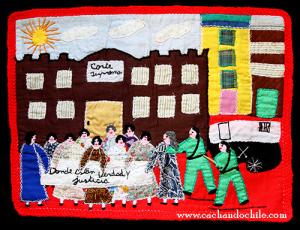
Performing the Body of Christ against Torture in Chile
The Mystical Body and the True Body of Christ
A New Christendom Fails to Challenge the State
TRENDING AT PATHEOS Catholic

The Parable Of The Sower And The Word...
One of Christ’s most famous parables is that of the sower who...

Rejecting Doom: Christian Hope And Human Action
Christianity is a religion of hope. We are to have hope and...

Why I Choose the Eucharist Over the Sermon
Choose the Eucharist, Not the Sermon What are we supposed to get...

5 Design Elements Found in Spiritually Rooted Homes
Putting Spirituality Into Home Decor Our homes are more than our living...

Credo: A Story of God Told with the...
About 10 years ago, I began to imagine a personal "Credo" that...

The Anatomy of Divine Revelation in Catholic Thought
The claim that God has made Himself known to human beings is...
view all Catholic blogs
Ad-Free & Subscriber Log-In Subscription Support
- About Us
- 2026 Calendar
- Videos
- Podcasts
- Library of World Religions
- Faith In Media Tracker
- Advertise With Us
- Write for Us
- Privacy Policy
- Terms of Service
- Do Not Sell My Data
- Contact Us
- Radiant Digital
- Manage Newsletter Subscriptions
- Unsubscribe From Notifications
- Sitemap
Copyright 2008-2026, Patheos. All rights reserved.
Subscription Support Ad-Free & Subscriber Log-In
Follow Patheos