
BuddhistCatholicContemplativeEvangelicalGeneral ChristianHinduJewishLatter-day SaintMuslimNew VisionsProgressive Christian
Beliefs
- Buddhist
- Catholic
- Contemplative
- Evangelical
- General Christian
- Hindu
- Jewish
- Latter-day Saint
- More Voices
- Muslim
- New Visions
- Pagan
- Progressive Christian
Topics
- Religion News
- Food and Religion
- Sports and Religion
- Religious Art
- Religious Music and Entertainment
- Religious Events
- History and Religion
- Style and Religion
- Politics and Religion
- Women in Religion
- Recreation Outdoors and Religion
- Business Finance and Religion
- Careers Workplace and Religion
- Education and Religion
- Family Parenting and Religion
- Health Fitness and Religion
- Home and Religion
- Relationships and Religion
- Technology and Religion
- Travel and Religion
Columnists
- Buddhist Columnists
- Business Finance and Religion Columnists
- Careers Workplace and Religion Columnists
- Catholic Columnists
- Contemplative Columnists
- Education and Religion Columnists
- Evangelists Columnists
- Family Parenting and Religion Columnists
- General Christian Columnists
- Health Fitness and Religion Columnists
- Hindu Columnists
- History and Religion Columnists
- Home and Religion Columnists
- Jewish Columnists
- More Voices Columnists
- Latter Day Columnists
- Muslim Columnists
- New Visions Columnists
- Nonreligious Columnists
- Pagan Columnists
- Politics and Religion Columnists
- Progressive Columnists
- Recreation Outdoors and Religion Columnists
- Relationships and Religion Columnists
- Religion News Columnists
- Religious Art Columnists
- Religious Events Columnists
- Religious Music and Entertainment Columnists
- Sports and Religion Columnists
- Style and Religion Columnists
- Technology and Religion Columnists
- Travel and Religion Columnists
- Women in Religion Columnists
Resource Library
- 2026 Calendar
- Library of World Religions
- The 100 Most Holy Places on Earth
- Patheos Answers
- Podcasts
- Videos
- Faith Leaders Database
- Anglican Episcopalian
- Bahai
- Baptist
- Buddhism
- Christianity
- Confucianism
- Eastern Orthodoxy
- Hinduism
- Holiness and Pentecostal
- ISKCON
- Islam
- Judaism
- Lutheran
- Methodist
- The Church of Jesus Christ of Latter-day Saints
- New Age
- Paganism
- Presbytarian and Reformed
- Protestantism
- Religion Behind the Scenes
- Roman Catholic
- Scientology
- Shia Islam
- Sikhism
- Sufism
- Sunni Islam
- Taoism
- Zen
- See all religions
Research Tools
 Ad-Free & Subscriber Log-In Subscription Support
Ad-Free & Subscriber Log-In Subscription Support
Follow Patheos 

- Trending:
- Forgiveness
- |
- Marriage
- |
- Consciousness
- |
- Death Penalty
- |
- Election
- |
- Halloween

- Home
- Catholic
- Torture and Society in Pinochet’s Chile
Torture and Society in Pinochet’s Chile
Last updated on: April 22, 2023 at 8:00 am by Jack Hartjes
Torture and Society in Pinochet’s Chile 2023-04-22T08:00:30-06:00 Jack Hartjes
Patheos Explore the world's faith through different perspectives on religion and spirituality! Patheos has the views of the prevalent religions and spiritualities of the world.
Chapter One, Part One of Torture and Eucharist by William T. Cavanaugh
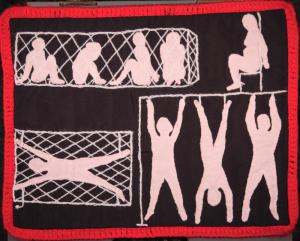
Torture in Pinochet’s Chile was one way for the state to maintain and increase its control over society.
Torture in Pinochet’s Chile did not only attack individuals. It was part of an assault on society. It aimed to create a certain perception of reality. The state wanted people to imagine enemies, which torture would create and from which the state would rescue society. Torture itself would be one of the necessary means.
On Chapter One, Part One of Torture and Eucharist: Theology, Politics, and the Body of Christ, third in the series on this book by William T. Cavanaugh, a Catholic theologian who writes about the Church and its role in culture, politics, and economics. Introduction to Cavanaugh and links to blogs in the series as they appear are here.
Cavanaugh sets his work in Chile during the repressive years of the Pinochet regime, 1973 to 1990. Before Pinochet started his dictatorial reign and for several years after, the Church in Chile had adopted a form of coexistence with secular powers. Cavanaugh argues that, in confining its work to the soul and leaving bodily matters to the state, the Church became ineffective in both areas. Essentially it consigned both soul and body to a murderous state.
The solution had to be for the Church not only to become interested in bodies but, more, to become a body itself, a social body, with its roots in the Body of Christ, the Eucharist. This, Cavanaugh says, is what the Church eventually did.
Torture and making up reality
The first major section of Chapter One begins, as Cavanaugh says, “abruptly, like the secret policeman’s nocturnal knock at the door.” He gives us a first-hand account of torture.
One’s first reaction is to condemn such a barbarous practice. Less primitive countries don’t do that anymore. Except when they do. Half of the world’s countries engage in torture, and a good many others finance it. (p. 23) And, far from being a primitive practice, modern-day torture follows advanced scientific principles.
Organizations responsible for torture in Chile had names like “National Center for Information.” From that you would guess that the purpose of torture is to gain information. From the Middle Ages to the second Gulf war, that’s an admitted, if rarely achieved, purpose for the use of torture. In fact, some sort of interrogation always accompanied the Chileans’ use of torture. Alas, the goals of torture, as practiced in Chile, were much more subtle than getting information.
The verbal component of torture – and it always has this verbal component – is designed to replace the victim’s reality with the reality of the state. More correctly, with the reality that the state wants to produce. The state is not interested in the true answer to any of its questions but in its answer, one that it makes up:
If you don’t sign this declaration, we will kill your husband or relatives, anyway they’re almost dead but you can save them by signing this declaration that we made. (P. 28, my emphasis. Cavanaugh quotes from archives of the Vicaría de la Solidaridad.)
Creating the individual’s reality is one of the powers this state aggregates to itself. What type of individual does the state want?
Creating enemies
In another book, Migrations of the Holy: God, State, and the Political Meaning of the Church, Cavanaugh describes a common interpretation of the formation of states. There is first a state of chaos. The so-called religious wars of the 16th and 17th centuries serve as an example of this chaos. States come along as a response. They replace chaos with order and peace. In Migrations Cavanaugh disputes this analysis as a convenient mythology.
A totalitarian regime such as Pinochet’s in Chile uses a similar and equally mythical analysis. Pinochet’s group took over Chile from the elected socialist Salvador Allende government in 1973. There was almost no chaos after the initial coup. To justify continued totalitarian methods, the state had to manufacture chaos, had to produce enemies.
Interrogation, which always accompanied torture, was not designed to elicit information, at least not true information. The process was designed to get the victim to claim to be an enemy of the state. Having produced an “enemy” the state is justified in using torture to combat the threat. Torture is both the production of that threat and the response to it…. (p. 31)
The next section defines more precisely the type of individual and society the state produced for itself.
Image credit: Fulltextiles via Google Images
Next Post

May 1, 2019 Torture, Neo-Liberalism and the Fragmentation of Social Bodies
Browse Our Archives
Select a Category Advent Christmas Amazon Synod Angels Being Consumed Bible Catholic Modern Creed Ecology Economics Elizabeth Johnson Eucharist Fragments and Filaments Gender and Sex Gospel of Mark Herzog Historical Jesus Liturgy Luke Opening Scriptures on Way to Emmaus Ordinary radicals Parables Pro-Life Reincarnation Rosary Sacraments science Social Justice Souls Stories of Jesus The Creed Torture and Eucharist Tracy Uncategorized War and Peace
Select a Month October 2026 June 2025 April 2025 March 2025 February 2025 January 2025 November 2024 July 2024 March 2024 December 2023 October 2023 September 2023 August 2023 May 2023 April 2023 March 2023 February 2023 January 2023 December 2022 November 2022 October 2022 September 2022 August 2022 July 2022 June 2022 April 2022 March 2022 February 2022 January 2022 December 2021 November 2021 October 2021 August 2021 July 2021 June 2021 April 2021 March 2021 February 2021 December 2020 November 2020 October 2020 August 2020 July 2020 June 2020 May 2020 April 2020 March 2020 February 2020 January 2020 December 2019 November 2019 October 2019 September 2019 August 2019 July 2019 June 2019 May 2019 April 2019 March 2019 February 2019 January 2019 December 2018 November 2018 October 2018 September 2018 August 2018 July 2018 June 2018 May 2018
Follow Us!
TAKE THE
Religious Wisdom Quiz
In what city was Jesus born?
Select your answer to see how you score.
Bethlehem Capernaum Nazareth Jerusalem
Related posts from Lost in a One-Acre Wood

“Drink the Cup” – Liturgy Teaches Us Eucharistic...

Holy Thursday Theology and the Scientific Quest for...

Kneeling Through the Communion Rite: Now I Get...
Economic Scarcity and Eucharistic Abundance: Two Stories about...
TRENDING AT PATHEOS Catholic

Creation, Preservation, and Teleology in Catholic Theology
As I write this, it is very early Monday morning. Like millions...

The Parable Of The Sower And The Word...
One of Christ’s most famous parables is that of the sower who...

Rejecting Doom: Christian Hope And Human Action
Christianity is a religion of hope. We are to have hope and...

Why I Choose the Eucharist Over the Sermon
Choose the Eucharist, Not the Sermon What are we supposed to get...

5 Design Elements Found in Spiritually Rooted Homes
Putting Spirituality Into Home Decor Our homes are more than our living...

Credo: A Story of God Told with the...
About 10 years ago, I began to imagine a personal "Credo" that...
view all Catholic blogs
Ad-Free & Subscriber Log-In Subscription Support
- About Us
- 2026 Calendar
- Videos
- Podcasts
- Library of World Religions
- Faith In Media Tracker
- Advertise With Us
- Write for Us
- Privacy Policy
- Terms of Service
- Do Not Sell My Data
- Contact Us
- Radiant Digital
- Manage Newsletter Subscriptions
- Unsubscribe From Notifications
- Sitemap
Copyright 2008-2026, Patheos. All rights reserved.
Subscription Support Ad-Free & Subscriber Log-In
Follow Patheos