
BuddhistCatholicContemplativeEvangelicalGeneral ChristianHinduJewishLatter-day SaintMuslimNew VisionsProgressive Christian
Beliefs
- Buddhist
- Catholic
- Contemplative
- Evangelical
- General Christian
- Hindu
- Jewish
- Latter-day Saint
- More Voices
- Muslim
- New Visions
- Pagan
- Progressive Christian
Topics
- Religion News
- Food and Religion
- Sports and Religion
- Religious Art
- Religious Music and Entertainment
- Religious Events
- History and Religion
- Style and Religion
- Politics and Religion
- Women in Religion
- Recreation Outdoors and Religion
- Business Finance and Religion
- Careers Workplace and Religion
- Education and Religion
- Family Parenting and Religion
- Health Fitness and Religion
- Home and Religion
- Relationships and Religion
- Technology and Religion
- Travel and Religion
Columnists
- Buddhist Columnists
- Business Finance and Religion Columnists
- Careers Workplace and Religion Columnists
- Catholic Columnists
- Contemplative Columnists
- Education and Religion Columnists
- Evangelists Columnists
- Family Parenting and Religion Columnists
- General Christian Columnists
- Health Fitness and Religion Columnists
- Hindu Columnists
- History and Religion Columnists
- Home and Religion Columnists
- Jewish Columnists
- More Voices Columnists
- Latter Day Columnists
- Muslim Columnists
- New Visions Columnists
- Nonreligious Columnists
- Pagan Columnists
- Politics and Religion Columnists
- Progressive Columnists
- Recreation Outdoors and Religion Columnists
- Relationships and Religion Columnists
- Religion News Columnists
- Religious Art Columnists
- Religious Events Columnists
- Religious Music and Entertainment Columnists
- Sports and Religion Columnists
- Style and Religion Columnists
- Technology and Religion Columnists
- Travel and Religion Columnists
- Women in Religion Columnists
Resource Library
- 2026 Calendar
- Library of World Religions
- The 100 Most Holy Places on Earth
- Patheos Answers
- Podcasts
- Videos
- Faith Leaders Database
- Anglican Episcopalian
- Bahai
- Baptist
- Buddhism
- Christianity
- Confucianism
- Eastern Orthodoxy
- Hinduism
- Holiness and Pentecostal
- ISKCON
- Islam
- Judaism
- Lutheran
- Methodist
- The Church of Jesus Christ of Latter-day Saints
- New Age
- Paganism
- Presbytarian and Reformed
- Protestantism
- Religion Behind the Scenes
- Roman Catholic
- Scientology
- Shia Islam
- Sikhism
- Sufism
- Sunni Islam
- Taoism
- Zen
- See all religions
Research Tools
 Ad-Free & Subscriber Log-In Subscription Support
Ad-Free & Subscriber Log-In Subscription Support
Follow Patheos 

- Trending:
- Forgiveness
- |
- Marriage
- |
- Consciousness
- |
- Death Penalty
- |
- Election
- |
- Halloween

- Home
- Catholic
- Does the Bible Mean what it Says? – Yes, if You Know the Idiom.
Does the Bible Mean what it Says? – Yes, if You Know the Idiom.
Last updated on: July 23, 2019 at 4:17 pm by Jack Hartjes
Does the Bible Mean what it Says? – Yes, if You Know the Idiom. 2019-07-23T16:17:44-06:00 Jack Hartjes
Patheos Explore the world's faith through different perspectives on religion and spirituality! Patheos has the views of the prevalent religions and spiritualities of the world.
Thoughts about Two Readings from the Fifth Sunday of Lent
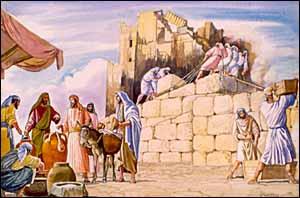
God does “something new” in history — restores the Jews to their homeland to rebuild after 50 years in exile.
I was pretty sure I had identified the idiom in last Sundays first reading from Isaiah, and then I was fine with what it said. I wasn’t so happy with the second reading from Paul’s Letter to the Philippians until it occurred to me: He’s using the same idiom.
Remember not the events of the past. (Isaiah 43:18)
What an awful thing for God to say to a Jew, or a Christian and mean it literally! Sunday’s first reading comes from what scholars call Second Isaiah and a time when God’s people first were identifying themselves as Jews. They were a people to whom, especially at that time of captivity, the past meant practically everything. The Exodus, the giving of the Law, and the settlement of the Land never stopped being events that Jews would remember and celebrate. But God was doing something new – freeing the Jews from captivity in Babylon.
It was during what historians have called the Axial Age. Encyclopedia Britannica says the Axial Age
… is the period when, roughly at the same time around most of the inhabited world, the great intellectual, philosophical, and religious systems that came to shape subsequent human society and culture emerged.
There were Greek philosophers, Indian metaphysicians of Hindu and Buddhist varieties, the “100 schools” of Chinese thought, Zoroastrianism. But of all these schools only the Jews conceived of a history that could take a radically new direction. Only Israel’s God would think of doing something new. To emphasize that, God says to forget about the past. God uses a Hebrew idiom, negating one thing, which God doesn’t mean to do literally, to emphasize something else. “Don’t really forget the past, but do really pay attention to what I’m doing now.”
“Rubbish” in St. Paul’s past
Brothers and sisters: I consider everything as a loss because of the supreme good of knowing Christ Jesus my Lord. For his sake I have accepted the loss of all things and I consider them so much rubbish…. (Philippians 3:8-10)
This first part of Sunday’s second reading bothered me at first. Paul seems to be saying about everything in his life, including the Law of Moses, if it isn’t Jesus it’s rubbish. I figure there’s a lot of good in a life that doesn’t know Jesus. Knowing Jesus doesn’t relegate all those things to the rubbish heap but transforms them, graces them. Grace renews, cleanses, prunes, builds on, and perfects nature, but doesn’t destroy it.
Jesus seems to agree. He built on the Jewish Law and also did some pruning. “You have heard that it was said … but I say to you….” (Matthew 5:21-47) But Jesus also said, “Do not think that I have come to abolish the law or the prophets. I have come not to abolish but to fulfill.” (Matthew 5:17)
It occurred to me that Paul must be thinking in the same typically Jewish idiom that the first reading held. Don’t literally throw out all that came before, but do stand in awe of the wonders of now knowing Jesus. At least, that’s what I think Paul must mean. How do new members enrich the Church if their pasts don’t count for anything?
More examples of the same idiom
It’s important not to misunderstand an idiom that apparently denies one thing, but doesn’t really mean to, in order to emphasize another. Often the thing that the idiom denies is exactly the sort of thing that Jesus came in human flesh to save, not deny or destroy. Here are three more examples:
In this is love, not that we loved God but that he loved us and sent his Son to be the atoning sacrifice for our sins. (1 John 4:10)
To another he said, “Follow me.” But he said, “Lord first let me go and bury my father.” But Jesus said to him, “Let the dead bury their own dead; but as for you, go and proclaim the kingdom of God.” Another said, “I will follow you, Lord, but let me first say farewell to those at my home.” Jesus said to him, “No one who puts ;a hand to the plow and looks back is fit for the kingdom of God.” (Luke 9:59-62)
If your hand causes you to stumble, cut it off; it is better for you to enter life maimed than to have two hands and to go to hell, to the unquenchable fire. And if your foot…. (Mark 9:43-48)
And my comments
On the letter writer John’s favorite topic, love: When we love God, it really is love, even though it pales in comparison to God’s prior love for us. John is making a point about God’s love, not ours.
On Jesus’ words to disciples in Luke: One can read the passage as literal history. Jesus may have given such commands and advice. But one wonders if Jesus really would have had disciples turn their backs on family obligations. Perhaps, but even so the passage might have carried its own meaning for Luke and his community, and for us. When we follow Jesus, we are entering upon a new path. Luke’s decision to use these vivid images about plows and burials emphasizes how important that path is. It doesn’t necessarily constrain us in regard to all that is good or even customary in our former lives.
On the strange advice in the Mark passage, where Jesus is certainly doesn’t want anyone to cut off a body part: Interpreters often say this is Semitic exaggeration. I think it’s more striking than that. Jesus’ advice is not just beyond but contrary to reasonable behavior. It forces one to jump immediately to the point, which I don’t think was about sins of hand, eye, or foot. God, who took on human flesh and body, surely wants to save whole bodies. But God doesn’t put up barriers to those who are not quite physically whole. That may have been the point – to challenge the common perception of the blind, maimed, and lame and the priests’ rule that barred such people from the Temple. Jesus spent a lot of time with blind, maimed, and lame people. They are welcome in the Kingdom of God.
Does the Bible always mean what it says? It’s easier to answer this question affirmatively if you understand the idiom.
Image credit: Jesus Walk via Google Images
Previous Post

April 10, 2019
The Misunderstood Messiah: Jesus’ Friends Don’t Get It
Next Post
April 15, 2019 Faith that can Move Mountains … or Not
Browse Our Archives
Select a Category Advent Christmas Amazon Synod Angels Being Consumed Bible Catholic Modern Creed Ecology Economics Elizabeth Johnson Eucharist Fragments and Filaments Gender and Sex Gospel of Mark Herzog Historical Jesus Liturgy Luke Opening Scriptures on Way to Emmaus Ordinary radicals Parables Pro-Life Reincarnation Rosary Sacraments science Social Justice Souls Stories of Jesus The Creed Torture and Eucharist Tracy Uncategorized War and Peace
Select a Month October 2026 June 2025 April 2025 March 2025 February 2025 January 2025 November 2024 July 2024 March 2024 December 2023 October 2023 September 2023 August 2023 May 2023 April 2023 March 2023 February 2023 January 2023 December 2022 November 2022 October 2022 September 2022 August 2022 July 2022 June 2022 April 2022 March 2022 February 2022 January 2022 December 2021 November 2021 October 2021 August 2021 July 2021 June 2021 April 2021 March 2021 February 2021 December 2020 November 2020 October 2020 August 2020 July 2020 June 2020 May 2020 April 2020 March 2020 February 2020 January 2020 December 2019 November 2019 October 2019 September 2019 August 2019 July 2019 June 2019 May 2019 April 2019 March 2019 February 2019 January 2019 December 2018 November 2018 October 2018 September 2018 August 2018 July 2018 June 2018 May 2018
Follow Us!
TAKE THE
Religious Wisdom Quiz
What did God create on the second day?
Select your answer to see how you score.
Sun Sky Trees Fish
Related posts from Lost in a One-Acre Wood

Credo: A Story of God Told with the...

Richard A. Horsley Sees Jesus in the Context...
“Jesus Wept.” Don’t Take the Humanity out of...

Holy Thursday Theology and the Scientific Quest for...
TRENDING AT PATHEOS Catholic

Rejecting Doom: Christian Hope And Human Action
Christianity is a religion of hope. We are to have hope and...

It’s What Comes From Within Which Matters
One of the most difficult things for us to understand is why...

Why I Choose the Eucharist Over the Sermon
Choose the Eucharist, Not the Sermon What are we supposed to get...

5 Design Elements Found in Spiritually Rooted Homes
Putting Spirituality Into Home Decor Our homes are more than our living...

Credo: A Story of God Told with the...
About 10 years ago, I began to imagine a personal "Credo" that...

The Anatomy of Divine Revelation in Catholic Thought
The claim that God has made Himself known to human beings is...
view all Catholic blogs
Ad-Free & Subscriber Log-In Subscription Support
- About Us
- 2026 Calendar
- Videos
- Podcasts
- Library of World Religions
- Faith In Media Tracker
- Advertise With Us
- Write for Us
- Privacy Policy
- Terms of Service
- Do Not Sell My Data
- Contact Us
- Radiant Digital
- Manage Newsletter Subscriptions
- Unsubscribe From Notifications
- Sitemap
Copyright 2008-2026, Patheos. All rights reserved.
Subscription Support Ad-Free & Subscriber Log-In
Follow Patheos