
BuddhistCatholicContemplativeEvangelicalGeneral ChristianHinduJewishLatter-day SaintMuslimNew VisionsProgressive Christian
Beliefs
- Buddhist
- Catholic
- Contemplative
- Evangelical
- General Christian
- Hindu
- Jewish
- Latter-day Saint
- More Voices
- Muslim
- New Visions
- Pagan
- Progressive Christian
Topics
- Religion News
- Food and Religion
- Sports and Religion
- Religious Art
- Religious Music and Entertainment
- Religious Events
- History and Religion
- Style and Religion
- Politics and Religion
- Women in Religion
- Recreation Outdoors and Religion
- Business Finance and Religion
- Careers Workplace and Religion
- Education and Religion
- Family Parenting and Religion
- Health Fitness and Religion
- Home and Religion
- Relationships and Religion
- Technology and Religion
- Travel and Religion
Columnists
- Buddhist Columnists
- Business Finance and Religion Columnists
- Careers Workplace and Religion Columnists
- Catholic Columnists
- Contemplative Columnists
- Education and Religion Columnists
- Evangelists Columnists
- Family Parenting and Religion Columnists
- General Christian Columnists
- Health Fitness and Religion Columnists
- Hindu Columnists
- History and Religion Columnists
- Home and Religion Columnists
- Jewish Columnists
- More Voices Columnists
- Latter Day Columnists
- Muslim Columnists
- New Visions Columnists
- Nonreligious Columnists
- Pagan Columnists
- Politics and Religion Columnists
- Progressive Columnists
- Recreation Outdoors and Religion Columnists
- Relationships and Religion Columnists
- Religion News Columnists
- Religious Art Columnists
- Religious Events Columnists
- Religious Music and Entertainment Columnists
- Sports and Religion Columnists
- Style and Religion Columnists
- Technology and Religion Columnists
- Travel and Religion Columnists
- Women in Religion Columnists
Resource Library
- 2026 Calendar
- Library of World Religions
- The 100 Most Holy Places on Earth
- Patheos Answers
- Podcasts
- Videos
- Faith Leaders Database
- Anglican Episcopalian
- Bahai
- Baptist
- Buddhism
- Christianity
- Confucianism
- Eastern Orthodoxy
- Hinduism
- Holiness and Pentecostal
- ISKCON
- Islam
- Judaism
- Lutheran
- Methodist
- The Church of Jesus Christ of Latter-day Saints
- New Age
- Paganism
- Presbytarian and Reformed
- Protestantism
- Religion Behind the Scenes
- Roman Catholic
- Scientology
- Shia Islam
- Sikhism
- Sufism
- Sunni Islam
- Taoism
- Zen
- See all religions
Research Tools
 Ad-Free & Subscriber Log-In Subscription Support
Ad-Free & Subscriber Log-In Subscription Support
Follow Patheos 

- Trending:
- Forgiveness
- |
- Marriage
- |
- Consciousness
- |
- Death Penalty
- |
- Election
- |
- Halloween

- Home
- Catholic
- Unsuccessful Prophet: Jesus Fails to Win His Own
Unsuccessful Prophet: Jesus Fails to Win His Own
Last updated on: April 29, 2019 at 7:50 am by Jack Hartjes
Unsuccessful Prophet: Jesus Fails to Win His Own 2019-04-29T07:50:29-06:00 Jack Hartjes
Patheos Explore the world's faith through different perspectives on religion and spirituality! Patheos has the views of the prevalent religions and spiritualities of the world.
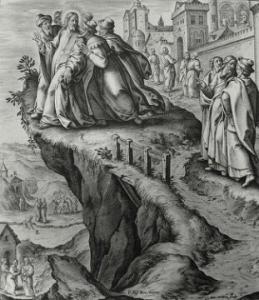
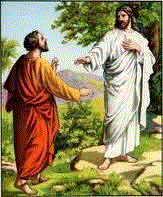
A prophet is not welcome in his own country, or in this case Jesus’ hometown, Nazareth.
As one who “came to do God’s will,” Jesus succeeded wonderfully. But people knew Jesus as a prophet, and as a prophet he largely failed. His message about the coming of God’s Kingdom and life in God’s Kingdom fell on a lot of deaf ears.
Jesus addressed his message to Jews almost exclusively. He even instructed his emissaries not to go to Samaria or the Greek cities. That has to be an accurate memory, it seems to me. Why otherwise would the early Church, a missionary movement that had much better success among Gentiles than among Jews, write it down? But from his own people Jesus’ was able to attract only a small following.
A prophet without honor
It’s not clear how well-off Jesus’ family was. He certainly did not hail from the upper class. Jesus may have given up a meager but at least decent living when he left carpentry for the life of an itinerant preacher.
It’s also not clear how much education Jesus had. His native language was Aramaic, but he probably knew enough Hebrew to read the Scriptures. That needn’t have been very much. Jesus would have heard and learned stories of Scripture from his youth so he could probably “read” pretty accurately even if he could only make out a few words here and there. I think he could do quite a bit better than that. Still, Jesus was not schooled to the extent of a rabbi or a scribe, who would be familiar not only with scripture but also with the interpretations of other rabbis and scribes.
As a traveling lay preacher Jesus would have been invited to take a leading role in Sabbath meetings at synagogue in the towns he visited. That would have involved a reading from Scripture plus commentary. If Jesus had been a scribe, his commentary would have been filled with references to what other interpreters had said about a passage. Typically, you had to back up whatever you were saying with voices from the past. Jesus’ commentary was different. People would say he speaks like one who has authority, not like the scribes and Pharisees. Jesus’ commentaries could surprise and also disturb people.
In his hometown
Jesus came to Nazareth, where he had grown up, and went according to his custom into the synagogue on the Sabbath day. He stood up to read and was handed a scroll of the prophet Isaiah. He unrolled the scroll and found the passage where it was written:
The Spirit of the Lord is upon me, because he has anointed me to bring glad tidings to the poor. He has sent me to proclaim liberty to captives and recovery of sight to the blind, to let the oppressed go free, and to proclaim a year acceptable to the Lord.
Rolling up the scroll, he handed it back to the attendant and sat down, and the eyes of all in the synagogue looked intently at him. He said to them, “Today this scripture passage is fulfilled in your hearing.” (Luke 4:16-30)
Well, those are the words of Jesus that impressed Luke, but I think Jesus must have said more than that.
What follows in Luke’s account makes no sense to me. First, Luke says all spoke highly of him. Then some ask, “Isn’t this the son of Joseph?” It’s a way of saying, “Why should we believe this hometown boy, whom no one thought much of before? What are his credentials?”
Jesus’ response seems all out of proportion. He goes into a tirade about prophets not being accepted in their own home. He refers to two prophets: Elijah, who saved a widow from famine in the land of Sidon, and Elisha, who cured Naaman the Syrian. It seems Jesus is trying to irritate his audience by making a point of the fact that it was foreigners, not Israelites, whom the prophets helped. In this he succeeds so well that the people try to throw him off a cliff.
Luke’s point
I think Luke is combining a number of incidents into one more or less creative story. He sets the story deliberately in Nazareth, Jesus’ home town, and adds to the account the ancient miracles for foreigners because by the time of Luke’s writing the vast majority of Jews, Jesus’ own people, weren’t accepting Jesus, but a lot of foreigners were. Luke’s own audience was mostly non-Jewish.
Jesus didn’t live to see his success among the gentiles. He did see his failure among the Jews, “at home.” Of course, he succeeded with some Jews—or did he? Unsuccessful prophet story to be continued…
Image credit: Word Press, Picture Stories from the Bible, via Google Images
Previous Post

April 4, 2019
The Beatitudes: Blessed are We Poor
Next Post
April 10, 2019 The Misunderstood Messiah: Jesus’ Friends Don’t Get It
Browse Our Archives
Select a Category Advent Christmas Amazon Synod Angels Being Consumed Bible Catholic Modern Creed Ecology Economics Elizabeth Johnson Eucharist Fragments and Filaments Gender and Sex Gospel of Mark Herzog Historical Jesus Liturgy Luke Opening Scriptures on Way to Emmaus Ordinary radicals Parables Pro-Life Reincarnation Rosary Sacraments science Social Justice Souls Stories of Jesus The Creed Torture and Eucharist Tracy Uncategorized War and Peace
Select a Month October 2026 June 2025 April 2025 March 2025 February 2025 January 2025 November 2024 July 2024 March 2024 December 2023 October 2023 September 2023 August 2023 May 2023 April 2023 March 2023 February 2023 January 2023 December 2022 November 2022 October 2022 September 2022 August 2022 July 2022 June 2022 April 2022 March 2022 February 2022 January 2022 December 2021 November 2021 October 2021 August 2021 July 2021 June 2021 April 2021 March 2021 February 2021 December 2020 November 2020 October 2020 August 2020 July 2020 June 2020 May 2020 April 2020 March 2020 February 2020 January 2020 December 2019 November 2019 October 2019 September 2019 August 2019 July 2019 June 2019 May 2019 April 2019 March 2019 February 2019 January 2019 December 2018 November 2018 October 2018 September 2018 August 2018 July 2018 June 2018 May 2018
Follow Us!
TAKE THE
Religious Wisdom Quiz
What did Moses break upon seeing the people worshiping an idol?
Select your answer to see how you score.
Aaron's staff Stone tablets The Ark The altar
Related posts from Lost in a One-Acre Wood
Resurrection: For the Apostles, It Took a While...
CRUCIFY HIM! -- What the Jews Did or...
Faith that can Move Mountains … or Not
The Misunderstood Messiah: Jesus’ Friends Don’t Get It
TRENDING AT PATHEOS Catholic

Creation, Preservation, and Teleology in Catholic Theology
As I write this, it is very early Monday morning. Like millions...

The Parable Of The Sower And The Word...
One of Christ’s most famous parables is that of the sower who...

Rejecting Doom: Christian Hope And Human Action
Christianity is a religion of hope. We are to have hope and...

Why I Choose the Eucharist Over the Sermon
Choose the Eucharist, Not the Sermon What are we supposed to get...

5 Design Elements Found in Spiritually Rooted Homes
Putting Spirituality Into Home Decor Our homes are more than our living...

Credo: A Story of God Told with the...
About 10 years ago, I began to imagine a personal "Credo" that...
view all Catholic blogs
Ad-Free & Subscriber Log-In Subscription Support
- About Us
- 2026 Calendar
- Videos
- Podcasts
- Library of World Religions
- Faith In Media Tracker
- Advertise With Us
- Write for Us
- Privacy Policy
- Terms of Service
- Do Not Sell My Data
- Contact Us
- Radiant Digital
- Manage Newsletter Subscriptions
- Unsubscribe From Notifications
- Sitemap
Copyright 2008-2026, Patheos. All rights reserved.
Subscription Support Ad-Free & Subscriber Log-In
Follow Patheos