
BuddhistCatholicContemplativeEvangelicalGeneral ChristianHinduJewishLatter-day SaintMuslimNew VisionsProgressive Christian
Beliefs
- Buddhist
- Catholic
- Contemplative
- Evangelical
- General Christian
- Hindu
- Jewish
- Latter-day Saint
- More Voices
- Muslim
- New Visions
- Pagan
- Progressive Christian
Topics
- Religion News
- Food and Religion
- Sports and Religion
- Religious Art
- Religious Music and Entertainment
- Religious Events
- History and Religion
- Style and Religion
- Politics and Religion
- Women in Religion
- Recreation Outdoors and Religion
- Business Finance and Religion
- Careers Workplace and Religion
- Education and Religion
- Family Parenting and Religion
- Health Fitness and Religion
- Home and Religion
- Relationships and Religion
- Technology and Religion
- Travel and Religion
Columnists
- Buddhist Columnists
- Business Finance and Religion Columnists
- Careers Workplace and Religion Columnists
- Catholic Columnists
- Contemplative Columnists
- Education and Religion Columnists
- Evangelists Columnists
- Family Parenting and Religion Columnists
- General Christian Columnists
- Health Fitness and Religion Columnists
- Hindu Columnists
- History and Religion Columnists
- Home and Religion Columnists
- Jewish Columnists
- More Voices Columnists
- Latter Day Columnists
- Muslim Columnists
- New Visions Columnists
- Nonreligious Columnists
- Pagan Columnists
- Politics and Religion Columnists
- Progressive Columnists
- Recreation Outdoors and Religion Columnists
- Relationships and Religion Columnists
- Religion News Columnists
- Religious Art Columnists
- Religious Events Columnists
- Religious Music and Entertainment Columnists
- Sports and Religion Columnists
- Style and Religion Columnists
- Technology and Religion Columnists
- Travel and Religion Columnists
- Women in Religion Columnists
Resource Library
- 2026 Calendar
- Library of World Religions
- The 100 Most Holy Places on Earth
- Patheos Answers
- Podcasts
- Videos
- Faith Leaders Database
- Anglican Episcopalian
- Bahai
- Baptist
- Buddhism
- Christianity
- Confucianism
- Eastern Orthodoxy
- Hinduism
- Holiness and Pentecostal
- ISKCON
- Islam
- Judaism
- Lutheran
- Methodist
- The Church of Jesus Christ of Latter-day Saints
- New Age
- Paganism
- Presbytarian and Reformed
- Protestantism
- Religion Behind the Scenes
- Roman Catholic
- Scientology
- Shia Islam
- Sikhism
- Sufism
- Sunni Islam
- Taoism
- Zen
- See all religions
Research Tools
 Ad-Free & Subscriber Log-In Subscription Support
Ad-Free & Subscriber Log-In Subscription Support
Follow Patheos 

- Trending:
- Forgiveness
- |
- Marriage
- |
- Consciousness
- |
- Death Penalty
- |
- Election
- |
- Halloween

- Home
- Catholic
- Souls, Transmigration, Gender Theory, and Some Early Roots of Gnostic Ideas
Souls, Transmigration, Gender Theory, and Some Early Roots of Gnostic Ideas
Last updated on: July 23, 2019 at 4:18 pm by Jack Hartjes
Souls, Transmigration, Gender Theory, and Some Early Roots of Gnostic Ideas 2019-07-23T16:18:09-06:00 Jack Hartjes
Patheos Explore the world's faith through different perspectives on religion and spirituality! Patheos has the views of the prevalent religions and spiritualities of the world.
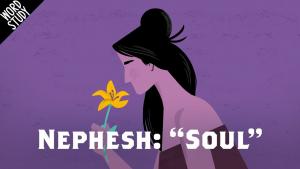
This video explains that “nephesh” in Hebrew means much more than “soul.”
The idea that we are not our bodies, but the most important part of us is our souls, more or less loose from material things has a long history. Today it’s catching on again. That we are basically spiritual seems entirely too religious an idea for an age that’s gradually abandoning religion. On the other hand, it’s really a Gnostic, not a Christian idea. At least it’s not biblical. Still, Christians talk much about souls, and manage to confuse the issue. I found how easily children pick up on the dualism of bodies and souls the other day in a religion class.
I was helping with a Montessori-based religion program for second graders when the topic of souls came up. Actually, the question presented was, What does it mean to be made in the image of God? It was a particularly bright child who came up with, “It means we have a soul.”
Later in that same class the discussion was about the seed falling to the ground, dying and bearing much fruit. Somehow that came to mean that Jesus takes our souls to heaven. The precocious mind-body dualist then declared that the soul has to leave immediately after death, otherwise it will be trapped in the body. Of course, we agreed that, yes, the soul does leave immediately, but, no, there’s no worry that it will be trapped in the body.
Karma or forgiveness
Is the soul the real person? That is Plato’s idea, and that potentially independent soul or something like it is the assumption behind transmigration of souls. The real person is not the body but something that inhabits the body for a while and in another life will inhabit another body. This soul’s job is to “get it right” eventually. You get rewarded with an improved life form in the next life if you’ve made positive steps in this one. Karma insures that you get the opposite consequence when you mess up.
Imagining such a distance between oneself and one’s body goes well with a distaste for bodies as such and a highly moralistic outlook. Oddly, I find that imagination in people who appear to love bodies, whether their own (they’re health nuts and “foodies”), someone else’s (of one sex or another or still another), or the earth (which certainly counts as a body). Perhaps it’s the strict moralism of karma that appeals to them. I prefer a healthy dose of forgiveness such as Christianity offers. I also love bodies and this material life on earth, but that doesn’t mean more bodies and more lives are better.
The wrong body?
Then there’s gender theory and the transgender person who feels trapped in the wrong body. That’s another Gnostic, or spiritualist, idea. There’s the thing I am and the body that I happen to have. (I prefer Gabriel Marcel’s idea: The body is not something I have but my way of being in the world.)
Gender and sex are different things, and feminism has helped us understand the difference. But can gender as we experience it tell us that the body we were born in is the wrong sex? How would a person ever know?
First off, we’d have to eliminate sexual preference as an indicator. In this age, homosexuality is a well-established phenomenon. A gay person is still a man, and a lesbian is still a woman. There’s no “trans” there. What else could tell a person he or she is in a wrong-sexed body. Boys can play with dolls and girls with trucks. Boys can have great people skills, and girls can excel in the STEM subjects. Feminism has done a great job of helping us appreciate the variety within each sex. No amount of “feminine” qualities makes a man less a man. A woman candidate for president shouldn’t have to be particularly lady-like.
An ideological style of parenting encourages children to think “outside the box” regarding their sexuality. If the box is their bodies, then outside the box there is nothing to think with. Children do identify as transgender, and studies show that often they have friends who identify as transgender. That tells me that their “trans” status belongs to peer group more than to personal discernment. Lately all of us are being hit with gender ideology through iconic, though not necessarily typical, figures of our largest peer group, society as a whole.
Back to the second-grade classroom
Gender theory says we can ignore what our body says and go with some vague internal intuition concerning our sex. I wonder if that theory could have started without Plato and the way Christians have latched onto his ideas about bodies and souls.
A second grader thinks being made in God’s image means having a soul. He didn’t get that from the Genesis 1:26. That verse says we are made in God’s image but doesn’t explain in what way we image God. The Collegeville Bible Commentary: Old Testament says the Hebrew language has no word for soul. Here’s that commentary’s explanation of God’s image:
In the ancient world, “image” was used to refer to a statue of the king that was sent to the distant corners of the kingdom where the king could not be present in person. This “image” was to be the representative of the king in that area. If we apply this to Genesis, to be created in the image of God is to be God’s representative on earth. (p. 40)
Christianity’s way of imagining self, others, and world, like that of the Jews’, is body-centered. Thomas Aquinas, who talked about souls, didn’t separate them from bodies. Neither the spiritual nor the material in us is an actual thing without the other. We are who we are as bodies ensouled, not souls which could be in one body or another or could look at the body and decide it’s the wrong one or float free without a body.
The state of the person after death and before the resurrection of the body is a mystery. I don’t know if second graders can handle the concept of soul without endangering a Christian appreciation for bodies, the material world, and the one blessed life we receive from God.
Image credit: Youtube via Google Images
Previous Post

March 27, 2019
Adultery and a Story of Jesus Writing on the Ground
Next Post
April 1, 2019 The Unbrokered Kingdom and Jesus’ Wandering Ways
Browse Our Archives
Select a Category Advent Christmas Amazon Synod Angels Being Consumed Bible Catholic Modern Creed Ecology Economics Elizabeth Johnson Eucharist Fragments and Filaments Gender and Sex Gospel of Mark Herzog Historical Jesus Liturgy Luke Opening Scriptures on Way to Emmaus Ordinary radicals Parables Pro-Life Reincarnation Rosary Sacraments science Social Justice Souls Stories of Jesus The Creed Torture and Eucharist Tracy Uncategorized War and Peace
Select a Month October 2026 June 2025 April 2025 March 2025 February 2025 January 2025 November 2024 July 2024 March 2024 December 2023 October 2023 September 2023 August 2023 May 2023 April 2023 March 2023 February 2023 January 2023 December 2022 November 2022 October 2022 September 2022 August 2022 July 2022 June 2022 April 2022 March 2022 February 2022 January 2022 December 2021 November 2021 October 2021 August 2021 July 2021 June 2021 April 2021 March 2021 February 2021 December 2020 November 2020 October 2020 August 2020 July 2020 June 2020 May 2020 April 2020 March 2020 February 2020 January 2020 December 2019 November 2019 October 2019 September 2019 August 2019 July 2019 June 2019 May 2019 April 2019 March 2019 February 2019 January 2019 December 2018 November 2018 October 2018 September 2018 August 2018 July 2018 June 2018 May 2018
Follow Us!
TAKE THE
Religious Wisdom Quiz
Which prophet's call included a vision of an almond branch and boiling pot?
Select your answer to see how you score.
Ezekiel Daniel Jeremiah Isaiah
Related posts from Lost in a One-Acre Wood

The Story of a Journey of Much More...

Metaphor: The Right Kind of Language for a...

Old Soul – Now I Know what it...

Credo: A Story of God Told with the...
TRENDING AT PATHEOS Catholic

The Parable Of The Sower And The Word...
One of Christ’s most famous parables is that of the sower who...

Rejecting Doom: Christian Hope And Human Action
Christianity is a religion of hope. We are to have hope and...

Why I Choose the Eucharist Over the Sermon
Choose the Eucharist, Not the Sermon What are we supposed to get...

5 Design Elements Found in Spiritually Rooted Homes
Putting Spirituality Into Home Decor Our homes are more than our living...

Credo: A Story of God Told with the...
About 10 years ago, I began to imagine a personal "Credo" that...

The Anatomy of Divine Revelation in Catholic Thought
The claim that God has made Himself known to human beings is...
view all Catholic blogs
Ad-Free & Subscriber Log-In Subscription Support
- About Us
- 2026 Calendar
- Videos
- Podcasts
- Library of World Religions
- Faith In Media Tracker
- Advertise With Us
- Write for Us
- Privacy Policy
- Terms of Service
- Do Not Sell My Data
- Contact Us
- Radiant Digital
- Manage Newsletter Subscriptions
- Unsubscribe From Notifications
- Sitemap
Copyright 2008-2026, Patheos. All rights reserved.
Subscription Support Ad-Free & Subscriber Log-In
Follow Patheos