
BuddhistCatholicContemplativeEvangelicalGeneral ChristianHinduJewishLatter-day SaintMuslimNew VisionsProgressive Christian
Beliefs
- Buddhist
- Catholic
- Contemplative
- Evangelical
- General Christian
- Hindu
- Jewish
- Latter-day Saint
- More Voices
- Muslim
- New Visions
- Pagan
- Progressive Christian
Topics
- Religion News
- Food and Religion
- Sports and Religion
- Religious Art
- Religious Music and Entertainment
- Religious Events
- History and Religion
- Style and Religion
- Politics and Religion
- Women in Religion
- Recreation Outdoors and Religion
- Business Finance and Religion
- Careers Workplace and Religion
- Education and Religion
- Family Parenting and Religion
- Health Fitness and Religion
- Home and Religion
- Relationships and Religion
- Technology and Religion
- Travel and Religion
Columnists
- Buddhist Columnists
- Business Finance and Religion Columnists
- Careers Workplace and Religion Columnists
- Catholic Columnists
- Contemplative Columnists
- Education and Religion Columnists
- Evangelists Columnists
- Family Parenting and Religion Columnists
- General Christian Columnists
- Health Fitness and Religion Columnists
- Hindu Columnists
- History and Religion Columnists
- Home and Religion Columnists
- Jewish Columnists
- More Voices Columnists
- Latter Day Columnists
- Muslim Columnists
- New Visions Columnists
- Nonreligious Columnists
- Pagan Columnists
- Politics and Religion Columnists
- Progressive Columnists
- Recreation Outdoors and Religion Columnists
- Relationships and Religion Columnists
- Religion News Columnists
- Religious Art Columnists
- Religious Events Columnists
- Religious Music and Entertainment Columnists
- Sports and Religion Columnists
- Style and Religion Columnists
- Technology and Religion Columnists
- Travel and Religion Columnists
- Women in Religion Columnists
Resource Library
- 2026 Calendar
- Library of World Religions
- The 100 Most Holy Places on Earth
- Patheos Answers
- Podcasts
- Videos
- Faith Leaders Database
- Anglican Episcopalian
- Bahai
- Baptist
- Buddhism
- Christianity
- Confucianism
- Eastern Orthodoxy
- Hinduism
- Holiness and Pentecostal
- ISKCON
- Islam
- Judaism
- Lutheran
- Methodist
- The Church of Jesus Christ of Latter-day Saints
- New Age
- Paganism
- Presbytarian and Reformed
- Protestantism
- Religion Behind the Scenes
- Roman Catholic
- Scientology
- Shia Islam
- Sikhism
- Sufism
- Sunni Islam
- Taoism
- Zen
- See all religions
Research Tools
 Ad-Free & Subscriber Log-In Subscription Support
Ad-Free & Subscriber Log-In Subscription Support
Follow Patheos 

- Trending:
- Forgiveness
- |
- Marriage
- |
- Consciousness
- |
- Death Penalty
- |
- Election
- |
- Halloween

- Home
- Catholic
- What the Jews Gave Us – The Story of a World Going Somewhere
What the Jews Gave Us – The Story of a World Going Somewhere
Last updated on: March 13, 2019 at 3:41 pm by Jack Hartjes
What the Jews Gave Us – The Story of a World Going Somewhere 2019-03-13T15:41:40-06:00 Jack Hartjes
Patheos Explore the world's faith through different perspectives on religion and spirituality! Patheos has the views of the prevalent religions and spiritualities of the world.
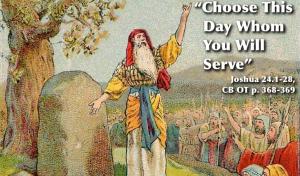
To serve only one God was the distinctive trait — or at least ideal — of the Jews.
Among my crowd of acquaintances and friends are some Pagans. Present-day Pagans believe in a number of gods and goddesses, but I do not think they hold the cyclical worldview that lay under ancient Pagan beliefs, a world that depends on always going back to a sacred beginning, never forward to something new.. Between ancient Pagans and the modern world came the Jews, who could not long abide the thought of a world going nowhere. The take on reality that they developed has determined much of our modern consciousness, whether we follow them religiously or not.
This is the seventh in a series on the Creed of Christians. An introduction consists of my retelling of the Creed’s story. That and links to other posts in the series are here.
A people known first as Hebrews or Israelites and later as Jews came together as an identifiable unit probably in the 1200’s Before the Common Era (BCE). It was a remarkable process, though most probably without the miracles of the Bible’s Exodus story. Among the studies on which this account is based is William G. Dever’s Who were the Early Israelites and Where did they Come From?
The people who became the Jews get started.
The world to the East and Southeast of the Mediterranean Sea was in chaos. There had been a repressive kind of order, as usual in complex human societies. People on the bottom, the peasant farmers lived in villages and tended the fields mostly for the benefit of the rulers and elite in nearby larger cities. But the system was breaking down. Highwaymen (called “hapiru,” a name suggestively similar to “Hebrew”) were operating freely outside the law, disrupting the extensive trading network that had kept the system going. Petty kings wrote to Egypt for help, but Egypt, with troubles of its own, was not prepared to help.
Then comes one of history’s mysteries. Maybe some of the hapiru took the lead. People started leaving their settled villages, headed for the hinterlands, the highlands of Palestine, and took up a less culturally advanced, less politically complicated way of life. There were no kings at first. They did what they knew; they farmed. Perhaps they were joined by some runaway slaves from Egypt.
This movement probably happened more peacefully and slowly than what the Bible seems to say, but that doesn’t mean that the stories people told about their heritage had to be dull. There was enough conflict and danger in this chaotic beginning. It would not be at all surprising if tales of a mighty, liberating, warrior god told by a group of runaway slaves came to represent the experience of this whole loosely connected community.
Israel’s god requires exclusive worship.
What would the people think about such a god? Not necessarily that this was the only god there was, but certainly they envisioned themselves as special to this one god. They could trust this one, and they ought to be faithful to this one. Vision, trust, and faithfulness are the three meanings of faith out of which faith as belief statements arises. Here are two great statements of early Israelite faith:
- I, the LORD, am your God, who brought you out of the Land of Egypt, that place of slavery. You shall not have other gods besides me. (Deuteronomy 5:6-7)
- [C]hoose this day whom you will serve, whether the gods your ancestors served in the region beyond the River or the gods of the Amorites in whose land you are living; but as for me and my household, we will serve the Lord. (Joshua 24:15)
Neither of these says that other gods don’t exist. In fact, the second presumes that they do exist. Were the precursors of the Jews simply adding another god to the world’s religions? They were doing much more than that. The first signal of the uniqueness of this new people is their insistence on not worshiping other gods. Jewish worship of only one god is called monolatry. It’s not monotheism but a step toward it. I don’t know of any religion not descended from Judaism that is similarly ill-disposed to its adherents’ worshiping someone else’s god.
God of history versus gods of nature
Israel’s God, Yahweh, had become something other than a nature god. If your god is represented by the sun, there’s nothing to stop you from worshiping a god of the moon as well if you see other people doing that. In general, nature gods move easily from one culture to another, especially when one country conquers another. But if your god is the one who took you out of one nation and set you down in the midst of some other nations and kept you more or less safe all the while, then any political conflict with a neighbor is going to seem like a religious conflict as well. Israel’s god may have started out as a nature god but became a god of Israel’s history.
For Israelites to serve another god would be to deny their identity as Israelites. It would also be to abandon the story that made them who they were, the story of a world where new things, like the dawn of a people with something new to offer the world, can happen.
More about the god of history in the next post in this series.
Image credit: Slideshare via Google Images
Previous Post

February 3, 2019
One God, Part 1: The Worldview behind the Many Gods of Paganism
Browse Our Archives
Select a Category Advent Christmas Amazon Synod Angels Being Consumed Bible Catholic Modern Creed Ecology Economics Elizabeth Johnson Eucharist Fragments and Filaments Gender and Sex Gospel of Mark Herzog Historical Jesus Liturgy Luke Opening Scriptures on Way to Emmaus Ordinary radicals Parables Pro-Life Reincarnation Rosary Sacraments science Social Justice Souls Stories of Jesus The Creed Torture and Eucharist Tracy Uncategorized War and Peace
Select a Month October 2026 June 2025 April 2025 March 2025 February 2025 January 2025 November 2024 July 2024 March 2024 December 2023 October 2023 September 2023 August 2023 May 2023 April 2023 March 2023 February 2023 January 2023 December 2022 November 2022 October 2022 September 2022 August 2022 July 2022 June 2022 April 2022 March 2022 February 2022 January 2022 December 2021 November 2021 October 2021 August 2021 July 2021 June 2021 April 2021 March 2021 February 2021 December 2020 November 2020 October 2020 August 2020 July 2020 June 2020 May 2020 April 2020 March 2020 February 2020 January 2020 December 2019 November 2019 October 2019 September 2019 August 2019 July 2019 June 2019 May 2019 April 2019 March 2019 February 2019 January 2019 December 2018 November 2018 October 2018 September 2018 August 2018 July 2018 June 2018 May 2018
Follow Us!
TAKE THE
Religious Wisdom Quiz
Who said, "Am I not sending you?"
Select your answer to see how you score.
Elijah God Moses Jesus
Related posts from Lost in a One-Acre Wood
The Nicene Creed: Thinking with the Bishop Barron...

The Creed, Entering God’s Dangerous World

What about the Traditional Angels, and What’s the...

Cosmos and History: Connecting the Angels
TRENDING AT PATHEOS Catholic

Creation, Preservation, and Teleology in Catholic Theology
As I write this, it is very early Monday morning. Like millions...

The Parable Of The Sower And The Word...
One of Christ’s most famous parables is that of the sower who...

Rejecting Doom: Christian Hope And Human Action
Christianity is a religion of hope. We are to have hope and...

Why I Choose the Eucharist Over the Sermon
Choose the Eucharist, Not the Sermon What are we supposed to get...

5 Design Elements Found in Spiritually Rooted Homes
Putting Spirituality Into Home Decor Our homes are more than our living...

Credo: A Story of God Told with the...
About 10 years ago, I began to imagine a personal "Credo" that...
view all Catholic blogs
Ad-Free & Subscriber Log-In Subscription Support
- About Us
- 2026 Calendar
- Videos
- Podcasts
- Library of World Religions
- Faith In Media Tracker
- Advertise With Us
- Write for Us
- Privacy Policy
- Terms of Service
- Do Not Sell My Data
- Contact Us
- Radiant Digital
- Manage Newsletter Subscriptions
- Unsubscribe From Notifications
- Sitemap
Copyright 2008-2026, Patheos. All rights reserved.
Subscription Support Ad-Free & Subscriber Log-In
Follow Patheos