
BuddhistCatholicContemplativeEvangelicalGeneral ChristianHinduJewishLatter-day SaintMuslimNew VisionsProgressive Christian
Beliefs
- Buddhist
- Catholic
- Contemplative
- Evangelical
- General Christian
- Hindu
- Jewish
- Latter-day Saint
- More Voices
- Muslim
- New Visions
- Pagan
- Progressive Christian
Topics
- Religion News
- Food and Religion
- Sports and Religion
- Religious Art
- Religious Music and Entertainment
- Religious Events
- History and Religion
- Style and Religion
- Politics and Religion
- Women in Religion
- Recreation Outdoors and Religion
- Business Finance and Religion
- Careers Workplace and Religion
- Education and Religion
- Family Parenting and Religion
- Health Fitness and Religion
- Home and Religion
- Relationships and Religion
- Technology and Religion
- Travel and Religion
Columnists
- Buddhist Columnists
- Business Finance and Religion Columnists
- Careers Workplace and Religion Columnists
- Catholic Columnists
- Contemplative Columnists
- Education and Religion Columnists
- Evangelists Columnists
- Family Parenting and Religion Columnists
- General Christian Columnists
- Health Fitness and Religion Columnists
- Hindu Columnists
- History and Religion Columnists
- Home and Religion Columnists
- Jewish Columnists
- More Voices Columnists
- Latter Day Columnists
- Muslim Columnists
- New Visions Columnists
- Nonreligious Columnists
- Pagan Columnists
- Politics and Religion Columnists
- Progressive Columnists
- Recreation Outdoors and Religion Columnists
- Relationships and Religion Columnists
- Religion News Columnists
- Religious Art Columnists
- Religious Events Columnists
- Religious Music and Entertainment Columnists
- Sports and Religion Columnists
- Style and Religion Columnists
- Technology and Religion Columnists
- Travel and Religion Columnists
- Women in Religion Columnists
Resource Library
- 2026 Calendar
- Library of World Religions
- The 100 Most Holy Places on Earth
- Patheos Answers
- Podcasts
- Videos
- Faith Leaders Database
- Anglican Episcopalian
- Bahai
- Baptist
- Buddhism
- Christianity
- Confucianism
- Eastern Orthodoxy
- Hinduism
- Holiness and Pentecostal
- ISKCON
- Islam
- Judaism
- Lutheran
- Methodist
- The Church of Jesus Christ of Latter-day Saints
- New Age
- Paganism
- Presbytarian and Reformed
- Protestantism
- Religion Behind the Scenes
- Roman Catholic
- Scientology
- Shia Islam
- Sikhism
- Sufism
- Sunni Islam
- Taoism
- Zen
- See all religions
Research Tools
 Ad-Free & Subscriber Log-In Subscription Support
Ad-Free & Subscriber Log-In Subscription Support
Follow Patheos 

- Trending:
- Forgiveness
- |
- Marriage
- |
- Consciousness
- |
- Death Penalty
- |
- Election
- |
- Halloween

- Home
- Catholic
- Enter into Life Blind, Crippled, and Maimed: Jesus Teaches Something New
Enter into Life Blind, Crippled, and Maimed: Jesus Teaches Something New
Last updated on: April 29, 2019 at 7:53 am by Jack Hartjes
Enter into Life Blind, Crippled, and Maimed: Jesus Teaches Something New 2019-04-29T07:53:57-06:00 Jack Hartjes
Patheos Explore the world's faith through different perspectives on religion and spirituality! Patheos has the views of the prevalent religions and spiritualities of the world.
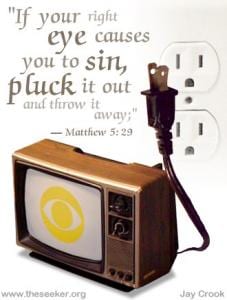
There may be more than personal morality to Jesus’ saying about how to enter into life.
A priest in Madison, Wisconsin, got a laugh with the opening lines of his homily. He was preaching on the passage where Jesus recommends a startling new way to enter into life:
If your hand/foot/eye causes you to sin, cut it off/pluck it out. Better for you to enter into life [without them]. (Mark 9:43-48)
“That is why we Catholics do not always interpret the Bible literally,” the priest quipped.
I don’t suppose there are many Christians who do interpret this saying of Jesus literally. Typically, one says that Jesus was using a figure of speech to emphasize a point. It’s easy enough to ascribe moral lessons to the different body parts in Jesus’ saying:
- Hand – Don’t steal.
- Foot – Stop kicking the dog.
- Eye – Skip the Sports Illustrated swimsuit issue.
Matthew, in fact, puts this teaching in the context of the famous teaching where Jesus equates lustful glances with adultery. (Matthew 5:27-30) But Mark’s Gospel, which is Luke’s source, doesn’t have the saying about lust. Here it seems odd for Jesus to be wasting a perfectly good figure of speech on some fairly humdrum moral situations. Mark’s Gospel presents a Jesus dealing with more world-historical issues. Jesus over and over startles us into a new kind of thinking about the Kingdom of God.
Enter into life in a new kind of kingdom
In Mark Jesus seems to have something more in mind than urging his followers not to sin with hand, foot, or eye, no matter how colorfully he speaks. Mark’s context (9:33-41) for this saying is Jesus’ new teaching about greatness in the Kingdom of God. In particular, it’s not something the disciples should be arguing about. They shouldn’t imagine, either that they can prevent non-members of their group from driving out demons. God’s power can’t be limited that way.
Then comes the section with the saying about hand, foot, and eye and how to enter into life. My Bible titles it “Temptations to Sin.” (Mark 9:42ff) Curiously it starts not with a temptation that one might fall into but with something more aggressive: “Whoever causes one of these little ones who believe to sin.” I’m wondering if the “little ones” might include people who happen to be missing a hand, a foot, or an eye.
Here are three factors that make me think more than personal morality is animating the saying in Mark:
- First, a major theme in Mark’s Gospel is Jesus’ opposition to the political, religious, and economic establishment represented by the Temple in Jerusalem. It was a far more entrenched vehicle of sin than anything a hand, foot, or eye could accomplish.
- Second, Jesus spent a lot of time with maimed, crippled, and blind people, along with people experiencing many other problems.
- Third, Temple rules forbade entrance by anyone who was not “whole.” The lame, maimed, blind, etc. were not allowed in. (See 2 Samuel 5:8)
God’s love won’t be confined
I put these facts together with the real temptation the disciples struggle with, the temptation to exclude others and make comparisons among themselves. It makes me think Jesus is not dealing with three different sins his followers might fall into. The saying as a whole functions like a parable with one over-arching meaning: God: Stop trying to limit God’s love.
The Temple and the religious establishment it represented did that, and this Temple is doomed, in Jesus’ thinking. (Mark 13:2) A disciple who similarly tries to limit God’s love would be better off “if a great millstone were put around his neck and he were thrown into the sea.” (Mark 9:42)
Matthew’s Gospel has its own way of challenging the Temple’s restrictive policy:
Jesus throws the buyers and sellers out of the Temple and upsets the tables of the money changers. He quotes Isaiah 56:7 — “My house shall be a house of prayer” — and says they’ve made it a “den of thieves.” Just then the blind and the lame approach Jesus “in the Temple area,” where they weren’t supposed to be, and he cures them. (Matthew 21:12-14)
Jesus almost makes being blind or maimed or otherwise suffering a marker for preferred entry into his Father’s Kingdom. He had done so all along by his behavior. Now he does so in words. In the sphere of personal morality, we can’t take Jesus’ words about cutting off body parts literally. Jesus does not seriously want people to enter into life by injuring themselves. But on a political level his literal words are aimed directly at the Temple establishment’s disenfranchising of a large number of people, people whose company Jesus preferred.
Image credit: Heartlight via Google Images
Previous Post

January 30, 2019
Inclusive Language: Its Place in Church and in Personal Piety
Next Post
February 3, 2019 One God, Part 1: The Worldview behind the Many Gods of Paganism
Browse Our Archives
Select a Category Advent Christmas Amazon Synod Angels Being Consumed Bible Catholic Modern Creed Ecology Economics Elizabeth Johnson Eucharist Fragments and Filaments Gender and Sex Gospel of Mark Herzog Historical Jesus Liturgy Luke Opening Scriptures on Way to Emmaus Ordinary radicals Parables Pro-Life Reincarnation Rosary Sacraments science Social Justice Souls Stories of Jesus The Creed Torture and Eucharist Tracy Uncategorized War and Peace
Select a Month October 2026 June 2025 April 2025 March 2025 February 2025 January 2025 November 2024 July 2024 March 2024 December 2023 October 2023 September 2023 August 2023 May 2023 April 2023 March 2023 February 2023 January 2023 December 2022 November 2022 October 2022 September 2022 August 2022 July 2022 June 2022 April 2022 March 2022 February 2022 January 2022 December 2021 November 2021 October 2021 August 2021 July 2021 June 2021 April 2021 March 2021 February 2021 December 2020 November 2020 October 2020 August 2020 July 2020 June 2020 May 2020 April 2020 March 2020 February 2020 January 2020 December 2019 November 2019 October 2019 September 2019 August 2019 July 2019 June 2019 May 2019 April 2019 March 2019 February 2019 January 2019 December 2018 November 2018 October 2018 September 2018 August 2018 July 2018 June 2018 May 2018
Follow Us!
TAKE THE
Religious Wisdom Quiz
True or False: According to Romans, if God is for us, no one can be against us.
Select your answer to see how you score.
FALSE TRUE
Related posts from Lost in a One-Acre Wood
Resurrection: For the Apostles, It Took a While...
CRUCIFY HIM! -- What the Jews Did or...
Faith that can Move Mountains … or Not
The Misunderstood Messiah: Jesus’ Friends Don’t Get It
TRENDING AT PATHEOS Catholic

The Parable Of The Sower And The Word...
One of Christ’s most famous parables is that of the sower who...

Rejecting Doom: Christian Hope And Human Action
Christianity is a religion of hope. We are to have hope and...

Why I Choose the Eucharist Over the Sermon
Choose the Eucharist, Not the Sermon What are we supposed to get...

5 Design Elements Found in Spiritually Rooted Homes
Putting Spirituality Into Home Decor Our homes are more than our living...

Credo: A Story of God Told with the...
About 10 years ago, I began to imagine a personal "Credo" that...

The Anatomy of Divine Revelation in Catholic Thought
The claim that God has made Himself known to human beings is...
view all Catholic blogs
Ad-Free & Subscriber Log-In Subscription Support
- About Us
- 2026 Calendar
- Videos
- Podcasts
- Library of World Religions
- Faith In Media Tracker
- Advertise With Us
- Write for Us
- Privacy Policy
- Terms of Service
- Do Not Sell My Data
- Contact Us
- Radiant Digital
- Manage Newsletter Subscriptions
- Unsubscribe From Notifications
- Sitemap
Copyright 2008-2026, Patheos. All rights reserved.
Subscription Support Ad-Free & Subscriber Log-In
Follow Patheos